Matières
Niveaux
Vocabulary on the theme of space.
| universe | Everything that exists, including all of space, time, energy, stars, planets and galaxies. Also called the cosmos. |
| cosmos | Everything that exists, including all of space, time, energy, stars, planets and galaxies. Also called the universe. |
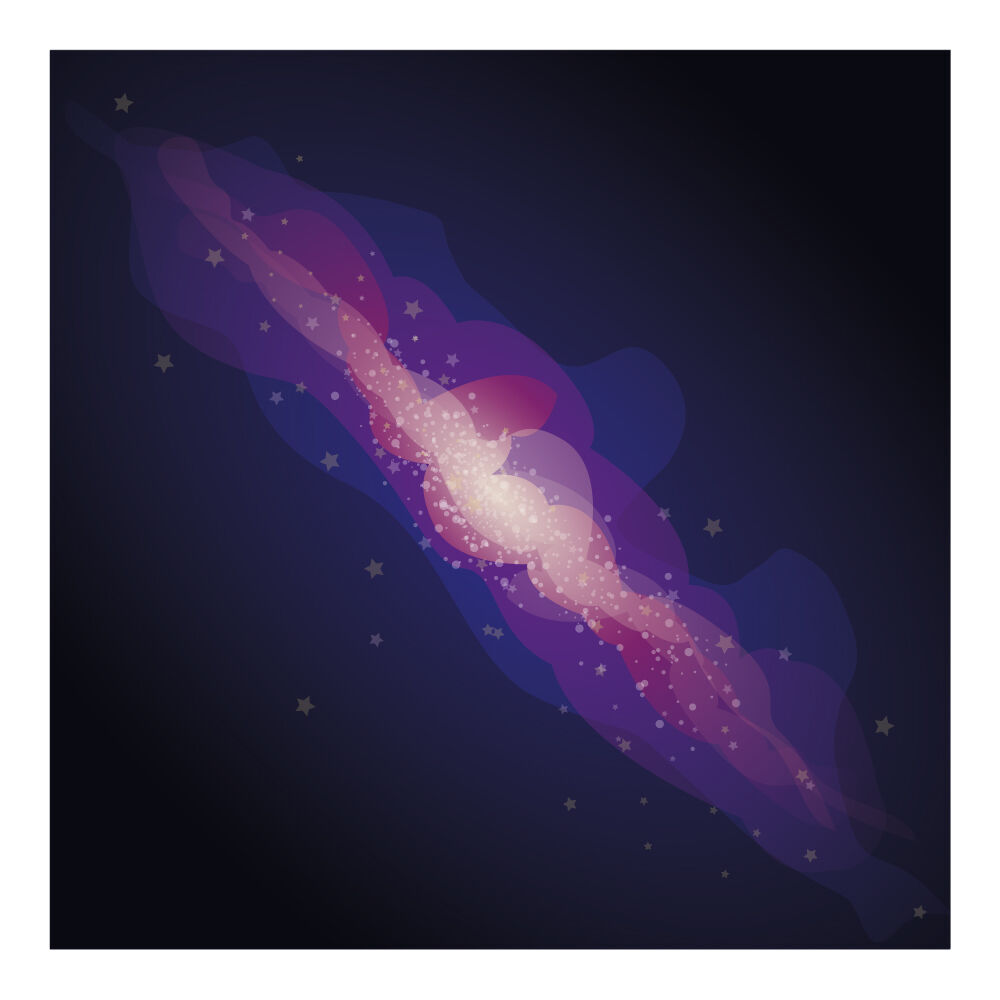
| galaxy | A group of billions of stars, planets, gas, dust and solar systems held together by gravity. |
| outer space | Everything beyond the Earth’s atmosphere. Often shortened to space. |
| atmosphere | The layer of gases that surrounds a planet (like air surrounding the Earth). |
| gravity | A force that pulls objects toward each other. |
| weightlessness | The feeling or condition of having no weight. Like when floating in space. |
| vacuum | A space that is completely empty of matter, even empty of air! |
| extraterrestrial | That is from outside planet Earth. |
| galactic | Describes something that belongs to or is related to a galaxy. |
| interstellar | Describes what is located or taking place between the stars. |
| astral | Describes something that comes or relates to stars. |
| celestial | Describes anything that belongs to the sky or outer space, such as stars, planets and moons. |
| astronomy | Science that studies the universe: stars, planets, galaxies and everything else in outer space. |
| astrophysics | Science that studies the laws of physics in space. |
| light year | A unit that measures the distance (not time!) light travels in a year: about 9 trillion kilometres. |
| Big Bang | The scientific idea that the universe began as a tiny, hot point and quickly expanded (about 13.8 billions years ago). |
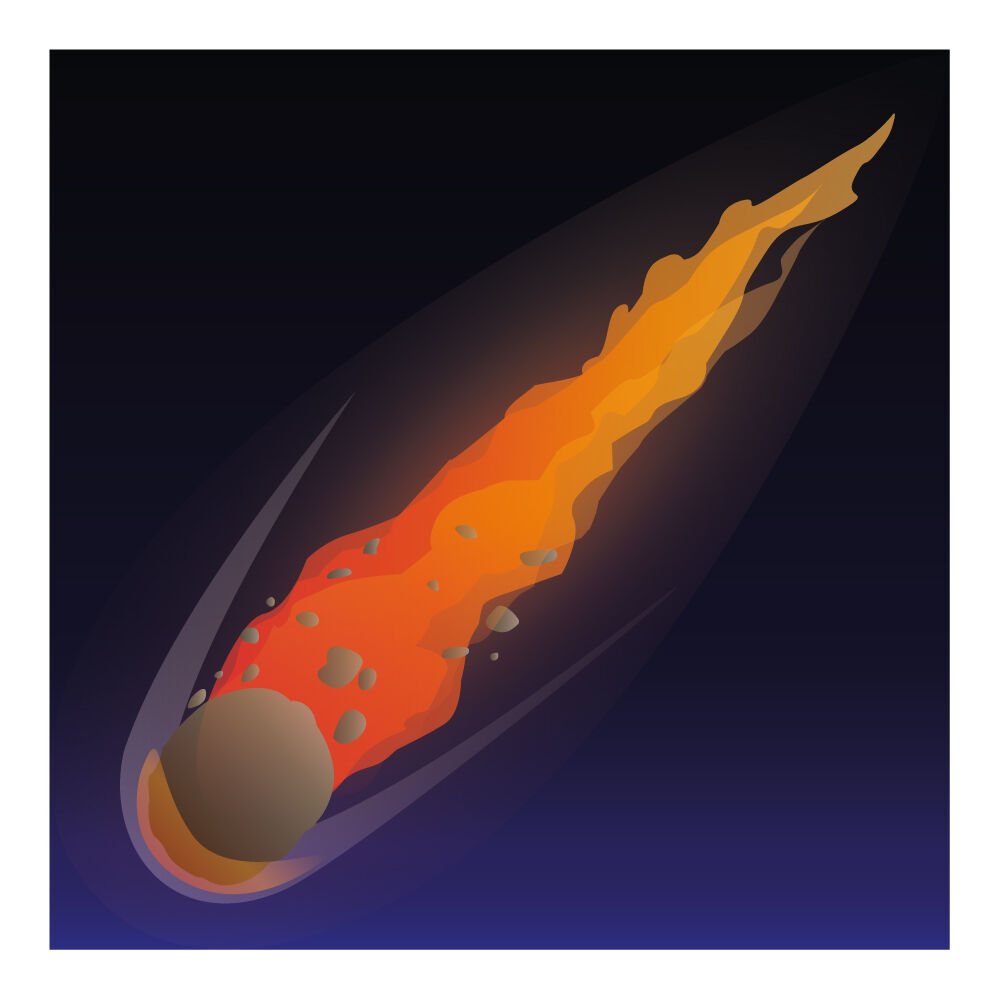
| comet | An object made of ice, dust and rock that travels through space. When it gets close to the hot Sun, its ice melts and forms a long, glowing tail. |
| tail | A long line of glowing gas and dust that streams behind a comet as it gets close to the hot Sun. |
| asteroid | A large piece of rock or metal that travels through space and orbits the Sun. |
| meteor | A small piece of rock that burns when entering a planet’s atmosphere, creating a streak of light in the sky. Often called a shooting star. |
| meteorite | A meteor that survived going through the atmosphere and landed on a planet’s surface. |
| meteor shower | When many meteors can be seen at the same time. |
| natural satellite | A natural space object (like a moon) orbiting a larger object, such as a planet. |
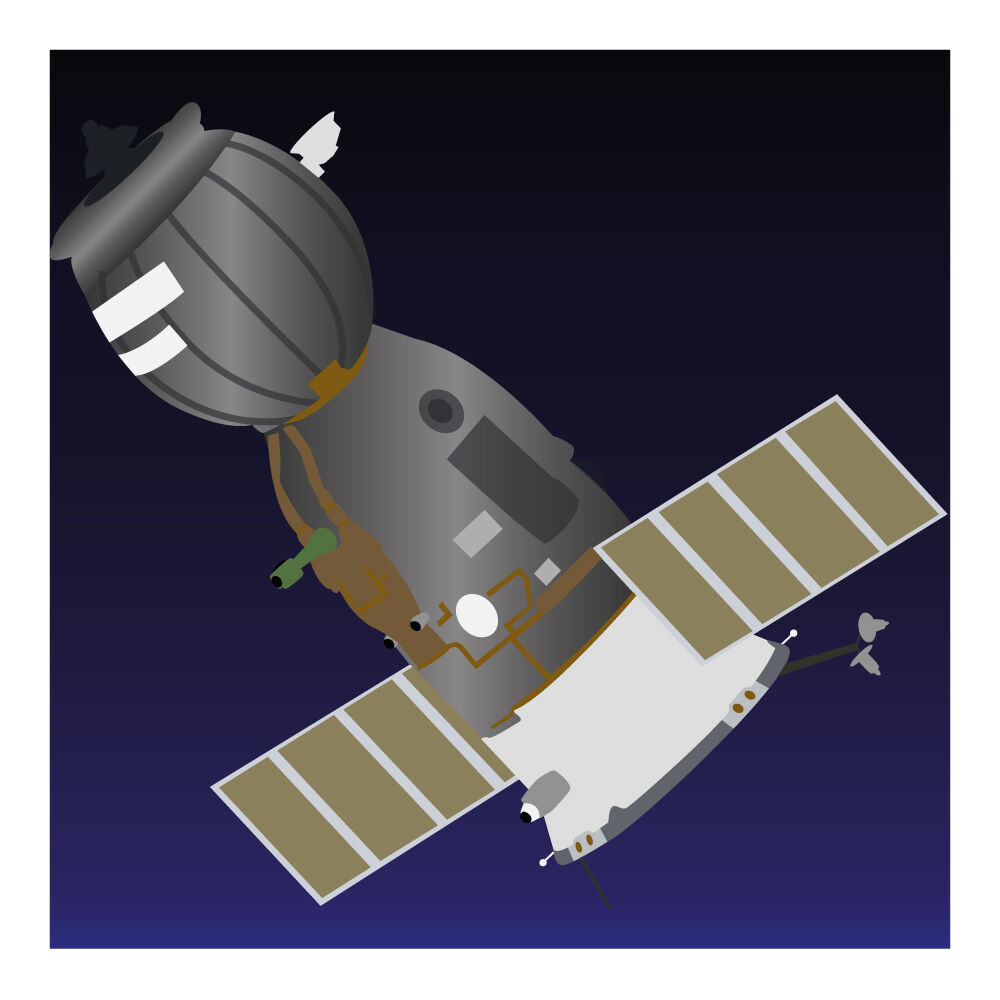
| artificial satellite | A man-made machine orbiting a planet made to collect information (e.g., weather, surveillance) or send signals (e.g., phone signals, GPS). |
| dwarf planet | A celestial object that is round, orbits the Sun and is not quite big enough to be a planet. |
| Pluto | A dwarf planet discovered in 1930. It used to be considered the ninth planet of our Solar System. |
| celestial objects | Any natural object that exists outside of the Earth’s atmosphere. |
| nebula | A giant cloud of gas and dust in space. |
| constellation | A group of stars that forms a pattern or picture in the night sky. |
| black hole | A place in space with gravity so powerful that nothing can escape from it, not even light. |
| dark matter | An invisible material that has very strong gravity, pulling on planets and stars. |
| supernova | A powerful explosion that happens at the end of a star’s life. |
| stardust | Tiny particles (rock, metal or dust) floating in space. |
| mission | An important trip or project into space with a specific goal. |
| to explore | To travel to an unknown place to discover and learn new things about it. |
| to orbit | To travel in a continuous, curved trajectory around a planet, moon or star. |
| mission control | A command centre where a team monitors, guides, and communicates with a spacecraft during its flight. |
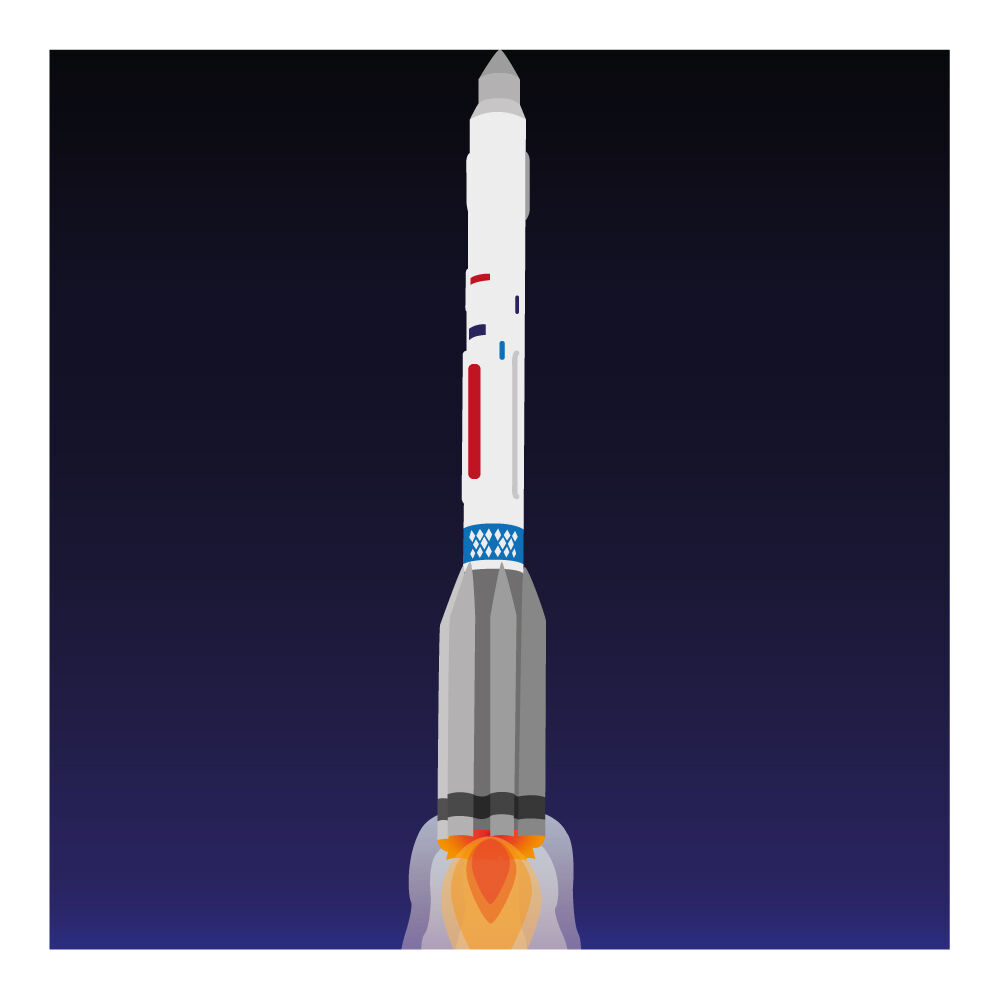
| launching | Blasting a rocket or spacecraft into the sky and into space. |
| launchpad | A platform from where a rocket or spacecraft is launched. |
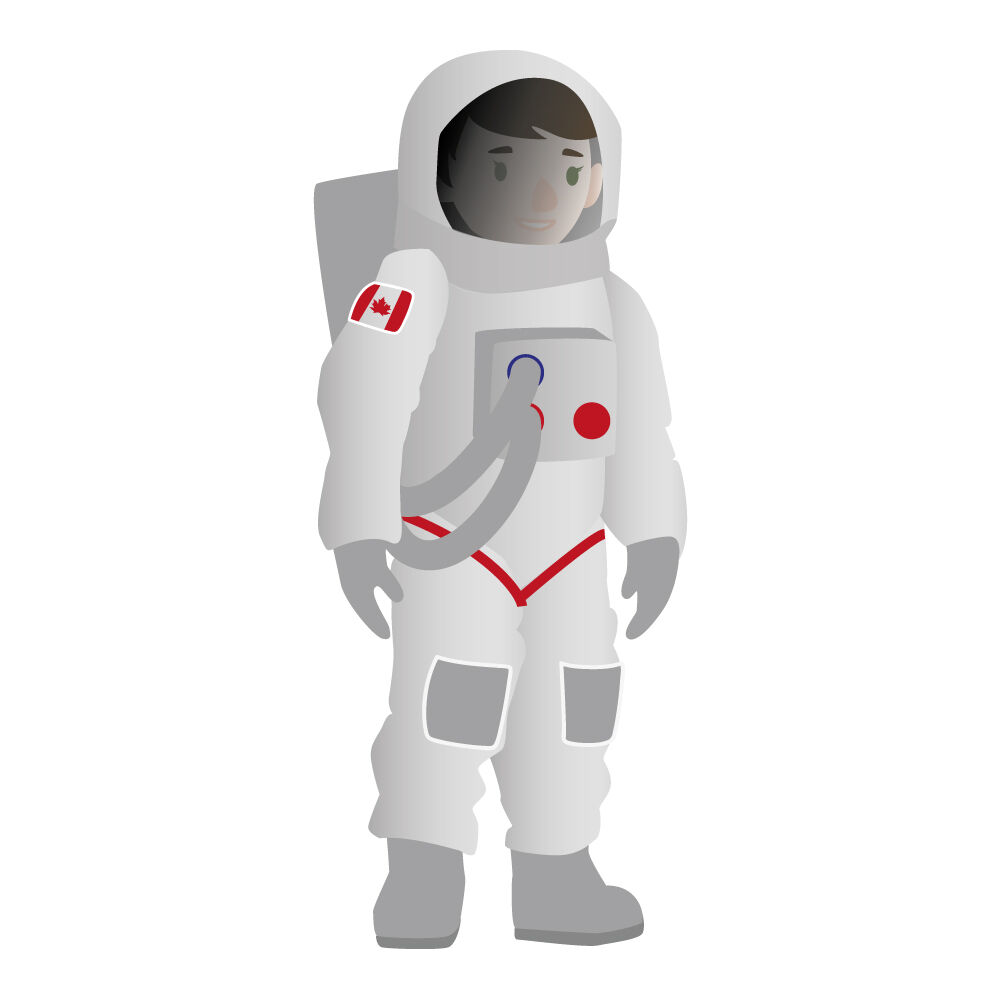
| cosmonaut | An astronaut from Russia (or the former Soviet Union). |
| probe | A small, robotic spacecraft sent into deep space to collect information, take photos, and send data back to Earth. |
| rover | A small robotic vehicle with wheels built to drive across the rocky surface of another planet or moon. |
| NASA | Acronym for “National Aeronautics and Space Administration.” |
| National Aeronautics and Space Administration | The government agency in the United States in charge of science, airplanes and space travel. |
| ESA | Acronym for “European Space Agency.” |
| European Space Agency | The space organization formed by European countries working together to explore space and build satellites. |
| CSA | Acronym for “Canadian Space Agency.” |
| Canadian Space Agency | The official government organization in Canada that is in charge of space travel, satellite technology and astronaut training. |
| ISS | Acronym for “International Space Station.” |
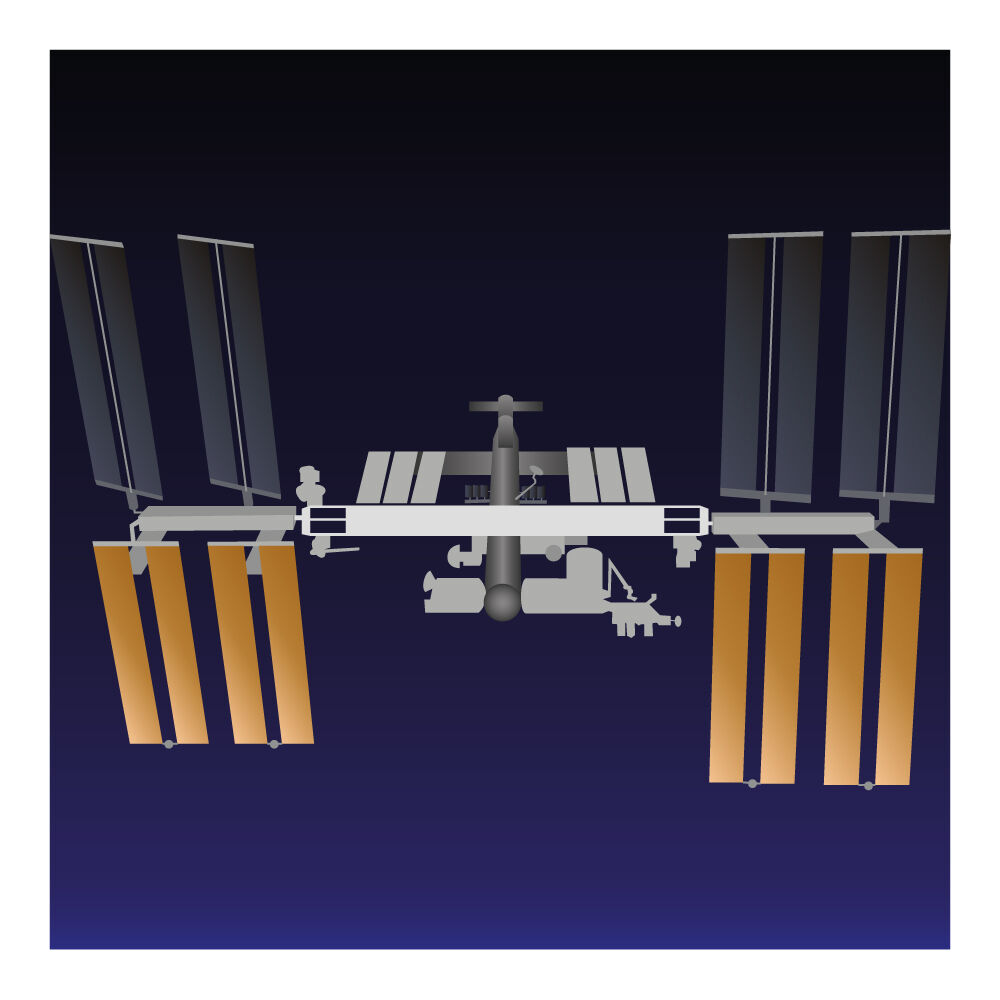
| International Space Station | A science laboratory and home orbiting the Earth, built and shared by several countries working together. |
| Apollo Program | A historic series of NASA space missions with the goal of landing the first humans on the Moon and bringing them safely home. |
| Moon landing | The arrival of a spacecraft on the surface of the Moon. The first took place on July 20th, 1969. |
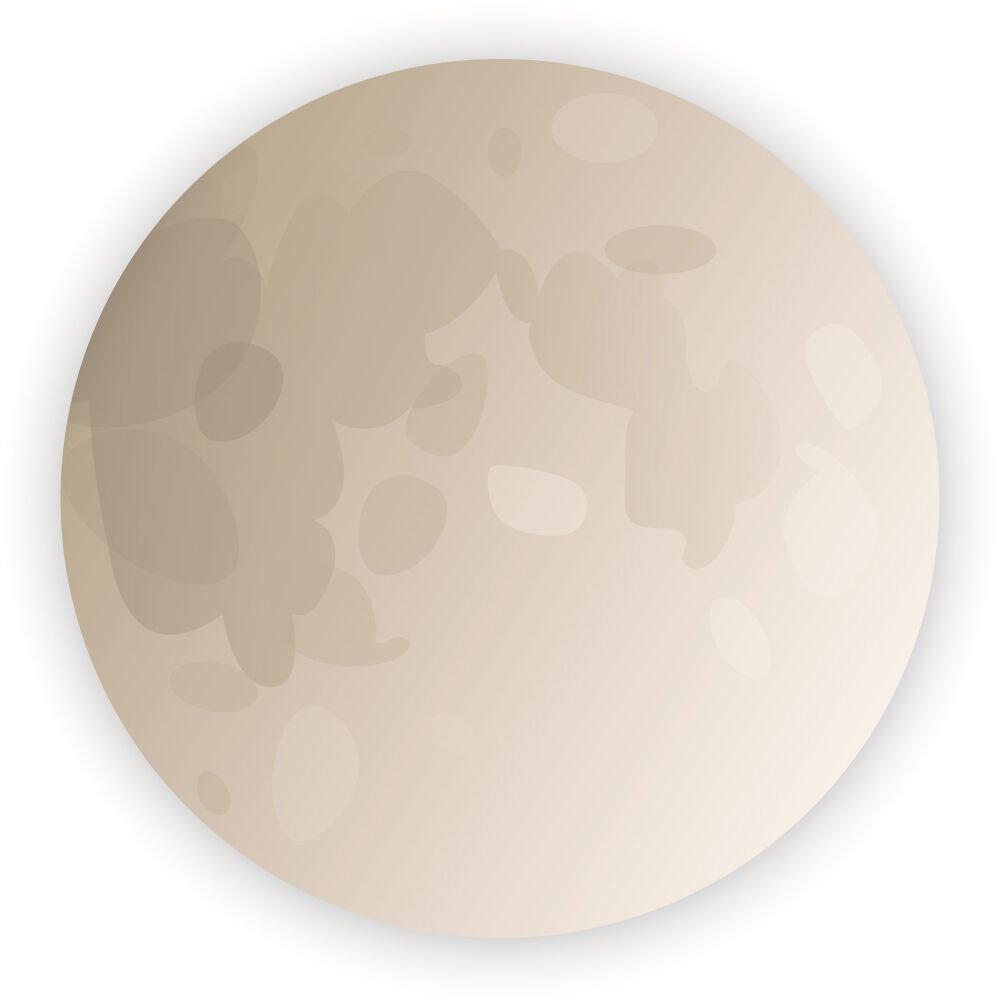
| lunar | Adjective that means having to do with or from the Moon. |
| moonlight | Light coming from the Moon at night. The light is reflected from the Sun. |
| moon phase | The changing shapes of the bright part of the Moon that we see from Earth. |
| full moon | Moon phase when the whole Moon is clearly visible, looking like a bright circle. |
| half moon | Moon phase when the Moon is half visible, looking like a bright half circle. |
| crescent moon | Moon phase when the Moon is only partly visible, looking like a bright crescent shape. |
| blood moon | A full moon that appears red or orange during a total lunar eclipse. |
| solar | Adjective that means having to do with or from the Sun. |
| dawn | The moment the first daylight appears in the sky, in the early morning. Takes place right before the sunrise. |
| dusk | The moment when the sky appears completely dark. It is the very end of the sunset. |
| sunrise | The moment when the Sun can be seen above the horizon, when the Sun comes up. |
| sunset | The moment when the Sun disappears below the horizon, when the Sun sets. |
| twilight | The soft light in the sky just after the Sun sets or just before it rises. |
| eclipse | When one object in space moves in front of another and blocks its light. |
| lunar eclipse | When the Earth passes between the Sun and the Moon. The Earth blocks the sunlight from reaching the Moon, often turning it a dark reddish color. |
| solar eclipse | When the Moon passes between the Sun and Earth. The Moon blocks the sunlight, making the day look dark like night. |
Moon vs. moon, what is the difference?





| universe | Everything that exists, including all of space, time, energy, stars, planets and galaxies. Also called the cosmos. |
| cosmos | Everything that exists, including all of space, time, energy, stars, planets and galaxies. Also called the universe. |
| galaxy | A group of billions of stars, planets, gas, dust and solar systems held together by gravity. |
| outer space | Everything beyond the Earth’s atmosphere. Often shortened to space. |
| atmosphere | The layer of gases that surrounds a planet (like air surrounding the Earth). |
| gravity | A force that pulls objects toward each other. |
| weightlessness | The feeling or condition of having no weight. Like when floating in space. |
| vacuum | A space that is completely empty of matter, even empty of air! |
| extraterrestrial | That is from outside planet Earth. |
| galactic | Describes something that belongs to or is related to a galaxy. |
| interstellar | Describes what is located or taking place between the stars. |
| astral | Describes something that comes or relates to stars. |
| celestial | Describes anything that belongs to the sky or outer space, such as stars, planets and moons. |
| astronomy | Science that studies the universe: stars, planets, galaxies and everything else in outer space. |
| astrophysics | Science that studies the laws of physics in space. |
| light year | A unit that measures the distance (not time!) light travels in a year: about 9 trillion kilometres. |
| Big Bang | The scientific idea that the universe began as a tiny, hot point and quickly expanded (about 13.8 billions years ago). |

| comet | An object made of ice, dust and rock that travels through space. When it gets close to the hot Sun, its ice melts and forms a long, glowing tail. |
| tail | A long line of glowing gas and dust that streams behind a comet as it gets close to the hot Sun. |
| asteroid | A large piece of rock or metal that travels through space and orbits the Sun. |
| meteor | A small piece of rock that burns when entering a planet’s atmosphere, creating a streak of light in the sky. Often called a shooting star. |
| meteorite | A meteor that survived going through the atmosphere and landed on a planet’s surface. |
| meteor shower | When many meteors can be seen at the same time. |
| natural satellite | A natural space object (like a moon) orbiting a larger object, such as a planet. |
| artificial satellite | A man-made machine orbiting a planet made to collect information (e.g., weather, surveillance) or send signals (e.g., phone signals, GPS). |
| dwarf planet | A celestial object that is round, orbits the Sun and is not quite big enough to be a planet. |
| Pluto | A dwarf planet discovered in 1930. It used to be considered the ninth planet of our Solar System. |
| celestial objects | Any natural object that exists outside of the Earth’s atmosphere. |
| nebula | A giant cloud of gas and dust in space. |
| constellation | A group of stars that forms a pattern or picture in the night sky. |
| black hole | A place in space with gravity so powerful that nothing can escape from it, not even light. |
| dark matter | An invisible material that has very strong gravity, pulling on planets and stars. |
| supernova | A powerful explosion that happens at the end of a star’s life. |
| stardust | Tiny particles (rock, metal or dust) floating in space. |
| mission | An important trip or project into space with a specific goal. |
| to explore | To travel to an unknown place to discover and learn new things about it. |
| to orbit | To travel in a continuous, curved trajectory around a planet, moon or star. |
| mission control | A command centre where a team monitors, guides, and communicates with a spacecraft during its flight. |
| launching | Blasting a rocket or spacecraft into the sky and into space. |
| launchpad | A platform from where a rocket or spacecraft is launched. |
| cosmonaut | An astronaut from Russia (or the former Soviet Union). |
| probe | A small, robotic spacecraft sent into deep space to collect information, take photos, and send data back to Earth. |
| rover | A small robotic vehicle with wheels built to drive across the rocky surface of another planet or moon. |
| NASA | Acronym for “National Aeronautics and Space Administration.” |
| National Aeronautics and Space Administration | The government agency in the United States in charge of science, airplanes and space travel. |
| ESA | Acronym for “European Space Agency.” |
| European Space Agency | The space organization formed by European countries working together to explore space and build satellites. |
| CSA | Acronym for “Canadian Space Agency.” |
| Canadian Space Agency | The official government organization in Canada that is in charge of space travel, satellite technology and astronaut training. |
| ISS | Acronym for “International Space Station.” |
| International Space Station | A science laboratory and home orbiting the Earth, built and shared by several countries working together. |
| Apollo Program | A historic series of NASA space missions with the goal of landing the first humans on the Moon and bringing them safely home. |
| Moon landing | The arrival of a spacecraft on the surface of the Moon. The first took place on July 20th, 1969. |
| lunar | Adjective that means having to do with or from the Moon. |
| moonlight | Light coming from the Moon at night. The light is reflected from the Sun. |
| moon phase | The changing shapes of the bright part of the Moon that we see from Earth. |
| full moon | Moon phase when the whole Moon is clearly visible, looking like a bright circle. |
| half moon | Moon phase when the Moon is half visible, looking like a bright half circle. |
| crescent moon | Moon phase when the Moon is only partly visible, looking like a bright crescent shape. |
| blood moon | A full moon that appears red or orange during a total lunar eclipse. |
| solar | Adjective that means having to do with or from the Sun. |
| dawn | The moment the first daylight appears in the sky, in the early morning. Takes place right before the sunrise. |
| dusk | The moment when the sky appears completely dark. It is the very end of the sunset. |
| sunrise | The moment when the Sun can be seen above the horizon, when the Sun comes up. |
| sunset | The moment when the Sun disappears below the horizon, when the Sun sets. |
| twilight | The soft light in the sky just after the Sun sets or just before it rises. |
| eclipse | When one object in space moves in front of another and blocks its light. |
| lunar eclipse | When the Earth passes between the Sun and the Moon. The Earth blocks the sunlight from reaching the Moon, often turning it a dark reddish color. |
| solar eclipse | When the Moon passes between the Sun and Earth. The Moon blocks the sunlight, making the day look dark like night. |
Moon vs. moon, what is the difference?
(Coming soon)