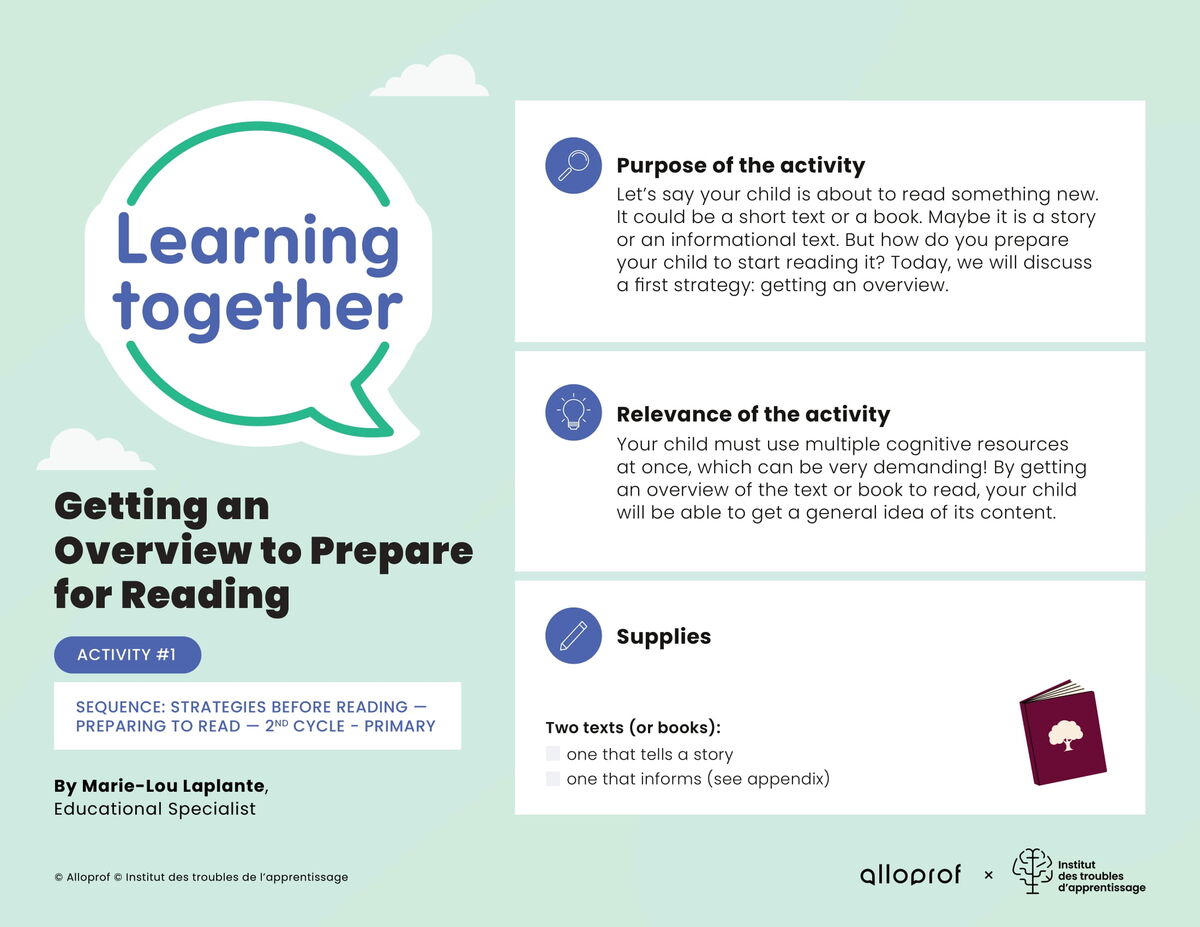
Activity #1: Getting an Overview to Prepare for Reading
The purpose of this first activity is to teach your child to skim a text before reading it. Skimming eases them into the reading process by helping them get a general idea of the text before diving in.
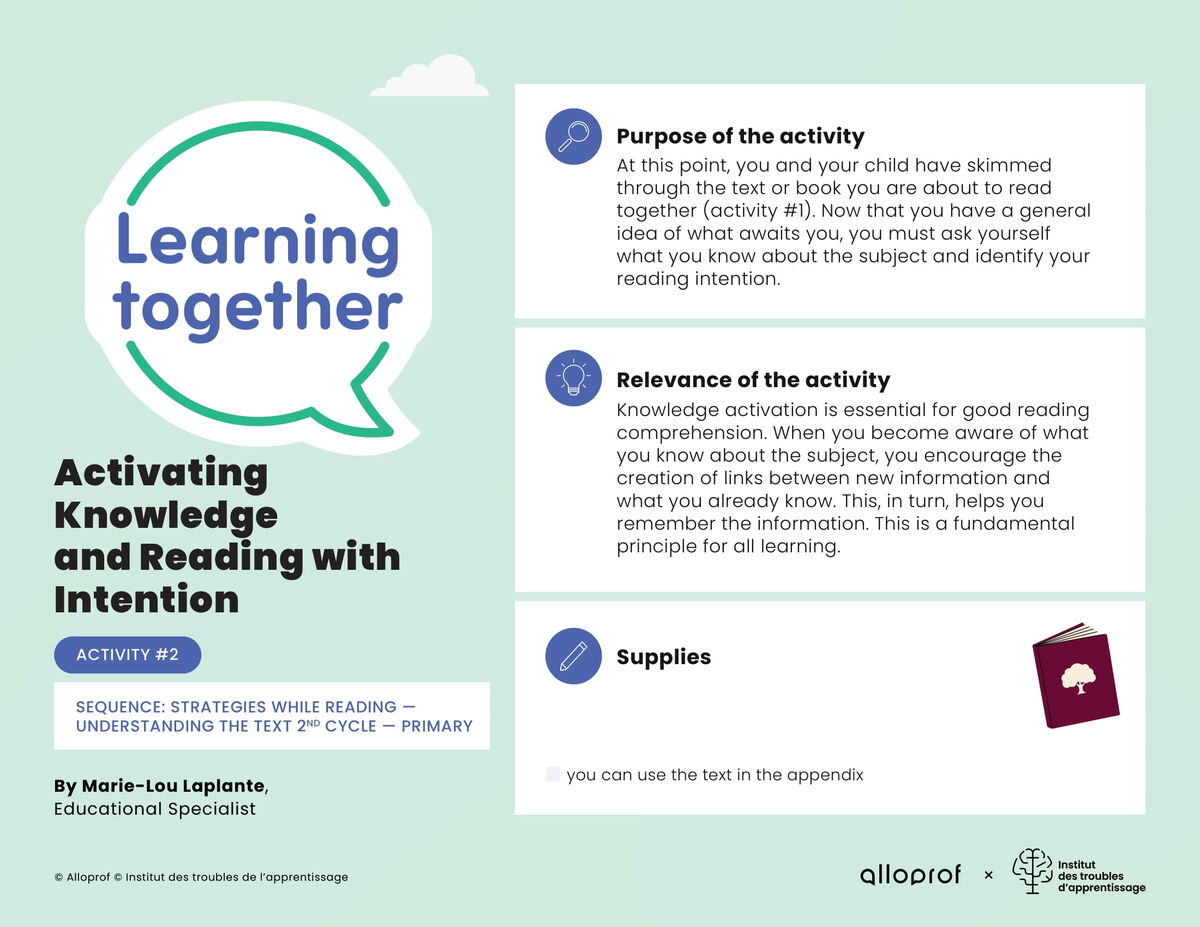
Activity #2: Activating Knowledge and Reading with Intention
This second strategy encourages your child to draw on their prior knowledge after skimming the text. By identifying what they already know about the subject, your child can make connections between their existing knowledge and the new information, which will improve their reading comprehension.
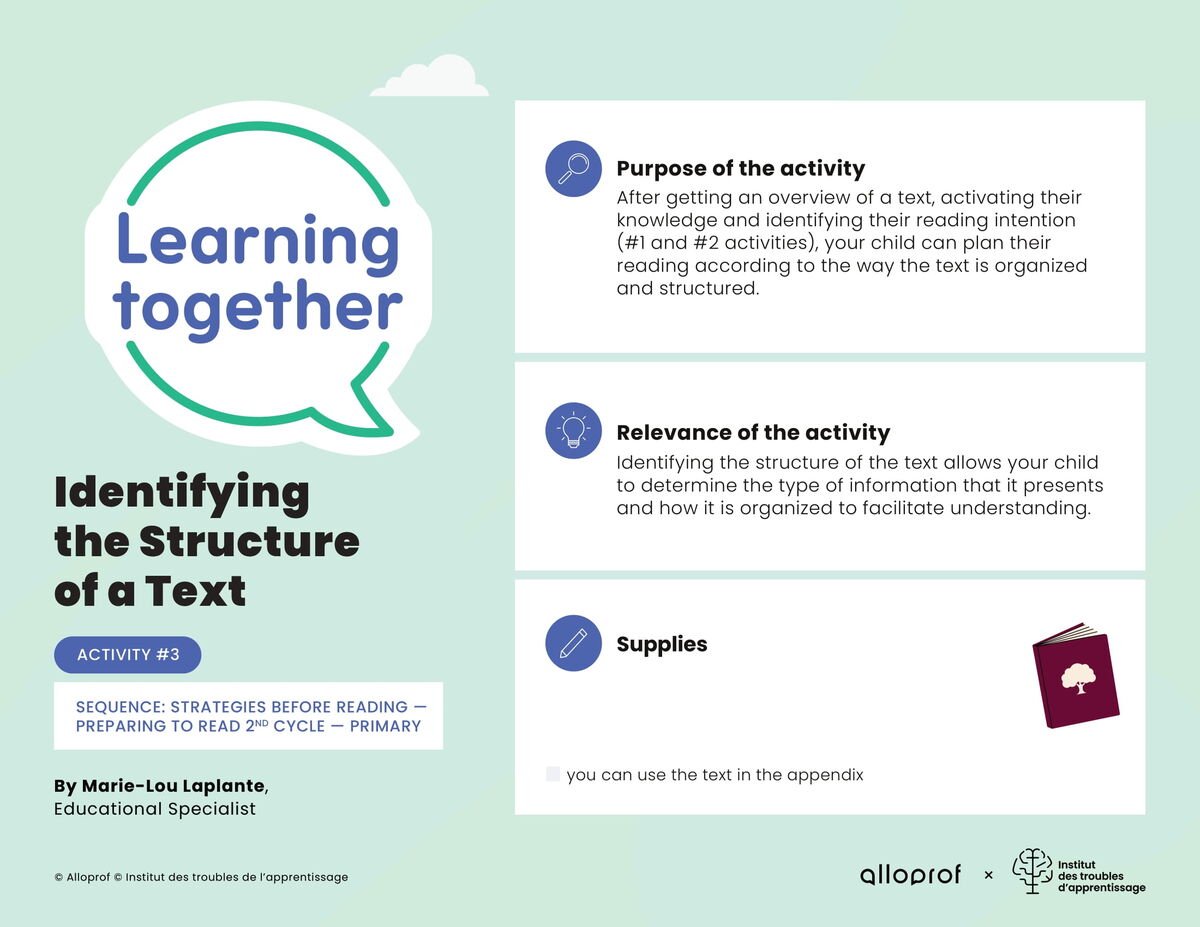
Activity #3: Identifying the Structure of a Text
In this activity, your child plans their reading based on the organization and structure of the text. This strategy can be used during and after reading to help your child identify and remember information.
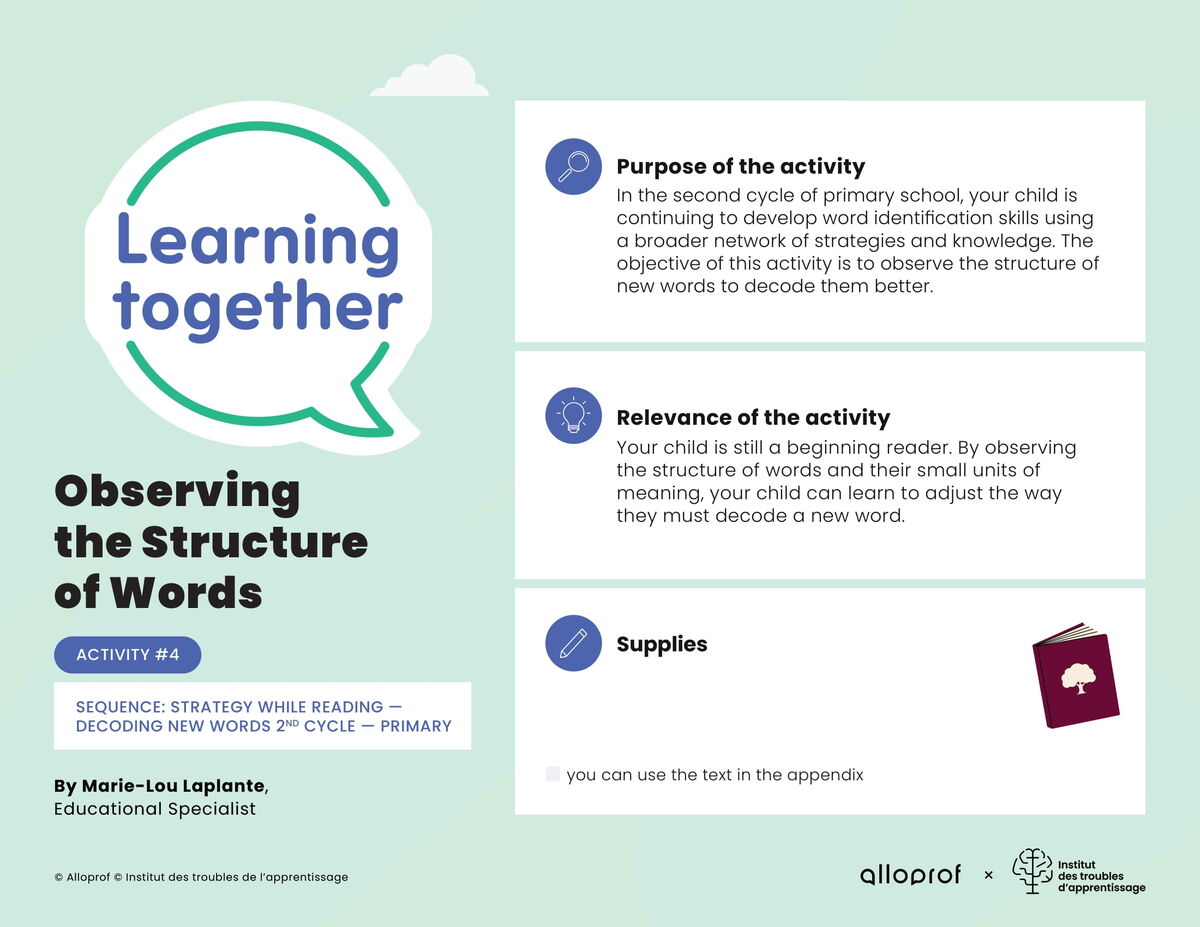
Activity #4: Observing the Structure of Words
This final activity teaches your child to decode words by focusing on their shape. This simple tool helps them recognize and understand words by examining their structure.
Activity #5: Reading Words Based on Clues in the Sentence
The purpose of this activity is to help your child use the clues in a sentence to identify words and their meaning and check their understanding. This allows them to draw connections between words they understand orally and their written form.
Activity #6: Anticipating Words
When your child uses context clues to anticipate the meaning of unfamiliar words, it enhances their reading comprehension. In this activity, your child learns how anticipating the meaning of new words can help them get a general idea of a text.
Activity #7: Paying Attention to Punctuation
Following activities 4 to 6, which explore how to correctly read words and anticipate their meaning, this worksheet focuses on interpreting punctuation marks, which is essential for understanding a paragraph or text as a whole.
Activity #8: Taking Visual Clues into Account
This activity is designed to show your child how graphic elements such as headings, subheadings, bold or italicized words, and tables and graphs can help them identify the main ideas in a text.
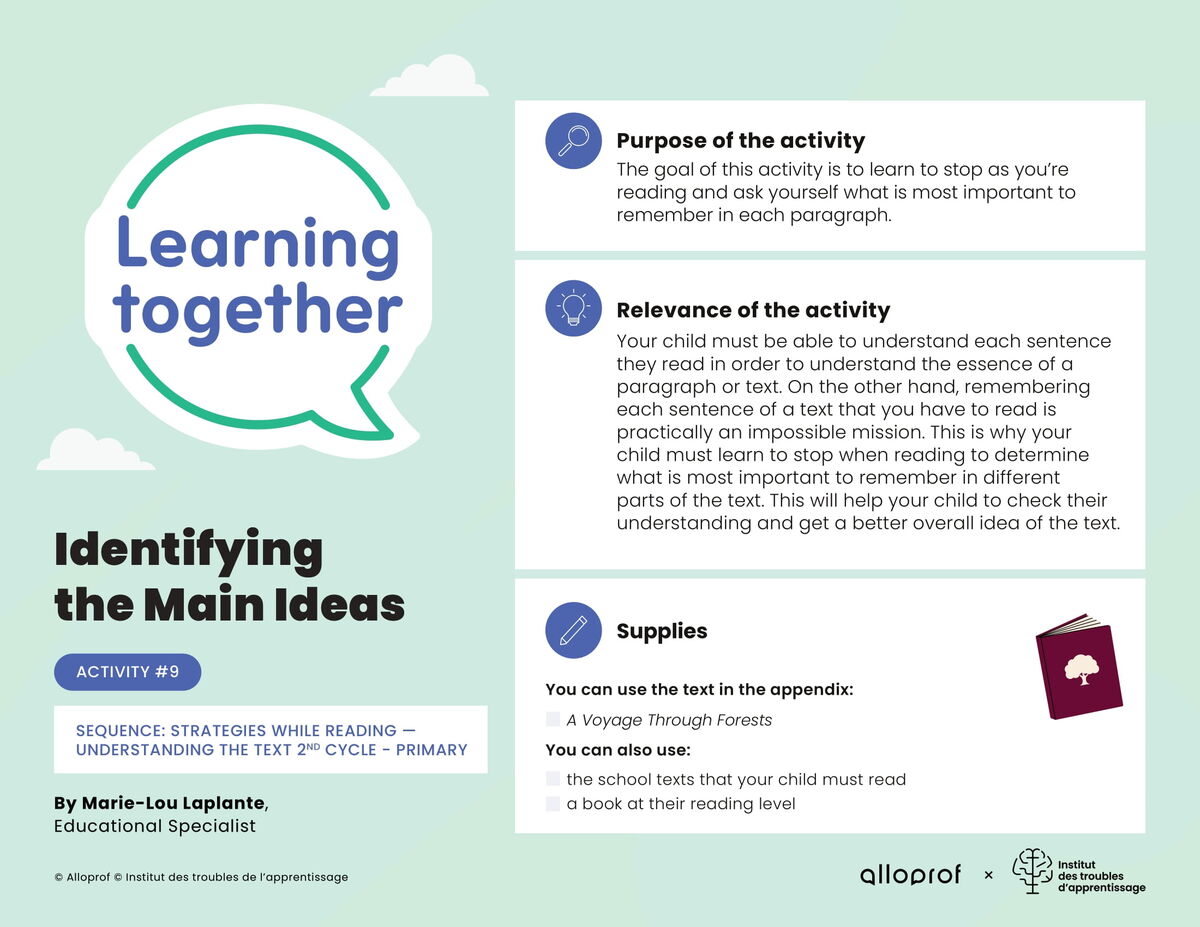
Activity #9 : Identifying the Main Ideas
This activity marks the halfway point of the sequence! It covers how to identify the main ideas in order to grasp the gist of a text. This strategy improves not only reading comprehension, but also the ability to synthesize and develop a mental picture of the material.
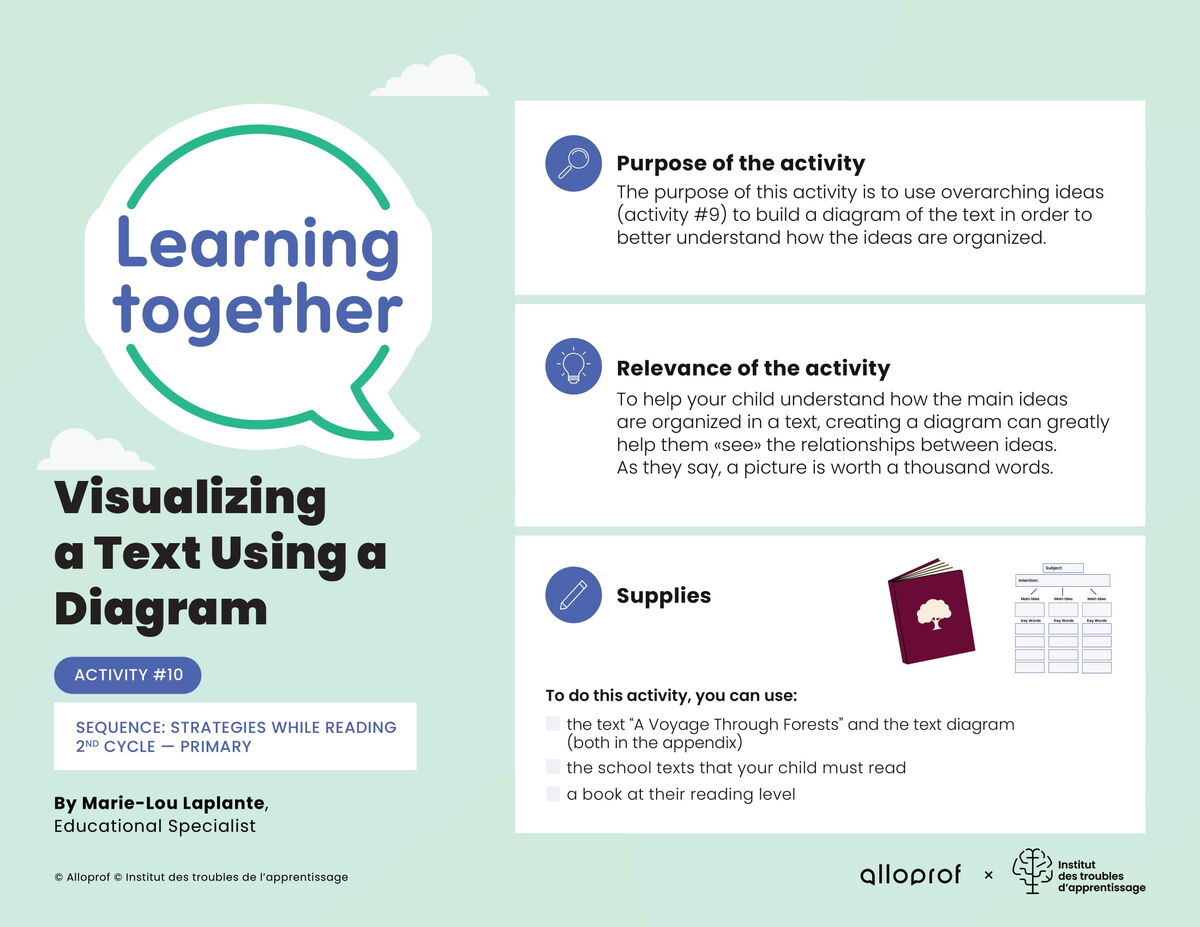
Activity #10 : Visualizing a Text Using a Diagram
This activity invites your child to draw a diagram to visualize the relationships between ideas, which makes it easier to understand a text.
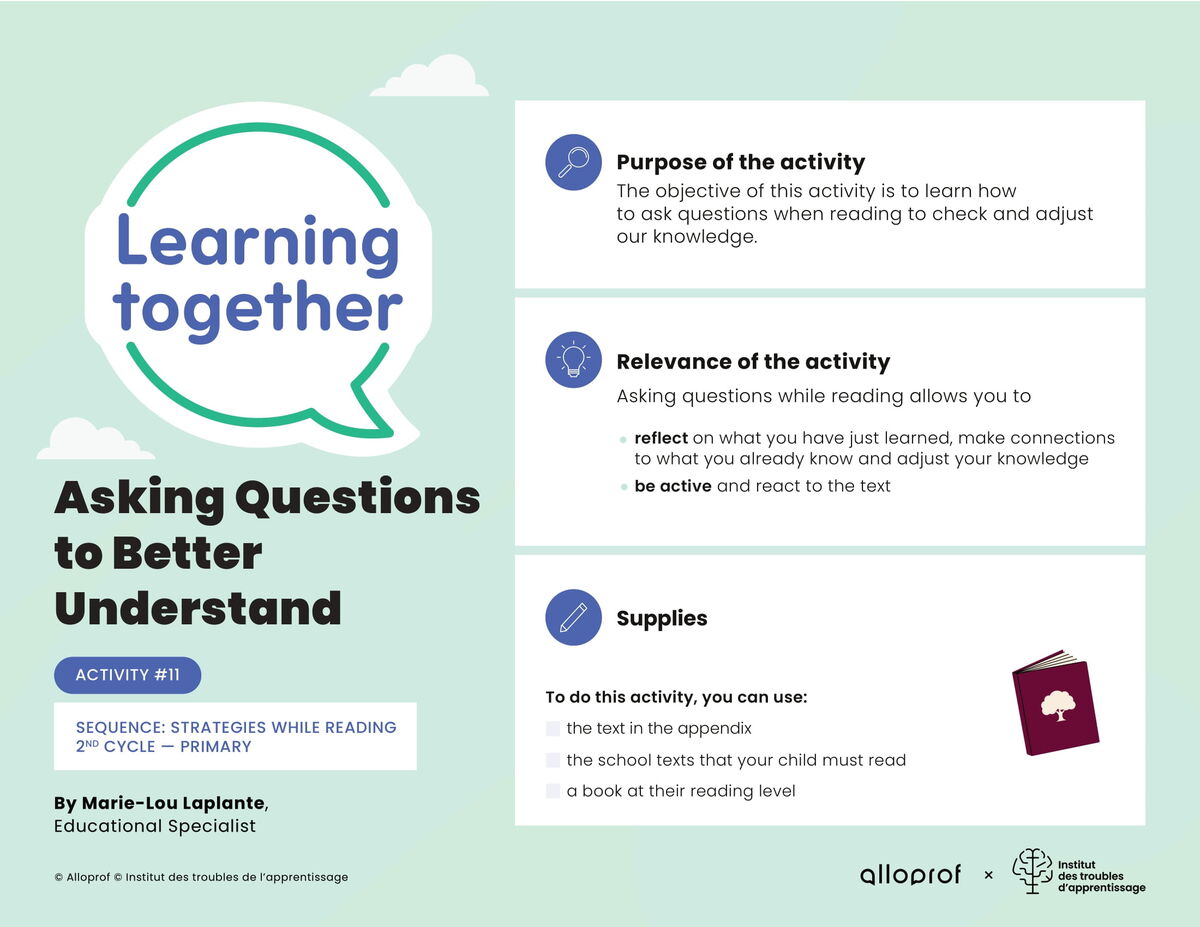
Activity #11 : Asking Questions to Better Understand
Getting into the habit of asking questions when they read allows your child to make connections with what they already know and to adjust their understanding accordingly.
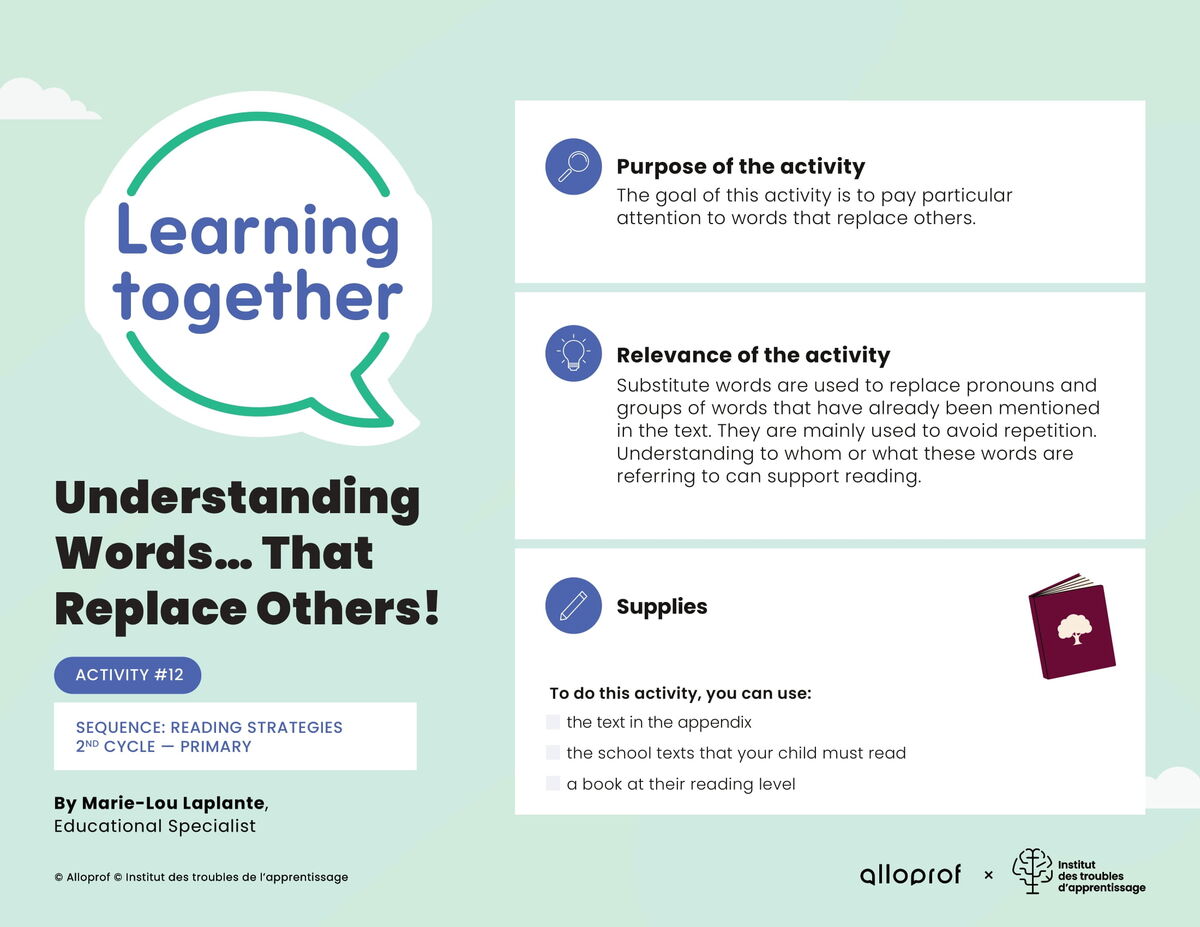
Activity #12 : Understanding Words... That Replace Others!
Often used to avoid repetition, substitution words stand in for pronouns or groups of words previously mentioned in the text. Knowing what or whom these words refer to helps your child clarify and reinforce their overall understanding of the text.
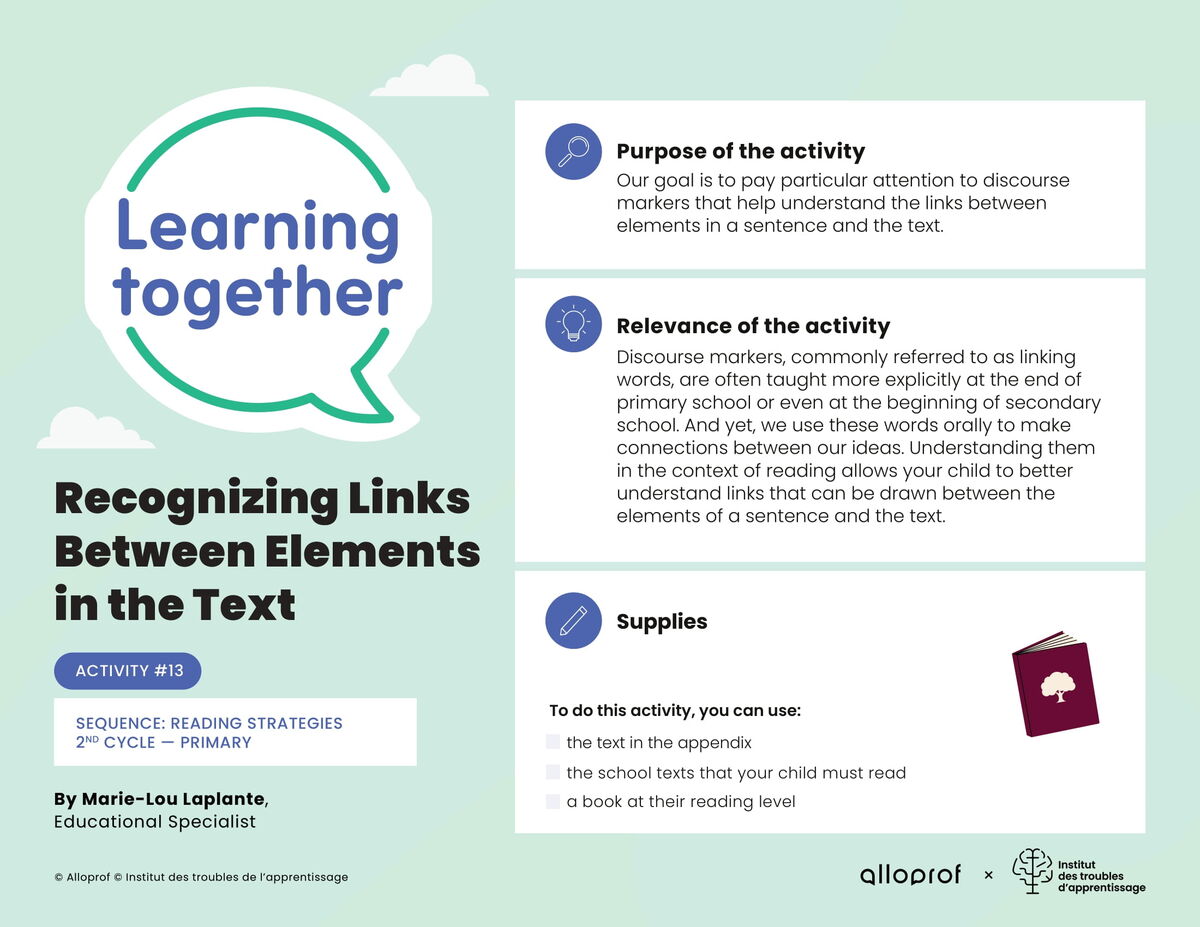
Activity #13 : Recognizing Links Between Elements in the Text
Identifying words that connect ideas helps your child better understand the logic of a text. By getting familiar with these now, they’ll find it easier to develop their reading comprehension.
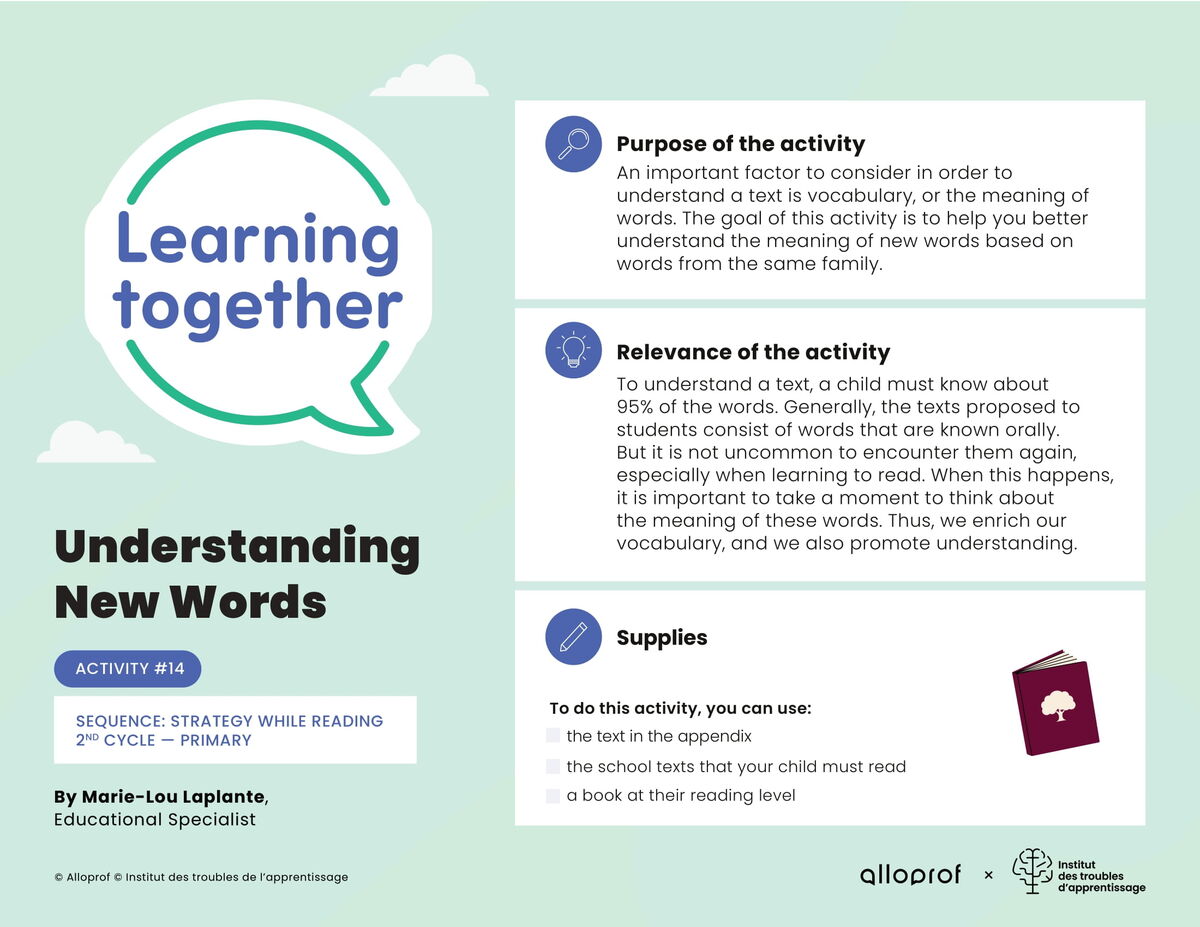
Activity #14 : Understanding New Words
Being able to deduce the meaning of new words from similar words in the same family is essential to understanding a text. Encountering and deciphering the meaning of unfamiliar words not only enriches your child’s vocabulary, but also improves their ability to understand the texts they read.
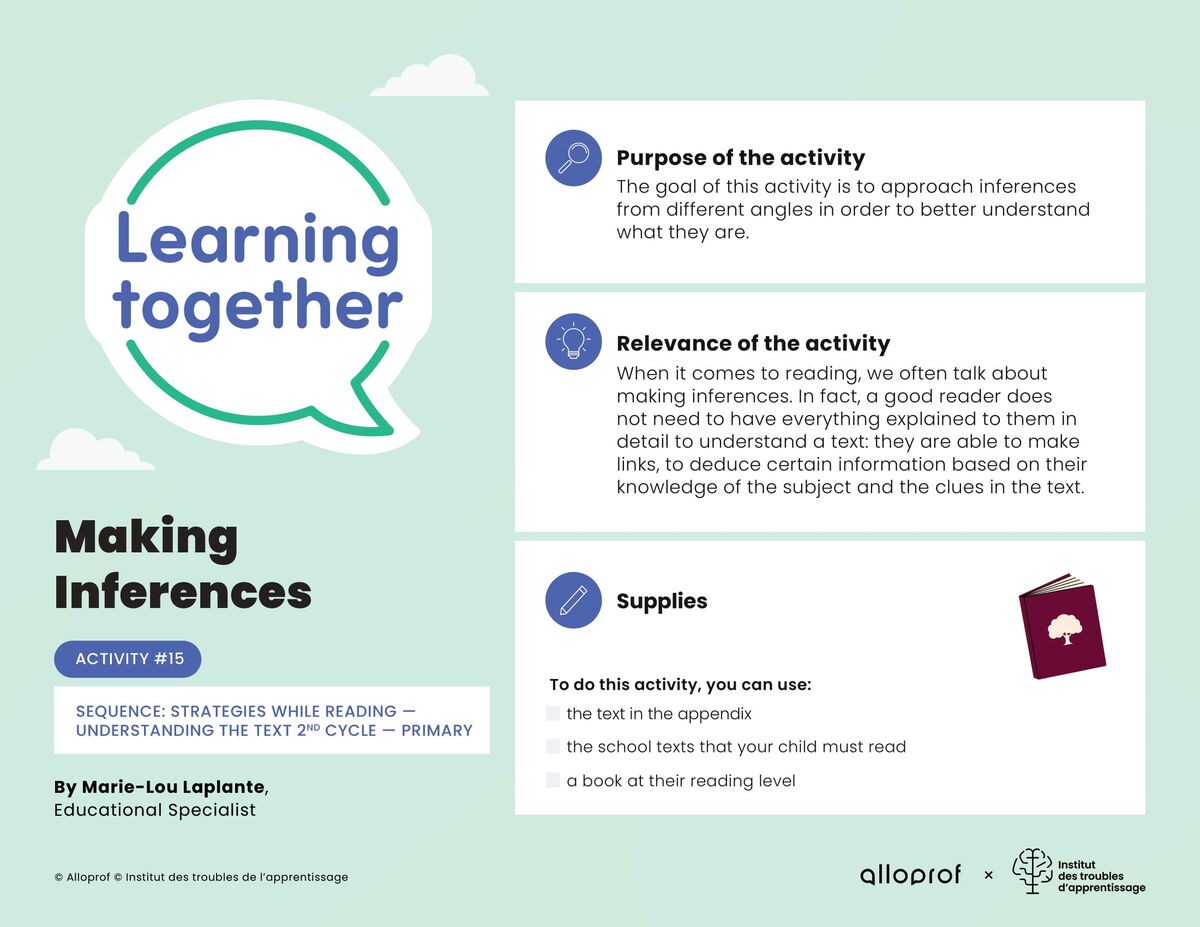
Activity #15 : Making Inferences
This 15th activity helps your child make inferences—that is, read between the lines. By drawing on clues from the text and their own knowledge, they will learn to infer information that is not explicitly stated.
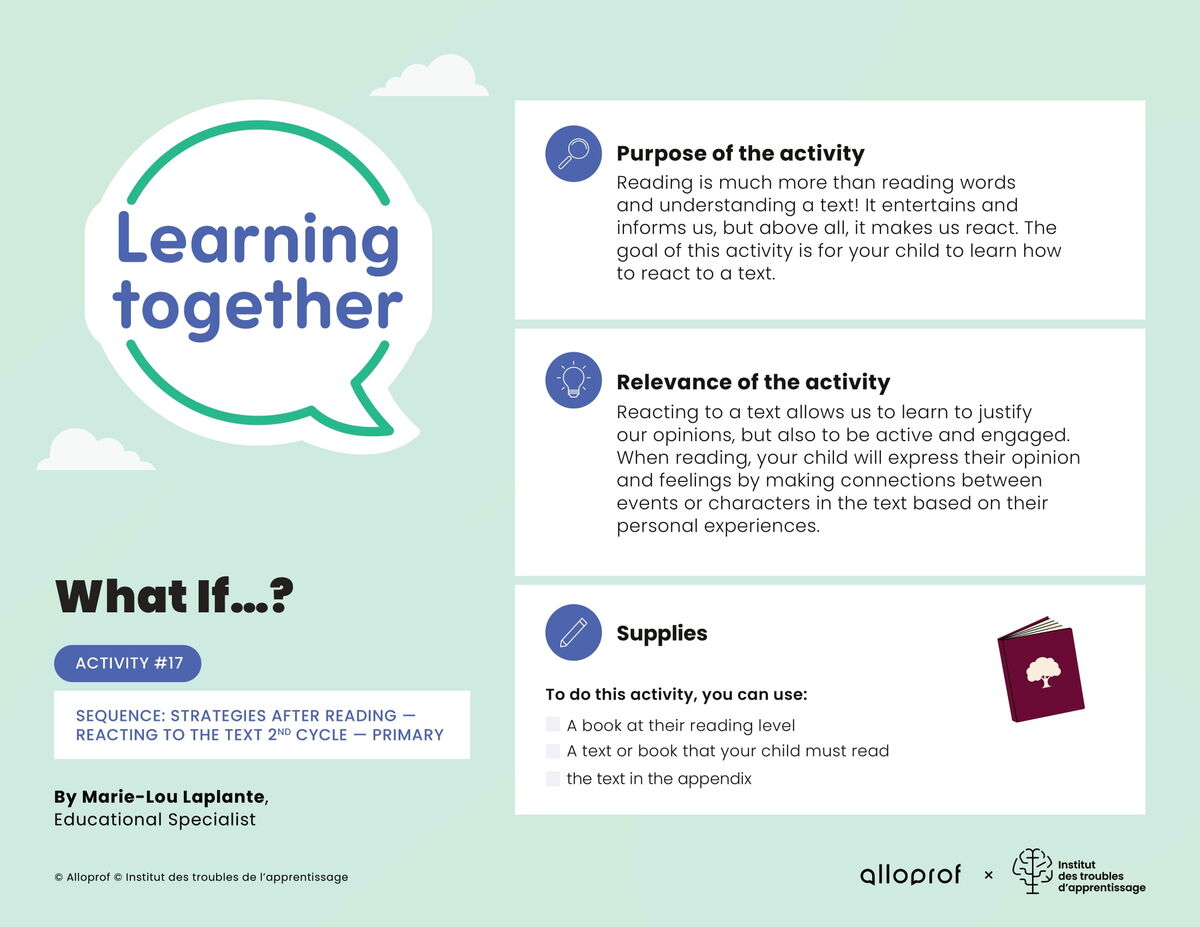
Activity #17 : What If...?
This activity helps your child react to what they have read. By expressing their ideas, emotions, and opinions, and then connecting them to their own experiences, they will develop a more active and thoughtful approach to reading.
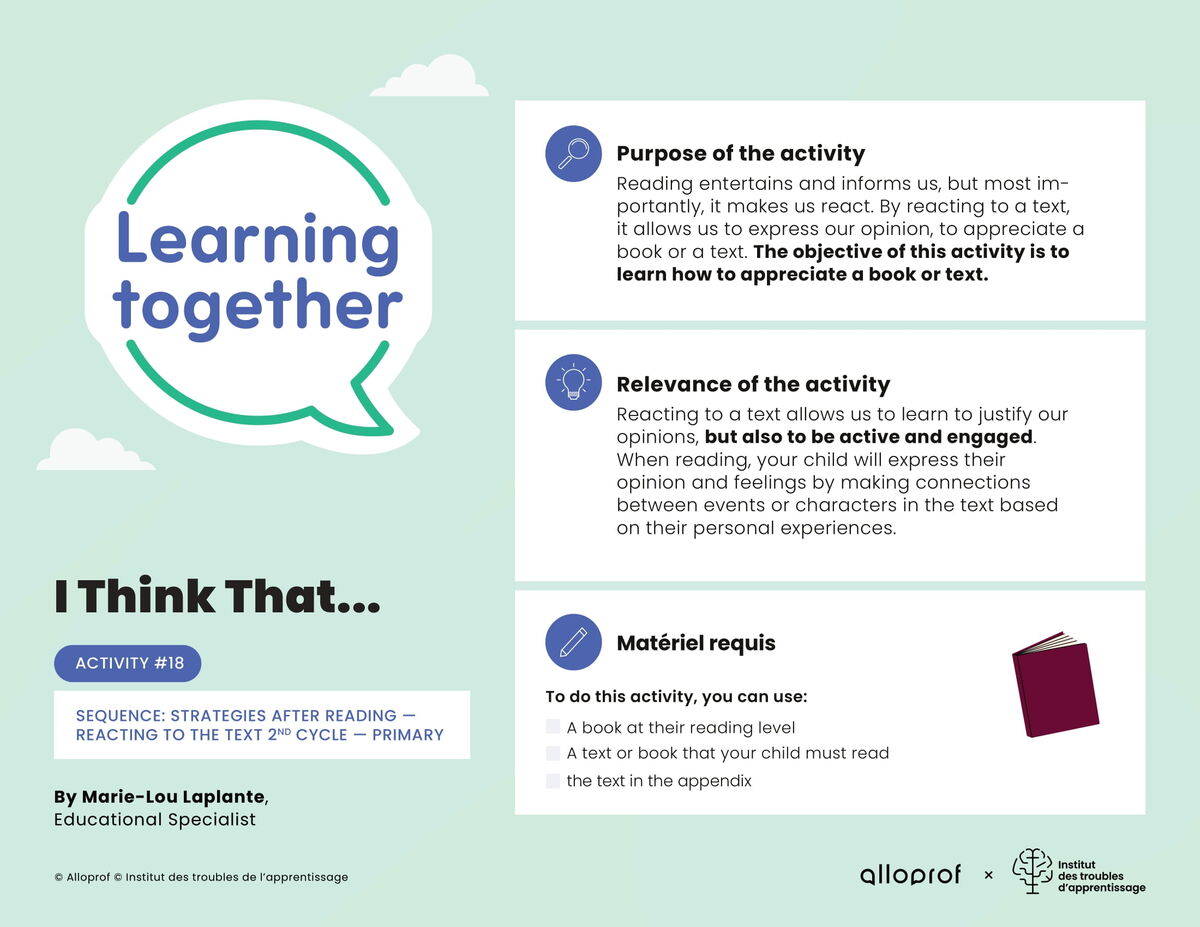
Activity #18 : I Think That...
Well done! You’ve made it to the final activity! This activity asks your child to share their thoughts on what they’ve read and connect it to their own experiences. This reflection will help them engage with their reading at a deeper level and develop a more personal understanding of the text.
Learn more about the Learning Together topic
This sequence is part of a collection of tools and resources to help your child develop reading, writing, and math skills.
Check out our featured topic Learning Together to explore our entire collection of activities!