Did you know that proficient, confident readers are especially well equipped to succeed at school? In fact, the ability to read well has been closely linked to academic success—but it’s a complex skill that requires the reader to use several strategies. Our sequence of 15 simple activities will introduce effective reading strategies to your child, so they can build strong reflexes and become a proficient reader!
The activities are designed to fit easily into your family routine and to be done in order. They were created specifically to help children with learning disorders, but all children can benefit from them!
You will need:
- A pencil and a highlighter
- Story (attached)
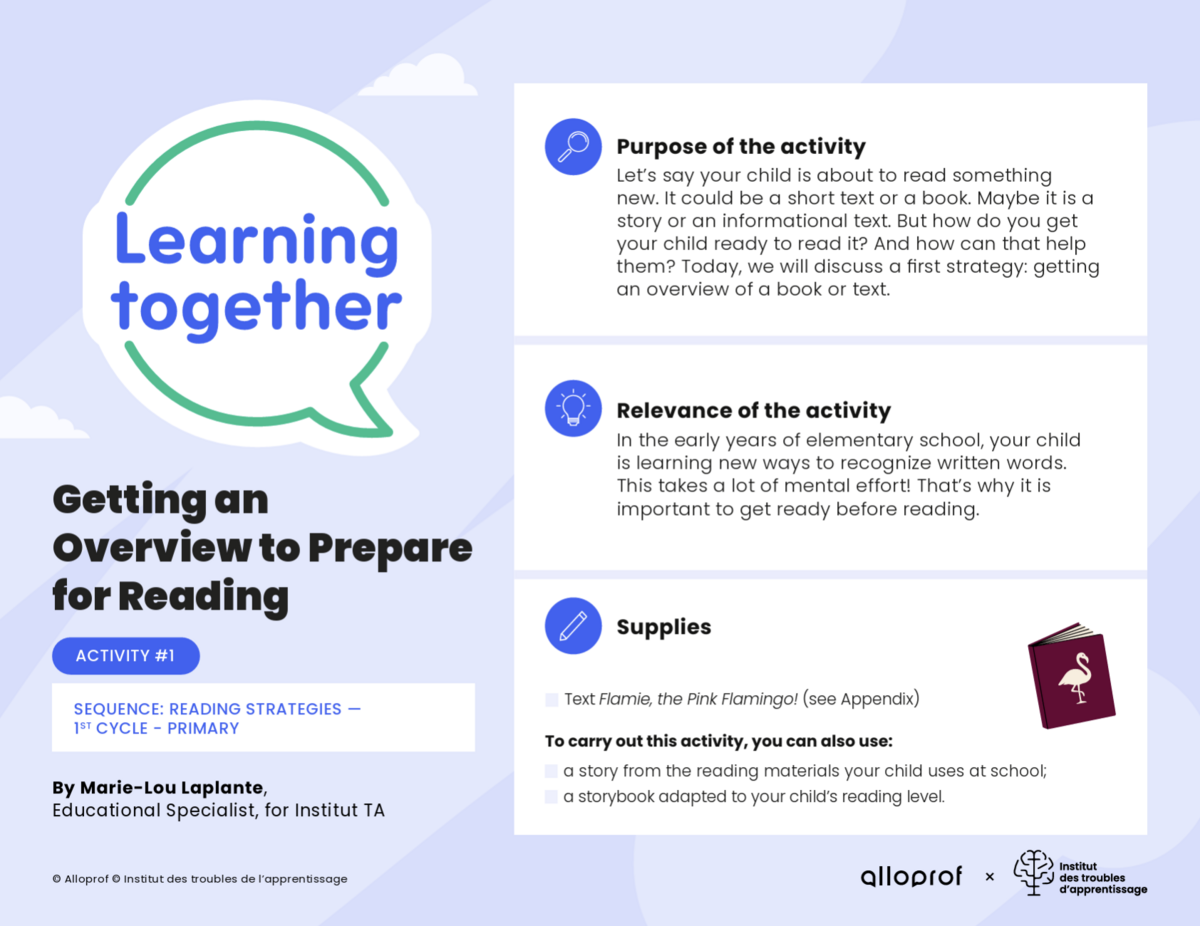
Activity #1: Getting an Overview to Prepare for Reading
This activity introduces the 1st strategy: getting an overview. It will teach your child to prepare their reading by gathering visual and text-based clues before they start and using their knowledge to predict what is in the text. By taking a few minutes to explore the cover page, title, and back of the book, you can uncover all kinds of clues!
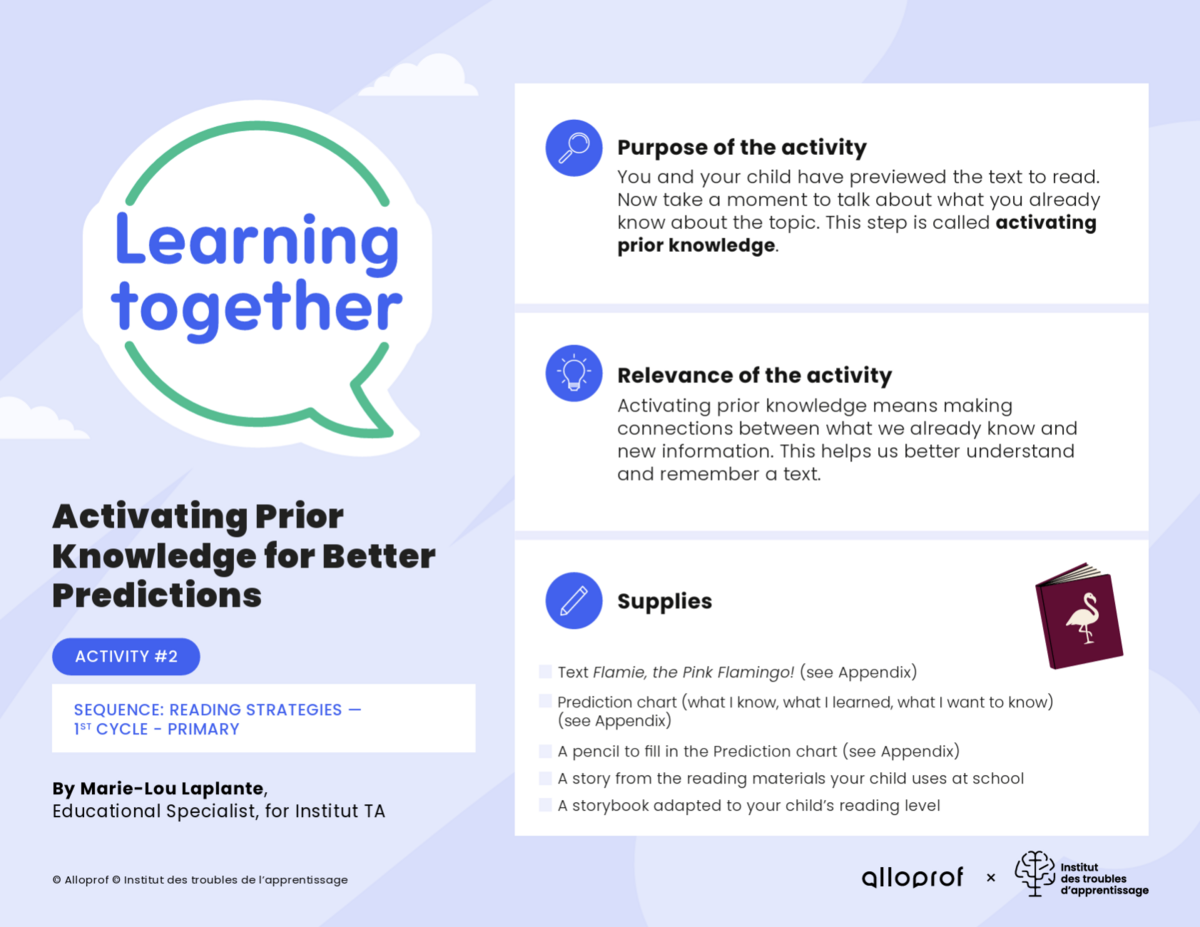
Activity #2: Activating Prior Knowledge for Better Predictions
This activity introduces your child to a 2nd strategy: activating prior knowledge. It will teach them to use what they already know about a topic covered in a text and make predictions about what will be presented in the book.
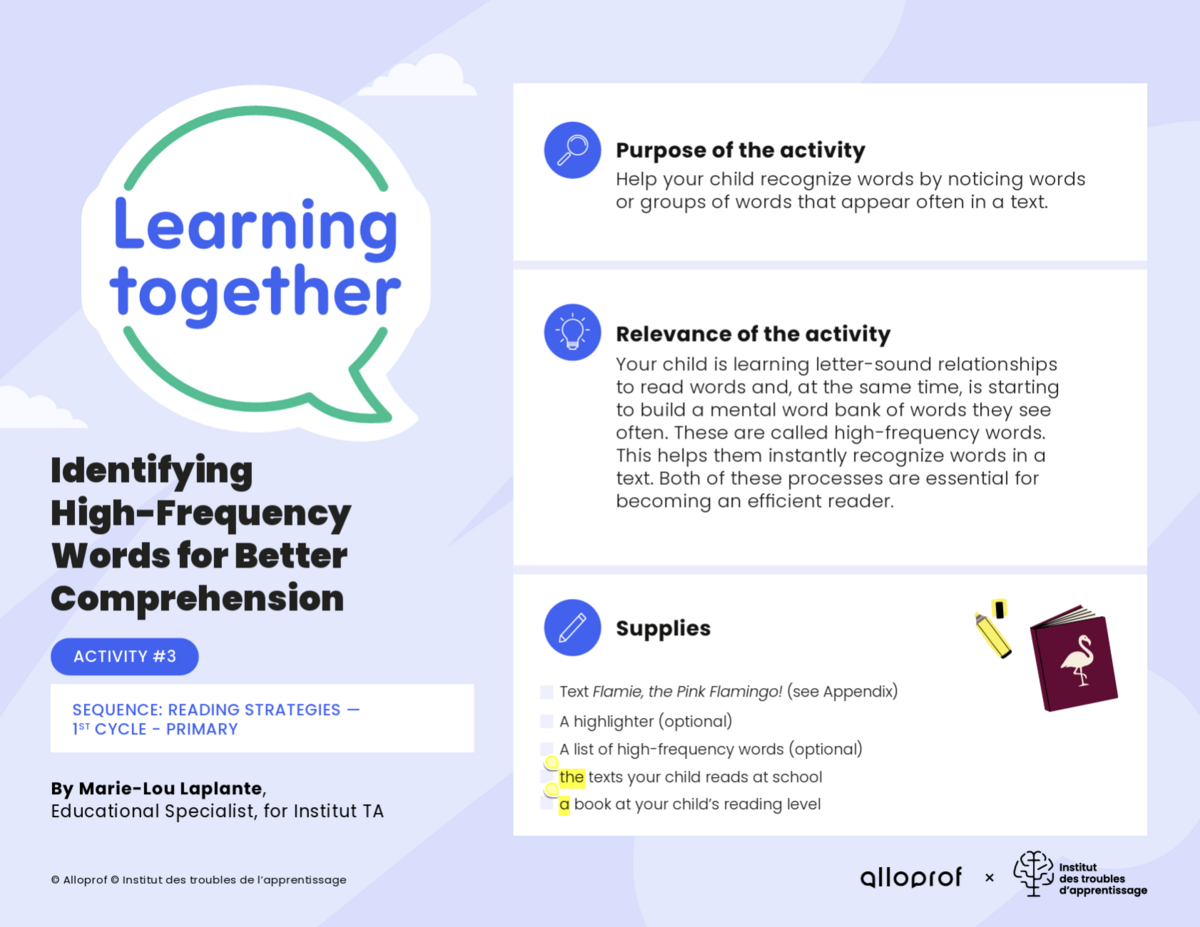
Activity #3: Identifying High-Frequency Words for Better Comprehension
Introduce your child to a 3rd strategy: identifying high-frequency words. This activity helps your child build a mental lexicon so they can quickly spot frequently used words in a text, which improves reading fluency.
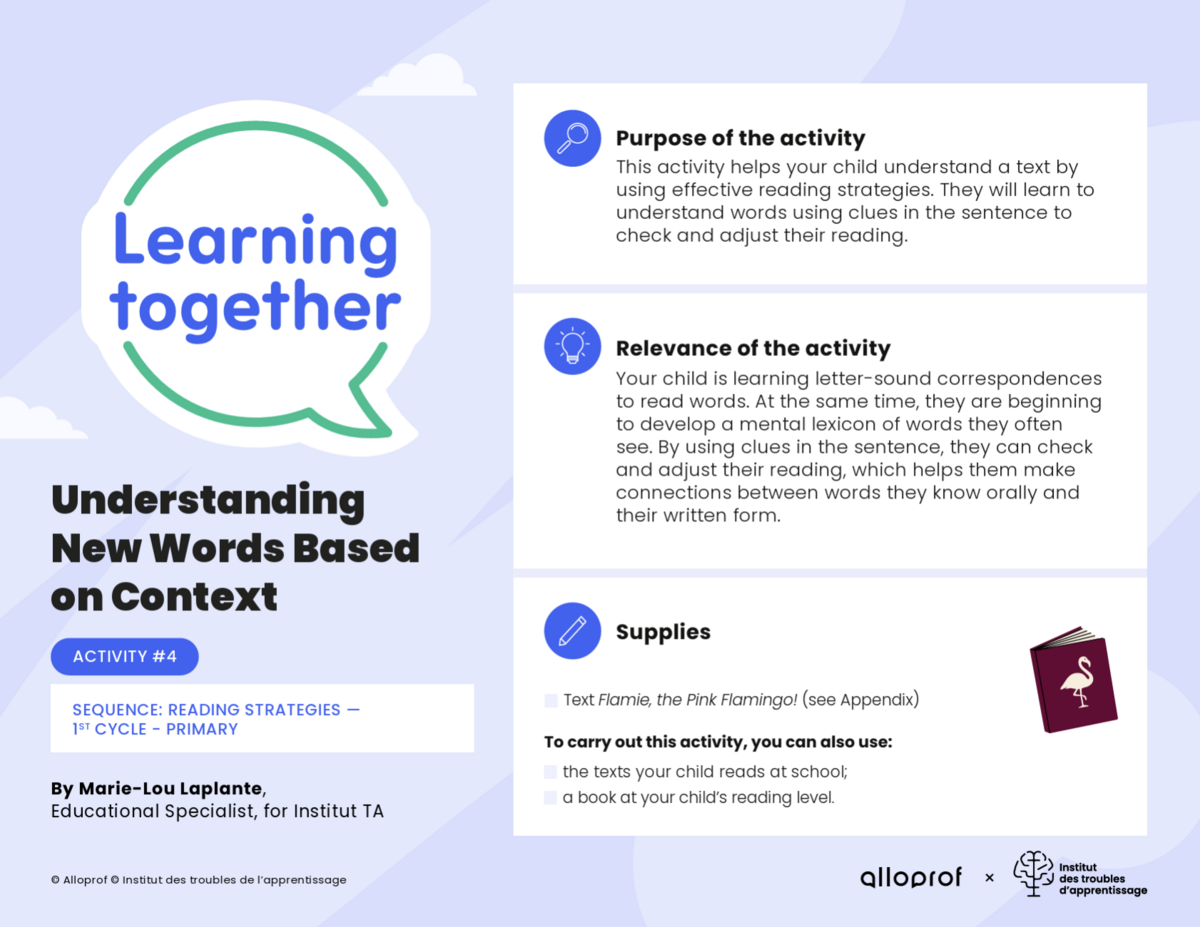
Activity #4: Understanding New Words Based on Context
Now discover a 4th strategy: understanding new words based on context. Have your child use clues in the sentence to identify difficult words and check their meaning as they read.
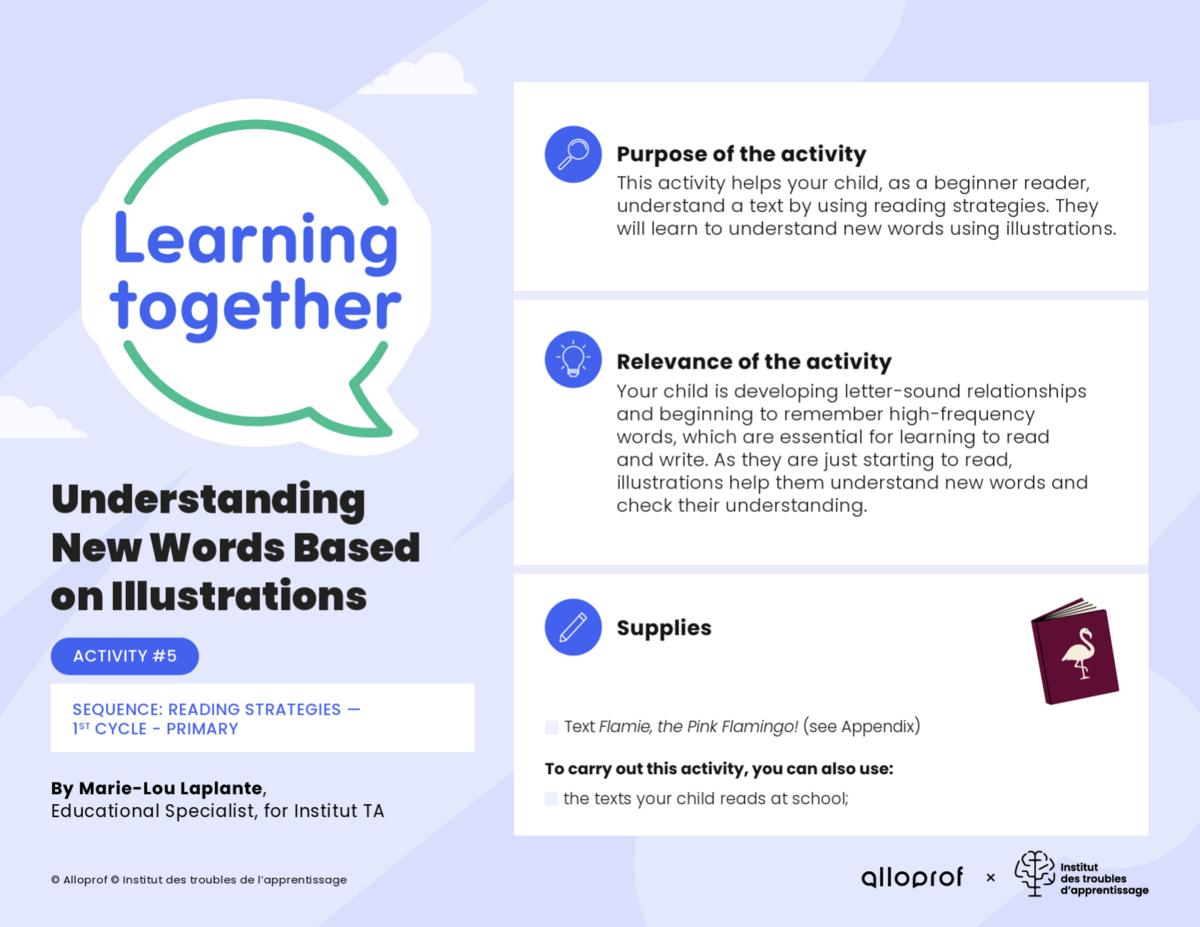
Activity #5: Understanding New Words Based on Illustrations
This activity introduces another reading strategy: understanding new words based on illustrations. By using the pictures to figure out difficult words, your child will be able to validate their reading hypotheses and better understand what they’re reading.
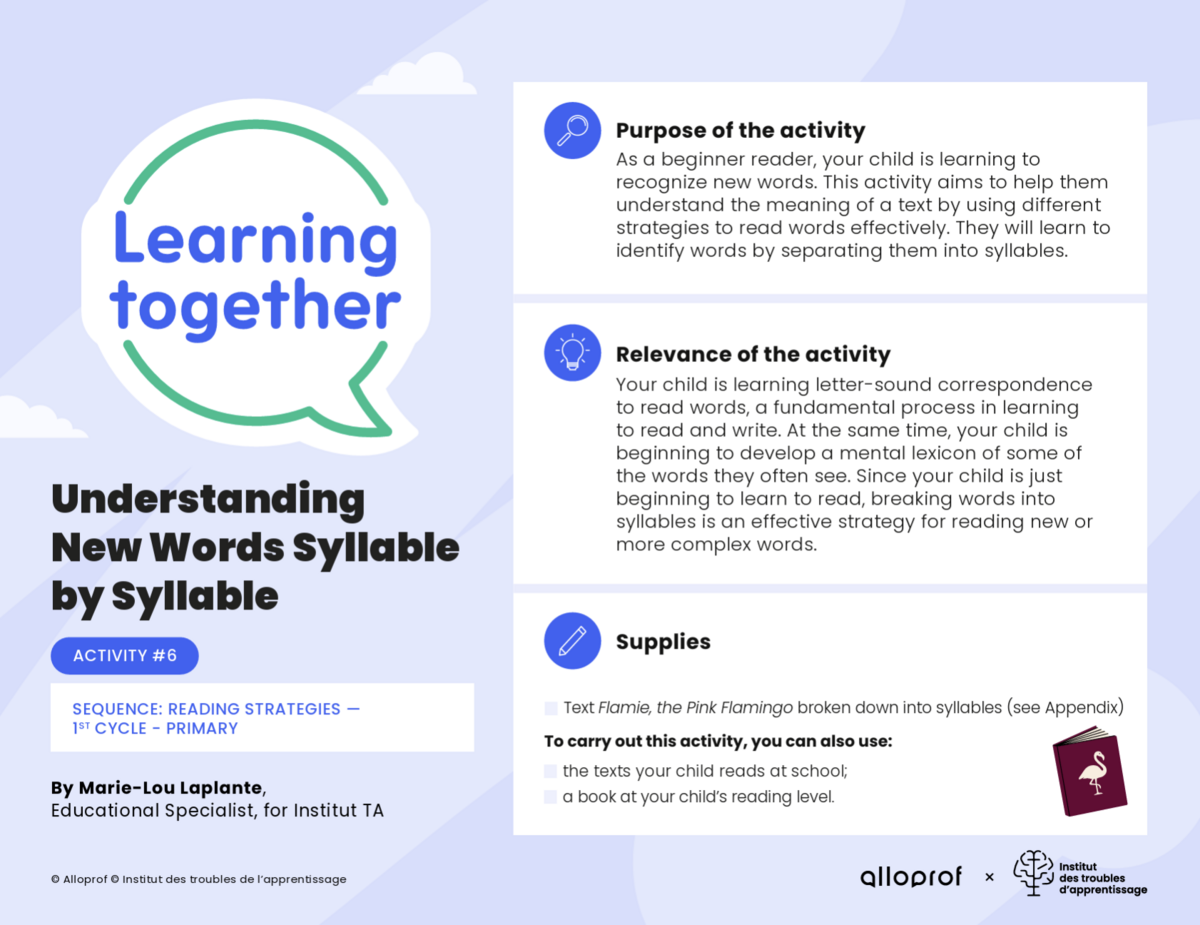
Activity #6: Understanding New Words Syllable by Syllable
This activity introduces a 6th strategy: understanding new words syllable by syllable. Since your child’s letter-sound correspondences are still developing, splitting up words into syllables is an effective way for them to decode new or longer words. By practising this method, your child will memorize new words more easily and become a more efficient and independent reader.
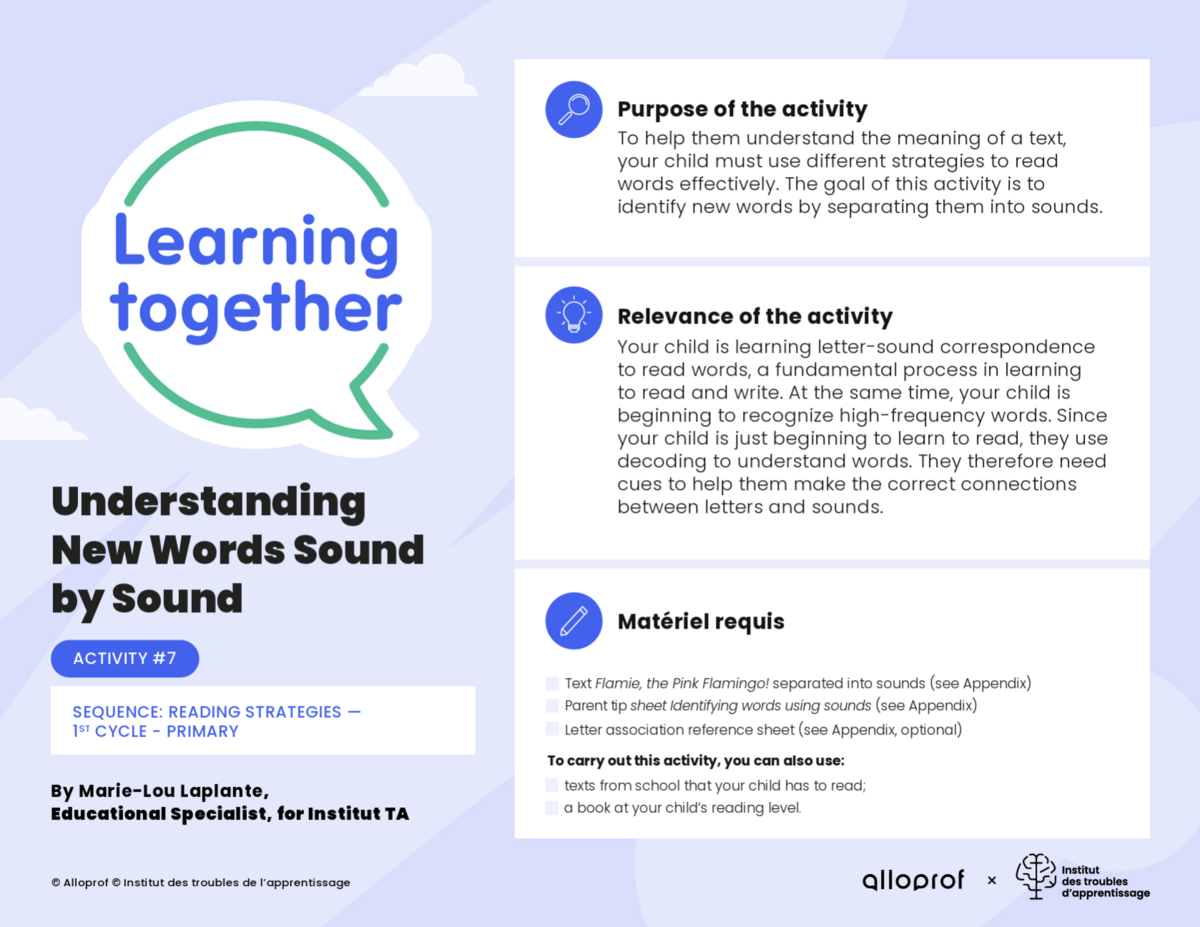
Activity #7: Understanding New Words Sound by Sound
Activity #7: Understanding New Words Sound by Sound
This activity is similar to the previous one, providing a strategy for decoding words. But this time, instead of splitting up a word into syllables, your child will try understanding new words sound by sound. By breaking down complex words into smaller sounds, they will become better at recognizing words automatically with repetition.
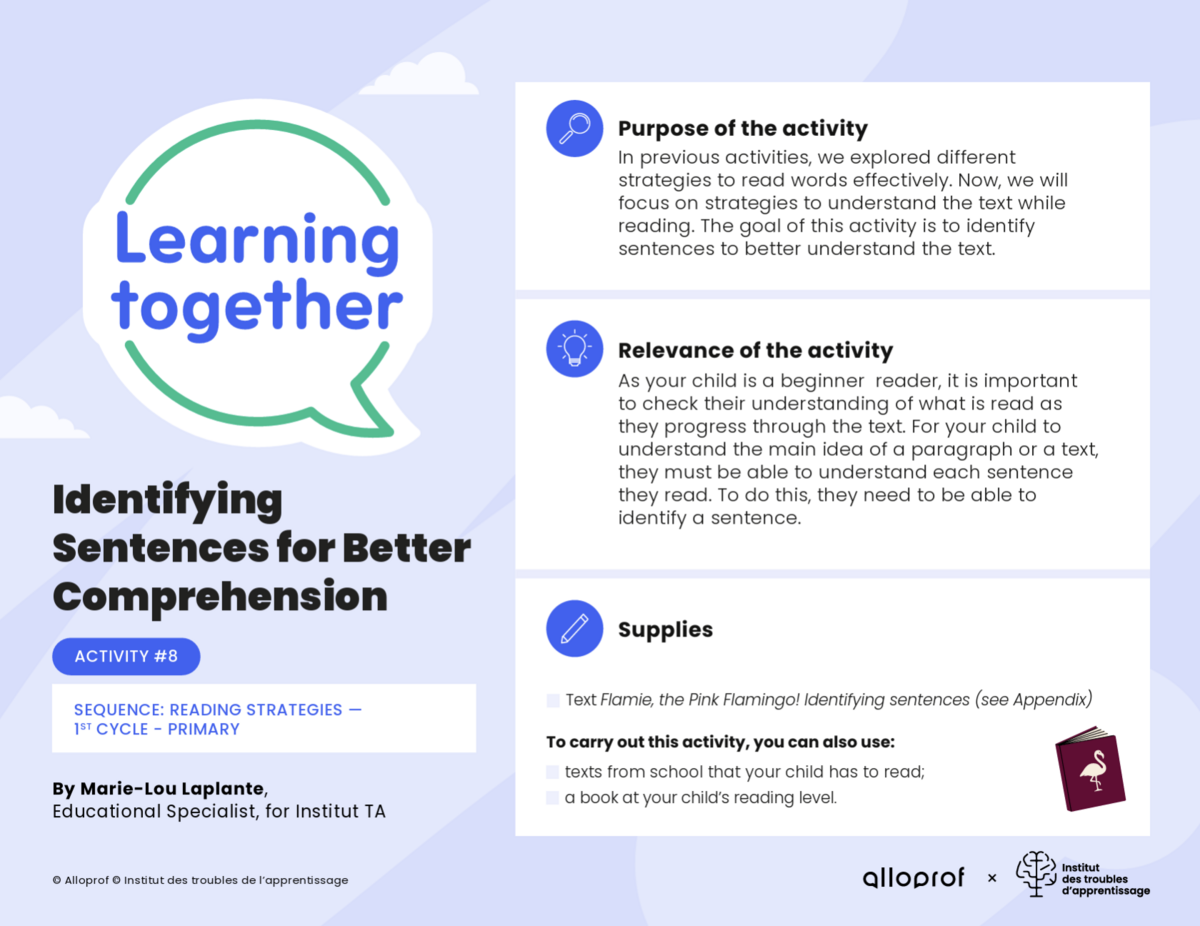
Activity #8: Identifying Sentences for Better Comprehension
Activity #8: Identifying Sentences for Better Comprehension
Discover another reading strategy with your child: identifying sentences for better comprehension.
Your child needs to understand each sentence individually, using visual cues like capitalization and punctuation, before they can grasp the text they are reading as a whole. Once they know where an idea starts and ends, they can think about who’s being talked about and what’s being said, which helps develop comprehension skills.
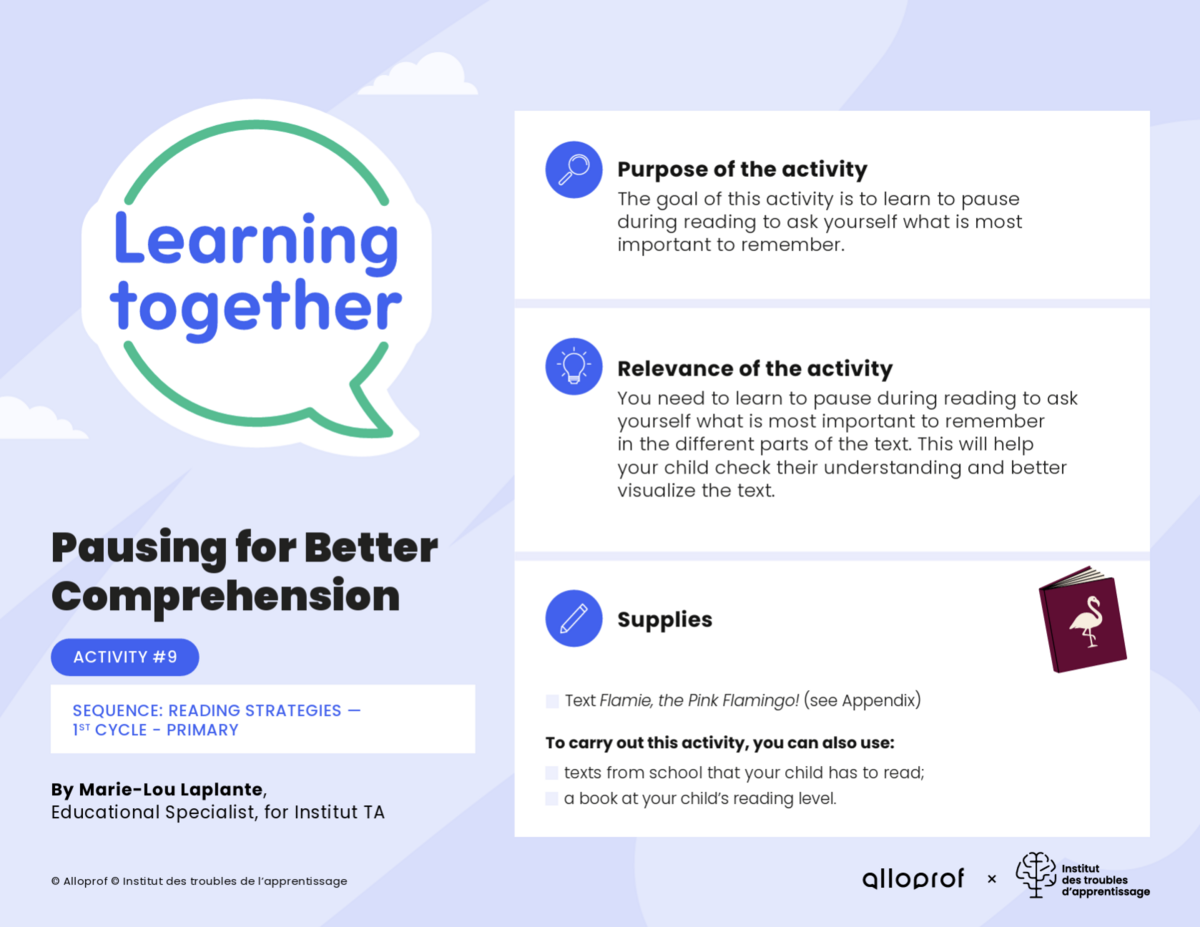
Activity #9: Pausing for Better Comprehension
Activity #9: Pausing for Better Comprehension
This activity introduces a 9th strategy: pausing for better comprehension. It teaches young readers to pause regularly to reflect on what they understand so far and tease out the important information. This strategy will help readers better understand the text and be able to see it in their mind.
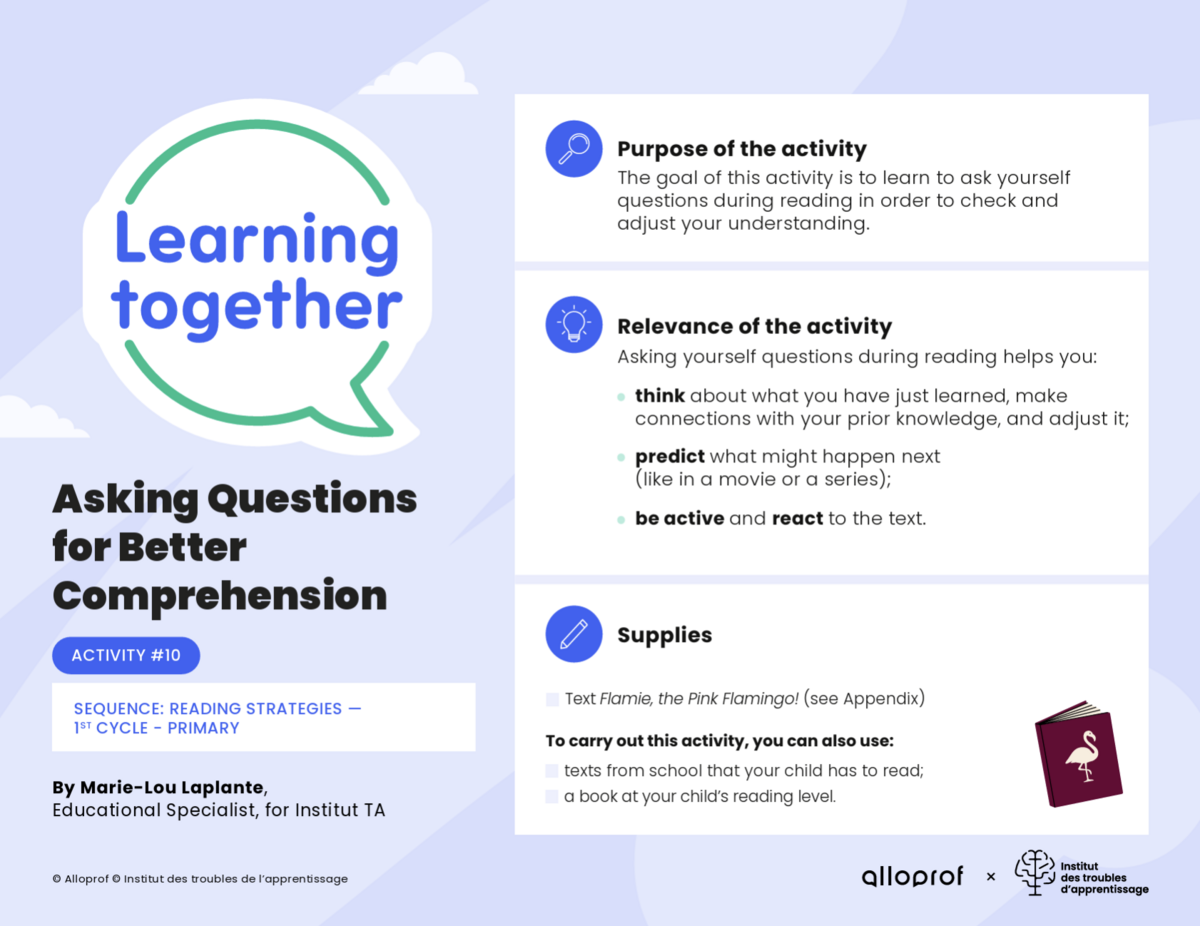
Activity #10: Asking Questions for Better Comprehension
This 10th strategy, asking questions for better comprehension, will encourage your child to ask themself questions as they read a text to check their knowledge and understanding. This type of self-reflection is easier than you might think; it’s all about making connections between new and prior knowledge, anticipating what will come next, and becoming aware of your reactions as you read.
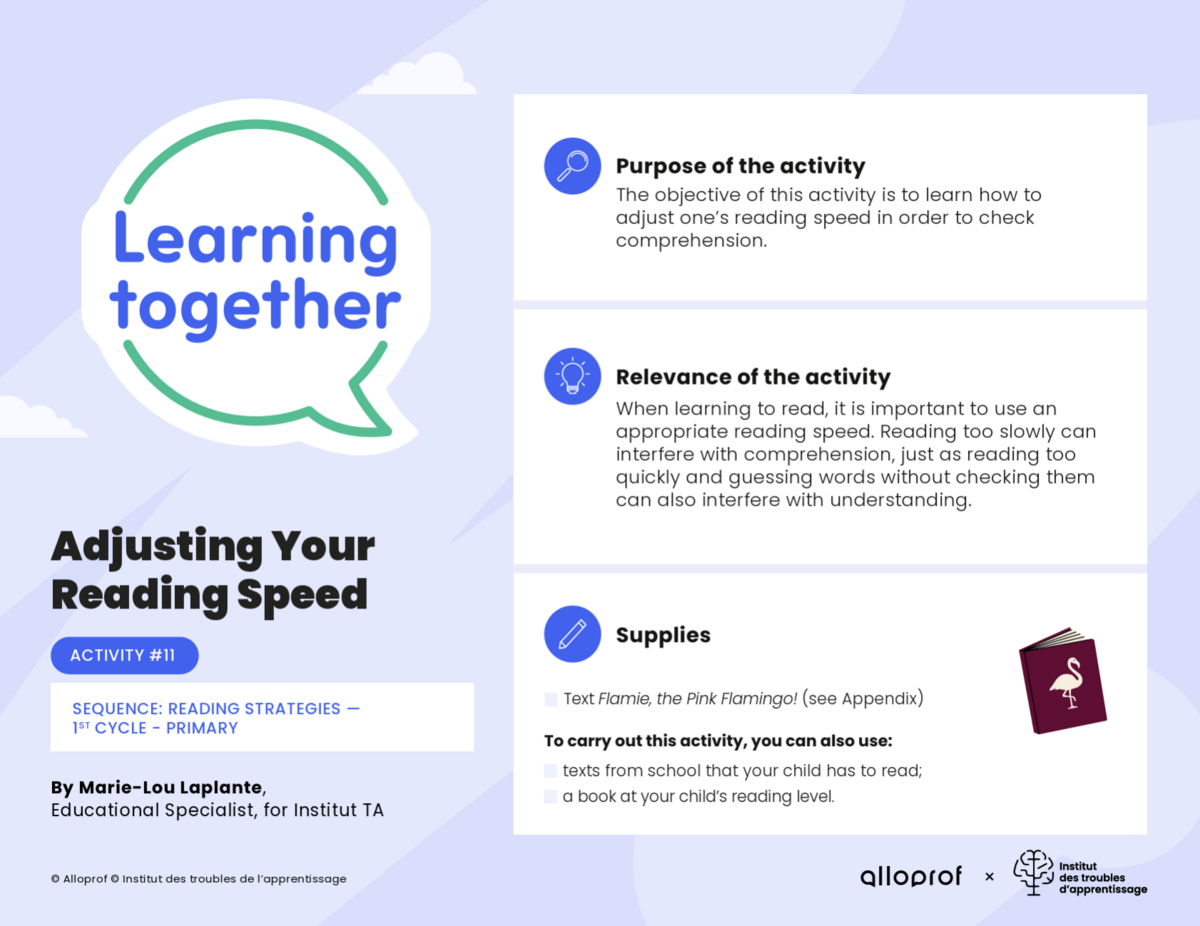
Activity #11: Adjusting Your Reading Speed
The aim of this strategy is to learn to adjust your reading speed so that you aren’t going too fast or too slow. If you read too slowly, you may forget the meaning of the sentences and overall text. But if you read too quickly, you might miss certain details or decode words incorrectly. This activity is a great tool for finding the right pace to supercharge your reading!
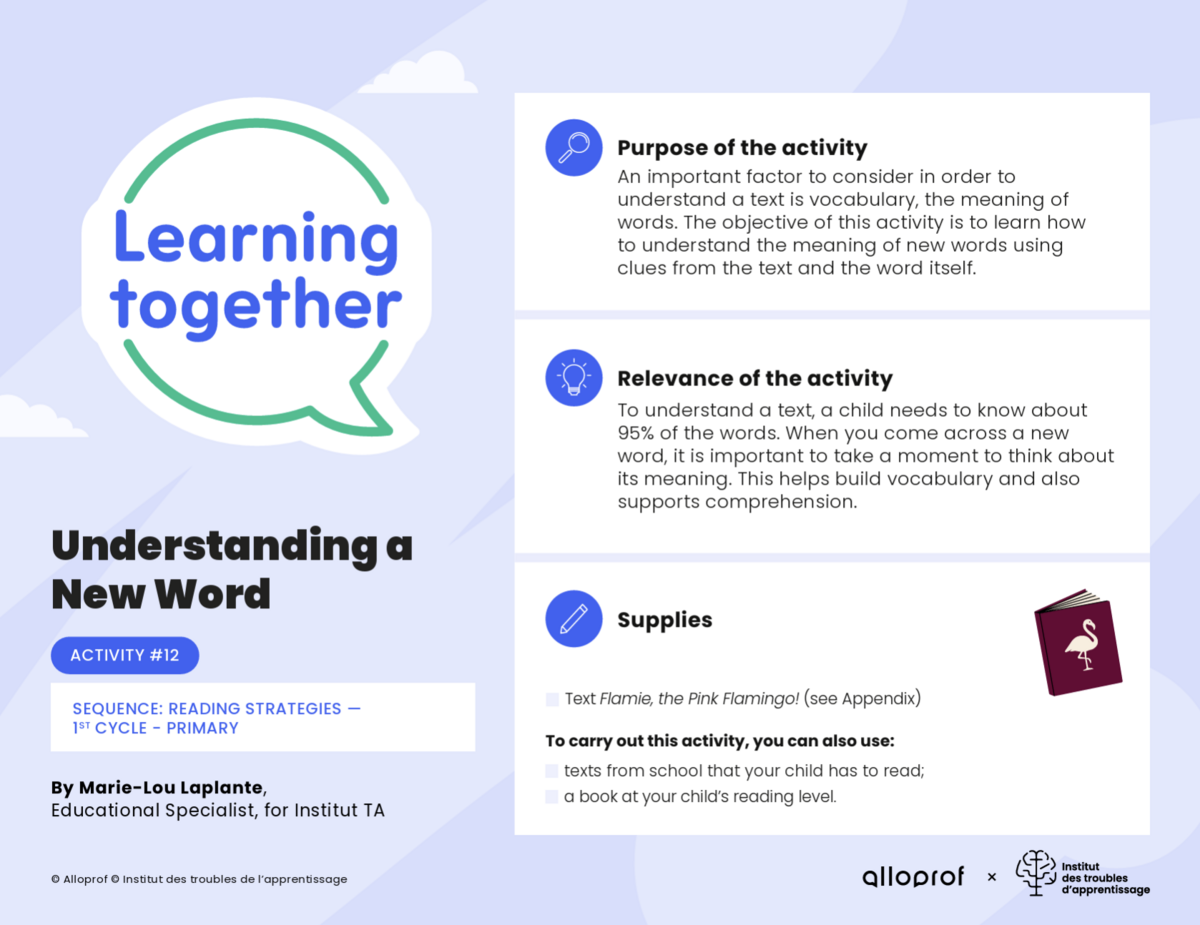
Activity #12: Understand a New Word
There are several strategies for understanding a new word. In this activity, readers look at whether there’s a smaller word contained within a bigger word, then look at what comes before and after it. These clues are invaluable for figuring out a challenging word.
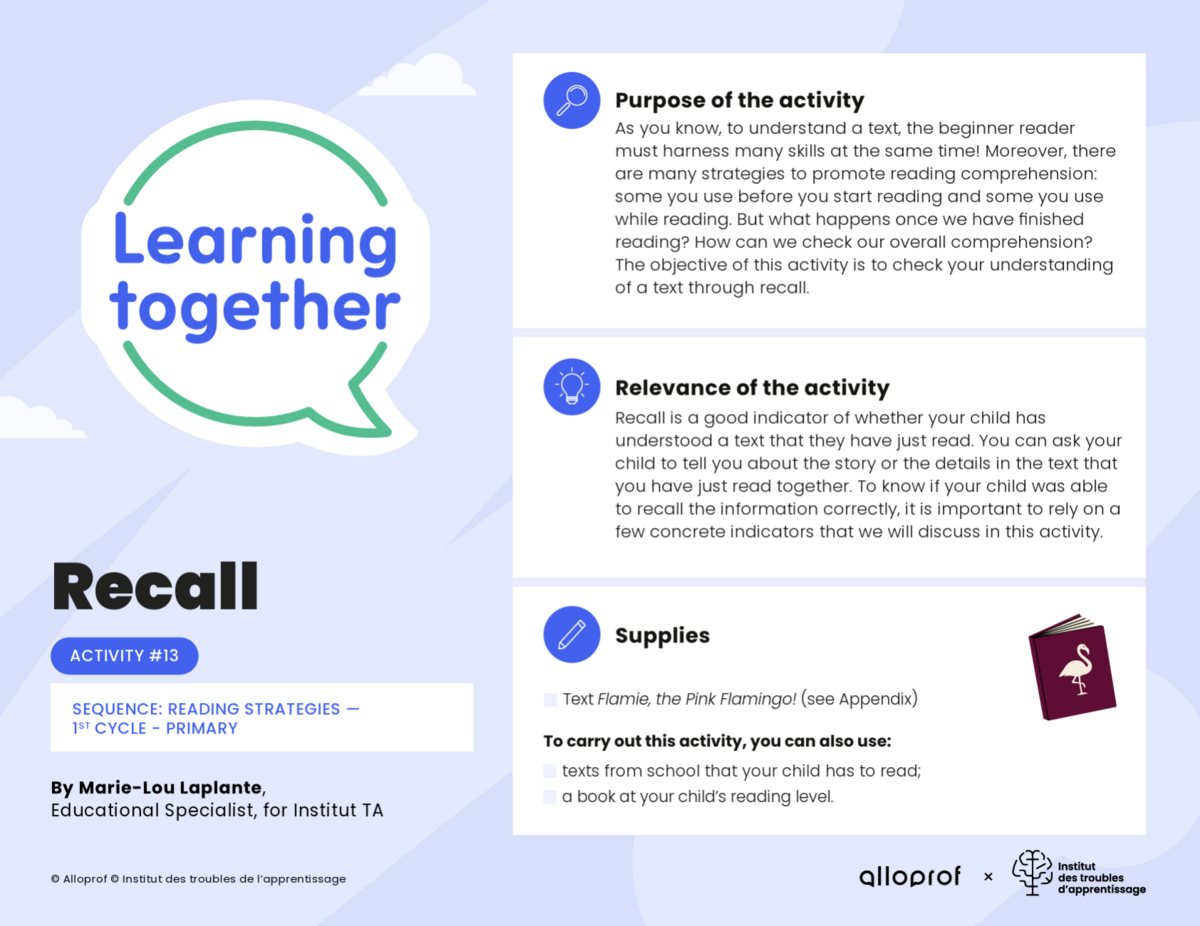
Activity #13: Recall
Many reading strategies are meant to be used before or during a reading session, but some are great to use afterwards. For example, the recall strategy involves checking your understanding of the text in its entirety once you’ve finished reading it. In this activity, your child will retell the events of a story as if it were a movie and remember its main themes.
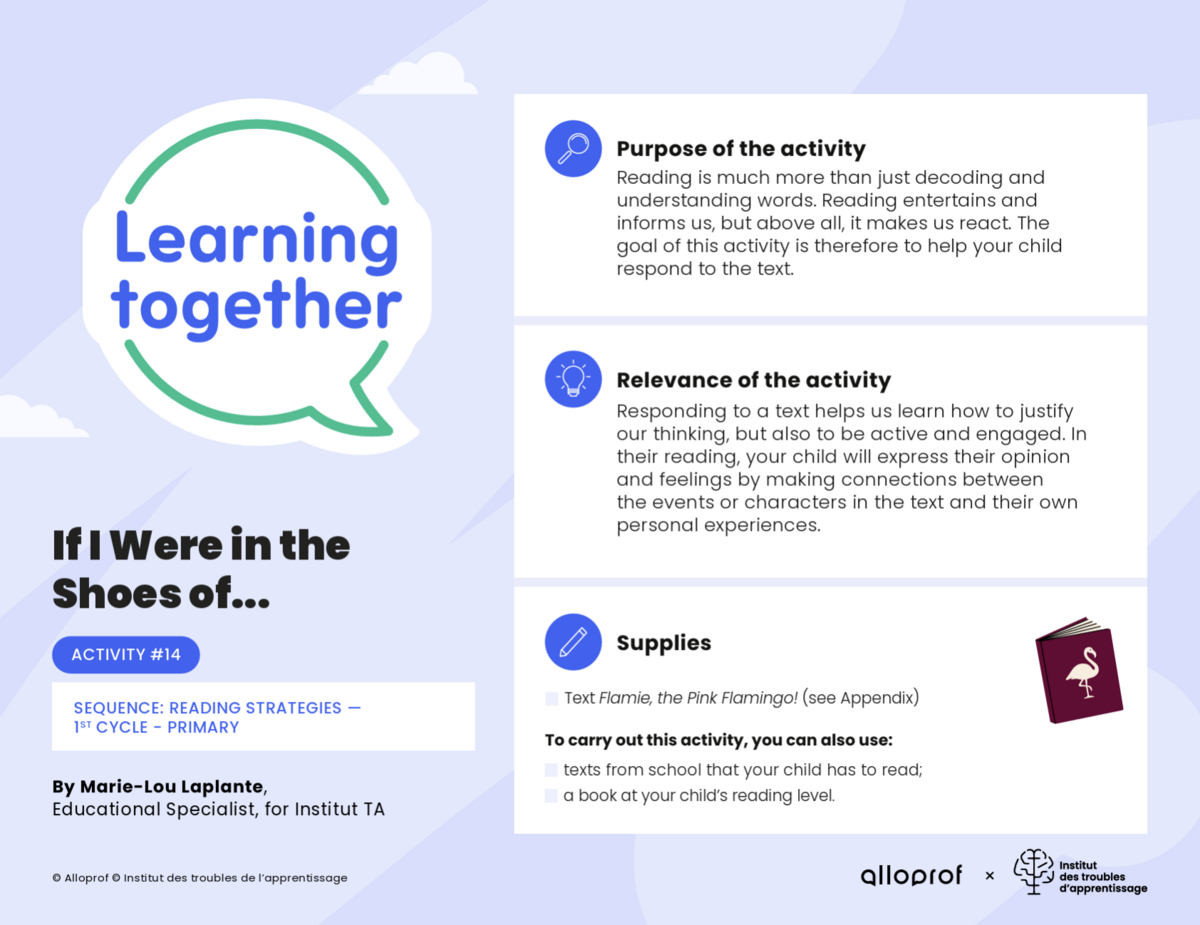
Activity #14: If I Were in the Shoes of...
This activity invites your child to explore a 14th strategy: reacting to the text. It provides an ideal opportunity for your child to express themself and share their thoughts on the story. Your role is to ask probing questions that will encourage them to develop their ideas. By taking this time to reflect after reading, your child learns to relate to a text and its content, and to better communicate their feelings and reactions.
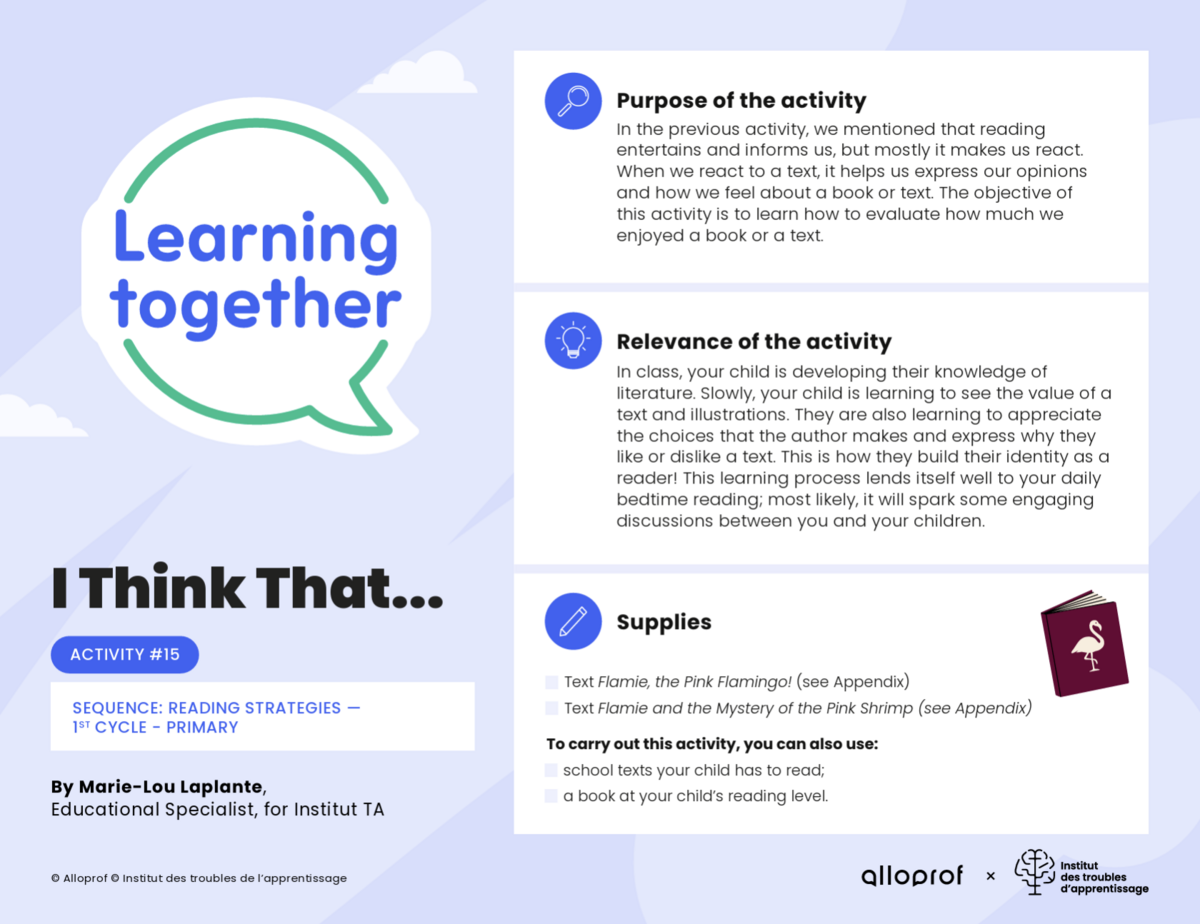
Activity #15: I Think That...
Great job! This is the last activity in this sequence. It aims to introduce a 15th reading strategy: appreciating a text. Your child will be asked to give their opinion on what they’ve read and justify it. It doesn’t matter whether they liked it or not! The point of the exercise is to be able to give valid reasons to support their opinion!
More on Learning Together Topic
This sequence is part of a collection of tools and resources to help your child develop literacy and numeracy skills.
Check out our Learning Together collection to discover more activities to support your child as they learn to read, write, and do math.
Other resources from Alloprof Parents
Check out our other resources to help your child learn to read.
These activities were created by learning specialist Marie-Lou Laplante for Institut TA.