Subjects
Grades
Short stories, just like the name says, are stories that are short. They focus on one main idea or event and can generally be read in one sitting.
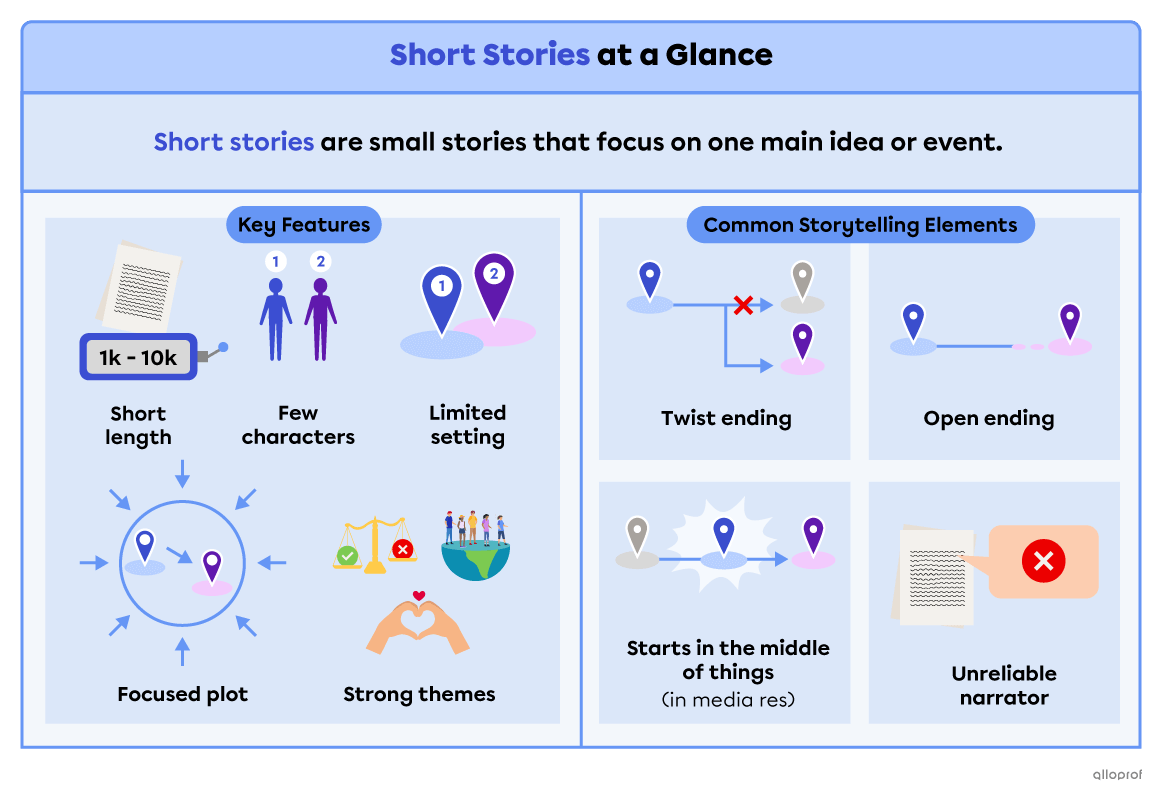
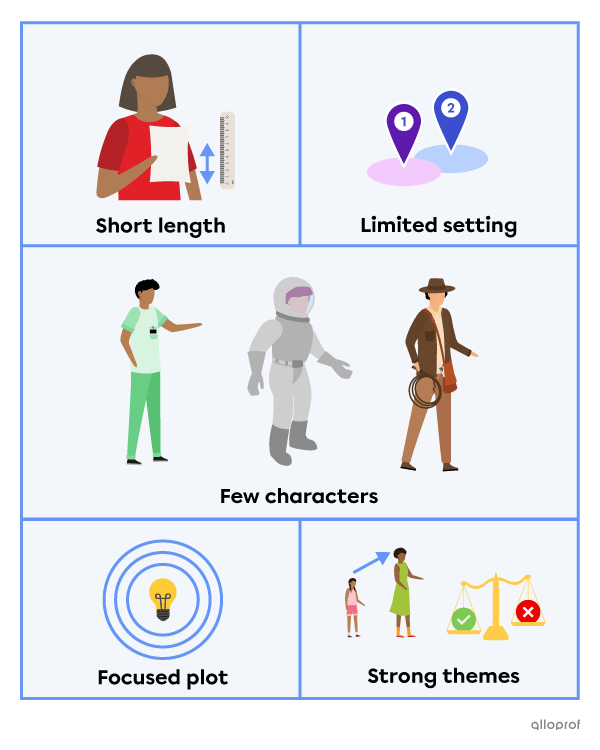
Here are the key features found in most short stories.
Keep in mind that not all short stories contain all of these features.
| Short length | 1000 to 10 00 words (3 to 30 pages) |
| Can be read in 1 sitting | |
| Few characters | 1 or 2 main characters |
| Easily identifiable and relatable | |
| Limited setting | 1 or 2 locations |
| Only necessary details are given | |
| Focused plot | Centered on 1 idea, incident or conflict |
| Revolve around the main character | |
| Strong themes | Explore big ideas and themes → For example: coming of age, courage, identity |

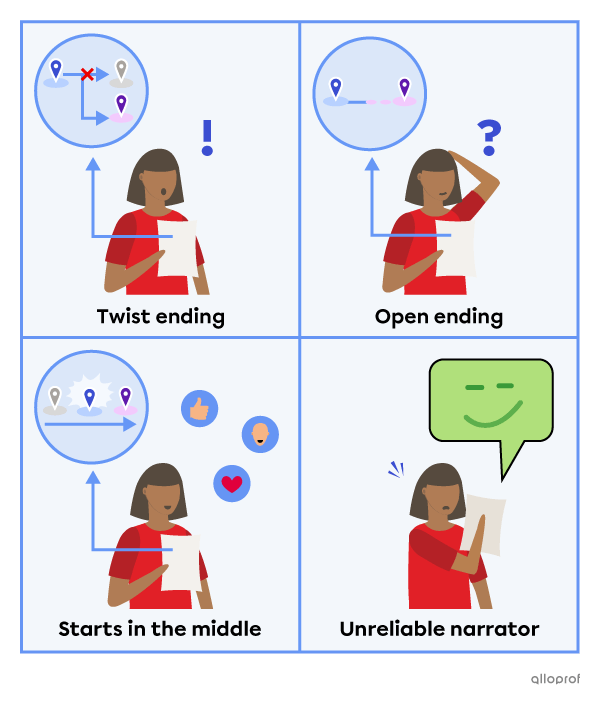
Here are some examples of storytelling elements often found in short stories.
| Twist ending | Presents an unexpected turn of events |
| Changes the reader’s perspective | |
| Creates surprise | |
| Reinforces themes | |
| Open ending | Presents an ending that leaves parts of the story unresolved |
| Leaves room for interpretation | |
| Sparks discussion | |
| Starts in the middle of things | Places the reader in the middle of the action |
| Literary device is known as in media res* *Latin for into the middle of things. | |
| Grabs reader’s attention | |
| Creates tension & mystery | |
| Unreliable narrator | A narrator that misleads the reader |
| Often used with a first-person narrator | |
| Creates suspense, surprise and plot twists |