Subjects
Grades
To access the other concept sheets in the Metropolis unit, check out the See Also section.
 100%
100%
 100%
100%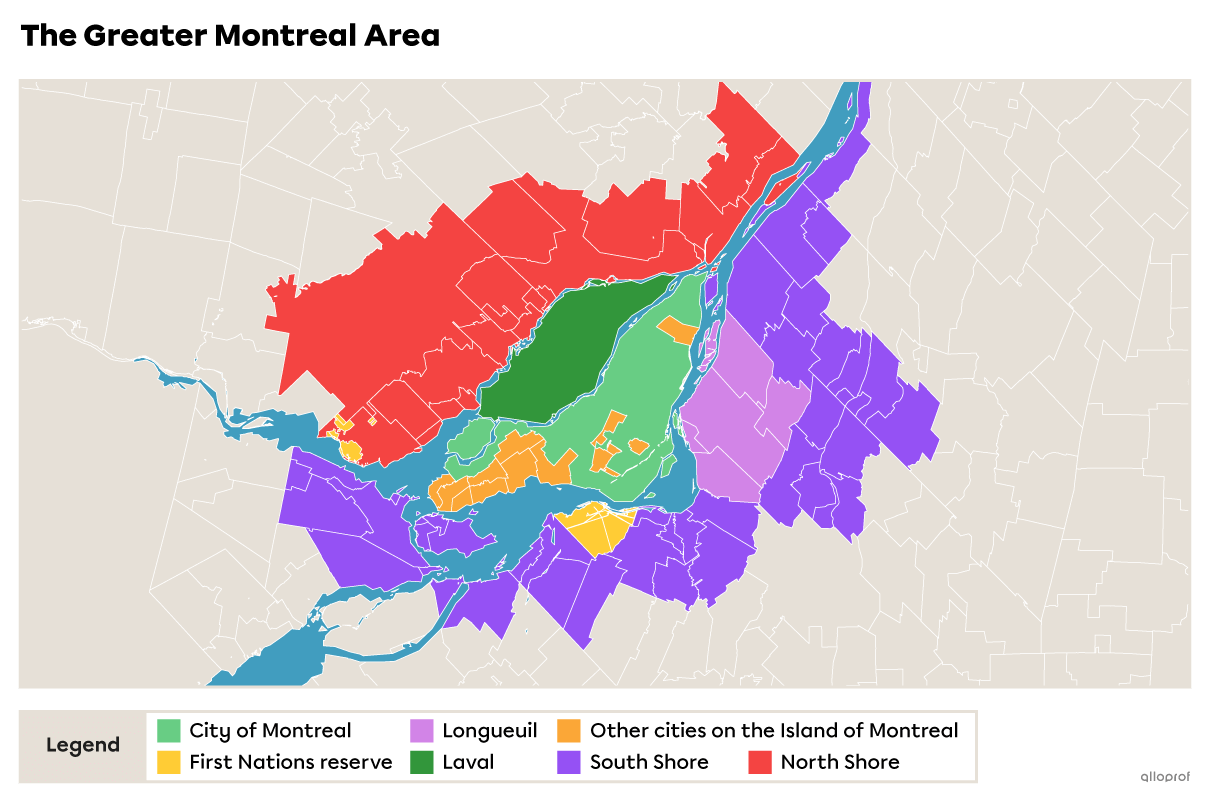 100%
100%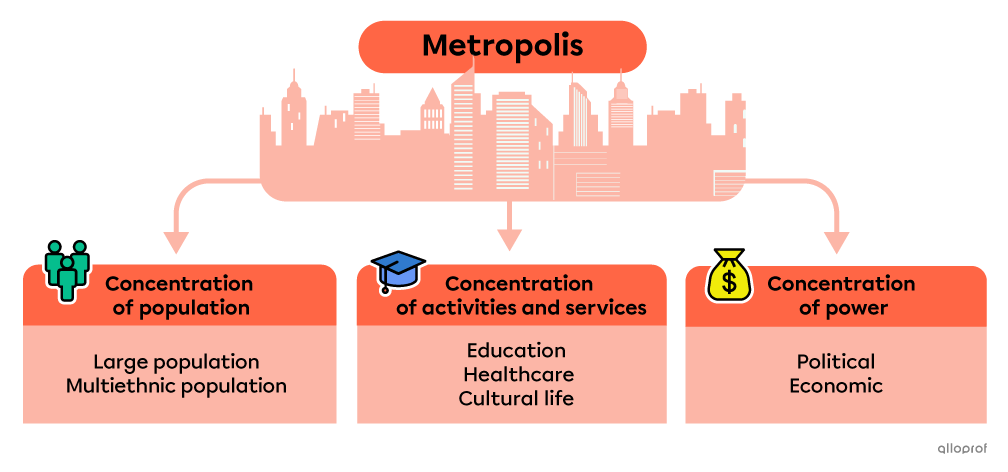 100%
100%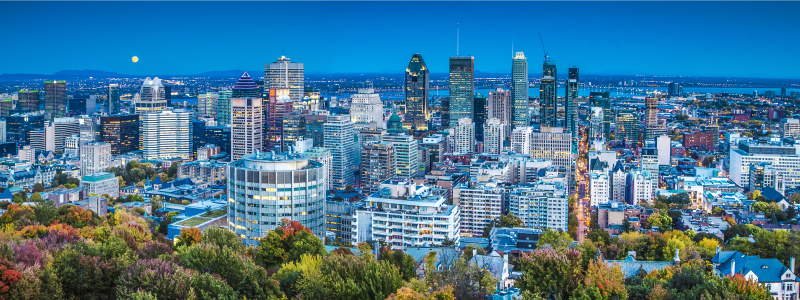 100%
100% 100%
100%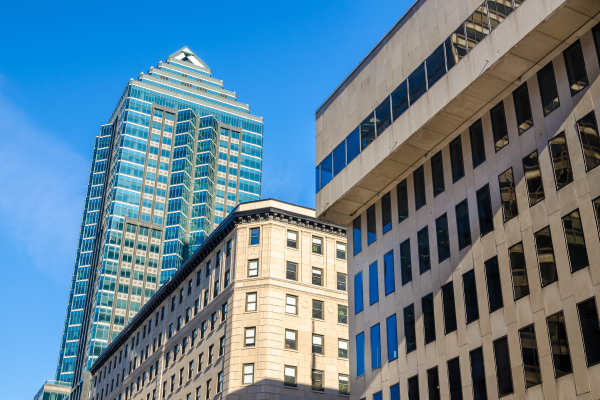 100%
100%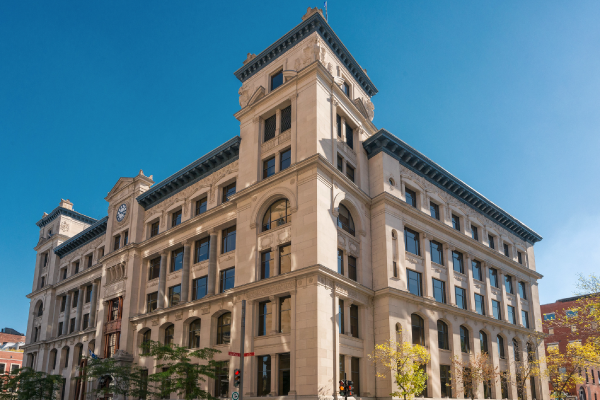 100%
100%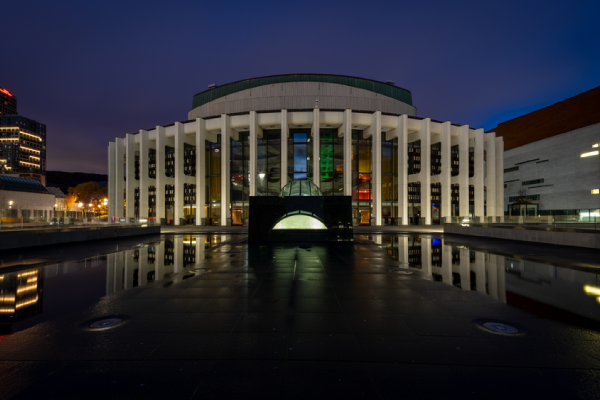 100%
100%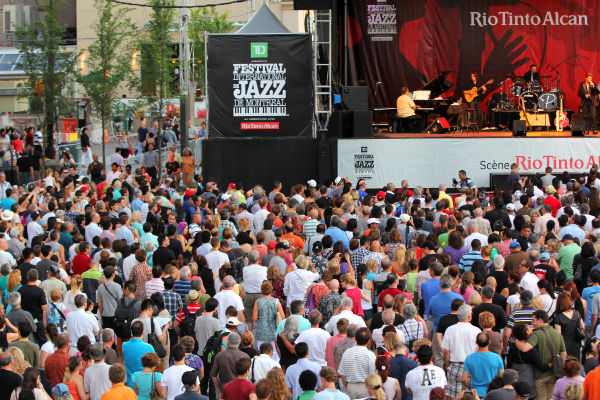 100%
100%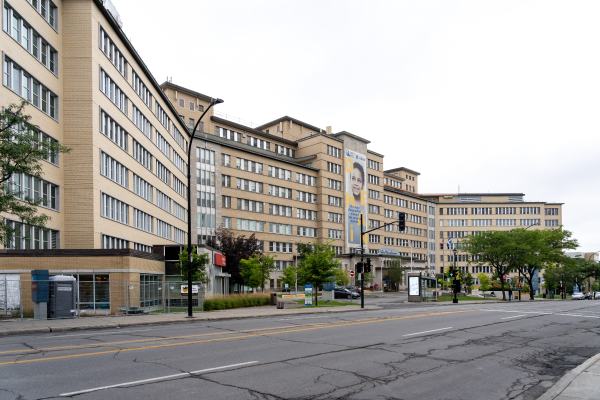 100%
100%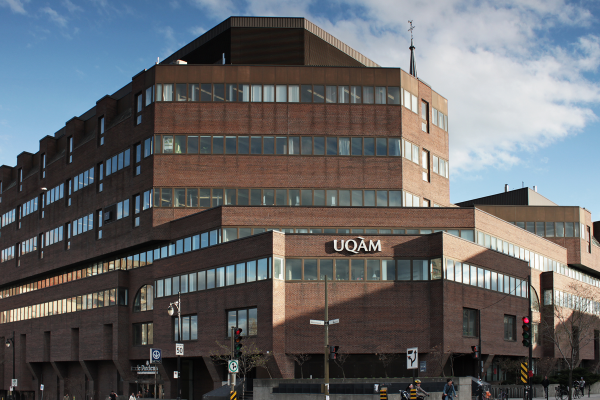 100%
100%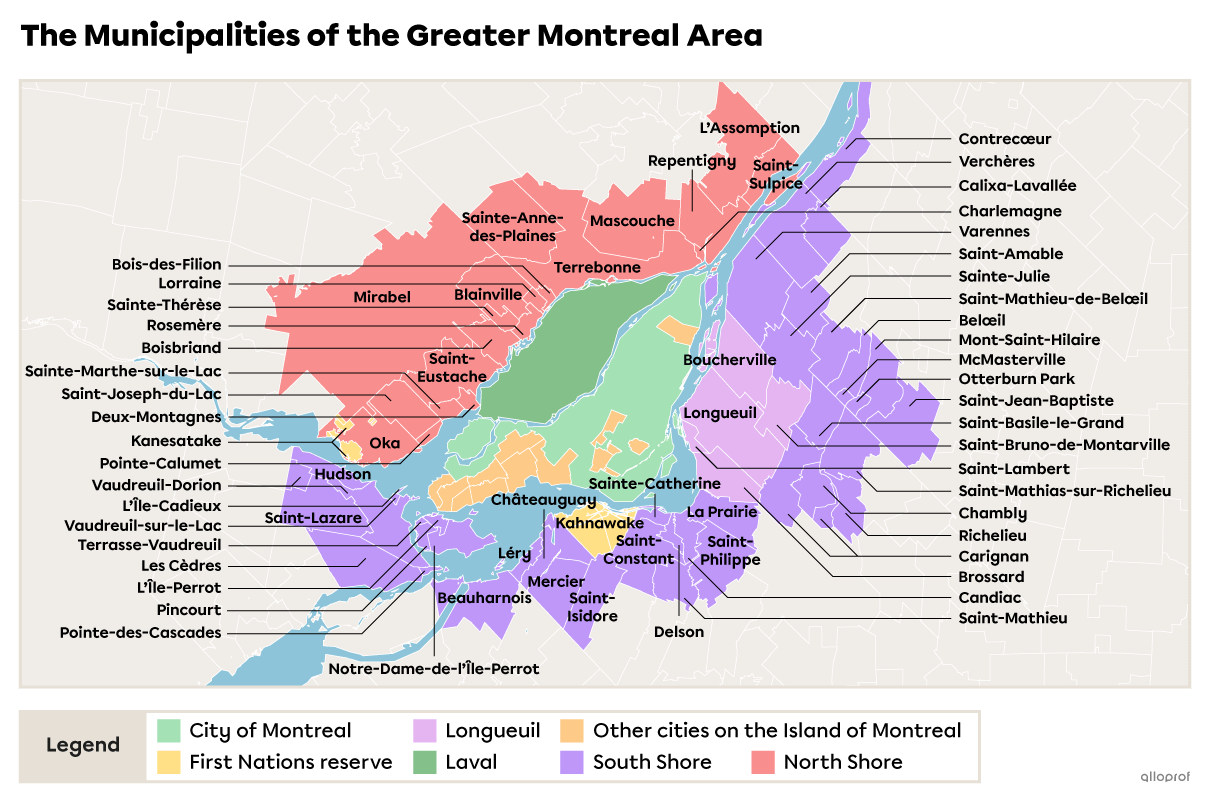 100%
100%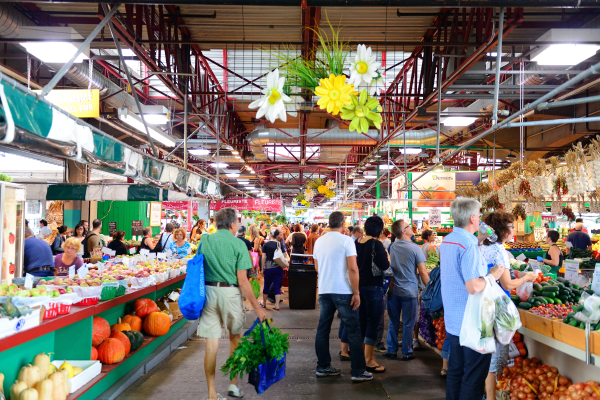 100%
100%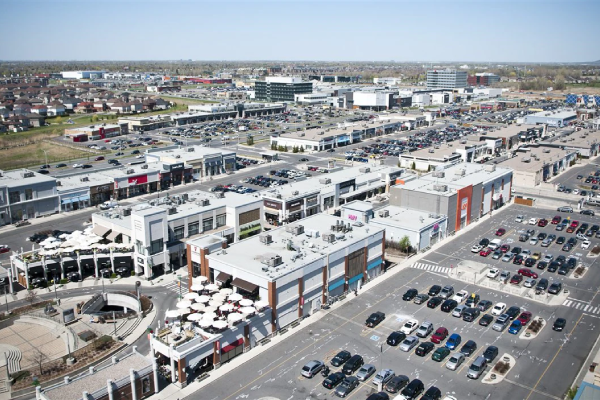 100%
100%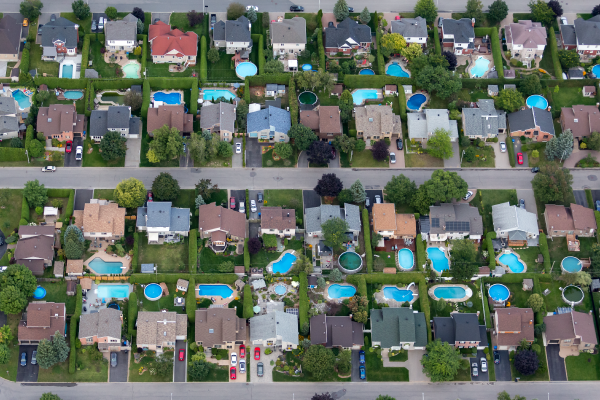 100%
100%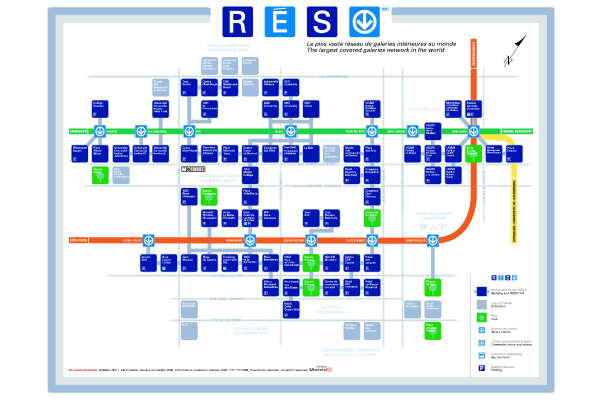 100%
100%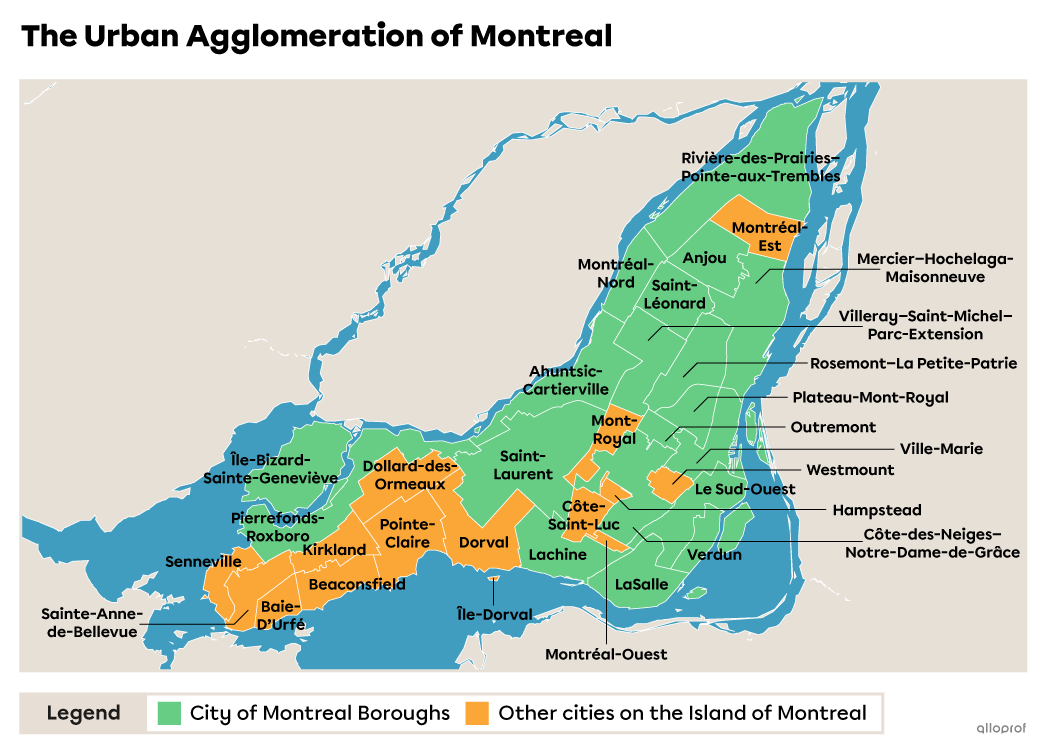 100%
100%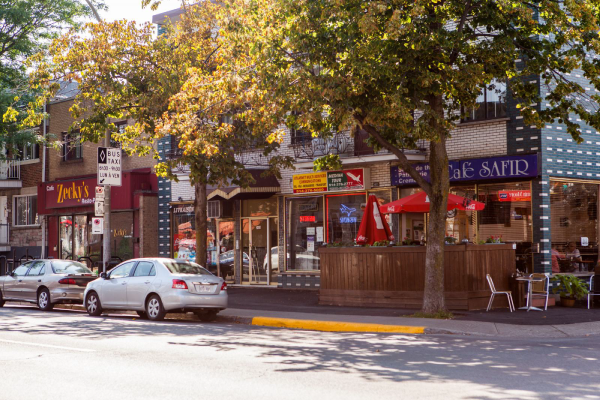 100%
100%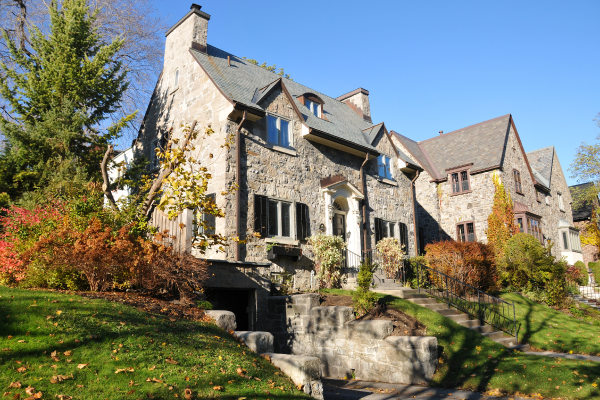 100%
100%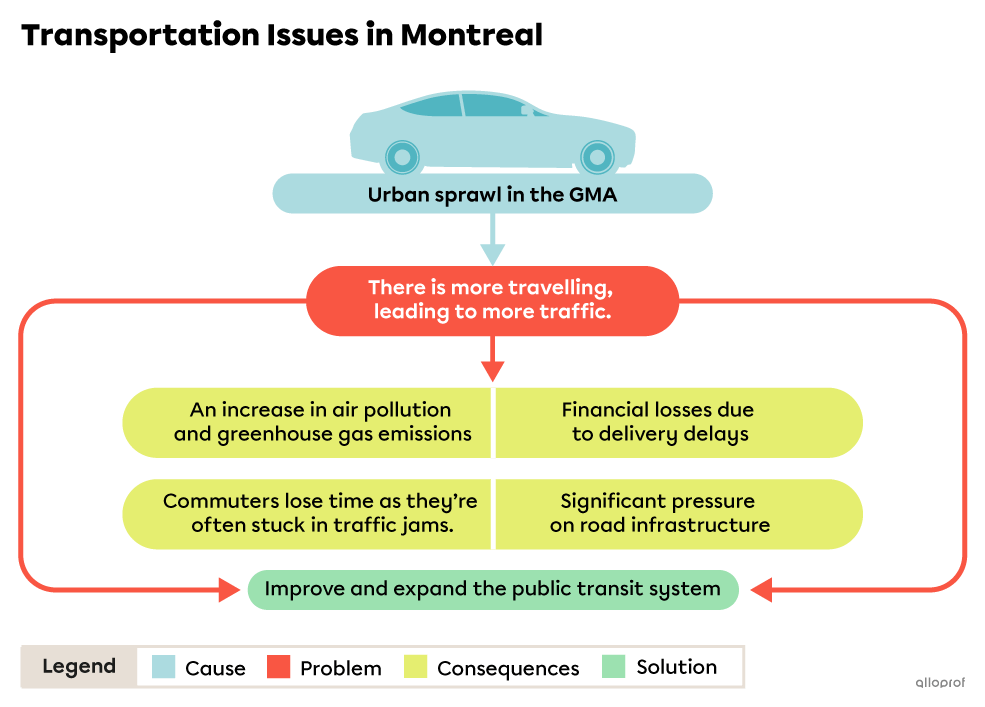 100%
100%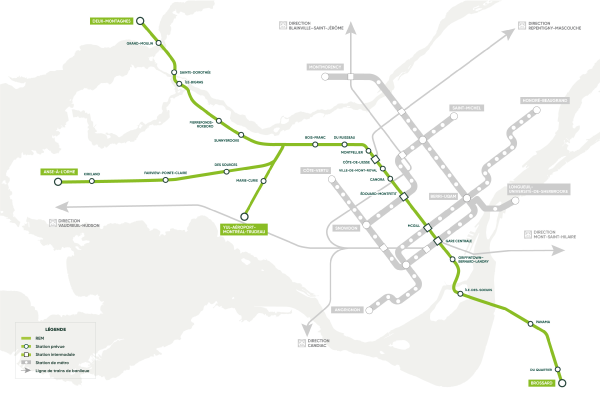 100%
100%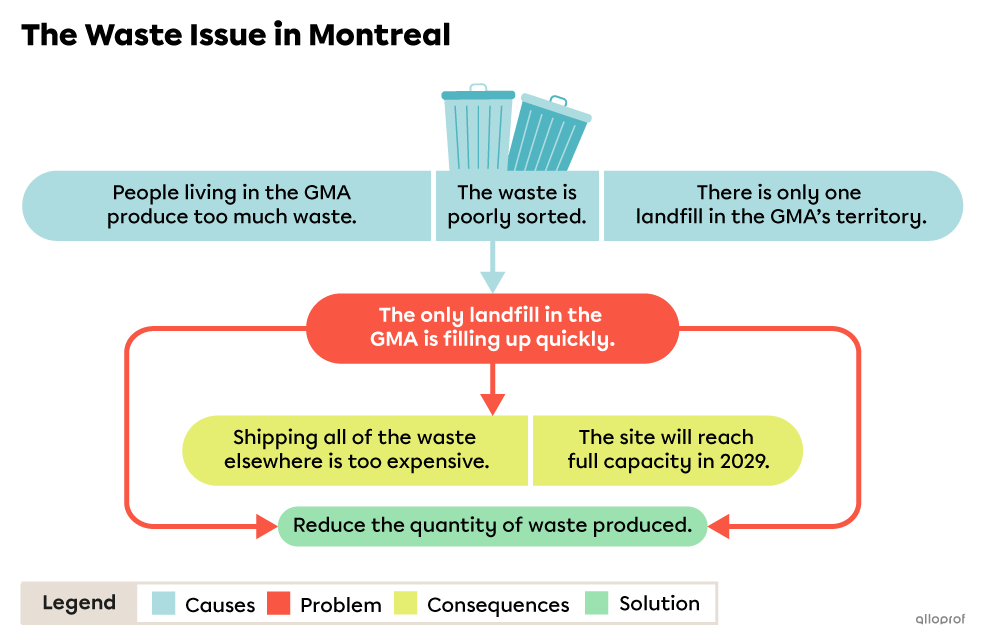
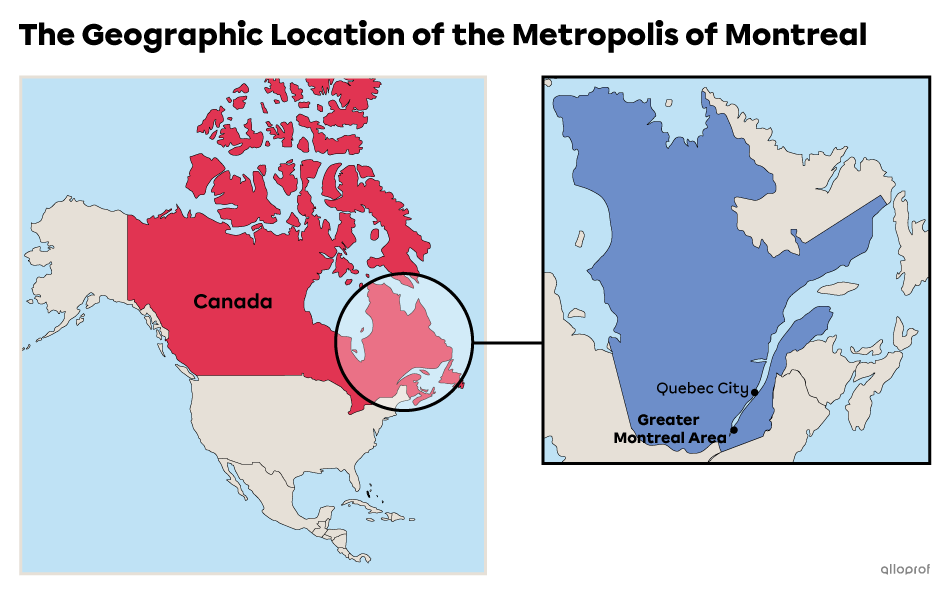
Montreal is located in southern Quebec, on the St. Lawrence River. It is the only metropolis in Quebec, and one of Canada’s three main cities.

The Greater Montreal Area brings together five different agglomerations: Montreal, Longueuil, Laval, the North Shore and the South Shore.
One of the main characteristics of the metropolis of Montreal is the concentration of its population. The Greater Montreal Area has a population of 3 979 402 inhabitants.[1] This represents close to 50% of the total population of the province of Quebec.
Downtown Montreal
Concentration refers to a grouping of several elements on the same territory.
High population density is another element that characterizes Quebec’s metropolis. There is a big difference between the population density of Montreal and that of the entire province.
| Population density | |
|---|---|
| Metropolis of Montreal | Province of Quebec |
| 912 inhabitants/km2 | 6.5 inhabitants/km2 |
Population density refers to the average number of individuals living in a given area. It measures the number of inhabitants per square kilometre (inhabitants/km2).
Population density is calculated using the following equation:
Number of inhabitants ÷ Area = Population density.
Like metropolises around the world, Montreal is characterized by the diversity of its population, in other words, its multiethnicity.
Approximately 60% of immigrants settle in the metropolis when they arrive in Quebec.[2] They are attracted by:
the concentration of activities and services, as well as the jobs related to these sectors;
the presence of members of their ethnic community.
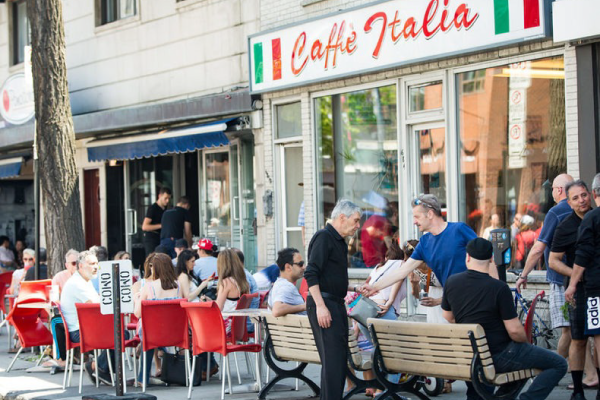
Neighbourhood of Little Italy
The neighbourhood of Little Italy is one of the best known ethnic neighborhoods in Montreal.
Immigration refers to people entering a new country with the aim of settling there.
Multiethnicity is a term that describes a population composed of people from different origins living in the same area.
The concentration of political and economic power contributes to the appeal and influence of the metropolis of Montreal.
While Montreal is not the capital of the province, there is still a large concentration of political power there. The metropolis is home to several government offices and agencies, as well as consulates from more than 70 countries and over 60 international organizations.
International organizations in Montreal include the International Civil Aviation Organization (ICAO), the World Anti-Doping Agency (WADA) and the International Air Transport Association (IATA).
UNESCO Institute for Statistics
The UNESCO Institute for Statistics is an international organization located in Montreal.
Consulate General of France in Montreal
The consulate offices are located in the Eaton Centre, near the McGill tower in downtown Montreal.
Grand Trunk Railway Building
The offices of the Ministère de l’Immigration, de la Francisation et de l’Intégration du Québec are the Grand Trunk Railway Building since 1988.
Like all metropolises, there is a significant concentration of economic power in Montreal, including several economic and financial institutions, such as banks, real estate agencies and insurance companies.
An institution is an organization, governed by regulations and laws, that plays a specific role in society. This role can be of a political, social, economic or religious nature.
There are more than 100 000 companies located in the Montreal metropolitan area. With this concentration of companies, the metropolis generates more than half of the province’s revenue.
Among these companies, many are from Quebec and their head offices are in Montreal, including Bombardier and Hydro-Québec.
There are also many foreign companies with offices in Montreal, including Cirque du Soleil, formerly a Quebec company. There are also many high-tech, pharmaceutical and aeronautics companies in Montreal.
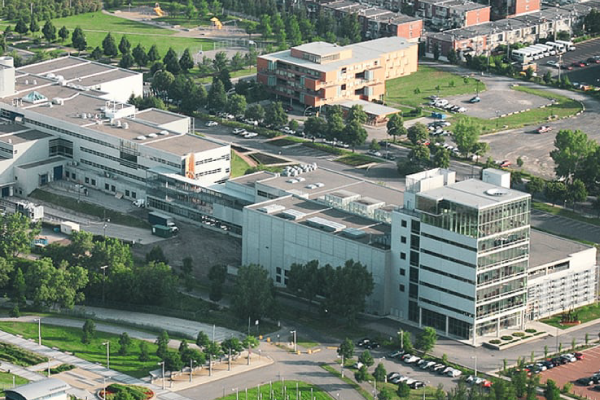
Cirque du Soleil Head Office
Montreal has a high concentration of activities and services, which contributes to the city’s power of attraction.
The metropolis of Montreal offers lots of cultural activities, such as museum events, performances, exhibitions and festivals.
The Grande Bibliothèque, Cirque du Soleil and Orchestre symphonique de Montréal are examples of major cultural institutions in the metropolis.
Place des Arts has five performance halls for a variety of shows including dance, music and comedy.
Salle Wilfrid-Pelletier at Place des Arts
Salle Wilfrid-Pelletier is one of the performance halls at Place des Arts.
The Festival International de Jazz de Montréal is the biggest jazz festival in the world with hundreds of concerts held at the Quartier des Spectacles.
A show at the Festival international de Jazz de Montréal
Montreal is home to several major hospital centres, including two university super hospitals: the Centre hospitalier universitaire de Montréal (CHUM) and the McGill University Hospital Centre (MUHC). The city also has several specialized health institutes, such as the Montreal Heart Institute, the Montreal Neurological Institute (affiliated with the MUHC) and the CHU Sainte-Justine, a university hospital centre focusing on mother and child.
The CHU Sainte-Justine is a specialized hospital for children, adolescents and mothers, and the only one of its kind in Quebec.
CHU Sainte-Justine
Given the city’s large population, there is a need to have many educational institutions. There are several school boards and school service centres offering elementary and secondary education in the Montreal metropolitan area, as well as many colleges and universities, including Collège de Rosemont, Cégep du Vieux Montréal, Université de Montréal and McGill University.
Université du Québec à Montréal (UQAM) is a higher education institution offering more than 300 programs of study.
Université du Québec à Montréal (UQAM)
UQAM is located in downtown Montreal.
Montreal is also known for its concentration of media outlets, many of which have their offices in the metropolis. The city is home to several newspapers, magazines and publishers as well as television and radio stations, such as Radio-Canada. Many advertising and communications agencies as well as video game creators are established in Montreal, including Ubisoft.
Groupe TVA Inc. is a Quebec communications company whose headquarters are in Montreal. Its activities include broadcasting, film and audiovisual production and publishing. It is the largest private French-language network in North America. Through its subsidiary, TVA Publications, Groupe TVA also manages more than 50 magazines, making it the largest French-language magazine publisher in Quebec.
In Montreal, the largest commercial neighbourhood is located downtown. It is crossed by Sainte-Catherine Street, running 11.2 km in length, with its 1200 department stores, boutiques and restaurants.[8] Also located on this street is the Eaton Centre, the largest shopping centre in the city. It attracts the residents of the Greater Montreal region as well as tourists, with more than 30 million visitors per year.[9]
Sainte-Catherine Street is not the only place where residents of the metropolis go to shop. Here are two other locations that attract consumers.
Located in the heart of Little Italy, Jean-Talon Market is one of the largest markets in North America. Open year round, it offers a wide variety of goods from local fruit and vegetable farms, as well as butcher shops, bakeries, fish shops, grocery stores, and more. There are also many restaurants.
Jean-Talon Market
Quartier DIX30 is a veritable shopping neighbourhood, located in Brossard, a suburb on the South Shore of Montreal. Quartier DIX30 offers a variety of activities and services, with hundreds of boutiques as well as restaurants, a movie theatre, two performance halls, two hotels, a spa, an indoor surfing park as well as a skatepark.
Quartier Dix30
There are residential neighbourhoods across the entire metropolis and many of them are on the Island of Montreal. The densely populated neighbourhoods close to downtown are mostly residential. In this type of neighbourhood, the houses are often attached in rows and there are many apartment buildings. These neighbourhoods also have a high concentration of services and access to public transit.
Plateau-Mont-Royal is the most populated residential neighbourhood in Montreal. There is also a high concentration of activities and services there, such as patios, nightclubs, bars, and many parks.
Outremont is one of the wealthiest neighbourhoods on the Island of Montreal. The houses tend to be bigger than in other residential neighbourhoods. Partially built on Mount Royal, one-third of the neighbourhood is green space with a number of playgrounds, ponds, streams and footpaths. Many families choose to live there, attracted to the Théâtre d’Outremont, dog park, skating rinks, outdoor pools, splash pads and arena.
In the 1950s, Montrealers started to move away from the city centre to live in the suburbs. Several factors explain this phenomenon. People who move to the suburbs are often in search of:
a better quality of life
less expensive houses
less air pollution
bigger yards
quieter neighbourhoods
As a result, suburbs developed, first on the Island of Montreal and Île Jésus (Laval) and then, with the growth of the population, on what is now known as the North Shore and South Shore of the metropolis. More than 50% of the population of the Greater Montreal Area now lives off the Island of Montreal.[34]
The suburb of Longueuil, located on the South Shore of Montreal, is very popular among people who want to live in the metropolis, but are looking for a living environment between city and country. The houses there are generally larger and less expensive. Approximately 65% of the inhabitants of Longueuil own their homes, compared with 37% of the inhabitants of the Island of Montreal.[10]
Longueuil offers opportunities for outdoor activities with more than 200 parks and green spaces.[11] Longueuil is also close to the Parc national du Mont-Saint-Bruno for skiing and snowshoeing. The nearby Parc national des Îles-de-Boucherville offers numerous aquatic activities.
Longueuil is accessible by public transit with a metro line and commuter train.
The Suburb of Longueuil
The expansion of the metropolis around the Island of Montreal required the development and extension of public services, such as the aqueduct, electrical grid and sewer network. The transportation infrastructure, including highways, bridges, tunnels and commuter trains, also had to be developed. The expansion presented some challenges, such as protecting farmland and getting around within the metropolis.
Urban sprawl is the progressive spreading of a city over a greater area.
Infrastructure refers to a structure or set of structures (roads, bridges, buildings, sewers, etc.) that enable the planning and development of a territory.
There are many means of transportation in the Greater Montreal Area, allowing inhabitants to get from place to place and for businesses to trade with the rest of the world. One of the particular characteristics of the metropolis of Montreal is that it is built across two shores and two islands, requiring the construction of more than 40 bridges and tunnels.
| A few means of transportation in Montreal | |
|---|---|
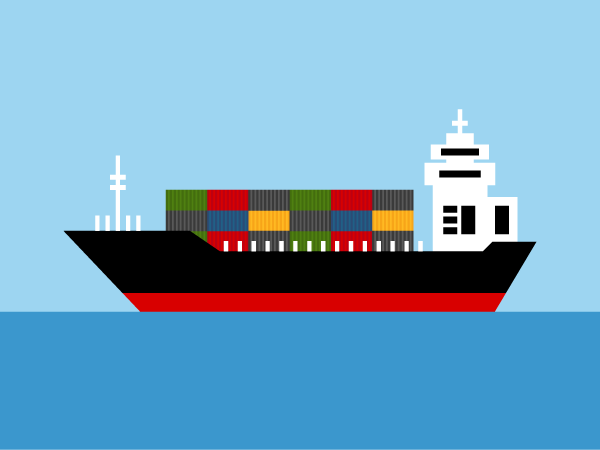 |
The Port of Montreal is one of the largest in North America. It is connected to over 140 countries around the world, and more than 2000 ships pass through it every year, making it one of the area’s most important economic motors. |
 |
The Montréal-Trudeau International Airport is the largest airport in Quebec and the second largest in Canada.[35] More than 30 airlines fly out of this airport to hundreds of destinations. |
 |
The Greater Montreal Area also has many highways criss-crossing its territory, totalling 1735 km.[13] |
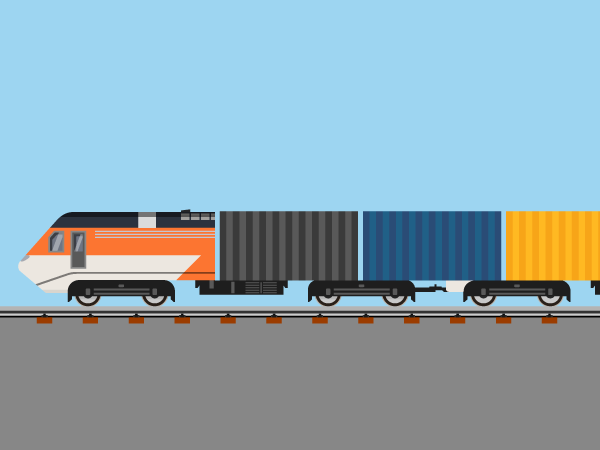 |
There are many railways in the Greater Montreal Area, mostly to transport goods. Its geographic location, on an island, makes the planning and development of rail transport more difficult because it requires the construction of several bridges. |
 |
Montreal has developed a large public transit system, including a metro system with four lines and 68 stations.[14] |
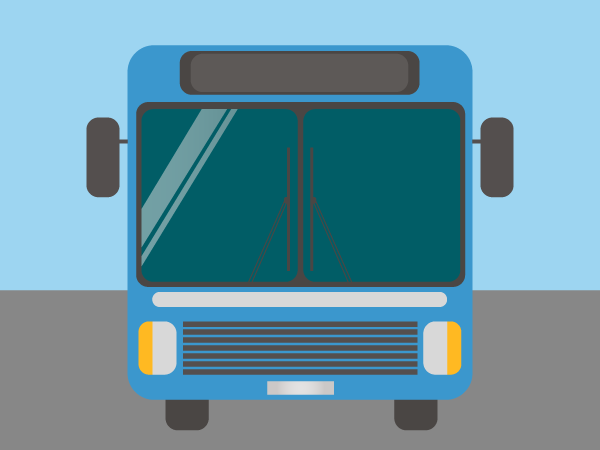 |
Buses are another important part of the public transit system. The Greater Montreal Area has more than 220 bus routes and 900 stops.[2] |
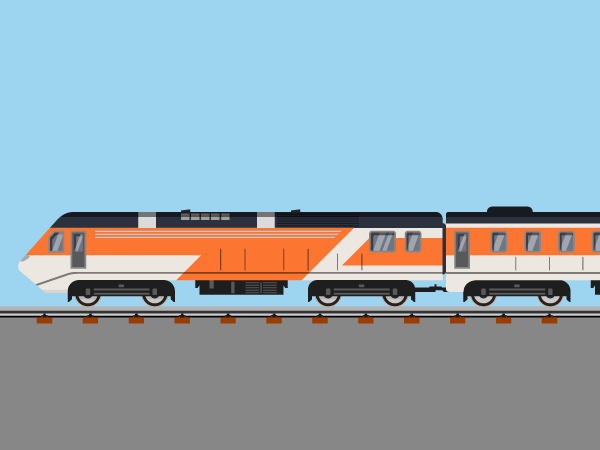 |
People living in the suburbs have access to public transit, including commuter trains. There are six commuter train lines interconnecting several boroughs in the metropolitan area. |
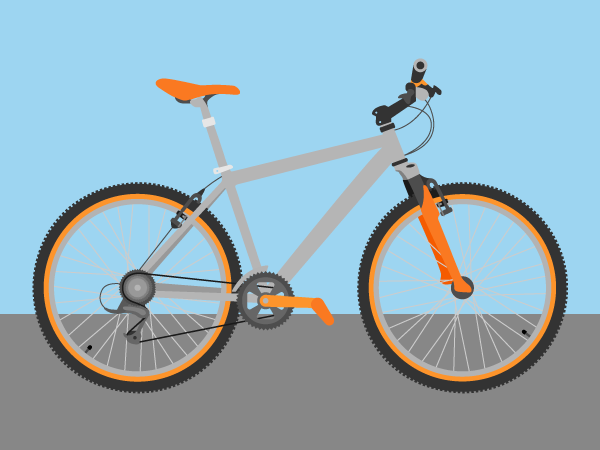 |
The Greater Montreal Area has a very well developed network of bicycle paths and one of the largest bicycle path networks in the world is on the Island of Montreal. The City of Montreal alone has 889 km of bike paths.[15] |
To learn more about public transit on the Island of Montreal, take a look at the following map: note that the neighbourhoods close to downtown Montreal have a greater concentration of public transit than the neighbourhoods further away, due in part, to the metro system.
The metropolis of Montreal faces a major challenge that most other metropolises do not have to deal with: Quebec’s heavy snowfall in the winter. Snow removal in Montreal is a major challenge. The City’s employees not only have to clear snow from highways, bridges and tunnel entrances, but also from streets and sidewalks. What’s more, they must collect all that snow and transport it to snow dumps in the city. Some neighbourhoods, like downtown, can be particularly difficult to clear because each day close to 160 000 cars are parked there, and more than 500 000 people move through its streets and sidewalks.[16]
One of Montreal’s innovations in response to the winter climate is the development of a network of tunnels, called RÉSO, one of the largest underground networks in the world.
RÉSO is 32 km of tunnels, providing access to more than 1600 boutiques, 300 restaurants, 9 hotels, 8 metro stations, 5 train stations, several office buildings and university pavilions, as well as the Bell Centre. More than 500 000 people walk these tunnels every day.[2]
RÉSO
The Anjou industrial park is one of the largest industrial neighbourhoods in the east end of the island, with approximately 130 businesses.[6]
The Saint-Laurent industrial park, located close to downtown Montreal, is one of the main industrial hubs in the province of Quebec. With more than 100 000 employees, it is also the second largest employment pool in the city, second to the downtown core. Some 4700 businesses are located in this industrial neighbourhood, many of them specialized in aerospace, life sciences, and information and communication technologies.[7]
Many of the richer neighbourhoods have a median income per household that is much higher than in more disadvantaged neighbourhoods. Look at the two tables below: compare the inequalities in median income per household in certain advantaged and disadvantaged neighbourhoods.
| Neighbourhood | Median income |
|---|---|
|
Upper Westmount |
$222 037 |
|
Beaconsfield |
$123 392 |
|
Senneville |
$100 587 |
| Neighbourhood | Median income |
|---|---|
|
Parc-Extension |
$34 795 |
|
Côte-des-Neiges |
$34 901 |
Sometimes there are major inequalities within the same neighbourhood, as is the case in the Plateau-Mont-Royal borough.
While Mont-Royal east has a median income per household of $116 416 and Mont-Royal west of $108 160, the median income per household for the whole Plateau-Mont-Royal sector is much lower, in particular in the Quartier Latin neighbourhood where the median income is estimated at $30 167.[5]
There are many industrial neighbourhoods in the metropolis of Montreal, with a concentration of industries, warehouses and technology companies.
Downtown Montreal is a neighbourhood with many services and jobs. It is the only location in the metropolis with skyscrapers, some as high as 50 storeys.
It is also one of the liveliest neighbourhoods in the metropolis. Sainte-Catherine Street cuts across it, with its many stores, boutiques, restaurants and bars. The Quartier des Spectacles is also located downtown, and includes Place des Arts and the Musée d’art contemporain. Further west is the Montreal Museum of Fine Arts.
This neighbourhood is one of the best served by public transit, with several interconnecting transportation networks. There are many metro stations downtown on the orange, green, blue and yellow lines, as well as many bus stops.
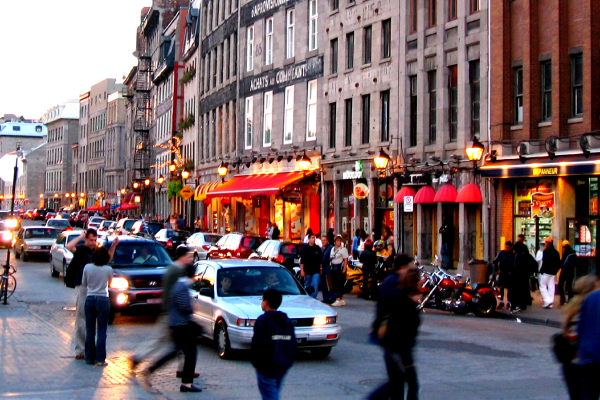
Downtown Montreal
The Greater Montreal Area brings together five different agglomerations: Montreal, Longueuil, Laval, the North Shore and the South Shore.
The agglomeration of Montreal is located on the Island of Montreal, which is comprised of the City of Montreal, divided into 19 boroughs, as well as 15 other cities.
An agglomeration is an urban area made up of a main city surrounded by other cities or municipalities.
A borough is an administrative unit within a region or city.
Like every city in the world, Montreal has many different neighbourhoods. These are distinct in terms of their function and their location in relation to downtown. The neighbourhoods closer to downtown often have a higher population density and a greater concentration of activities and services.
Median income is the middle income of a population, that is, half of the population earns more than this amount, while the other half earns less.
A household represents one person or a group of people (roommates, family) living under one roof.
Montreal has a very large immigrant population. Immigrants often choose to settle close to people from their communities. Consequently, Haitian, French, Moroccan, Algerian, Chinese and Italian cultural communities, among others, have developed in the metropolis. These cultural groups tend to come together in designated neighbourhoods, such as Chinatown, Little Italy, Little Maghreb and the Portuguese quarter.
Little Maghreb is an ethnic neighbourhood located in Saint-Michel on the Island of Montreal. It is home to various businesses and cafes managed by individuals of Algerian, Tunisian and Moroccan descent.
While Little Maghreb is composed of businesses offering Maghrebian products and services, unlike in other ethnic neighbourhoods, most montrealers of Maghrebian descent do not live there.
Little Maghreb
There are significant inequalities in the distribution of wealth in Montreal and this inequity can be seen in the different neighbourhoods or boroughs of the city, some of which are privileged while others are impoverished.
Areas such as Montréal-Nord, Saint-Léonard, Saint-Michel, Côte-des-Neiges, Hochelaga and Parc-Extension have a greater number of inhabitants living under the low-income cutoff.
The term disadvantaged refers to someone or something lacking in economic, social or cultural resources.
Low income cutoff (LICO) refers to a situation in which too large a portion of a household’s income is spent on meeting basic needs (housing, food, clothing).
In the neighbourhood of Saint-Michel, 30% of the population is low-income. In the eastern part of this neighbourhood, this increases to 40%. In comparison, the average percentage for Montreal is 21%.[3]
In Montreal North, 32% of the population, that is, almost one person in three, lives in poverty. In the northeast area of the neighbourhood, this increases to 48%,[4] or almost one person in two.
In contrast, there are some very wealthy neighbourhoods and boroughs, such as Westmount, Outremont, Mount-Royal, Senneville, Beaconsfield and Sainte-Thérèse.
House in the Neighbourhood of Westmount
Montreal, like every metropolis in the world, has to deal with many issues, most of them related to the large population living in the city.
The Greater Montreal Area (or GMA) brings together the metropolis’s 82 municipalities.
The Montreal Metropolitan Community (MMC), created in 2001, is a planning, coordinating and financing organization that brings together the GMA’s 82 municipalities.
Urban sprawl is a major issue for the metropolis and one of the main causes of transportation problems in the city.
Over the last 20 years, the population density of the Greater Montreal Area has decreased by 10%. One of the reasons is that almost every neighbourhood built between 2002 and 2021 is a low-density suburb.[17]
The suburbs are very different from neighbourhoods closer to downtown. They are residential neighbourhoods mostly comprised of individual houses built with a greater distance between them and on larger lots than in the city, meaning the population is much less dense. This type of neighbourhood makes transportation and pollution problems worse because 80% of the people living in suburbs use cars to get to work or to access various services.[17]
Many people living outside the MMC nevertheless work in the city, which also contributes to transportation and pollution problems. More than 40% of people living in some 30 municipalities around the MMC go to work each day in the metropolis, and approximately 94% of them use their cars, adding to the traffic.[18]
The large proportion of people who use their cars considerably increases the problem of road traffic. This is not just a suburban problem. More than half of the people living in the City of Montreal use a car to get to work, despite the high concentration of public transit.[19]
Car traffic in the Greater Montreal Area has many consequences:
financial loss of more than $4 billion each year in the economic sector due to delivery delays and work absences[21]
increase in travel time for people living in Montreal, who, on average, spent more than 130 hours in traffic jams in 2019[22]
contribution to air pollution: the transportation sector in Quebec has the highest rate of greenhouse gas (GHG) emissions
greater pressure on transportation infrastructure leading to a faster deterioration of roads and bridges, which then require greater investment to maintain
Public transit remains the best solution. Montreal’s transportation problem cannot be solved with more roads, bridges and overpasses.
A 2020 study conducted by the U.S. government on the road network in the city of Jackson, Mississippi, revealed that road traffic still increased significantly despite a low population increase and the building of more roads. The road network expanded by more than 60% between 1993 and 2017. During the same period, the population increased only by 9%. Nevertheless, traffic increased by 317%.[21]
Public transit means fewer cars on the roads, and this decreases traffic in a sustainable way. The use of public transit also often reduces travel time.
In the Montreal metropolitan area, if 3% of people used public transit instead of their car, costs related to road traffic would be reduced by $60 million and those related to air pollution, by $6 million.[22] That’s why the Montreal metropolis is expanding its public transit system with the Réseau express métropolitain (REM), a completely electric and automated above-ground metro. It will provide a second metro link to the South Shore and a first link to the North Shore.
The Réseau express métropolitain
Like all large metropolises, Montreal must manage the waste produced by its population. Montrealers produce on average 465 kg of waste per year per person.[23] Although much of this waste could have been recycled or composted, close to 50% of it is sent to the dump because individuals and businesses are improperly sorting their waste.[24] According to the communications coordinator of Complexe Enviro Connexions, close to 70% of what is taken to the dump in Terrebonne should have been placed in recycling or compost bins.[25]
The Greater Montreal Area produces an enormous amount of waste. The Complexe Enviro Connexions in Terrebonne, the only landfill site in the Montreal area, receives 47% of the metropolis’s waste. That’s more than 3500 tons of waste that ends up in landfills every day,[25] and they are filling up very quickly.
The rest of the GMA’s waste is sent to various sites outside the area.
The large quantity of waste produced in the GMA has several consequences:
the Complexe Enviro Connexions in Terrebonne will reach its full capacity and shut down in 2029
shipping all of the metropolis’s waste elsewhere is much too expensive
Despite the fact that Montreal already has recycling and organic waste (compost) pick-up, the metropolis has to rethink its system because it is not efficient enough. Montreal must reduce the quantity of waste it produces.
With the goal of solving this problem, the Greater Montreal Area (GMA) established a plan known as the Metropolitan Waste Management Plan. Its two main objectives are regional autonomy (to not send waste outside the area) and zero waste. In other words, the GMA does not want to send its waste to other regions and does not want to open a new landfill site. Instead, it wants to reduce the quantity of waste produced.
Here are some of the solutions put forth in the plan:
attain a 70% recycling rate for recyclable materials by 2020 (the objective was not attained)
attain a 60% recycling rate for organic materials by 2025
modernize sorting centres
modernize the return process for bottles and cans
The regulations around single-use plastics (straws, cups, bags) will help attain these objectives, since more than 15 000 tons of single-use plastics are thrown out in the metropolis every year. The City of Montreal banned several single-use plastic products, such as straws and cups, on March 1, 2023. Plastic bags were banned on September 1, 2022.[26]
Various regulations will also be put in place to reduce food waste. Food businesses, such as grocery stores, will be encouraged to partner with food banks. The City may also eventually ban restaurants and grocery stores from throwing out food that is still edible.
Housing in Montreal is a major issue. It can be divided into three sub-issues, each with its own cause, consequence and solution.
Like all metropolises around the world, Montreal has a housing problem, caused in part by the fact that the average price of an apartment in the metropolitan area increased by 20% between 2015 and 2020. Since there are fewer and fewer rental units available, rents are going up. The rent for a two-bedroom apartment has increased from an average of $760 per month to more than $915.[27]
The problem is that even if there are rental units available in the metropolis, they are too expensive for many tenants, especially those with low incomes. There are 213 000 low-income tenant households in the Greater Montreal Area, which represents about one-third of all tenant households in the area.[28]
The significant increase in rent is having very serious consequences for some people, who have to spend too much of their income on rent. This impoverishes tenants and forces them to cut back on other essential needs, such as food, education, transportation or clothing. Some tenants are being evicted because they are unable to pay their rent.
Some landlords are pressuring tenants to leave, claiming that they want to do major renovations when, in fact, they want to increase the rent. This is referred to as ‘renoviction’.[29]
In some cases, people who are evicted run the risk of becoming homeless. There are currently more than 30 000 people experiencing homelessness in Montreal.[30]
Precarity refers to something that is unstable or uncertain.
Overcoming the shortage of affordable housing requires the construction of social and community housing. It has been shown that investing in this type of housing also leads to savings in other sectors, such as health and social services.
Another solution could be to set some controls on the housing market with various measures designed to prevent abusive rent increases and evictions (such as renovictions).
Social housing is built specifically for people with low incomes, and can be a solution to the shortage of affordable housing.
However, there are also issues related to social housing in the Greater Montreal Area.
There is very limited social housing available because very few units have been built. Of the new rental housing built between 2017 and 2020, only 5.1% is social housing.
There are too few social housing units when compared to the number of people who need it. Low-income individuals and families who are not able to find affordable housing turn to social or community housing, but there are not enough units in the Montreal area to meet the demand.
This problem is worsened by the fact that many social housing units are unsanitary. According to the mayor of the City of Montreal, Valérie Plante, in 2019 there were hundreds of unsanitary social housing units that were uninhabitable because they had not been maintained.[31]
The shortage of social housing forces low-income households to find other housing. These households must sometimes pay for housing that is much too expensive for their income. Some people do not have the means to pay for another type of housing and end up homeless.
There are three main solutions to the shortage of social housing:
build more social and community housing
require a minimum number of social housing units in new apartment buildings
renovate existing social housing that is in poor condition
A number of factors result in unsanitary housing, including lack of maintenance and repairs.
Unsanitary housing is a problem in the metropolis. According to Maxime Roy, spokesperson for the tenants rights organization Regroupement des comités de logement et associations de locataires du Québec, one-third of tenants in Montreal are living in unsanitary housing.[32]
Unsanitary housing also has serious consequences for tenants’ health. Housing infested with vermin, such as cockroaches, is harmful to tenants’ health and wellbeing. Also, housing that is poorly insulated in the winter, or is unsafe, for example, has an unstable balcony, can have many negative consequences for its tenants.
In the case of unsanitary social housing, it remains vacant, which further contributes to the shortage of affordable housing.
To counter the problem of unsanitary housing, Montreal will be implementing a new certification that must be renewed every five years, starting in 2023. This will affect some 250 000 housing units in buildings of eight units or more. To obtain certification, landlords must prove, on the basis of an inspection, that none of their units are unsanitary or dangerous. They must also declare the rent being charged for all of the units at the time of certification.[33]
To access the rest of the module, you can consult the following concept sheets.
1. Ministère des Transports. (2022). Région métropolitaine de Montréal. Gouvernement du Québec. https://www.transports.gouv.qc.ca/fr/ministere/organisation/organisation-territoriale/cmm/Pages/region-metropolitaine.aspx
2. Fontaine, V., Ouimet, K., Paiement-Paradis, G., Parent, A. et Lavoie, R. (2019). Complètement GÉO! Les métropoles - 1er cycle du secondaire [Cahier d’activités]. Chenelière Éducation.
3. Centraide. (2020). Montréal — Villeray, Saint-Michel et Parc-Extension 2019-2020. https://www.centraide-mtl.org/wp-content/uploads/2021/01/Portrait-Montreal-Villeray-Saint-Michel-Parc-Extension-2019-2020.pdf
4. Centraide. (2020). Montréal — Montréal-Nord 2019-2020. https://www.centraide-mtl.org/wp-content/uploads/2021/01/Portrait-Montreal-Nord-2017-2018.pdf
5. Nardi, C. et Rousseau, A. (2017, 16 septembre). Où habitent les ménages les mieux payés au Québec? Le Journal de Montréal. https://www.journaldemontreal.com/2017/09/16/ou-habitent-les-menages-les-mieux-payes-au-quebec
6. Parcs industriels du Canada. (2017, 1er novembre). Parc industriel d’Anjou. https://parcsindustrielscanada.com/parcs/316
7. Parcs industriels du Canada. (2020, 25 aout). Zone industrielle de Saint-Laurent. https://parcsindustrielscanada.com/parcs/405
8. Tourisme Montréal. (s.d.). Rue Sainte-Catherine. https://www.mtl.org/fr/quoi-faire/patrimoine-et-architecture/rue-sainte-catherine
9. Tourisme Montréal. (s.d.). Centre Eaton de Montréal. https://www.mtl.org/fr/quoi-faire/shopping/le-centre-eaton-de-montreal
10. Picard, G. (2018, 12 mai). Le Québec continue d’avoir un taux de propriété plus faible que le reste du Canada. Le Journal de Montréal. https://www.journaldemontreal.com/2018/05/12/le-quebec-continue-davoir-un-taux-de-propriete-plus-faible-que-le-reste-du-canada
11. Ville de Longueuil. (s.d.). Parcs et espaces verts. https://longueuil.quebec/fr/services/parcs-et-espaces-verts
12. Port de Montréal. (s.d.). Statistiques. https://www.port-montreal.com/fr/le-port-de-montreal/le-port/en-bref/statistiques
13. Ministère des Transports.(s.d.). Région métropolitaine de Montréal. Gouvernement du Québec. https://www.transports.gouv.qc.ca/fr/ministere/organisation/organisation-territoriale/cmm/Pages/region-metropolitaine.aspx
14. Tremblay, M.-È., Rocha, R., Salcido, S., Julien, M. et Guimaraes, A. (s.d.). Les 68 stations de métro de Montréal vues autrement. Radio-Canada. https://ici.radio-canada.ca/nouvelles/special/2016/9/metro-montreal-68-stations-analyse/index.html#
15. Ville de Montréal. (2022, 21 janvier). Vélo et pistes cyclables. https://montreal.ca/sujets/velo-et-pistes-cyclables
16. Bergevin, R., Charette, J. et Méthé, M. (2014). GÉO à la carte - Territoire urbain : Métropole - 1er cycle du secondaire [Cahier d’activités]. CEC.
17. Shiab, N. et Bouchard, I. (2022, 7 mars). On a utilisé une intelligence artificielle pour mesurer l’étalement urbain au Canada. Radio-Canada. https://ici.radio-canada.ca/info/2022/03/etalement-urbain-densite-population-villes-transport-commun-changements-climatiques/
18. Corriveau, J. (2020, 7 janvier). L’étalement urbain se poursuit dans la grande région de Montréal. Le Devoir. https://www.ledevoir.com/politique/montreal/570293/cmm-l-etalement-urbain-se-poursuit
19. Ville de Montréal. (s.d.). Déplacements domicile - travail. https://ville.montreal.qc.ca/portal/page?_pageid=6897,67889698&_dad=portal&_schema=PORTAL
20. Leduc, L. (2021, 19 octobre). Les gros bouchons sont de retour. La Presse. https://www.lapresse.ca/actualites/grand-montreal/2021-10-19/les-gros-bouchons-sont-de-retour.php
21. CDPQ Infra. (2021, 24 septembre). La congestion routière. https://www.cdpqinfra.com/fr/actualites/articles/comment-la-congestion-routiere-nous-affecte-t-elle
22. Pelletier, G. (2020, 20 novembre). Plus de 130 heures perdues dans les embouteillages à Montréal en 2019. TVA Nouvelles. https://www.tvanouvelles.ca/2020/11/20/plus-de-130-heures-perdues-dans-les-embouteillages-a-montreal-en-2019
23. Corriveau, J. (2019, 18 octobre). Montréal veut réduire de 85 % ses déchets. Le Devoir. https://www.ledevoir.com/politique/montreal/565082/montreal-vise-une-reduction-de-85-des-dechets-destines-aux-depotoirs
24. Goudreault, Z. (2021, 21 aout). Le s déchets pèsent plus lourd depuis la pandémie. Le Devoir. https://www.ledevoir.com/societe/626553/montreal-la-pandemie-a-fait-croitre-les-dechets-residentiels
25. Léveillé, J.-T. (2019, 6 juillet). La plus grosse poubelle du Québec bientôt pleine. La Presse. https://www.lapresse.ca/actualites/environnement/2019-07-06/la-plus-grosse-poubelle-du-quebec-bientot-pleine
26. Goudreault, Z. (2021, 19 aout). Montréal promet d’interdire plusieurs objets en plastique à usage unique d’ici 2023. Le Devoir. https://www.ledevoir.com/politique/montreal/625752/montreal-promet-d-interdire-plusieurs-plastiques-a-usage-unique-d-ici-2023?utm_source=recirculation&utm_medium=hyperlien&utm_campaign=corps_texte
27. Talbot, D. (2022, 3 février). « Nous vivons une crise du logement dans la province ». TVA Nouvelles. https://www.tvanouvelles.ca/2022/02/03/nous-vivons-une-crise-du-logement-dans-la-province
28. Communauté métropolitaine de Montréal. (s.d.). Crise du logement social et abordable. https://cmm.qc.ca/grands-enjeux/crise-du-logement-social-et-abordable/
29. Legault, J. (2021, 30 juin). Rénovictions, le cauchemar de perdre son chez soi. Le Journal de Montréal. https://www.journaldemontreal.com/2021/06/30/renovictions-le-cauchemar-de-perdre-son-chez-soi
30. Thériault, J.-F. (2021, 30 juillet). Presque à la rue, un Montréalais raconte comment il vit la crise du logement. Radio-Canada. https://ici.radio-canada.ca/nouvelle/1812842/eviction-itinerance-sauvetage-logement-office-habitation
31. Carrier-Plante, C. (2019, 22 juillet). Côte-des-Neiges : des HLM insalubres et oubliés. La Presse. https://www.lapresse.ca/debats/opinions/2019-07-22/cote-des-neiges-des-hlm-insalubres-et-oublies#
32. Meloche-Holubowski, M. (2020, 6 février). Logements insalubres : les propriétaires fautifs n’ont rien qu’à bien se tenir. Radio-Canada. https://ici.radio-canada.ca/nouvelle/1507743/salubrite-insalubrite-logement-montreal-inspections-donnees
33. Goudreault, Z. (2022, 15 février). Montréal serre la vis à des propriétaires d’immeubles. Le Devoir. https://www.ledevoir.com/societe/674835/montreal-devoile-sa-certification-pour-rendre-les-proprietaires-responsables
34. Bergevin, R., Charette, J. et Méthé, M. (2014). GÉO à la carte - Territoire urbain : Métropole - 1er cycle du secondaire [Cahier d’activités]. CEC.
35. Données mondiales. (s.d.). Les 30 plus grands aéroports et compagnies aériennes au Canada. https://www.donneesmondiales.com/amerique/canada/aeroports.php
36. Organisation des Nations Unies pour l’éducation, la science et la culture. (mai 2016). Actes du Colloque international sur la mesure des produits culturels numériques. Institut de statistique de l’UNESCO. https://api.patrimoinevivant.qc.ca/content/uploads/2021/01/actes_du_colloque_international_sur_la_mesure_des_produits_culturels_numeriques.pdf
Société de transport de Montréal. (2022, 27 mai). Données ouvertes. https://www.stm.info/fr/a-propos/developpeurs
Partenariat Données Québec. (2021, 9 décembre). Lignes de train. Gouvernement du Québec. https://www.donneesquebec.ca/recherche/dataset/lignes-de-train