Subjects
Grades
To access the other concept sheets in the Indigenous Territory unit, check out the See Also section.
 100%
100%
 100%
100%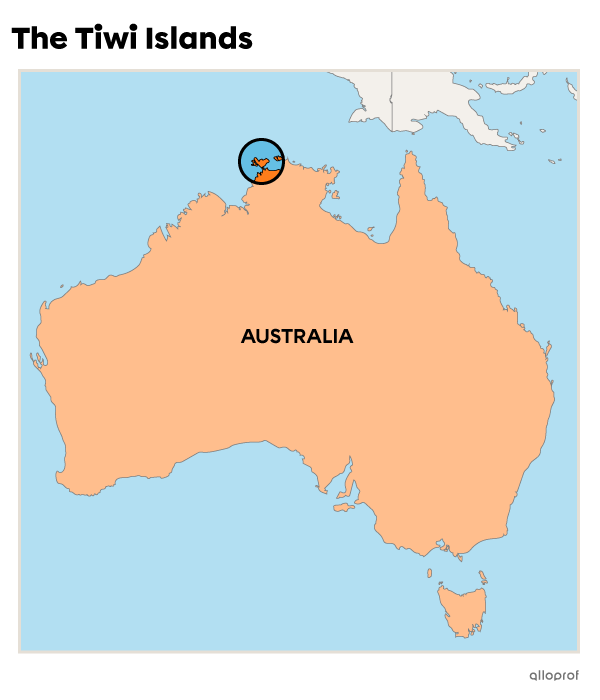 100%
100%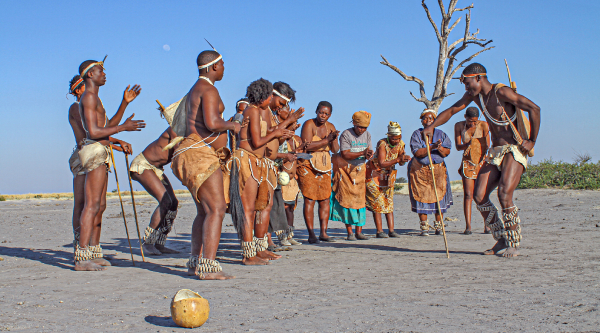 100%
100%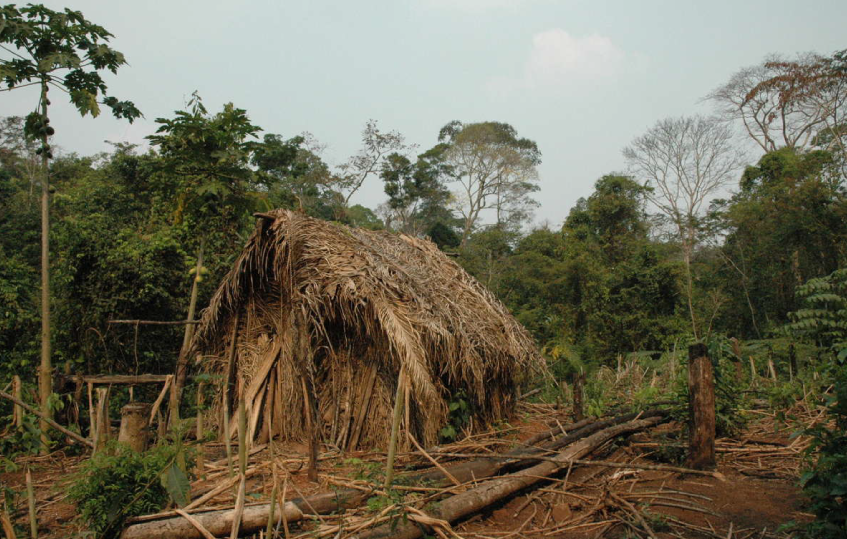
Indigenous communities around the world face various issues and challenges in their efforts to defend their rights.
In geography, an issue is a problem related to the use or the planning and development of a territory. An issue can be environmental, economic, political, social, etc.
Indigenous peoples around the world must share their territory with colonizers who settled their lands many years ago. Indigenous territories are often rich in natural resources and therefore coveted by governments and companies. This can lead to conflicts and negotiations among the various stakeholders.
Sometimes, governments and companies exploit the resources on Indigenous territories without taking into consideration the communities living there.
This can lead to health problems for Indigenous people
This can deprive Indigenous people of the resources needed to feed themselves and to live on the land
In other cases, agreements are reached between Indigenous communities and the government or the companies to compensate them for the loss of their territory.
Some cases are brought before the courts to stop the exploitation of a resource on an Indigenous territory.
A natural resource is an element present in nature (minerals, oil, wood, etc.) that is exploited by humans.
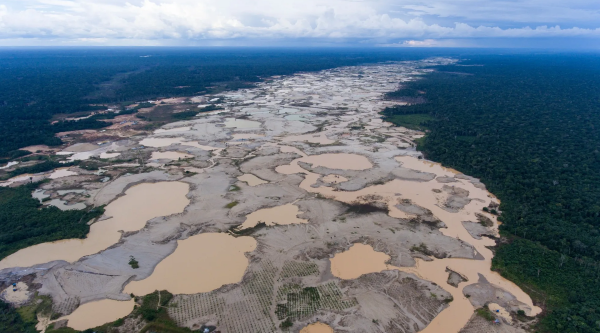
In Peru, the Indigenous communities in the region of Madre de Dios, in Amazonia, are exposed to high levels of mercury caused by gold mining. The mercury ends up in the water of the rivers, poisoning aquatic species and, in turn, the people who eat them. Indigenous communities are at risk of developing diseases related to this mercury poisoning.

Gold Mine in the Province of Madre de Dios in Peru
In December 2022, an Aboriginal group in Australia turned to the courts to prevent a major oil company from exploiting natural gas in the Timor Sea, close to the Tiwi Islands where the community lives. The Federal Court of Australia ruled that the Indigenous groups concerned had not been sufficiently consulted regarding the oil company’s plans. The Aboriginal community of Tiwi argued before the courts that the exploitation could harm their food resources, which come from the sea, as well as their spiritual connection with this environment.
Despite this Aboriginal group’s legal victory, the oil company is still planning to mine the gas in this location before 2025. The Indigenous groups will likely have to continue to defend their territory.
Indigenous communities around the world face multifaceted economic problems that have many dimensions.
In general, Indigenous communities are among the poorest and most marginalized groups in their country.
Approximately 80% of the world’s Indigenous people live in poverty[2].
There is a higher malnutrition rate among Indigenous peoples due to low income.
Indigenous communities are often the last to obtain funding from governments for basic services and infrastructure, such as drinking water, sewer systems and electricity.
Infrastructure refers to a structure or set of structures (roads, bridges, buildings, sewers, etc.) that enable the planning and development of a territory.
In Canada, 33 Indigenous communities still did not have access to drinking water in 2022. Lack of access to drinking water was due, among other things, to a lack of government funding to build or repair existing infrastructure.
In 2015, during a federal election campaign, the Indigenous community of Neskantaga asked politicians to commit to providing access to drinking water. The Prime Minister promised that in the next five years, all Indigenous communities would have access to drinking water. Despite this promise, in 2022, many communities still had no drinking water, including the Neskantaga community, which has been without for 27 years.
To find out more, check out the article Dozens of Canada’s First Nations lack drinking water: ‘Unacceptable in a country so rich’.
Increasing numbers of Indigenous people live in urban settings. However, many communities continue to live in remote territories. Whether in Canada’s Far North, in the heart of the Amazon forest or in Australia’s backcountry, these communities face many challenges.
While the consequences of this isolation vary from place to place, some are common to most remote areas:
few available jobs
difficulty travelling outside the territory
high product costs, because products have to be delivered over long distances
difficulty accessing certain services, such as healthcare
This isolation can exacerbate the communities’ economic and social problems. However, there can also be positive impacts, such as greater protection of the community’s culture. Isolation often means that the community can continue to honor their culture and traditions without any direct outside influence.
Most communities in Canada’s Far North are only connected to cities in the south by plane or ship, which means that essential goods (food, clothing, construction materials) in these remote areas must be brought in using these means of transportation.
The distance and the additional cost of supplying these communities means that the price of these products is much higher, making it difficult for many people to obtain what they need.
| Product | Price in Nunavut | Average price in the rest of Canada |
|---|---|---|
| Flour | $13.57 | $4.91 |
| Apples (1 kg) | $7.02 | $3.85 |
| Eggs (12) | $8.72 | $3.08 |
| Toothpaste | $6.25 | $2.67 |
Source: Nunavut Bureau of Statistics, 2018[4]. |
||
In addition to high costs, there are a number of other challenges that make it difficult to supply remote northern communities. Planes cannot reach them in very poor weather, and ships are unable to access these communities for many months of the year due to ice.
More than 100 communities around the world have chosen to live separate from society to maintain their way of life. These communities have a vast knowledge of their territory and are able to live off the resources it provides. However, many of these communities are still threatened due to:
the loss of their territory to build roads or mining projects, for farmland or pasturing (requiring the communities to find somewhere else to live, which is not always possible)
the presence of outsiders who come without their agreement to exploit resources (their presence leads to conflicts and deaths and can also introduce diseases that can have a deadly impact on Indigenous communities)
A pasture is land covered in grass suitable for grazing farm animals.
The Sole Survivor of his Tribe
A man lived for many years alone on a piece of land in Brazilian Amazonia. His life and origins are largely a mystery. Even his name is not known. He was the last survivor of his community. He lived alone for 20 years in an area of the forest surrounded by farms and pasture. Many people, including farmers and loggers, wanted to take possession of the land he lived on. He refused all contact with people from the outside, preferring to hide when he could. The photograph shows one of the huts he built in the forest. Among other things, he had a garden and orchard to grow his food. He died in 2022.
Various Indigenous communities around the world face the challenge of protecting their culture. Many Indigenous cultures are at risk of disappearing. According to the UN, 90% of the world’s languages will disappear in the next 100 years[6]. Most of these languages are Indigenous.
The importance of preserving Indigenous cultures is increasingly recognized by governments around the world but their actions to protect them are often insufficient.
Canadian Indigenous artists are seeing their artworks copied by companies in China and Eastern Europe. These copies are then sold in Canada, leading to a loss of income for these artists and threatening their livelihoods. Indigenous artists are calling for measures to help them counter this fake Indigenous art industry.
To find out more about this problem, check out these articles Feds urged to crack down on fake Indigenous art, copyright breaches and Why tackling the global industry of fake Indigenous art is like playing 'whack-a-mole'.
To access the rest of the unit, you can consult the following concept sheets.
Abd, R. (n.d.). Dans certaines zones de la province de Madre de Dios au Pérou, l’orpaillage illégal a laissé des plaies dans la forêt [Photograph]. La Croix. (URL).*
Hall, G. et Gandolfo, A. (2016, August 11). Pauvreté et exclusion chez les populations autochtones : état des lieux et tendances de fond dans le monde. Banque mondiale. https://blogs.worldbank.org/fr/voices/pauvret-et-exclusion-chez-les-populations-autochtones-tat-des-lieux-et-tendances-de-fond-dans-le
Kauffmann, A. (2016, December 23). Botswana : première victoire pour le peuple San. GEO. https://www.geo.fr/voyage/botswana-premiere-victoire-pour-le-peuple-san-162618
Nunavut Bureau of Statistics. (2018, July). StatsUpdate. https://www.gov.nu.ca/sites/default/files/food_price_survey_statsupdate_2018_2.pdf
Survival. (n.d.). La maison et le jardin de » l’homme au trou ». [Photograph]. https://www.survivalinternational.fr/actu/5306*
Département des affaires économiques et sociales. (n.d.). La Culture. Organisation des Nations Unies. https://www.un.org/development/desa/indigenous-peoples-fr/thematiques/la-culture.html
*Content used by Alloprof in compliance with the Copyright Act in the context of fair use for educational purposes. [https://laws-lois.justice.gc.ca/fra/lois/c-42/page-9.html].
Social Problems
Indigenous individuals face many social problems due to widespread discrimination and marginalization (exclusion) within their country, with serious consequences in their daily lives.
Their rights and freedoms are rarely respected.
They are at greater risk of physical assault and even murder.
They often have difficulty accessing basic services, such as education, health and housing.
They often face discrimination in the justice system.
In most places, Indigenous women are at greater risk of violence, both inside and outside their community.
For a wide range of reasons, Indigenous children are generally subject to greater violence.
Social Problems of the San People
The San people are the oldest known culture in the world. They have been living in Southern Africa for more than 40 000 years[3]. Now considered discriminatory, the San were previously referred to as the Bushmen by European settlers because their subsistence principally relies on hunting and foraging.
The San population is approximately 90 000 and most of them live in the Kalahari desert[3].
The San experience discrimination in their own country, by the general population, who consider them an inferior people, and by the government.
In addition to this discrimination, their access to basic services is difficult, particularly children’s education.
San people demonstrating how they dance and hunt.
Source: Able Africa Content, Shutterstock.com