Subjects
Grades
To access the other sheets in the Forest Regions unit, consult the See Also section.
 100%
100%
 100%
100%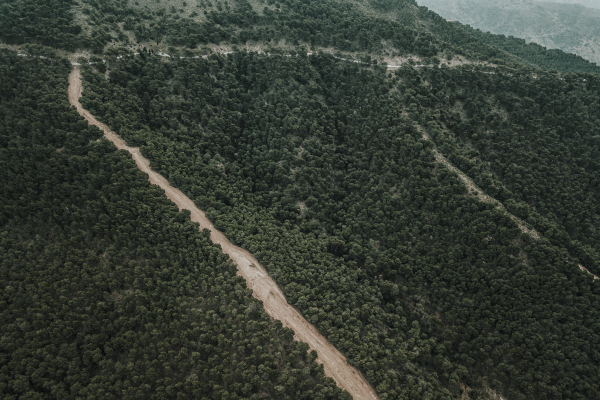 100%
100%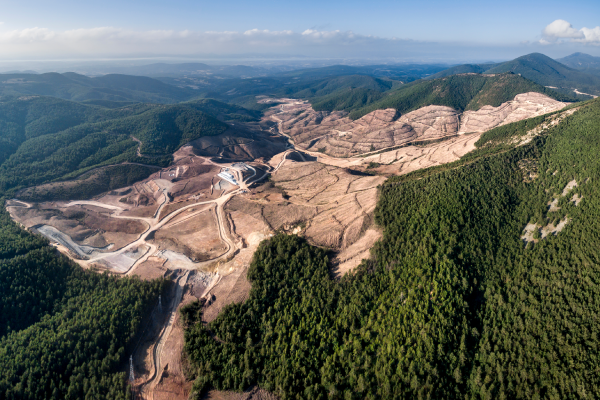 100%
100%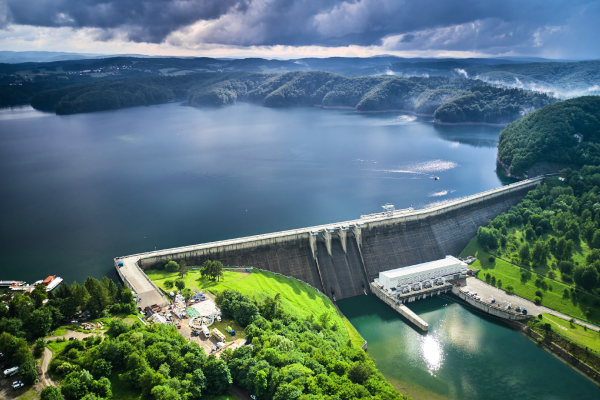 100%
100%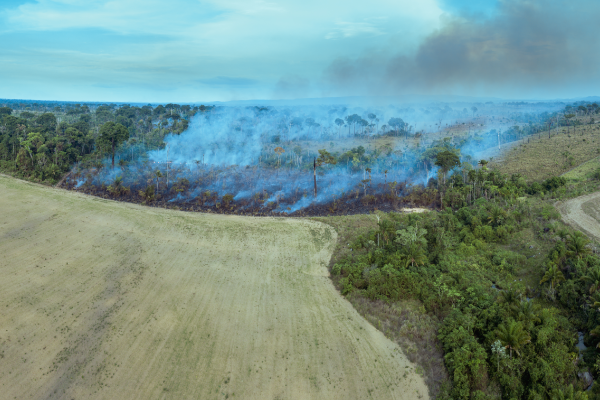
Planning and development is the modification or transformation of a territory with the goal of making it accessible, functional and usable.
Planning and development make it possible to practise various activities in forest regions.
Recreational tourism (hiking, hunting, fishing, etc.)
Electricity production (hydroelectric dams, wind turbines, etc.)
Each activity requires specific planning and development.
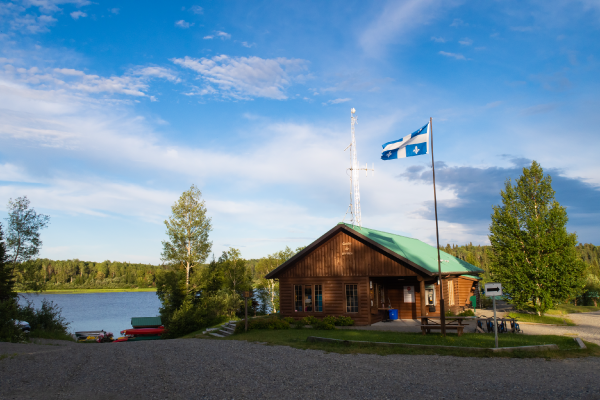
These activities require planning and development, such as the construction of reception buildings for tourists and building trails.
This does not require cutting down a lot of trees.

A reception building in a national park in Abitibi
These activities require the planning and development of roads to transport the wood to logging camps. Forest camps are sometimes built to house forestry workers.
This does not require cutting down a lot of trees.
A logging Road
Roads are built to transport logs to sawmills, for example.
Mining requires large areas to be cleared so that mining companies can extract mineral ores.
Many trees need to be cut down to make the area accessible for mining activities, and this leads to deforestation because forest is permanently eliminated.
Gold mine in Turkey
Mining certain mineral ores leads to deforestation in certain areas.
Deforestation refers to the human action of permanently eliminating an area of forest.
Producing electricity requires the planning and development of dams, power plants and roads. This leads to deforestation because a lot of trees are permanently removed.
The construction of hydroelectric dams floods large areas, which also causes deforestation.
A hydroelectric dam in Poland
The construction of dams leads to flooding of forest regions and deforestation.
Farming in forest regions requires cutting down large areas of forest, leading to deforestation.
An illegal fire in the Amazon forest in Brazil
Around the world, many hectares of forest are burned or cut down to create farmland. Farmers also burn forest land to add nutrients to their future farmland.
This type of logging involves cutting down all of the trees in a sector. In clear-cutting operations, logging machines are operated all over the territory, without restriction. Clear-cutting has a negative impact on the environment, such as disrupting and destroying fauna habitats. The weight and repeated movement of the machines also compact the soil, while the clear-cutting exposes it to rain and wind, leading to erosion.
Erosion is the deterioration of the soil under the effect of wind, water or human activity.
Clear-cutting has not been practised in Quebec since 1995.
This type of logging consists of cutting all of the mature trees in a given sector. Unlike clear-cutting, cutover protects younger trees and forest regeneration. Logging machines cannot operate over the entire territory and are restricted to certain roads.
Regeneration refers to the renewal, such as the renewal of a resource.
In Quebec, a mature tree is defined as a tree that measures more than 7 metres in height and 9 centimetres in diameter.[2]
Clear-cutting or logging cutover is not synonymous with deforestation.
If there has been clear-cutting or cutover in a forest region and it regenerates naturally or through tree planting, there has been no deforestation.
If there has been clear-cutting or cutover in a forest region and it cannot regenerate because the land is used for something else, such as to build houses or create farmland, then there has been deforestation.
There are different types of selective cutting. In Quebec, partial cutting is the harvesting of less than 50% of the trees in a forest[2].
Cutover and selective cutting have a lower impact on the environment, and are a form of silviculture because the goal is to exploit the forest while ensuring its protection and regeneration.
Selective cutting minimizes the disruption of fauna and flora and protects the soil from erosion, for example.
Sylviculture is a set of rules and techniques designed to exploit the forest while ensuring its regeneration and protection.
To access the rest of the unit, please consult the following pages.