Subjects
Grades
World War II was one of the most significant conflicts of the 20th century. During this period, Canada mobilized to support the war effort. This involvement had a major impact on Canadian society, from the deployment of soldiers overseas to the changing role of women and the political tensions surrounding conscription.
 100%
100%
 100%
100%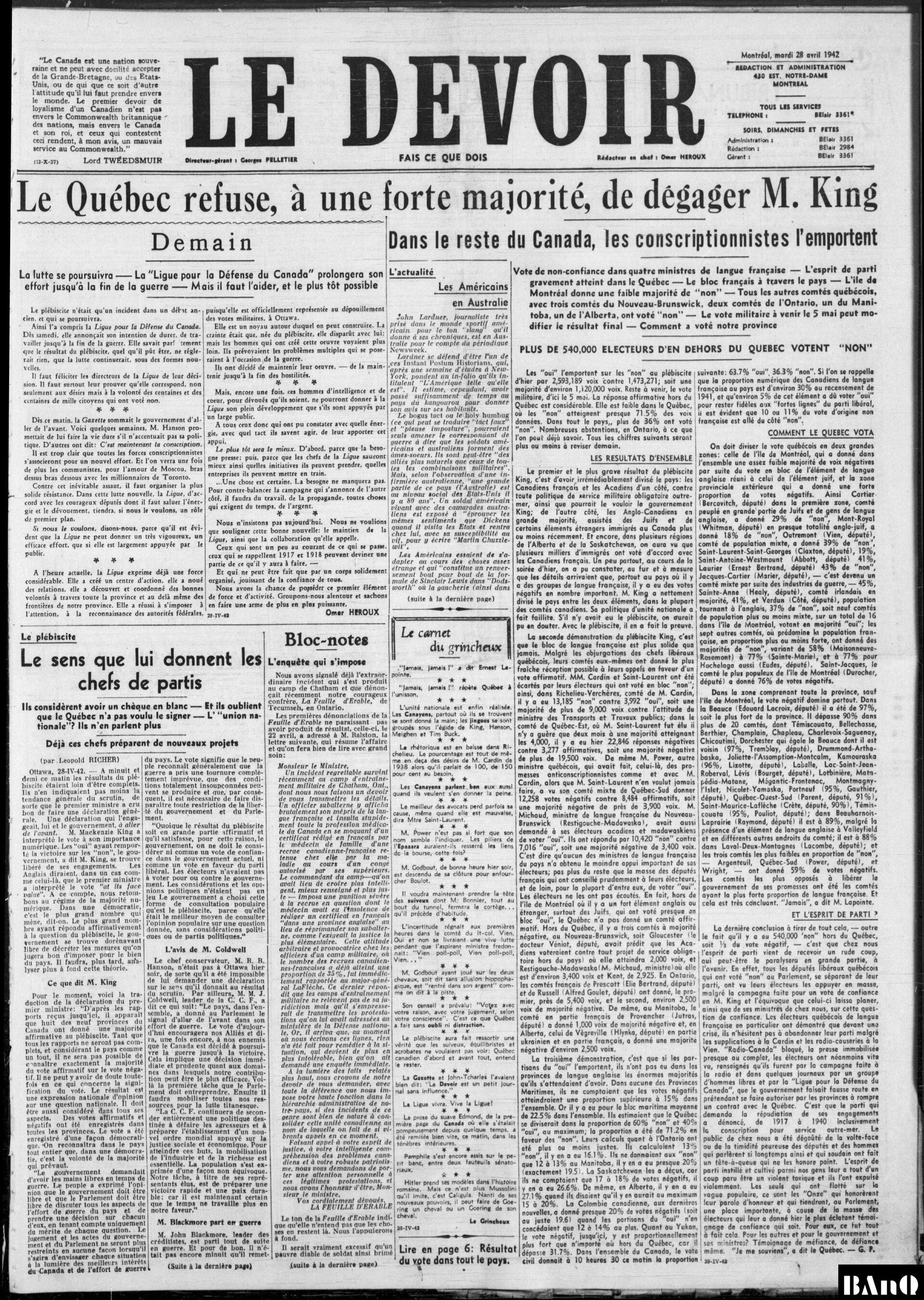 100%
100%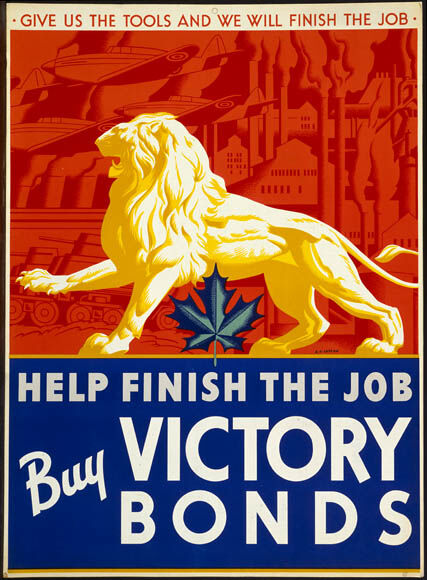
In the 1920s and 1930s, the global political climate remained highly tense. Germany was deeply weakened and angered by the conditions imposed by the Treaty of Versailles, such as:
This, combined with the Great Depression that began in 1929, contributed to the rise of a new fascist political movement: Nazism.
The German Nazi Party came to power in 1933 and began to revive the German economy by restarting military production to rearm the country (which was prohibited by the Treaty of Versailles), and by annexing new territories like Austria and Czechoslovakia.
Created after World War I, the League of Nations (the predecessor of the United Nations) had the mission of preventing the outbreak of new wars. However, in the 1930s, it was unable to enforce the conditions of the Treaty of Versailles or prevent the start of World War II.
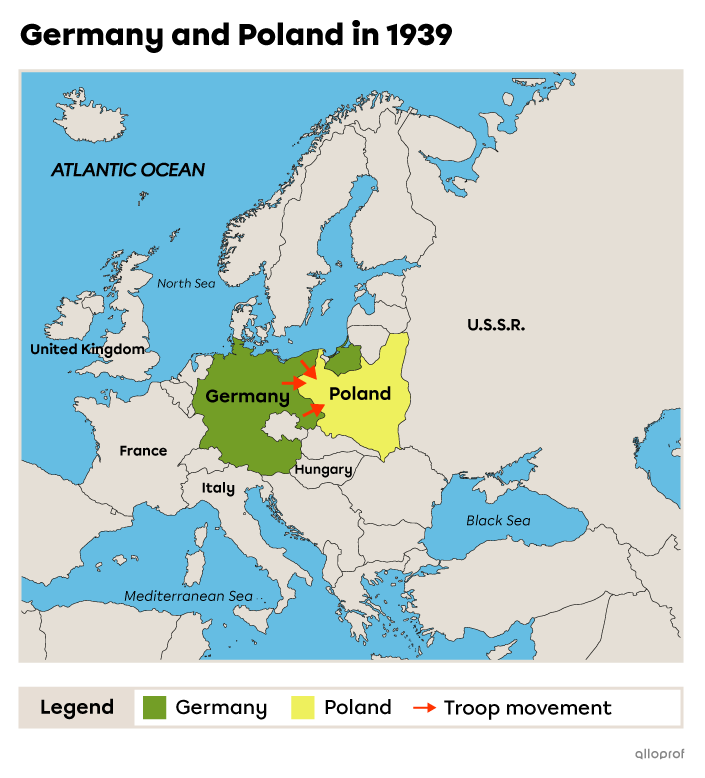
The invasion of Poland by Germany triggered the outbreak of war. Two blocs were established:

Unlike World War I, Canada was not forced to participate in the war. Since the Statute of Westminster was passed in 1931, the territory moved from being a dominion to being its own independent country.
A dominion is a former British colony that has gained some independence. However, the United Kingdom maintained the right to make decisions on major issues such as diplomacy, war, citizenship and the constitution for its former colony.
As a result, when France and the United Kingdom declared war against Germany on September 3, 1939, Canada was not obligated to join. However, Canadian Prime Minister William Lyon Mackenzie King suggested that the government support the United Kingdom in the conflict, which was immediately accepted. Canada joined the war on September 10, 1939 as its own country and not as a colony of the United Kingdom.
At the beginning of the war, the federal government implemented the War Measures Act. This act authorized the government to ration materials and control the price of products as well as wages to ensure efficient industrial and agricultural production during wartime.
This act also allowed the Canadian government to control the media for censorship and propaganda purposes. These measures were put in place to limit communication that could hinder an Allied victory, and to encourage people to enlist in the military and join the war effort. For example, newspapers were monitored and censored to prevent information about military strategies from being disclosed, and posters promoting enlistment were published.
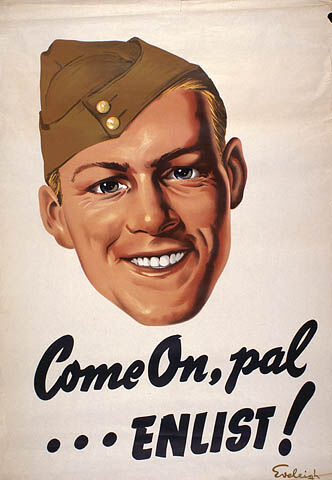
Many posters like this encouraged people to enlist in support of Canada’s war effort.
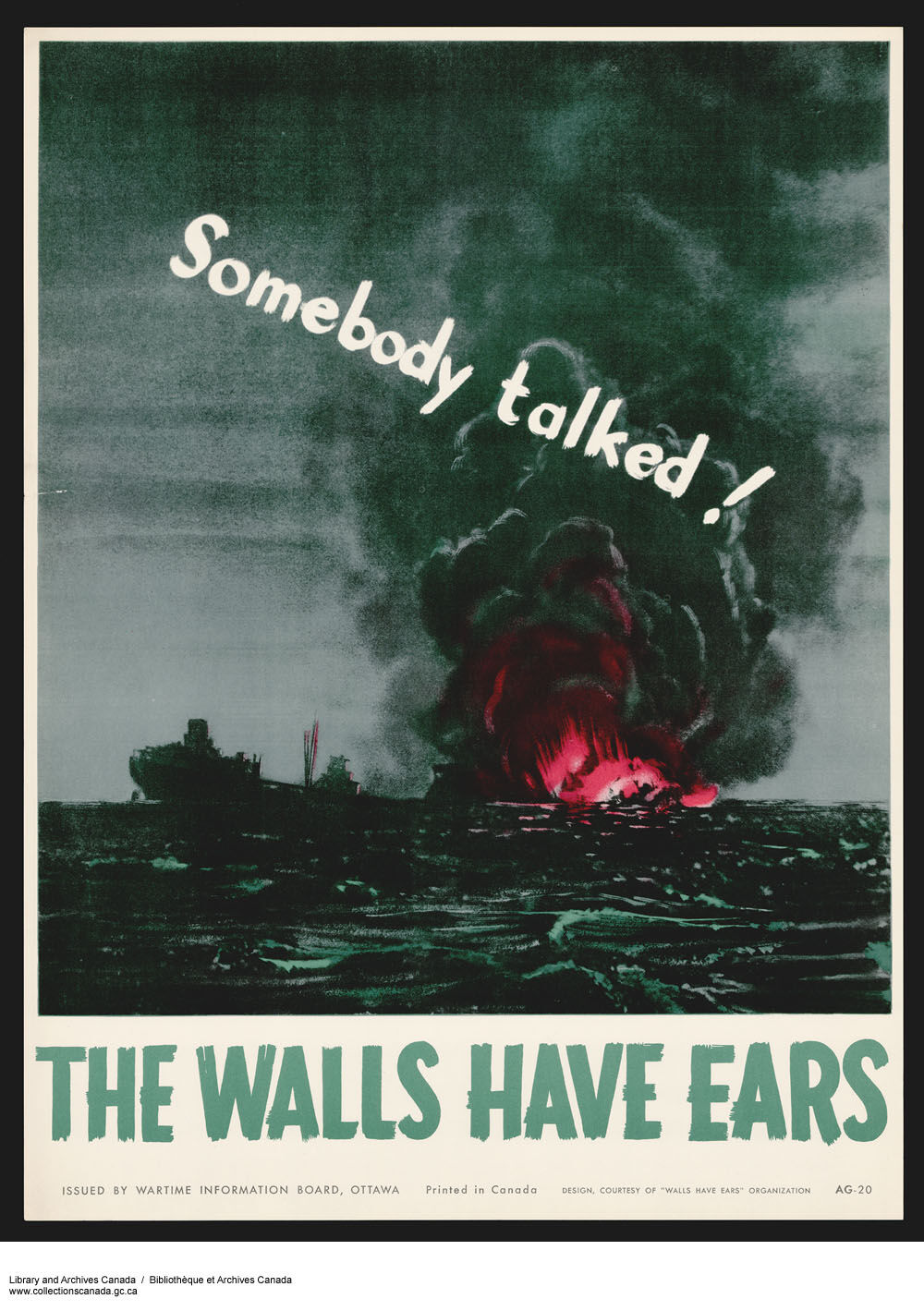
A wartime poster encouraging discretion.
The War Measures Act also impacted immigration. During the war, the government changed its requirements for newcomers and foreign-born citizens. For example, several ships carrying Europeans who were fleeing the war were refused entry to Canada. Many citizens of German, Italian and Japanese origin were sent to work camps because they were, often incorrectly, suspected of being spies or working with enemy countries.
When World War II first broke out, Mackenzie King’s federal government promised not to impose conscription.
Conscription is a political decision made by a government in times of war. When conscription is declared, men deemed fit to fight are forced to enlist and fight in combat.
French Canadians were against this policy and Mackenzie King wanted to keep their support. During the provincial elections, Adélard Godbout also promised that there would be no conscription in Quebec if he was elected, one of the reasons he won the election in 1939.
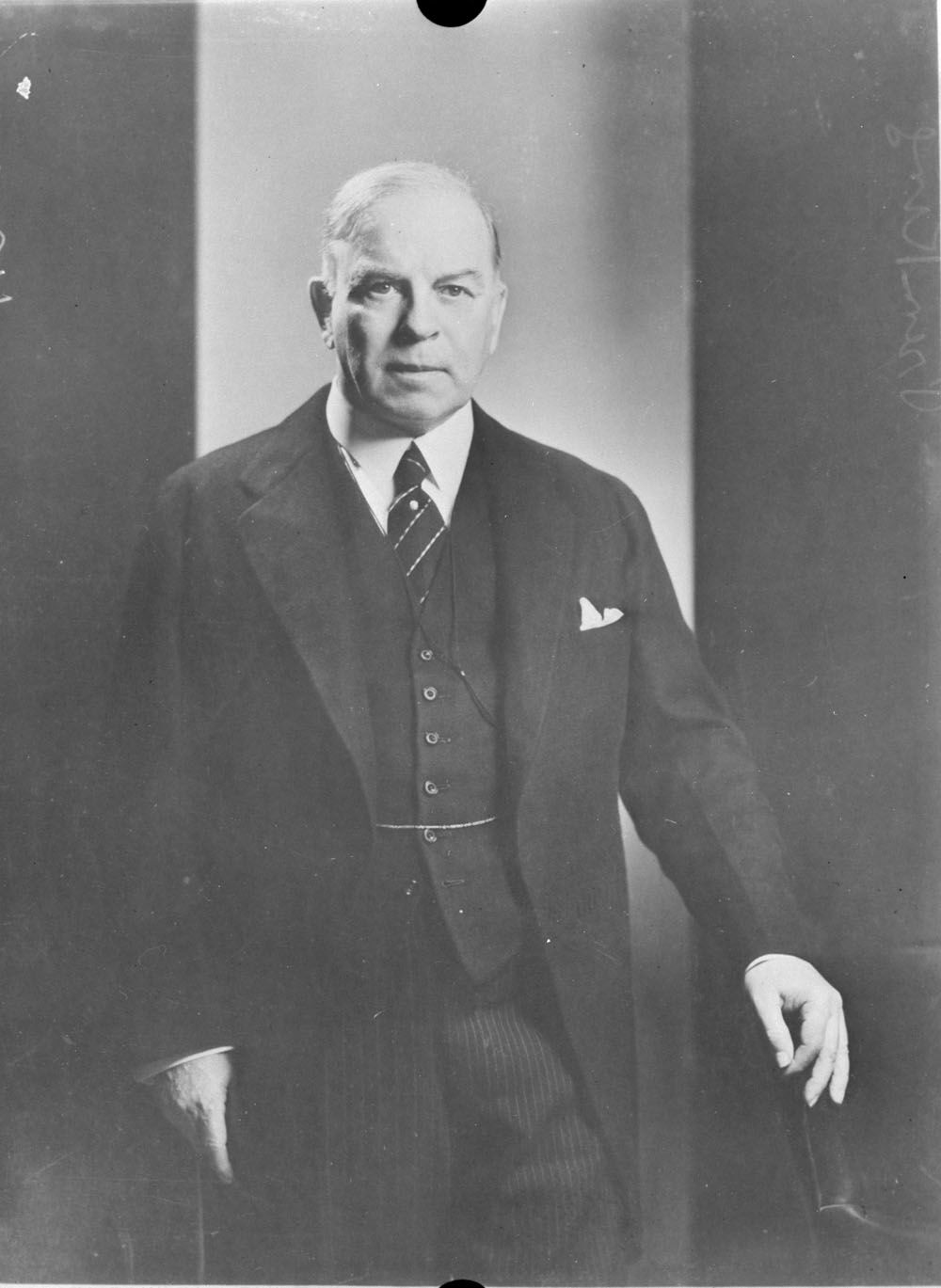
William Lyon Mackenzie King, Prime Minister of Canada during World War II
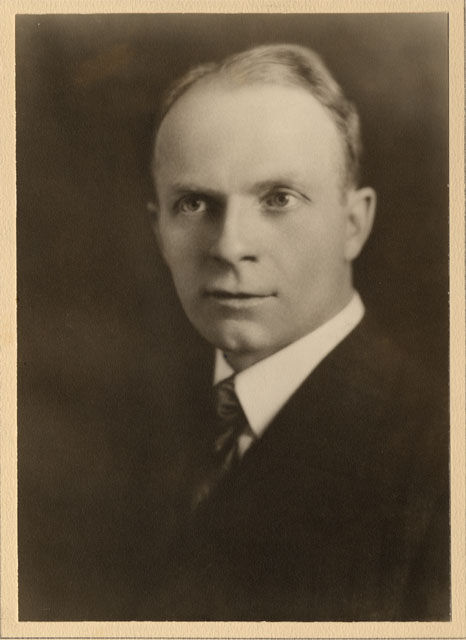
Adélard Godbout, Premier of Quebec during most of World War II
As with World War I, many people volunteered to enlist at the beginning of the war. During this voluntary enlistment, more Anglophones than Francophones joined the Canadian army. This was because English Canadians felt a sense of loyalty to the United Kingdom, while French Canadians felt less connected to the war.
Despite voluntary participation, the demand for soldiers at the front lines increased rapidly. By 1942, the Canadian federal government realized that it needed to increase the number of soldiers being sent to Europe. Faced with the situation, Mackenzie King’s federal government considered breaking its promise and introducing conscription. He asked the Canadian citizens for their opinion on conscription through a plebiscite.
A plebiscite is a vote by the people of an entire country on an issue. It is a form of polling, since the government does not have to respect the result.
Throughout the campaign, citizens formed groups to voice their opinion on the issue. In Quebec, people were mainly against conscription and several protests were organized. The majority of Anglophones supported the measure, which caused tensions in the province and throughout the country.
On April 27, 1942, the results of the plebiscite were in—70% of Quebec was against conscription, but over 60% of the rest of Canada supported it.
Once again, the country was divided. To ease tensions, Mackenzie King passed the Act, but waited before implementing it, hoping that the war would end before he had to impose conscription. He finally implemented it two years later in 1944, and 13 000 conscripted men were sent to Europe. They were the last soldiers to be sent to the front lines by Canada.
Quebec’s response to the plebiscite on conscription in 1942
The war allowed Canada to increase its exports and industrial production. The military industry became very important and many civilian factories began producing military resources. Resources included uniforms, weapons, aircraft, ships and tanks. The agricultural sector was also in high demand to feed the Canadian and Allied soldiers on the front lines.
Since the country had to pay for soldiers’ salaries, weapons, transportation and basic needs, such as food, war-related expenses soared. Canada’s debt increased from $5 billion to $18 billion between 1939 and 1944. The government then put two solutions in place to acquire more funding for the war effort.
The first solution was to turn to the provinces. In 1941, Mackenzie King asked the provinces to introduce a personal income tax system to refill the government’s coffers. The provincial governments agreed to the measure if they could keep some of this money in exchange.
The other solution involved the population’s voluntary participation. To raise money for the war, the federal government reintroduced the sale of victory bonds, allowing individuals to lend money to the government. This money would be returned to them, with interest, at the end of the war.
A Canadian government propaganda poster encouraging people to buy victory bonds
Since many men were going off to war, there was a major shortage of industry workers. Factories gradually turned to women to keep up with production. Women were paid less than men for doing the same job, but this allowed them to become more financially independent.
What’s more, some 50 000 women served in the Canadian military. Women had many more opportunities to serve, unlike during World War I when they were only allowed to be nurses. While some did work in health care, others were now able to work in communications. Several women also became pilots for reconnaissance flights.
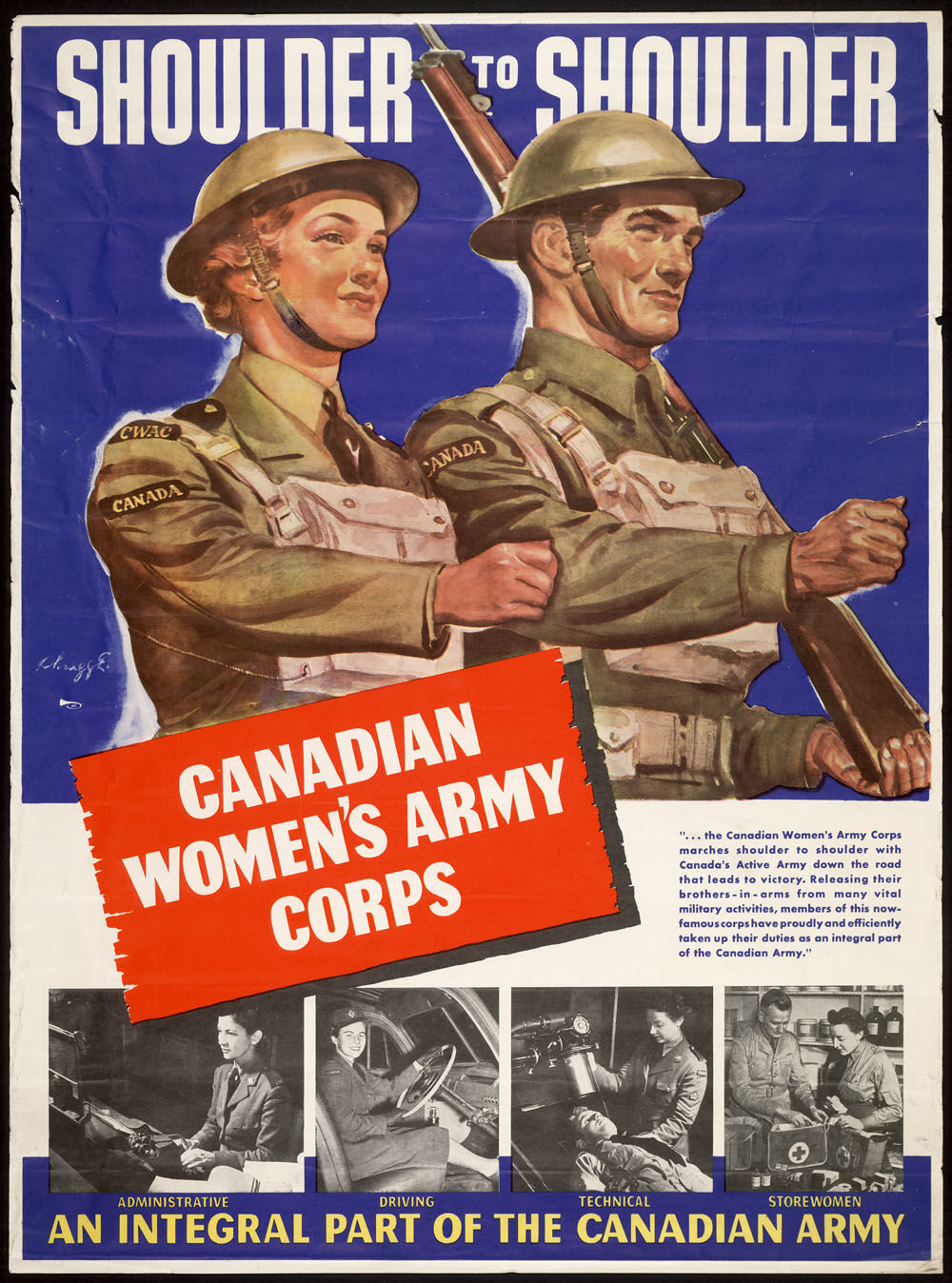
A promotional poster for the Canadian Women’s Army Corps
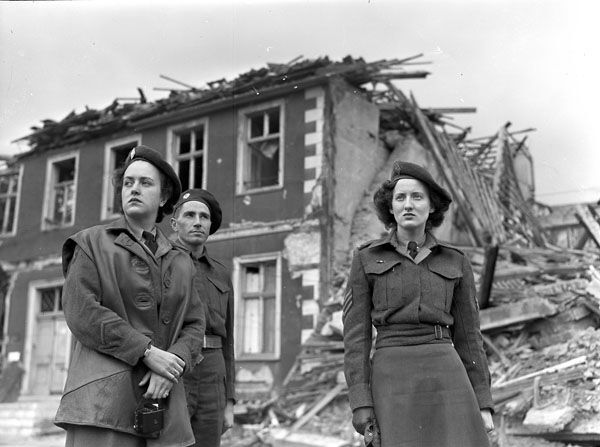
Two members of the Canadian Women's Army Corps entering a German city in 1945.
Women who stayed at home also played a role in the war effort. At that time, rationing was important, since the objective was to send as many resources as possible to the Allies on the front lines. The purchase of various products such as meat, sugar and gasoline were rationed through government-issued coupons. Citizens were also encouraged to salvage certain materials so that industry production could focus on military needs.
In 1945, the war ended and the Canadian soldiers came home. More than one million Canadians served in the military during the war. Of these, 55 000 were injured and over 40 000 died.
Many soldiers returned to civilian life and had to find new jobs. The Department of Veterans Affairs, created in 1944, oversaw their return home. The Canadian government supported veterans by providing them with money and farmland, and helping them find a job or get an education. Despite the aid offered, many veterans had suffered physical and psychological trauma that would follow them their entire lives.
*Content used by Alloprof in compliance with the Copyright Act in the context of fair use for educational purposes. [https://laws-lois.justice.gc.ca/eng/acts/c-42/page-9.html].