Subjects
Grades
 100%
100%
 100%
100%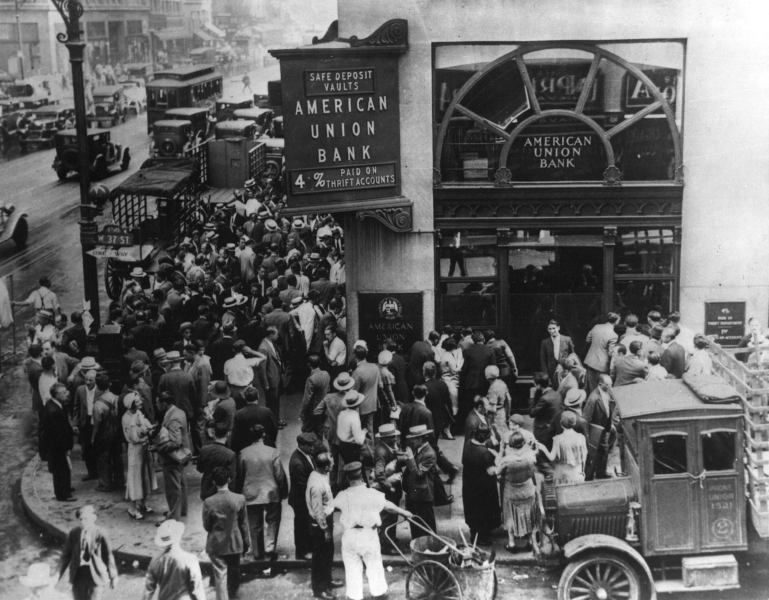 100%
100%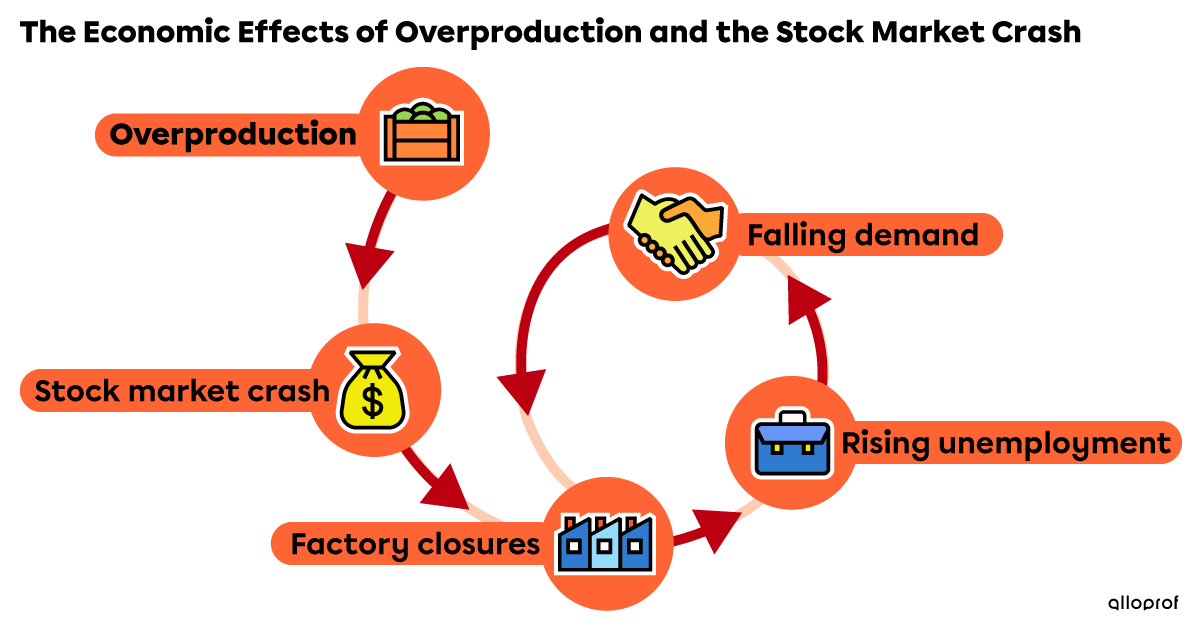
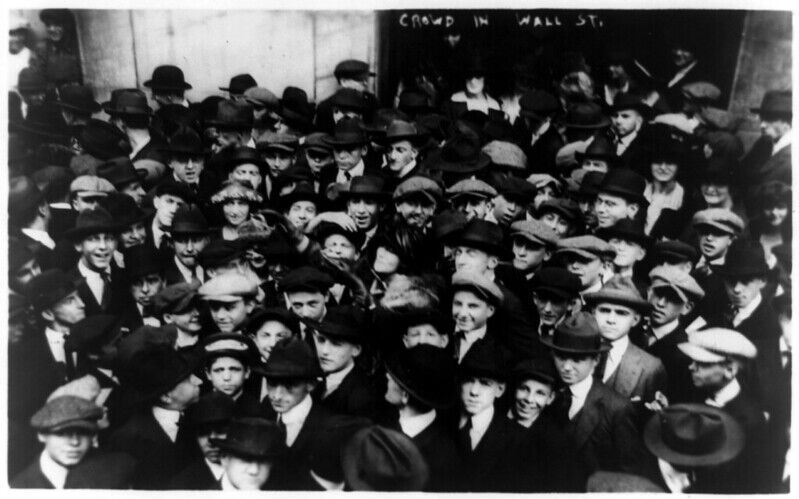
The stock market crashed on Thursday, October 24, 1929, a date that was nicknamed “Black Thursday”. This drastic economic decline marked the beginning of the Great Depression. Almost the entire planet felt the repercussions of the crash, causing economic, social and political changes in society.
After being forced to ration and join the war effort during World War I, people just wanted to enjoy themselves. People were spending more money and the standard of living increased very quickly, leading to the Roaring Twenties.
Some people wanted to make more money and decided to invest in the stock market without fully understanding how it worked. People would buy stocks to make more money and the majority would reinvest this money into more stocks. The demand to buy stocks rose rapidly, but the supply stayed the same, causing the value of these stocks to increase. The market value of the shares gradually became much higher than their actual worth.

Many people were trying to make money by buying stocks in the stock market. People were snatching up shares, which drove up the price.
During the Roaring Twenties, industries were overproducing goods to try to meet consumer demand. When stock owners realized that the various companies were not making as much profit as they thought, they sold their stocks all at once. The value of the stocks fell rapidly because everyone wanted to sell their stocks but there were no buyers.
As the stock market declined, many people withdrew their money from the banks. This led one bank after another to declare bankruptcy.
Les entrepôts de plusieurs industries continuent de se remplir. Puisqu’elles ne peuvent pas liquider toute leur production, les industries procèdent au congédiement de plusieurs de leurs employés. Ces gens ne reçoivent plus de salaire et perdent leur pouvoir de consommation. Puisqu’ils ne peuvent rien acheter, les ventes des industries diminuent. Les entreprises ferment ou congédient alors d’autres personnes et la boucle continue.
In 1930, Canada’s economy became very weak. Even though the economic crisis began in the United States, it directly affected Canada due to the close economic ties between the two countries. Given that Canada relied heavily on exports to its southern neighbour, the pause in U.S. purchasing paralyzed Canadian industries. The Canadian factories then experienced the same decline as those in the United States.
To remain open, several factories did the following:
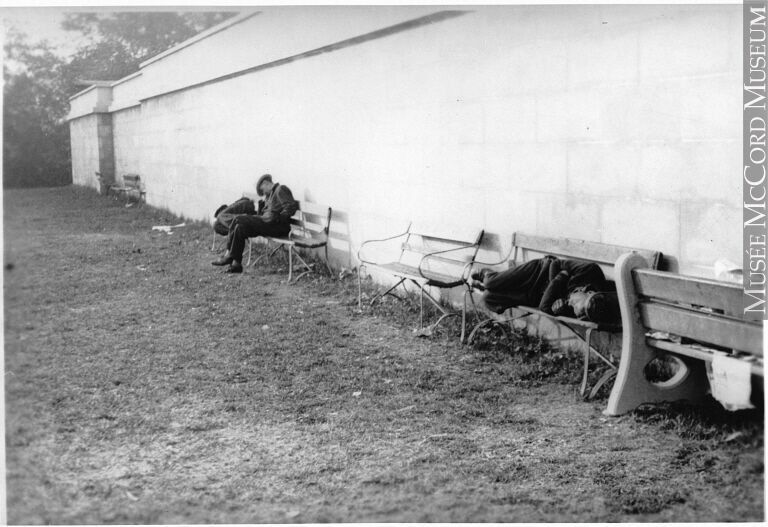
At the beginning of the crisis, the number of unemployed people increased rapidly and many were left to fend for themselves.
Despite their efforts, many companies went bankrupt and closed their doors. Those bankruptcies caused a massive wave of unemployment in Canada as well as in Quebec. The unemployment rate in the province went up to 26.4% in 1932[1].
On top of the rising unemployment rate, the government was ill-equipped to deal with the economic crisis. In fact, social programs were practically nonexistent.
Religious communities and charitable organizations provided assistance. However, given how high the unemployment rate was, the situation far exceeded their capacity to intervene. Therefore, the federal and provincial governments had to step in and take action.
Le taux de chômage correspond au pourcentage de la population qui ne travaille pas et qui recherche activement du travail.
Under these circumstances, the Canadian government and the various provincial governments intervened to try to pull the Canadian economy and society out of the crisis.
Interventionism refers to a policy where the government must intervene in the country’s economic affairs.
Significant amounts of money were being invested by both federal and provincial governments to limit the effects of the crisis.
In 1935, the Bank of Canada was established to stabilize the country’s economy. and centralize control over money.
The increased number of unemployed people living on the streets of major cities created tension in working-class neighbourhoods. Soup kitchens were opened, but this hardly resolved the situation. Religious charity groups that usually helped the poor were overwhelmed.
To prevent riots, the government proposed various solutions, including public works (work camps), colonization, direct relief and assistance to farmers.
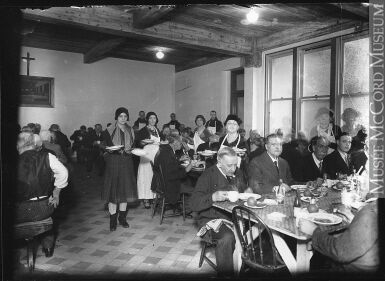
Several religious groups and organizations tried to help unemployed people by setting up soup kitchens.
This series of measures gave unemployed people various jobs, such as road construction, with salaries paid by the government. Since they were earning a salary, they could buy products and pay for services, thus boosting the economy. In some cases, those who were unemployed were also sent to work camps to keep them out of the cities to avoid riots.
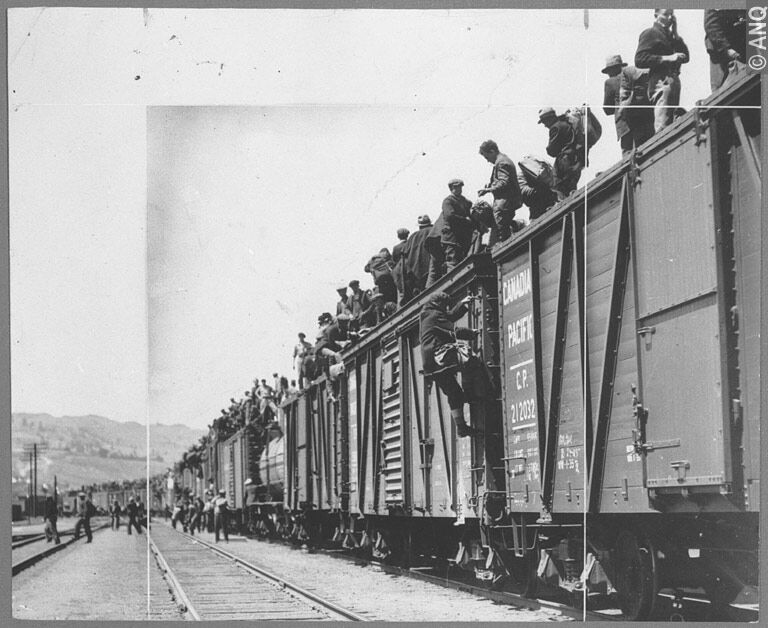
Unemployed people and their families were also invited to settle in more remote areas. In Quebec, settlers were mainly directed towards Abitibi-Témiscamingue and the Lower St. Lawrence. This measure was proposed by Louis-Alexandre Taschereau’s government. Three colonization plans were implemented throughout Quebec: the Gordon, Vautrin and Auger-Rogers plans. The Church supported the various colonization plans, and saw them as a return to traditional values that encouraged people to leave the cities.
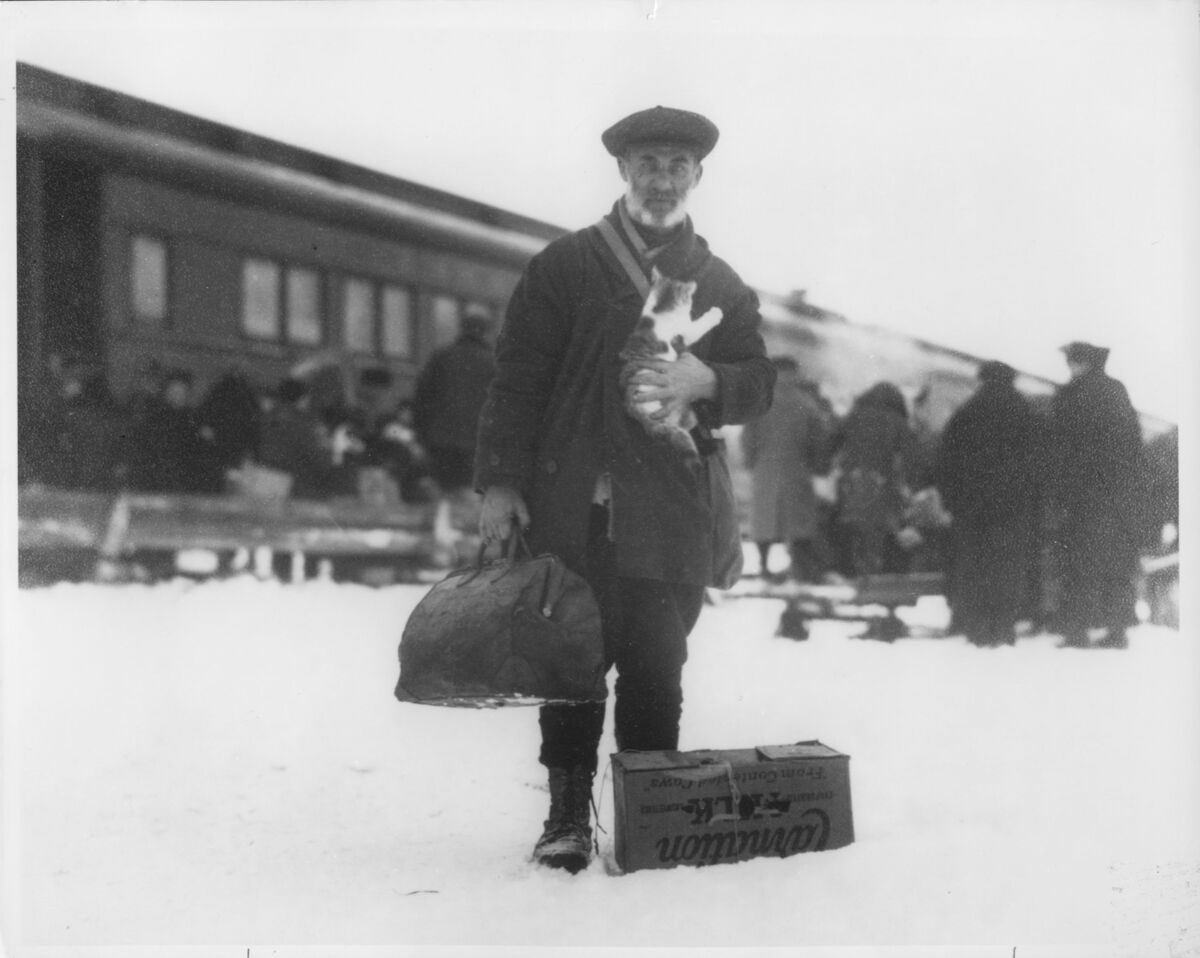
Thanks to the colonization measures, many settlers and their families moved to Abitibi-Témiscamingue and the Lower St. Lawrence.
Since some of the new settlers had no farming experience, many abandoned the settlement project and returned to the city. The lack of services and the harsh living conditions in remote areas also discouraged many people from moving out of the cities. However, thanks to support from the mining and forestry companies, many settlers found employment in these new regions.
Direct relief was the predecessor to the current Employment Insurance Program. It was financial aid given to poor families to help them pay for their basic needs. It was often given in the form of coupons that people could exchange for basic necessities such as food or wood for heating.
Commercial agriculture was heavily impacted by the economic crisis because exports ceased. To improve the situation, the Quebec government set up the Office du crédit agricole, providing money to farmers who were struggling financially. With these funds, farmers could produce more goods to try to revive the economy.
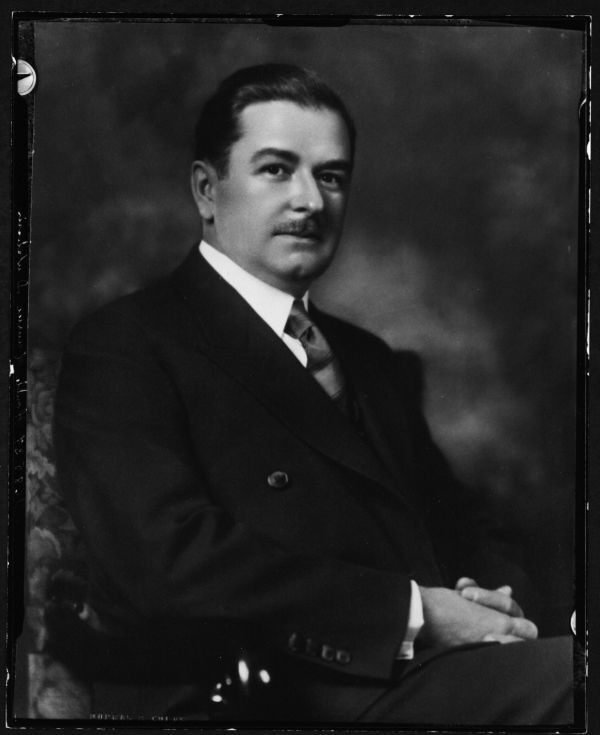
Maurice Duplessis
Maurice Duplessis’s government established the Office du crédit agricole in 1936.
Despite all the measures put in place by the various levels of government, the people were still in need. The crisis lasted 10 years and ended when World War II began, creating new jobs for the military and for the military production sector. That said, the economic crisis caused many people to question capitalism as a whole.
Canadian National. (1933). Un colon débarquant du train avec son chat dans les mains (A settler getting off the train and holding his cat), Laferté [Photograph]. BANQ. https://numerique.banq.qc.ca/patrimoine/archives/52327/3223604
Clarke, F. R. (Circa 1935). Unemployed men sleeping on park benches, Montreal, QC, circa 1935 [Photograph]. McCord Museum. http://collections.musee-mccord.qc.ca/fr/collection/artefacts/MP-1988.59.61
Fonds J. E. Livernois Ltée. (1938). Maurice Duplessis [Photograph]. BANQ. https://numerique.banq.qc.ca/patrimoine/details/52327/3114613?docsearchtext=maurice%20duplessis
American union bank [Photograph]. (n.d.). Wikimedia Commons. https://commons.wikimedia.org/wiki/File:American_union_bank.gif
Church basement soup kitchen, Montreal, about 1930 [Photograph]. (Circa 1930). McCord Museum. http://collections.musee-mccord.qc.ca/scripts/viewobject.php?section=162&Lang=1&tourID=CW_Alimentation_EN&seqNumber=24
Curb brokers in Wall Street, New York City [Photograph]. (October 2, 1920). Library of Congress. https://www.loc.gov/pictures/item/92519195/ *Extrait employé par Alloprof conformément à la Loi sur le droit d'auteur dans le cadre d'une utilisation équitable aux fins d’éducation [https://laws-lois.justice.gc.ca/fra/lois/c-42/page-9.html].
Strikers from unemployment relief camps en route to eastern Canada during "March to Ottawa," June 1935 [Photograph]. (June 1935). McCord Museum. http://collections.musee-mccord.qc.ca/fr/collection/artefacts/C-029399/