Subjects
Grades
The Roman Empire was born in rather dramatic circumstances. The Republic had been in existence for almost 500 years when it was transformed into an empire in 27 B.C.
Julius Caesar
Julius Caesar was an important general of the 1st century B.C. Thanks to his great tactical skills, he conquered Gaul, which then became a Roman province. On his return to Rome, he had himself appointed dictator in order to resolve some major problems in the running of the Republic. Senators, who feared he would retain the many powers he had accumulated, assassinated him in 44 B.C. Caesar's adopted son Octavian succeeded in uniting the Roman territories and was appointed emperor in 27 B.C. He then changed his name to Augustus, the first Roman emperor. It was at this point that the Roman Empire was born.
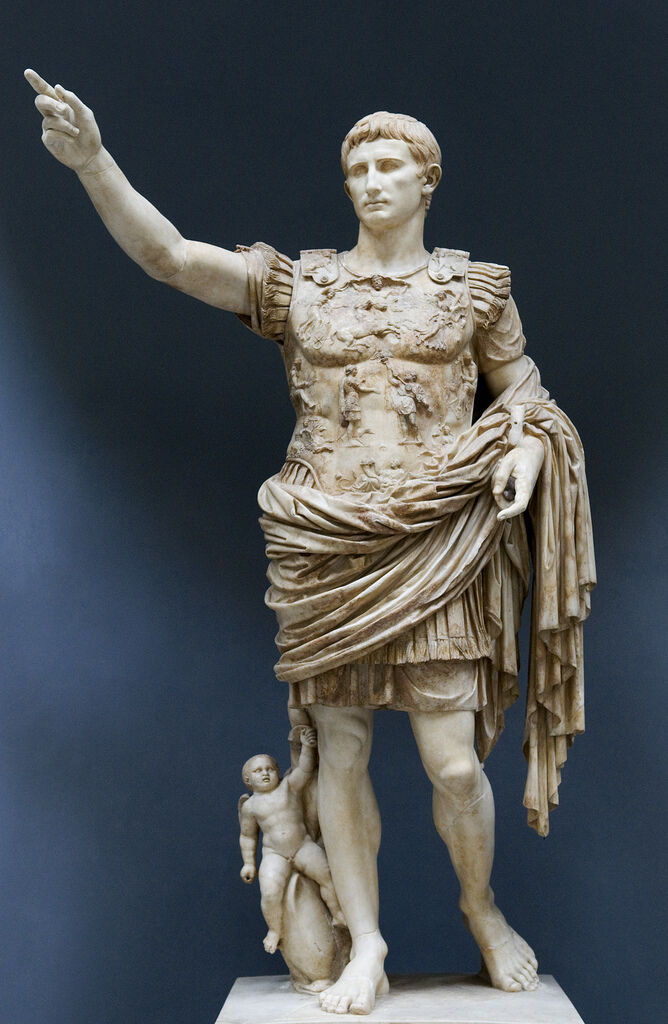
The emperor was the central figure of the Empire, holding all the powers and even being worshipped.
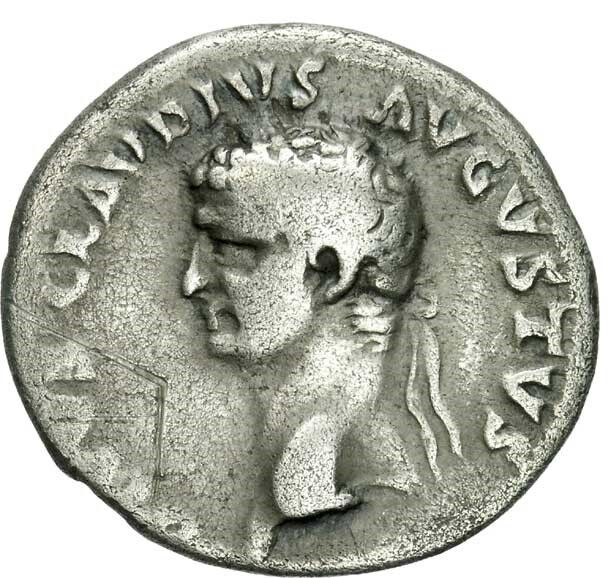
The emperor is depicted on coins and statues, and there are even national festivals in his honour. He exercises control over the political, religious, military and judicial spheres.
In order to simplify the management of the Empire, a number of laws were created that had to be applied throughout the territory. Around 450 BC, the first code of laws was created, known as the Law of the Twelve Tables. 5 centuries later, in 131, the emperor Adrian published the Praetor's Edict. This document brought together all the Roman laws of the time and made them known throughout the Empire.
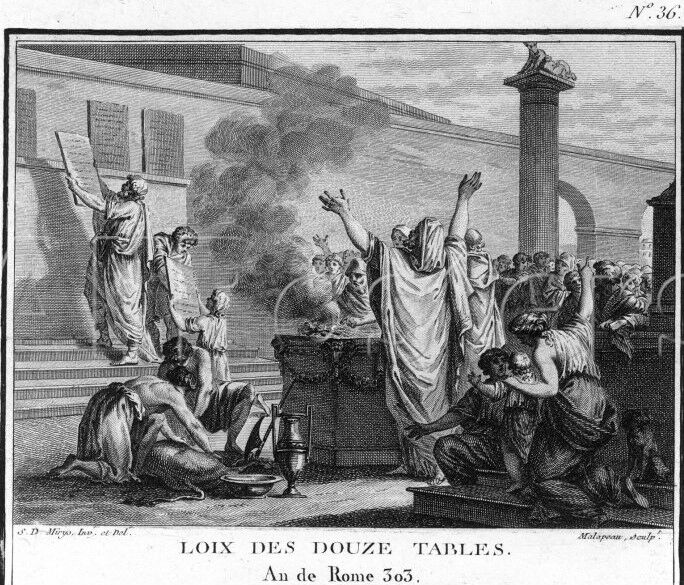
Bronze tables displaying the law
The application of justice during the Empire was based on very precise legal principles. These principles of Roman law were revolutionary for their time and influenced many civilisations over the years.
Principles of Roman law :
Presumption of innocence: A person is considered innocent until proven guilty.
Burden of proof on the plaintiff: The accuser must prove that he or she is right.
The judgement must be supported by evidence: Only concrete evidence (facts) can be used to prove someone's guilt.
Roman institutions, which were so important in the Republic, lost their importance during the Empire, as the emperor took over all the powers. Here is a diagram showing the Roman institutions during the Empire and their roles.
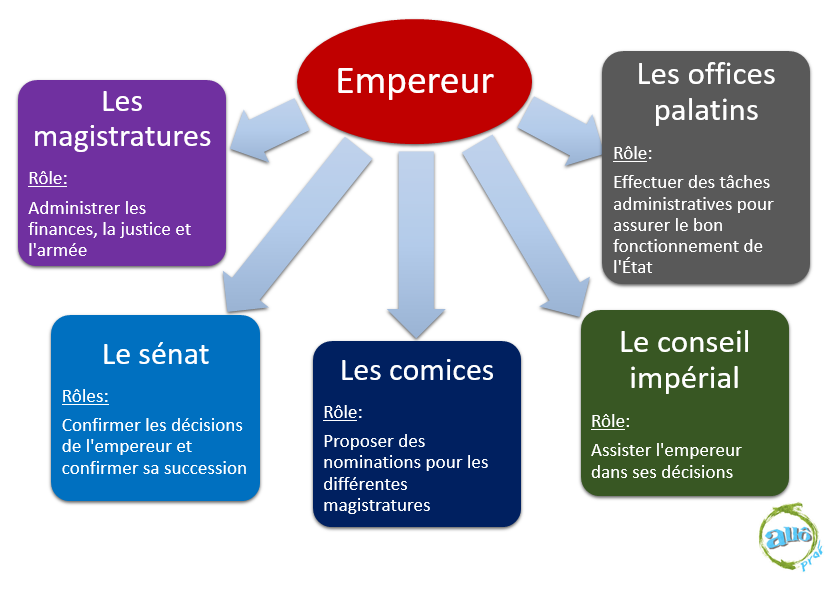
Note : English image coming soon!