Subjects
Grades
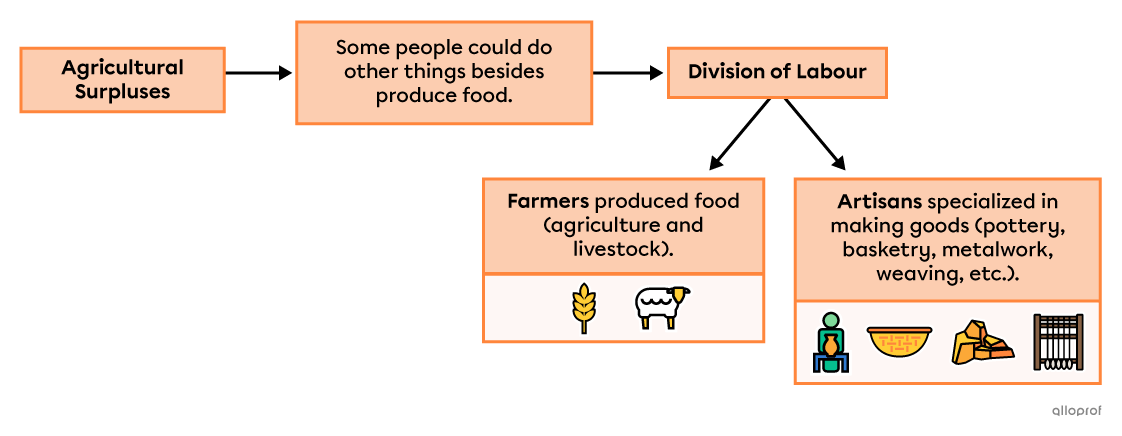
With agriculture, humans began producing more food than they needed. These agricultural surpluses allowed some people to dedicate themselves to other activities, such as crafts. This was the beginning of the division of labour, which led to the development of trade in the form of barter. Sedentarization also led to the emergence of the concept of property.
 100%
100%
 100%
100%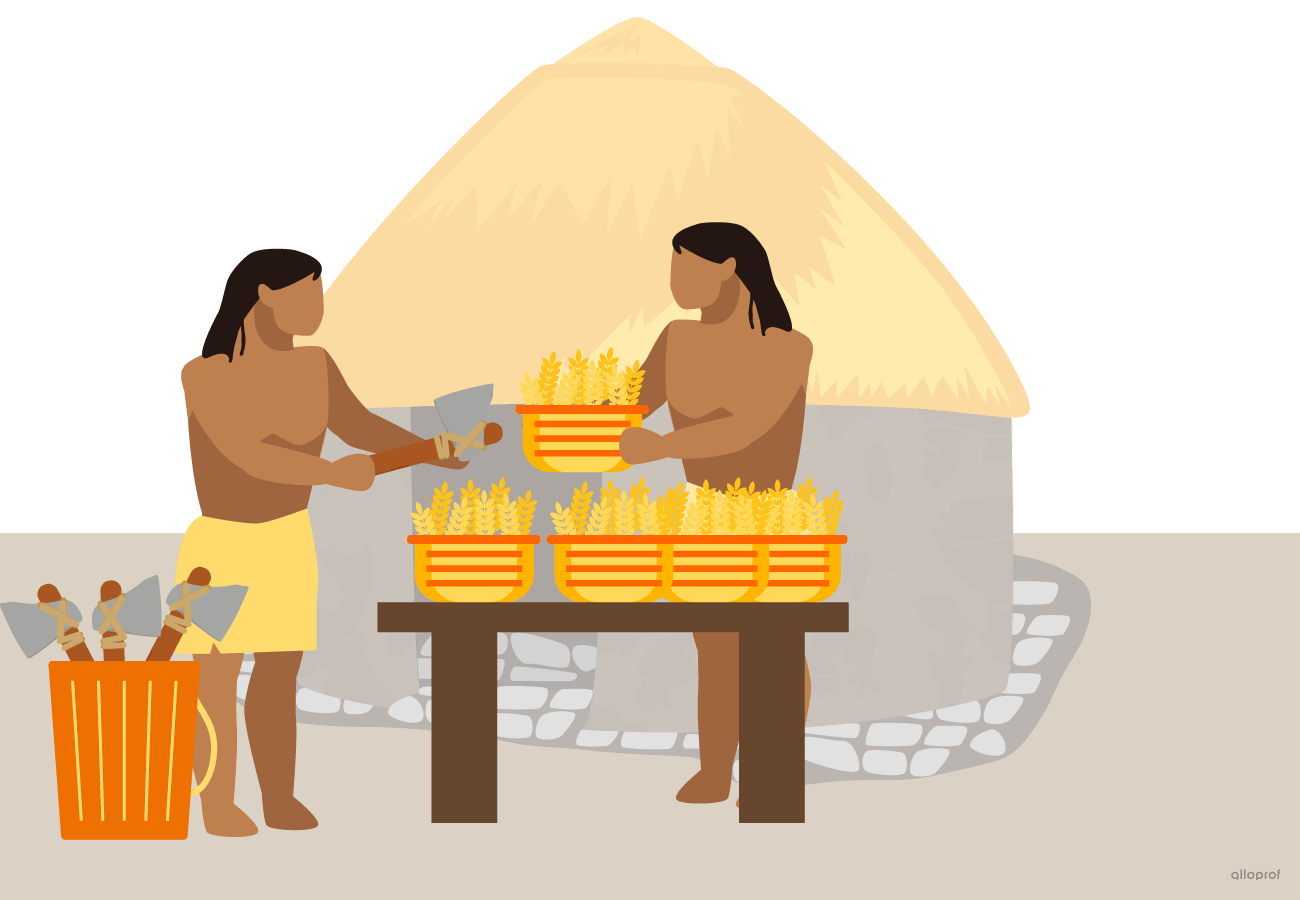
Agriculture was the main occupation of most inhabitants of the first sedentary villages. It was also the basis of their food production. New tools and techniques allowed them to produce more food than they needed (in other words, a surplus).
Agricultural surpluses meant that not everyone in the community had to work to produce food. They could therefore do other tasks, like making tools or clothes. These people were the first artisans. This way of organizing work, with some people producing food and some producing other goods, is called the division of labour.
The term sedentary refers to a person or group that settles permanently in one place.
The division of labour means sharing tasks so that everyone specializes in a certain kind of work.

The sedentary way of life brought about new needs in terms of tools and objects. Several technical innovations were developed to meet these needs. The artisans who manufactured these tools and objects developed an expertise in a particular field. What they manufactured was then used for agriculture, cooking, hunting, decoration, etc.
| Occupation | Goods Produced |
|---|---|
Potter  | Makes pots and other containers. |
Blacksmith  | Works with metal to make tools and weapons. |
Basket maker  | Makes baskets using plant fibers. |
Weaver  | Makes fabric or rugs. The fabric can be used to make clothes. |
Pottery was an important innovation for the first villages. Pots and other containers were useful for cooking and storing agricultural surpluses.
The division of labour leads to the production of different kinds of goods. These goods, such as pots, baskets, and agricultural surpluses, could then be exchanged for other goods. This type of exchange is called barter.
Barter is the exchange of a good or service for another.
Two people bartering.
A network of exchange gradually developed between the different Neolithic villages, making it easier for villagers to meet their needs.
To facilitate trade, a new occupation emerged: merchants. Merchants acted as intermediaries between people exchanging goods. For example, a merchant might trade baskets made by a basket weaver for food from another village. Over time, villages grew and economic activities diversified, leading to an increase in trade. This is how the foundations of commerce were laid.
With their increasingly important role, merchants had a central place in the new social hierarchy that emerged in these growing villages.
With sedentarization, the concept of property emerged. By producing their own food, villagers took ownership of the land they lived on. They came to see the fields they cultivated and the animals they raised as their own and wanted to protect them. In the Neolithic period, land was considered to belong to the community, and therefore to the entire village.
Property refers to owning something, such as tools, land, a house, etc.
To access the rest of the sedentarization unit, you can consult the following concept sheets.