Subjects
Grades
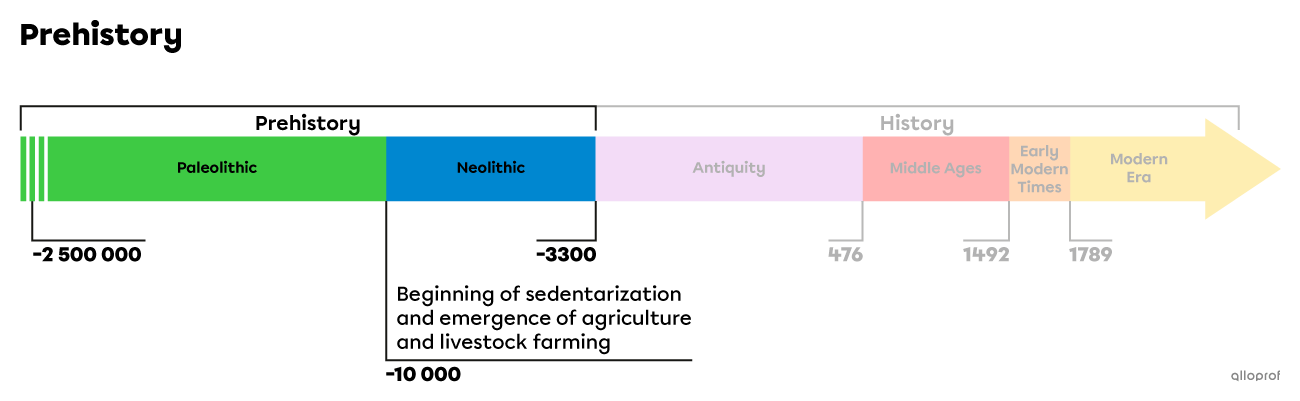
In the Neolithic period, humans transitioned from a nomadic way of life to a sedentary way of life. This major change, known as sedentarization, was made possible by natural factors such as a warming climate and abundant resources in the Fertile Crescent. It was also directly linked to the invention of new subsistence activities, such as agriculture and livestock farming, which led to the creation of the first villages.
 100%
100%
 100%
100%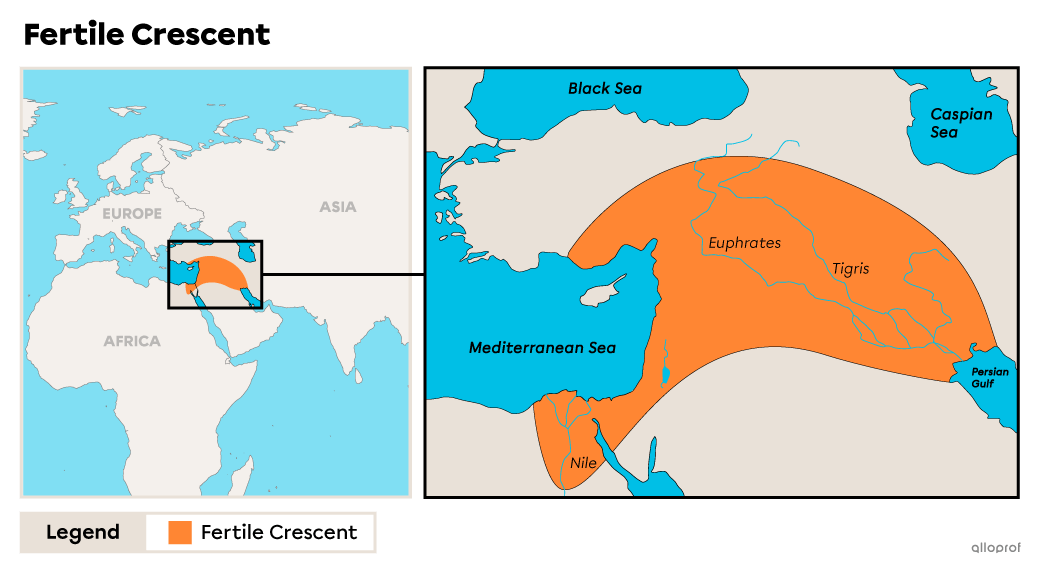 100%
100% 100%
100% 100%
100% 100%
100% 100%
100%
In the Neolithic period, humans gradually began to abandon their nomadic way of life and adopt a sedentary way of life instead. This major change was made possible by:

Towards the end of the Paleolithic period, the earth’s climate gradually warmed. This led not only to the melting of glaciers, but also to major environmental changes in certain regions.
A number of favourable natural factors enabled humans to adopt a sedentary lifetstyle. Some regions, such as the Fertile Crescent, become highly fertile. In addition, natural resources became more plentiful.
The Fertile Crescent is a region of the Middle East whose fertile soils facilitated the emergence of agriculture. It was here that the first human settlements were established and the first villages appeared.
The warming of Earth’s climate caused a number of consequences, including an increase in natural resources available to humans.
Several new species also appeared.
Around 10 000 BCE, humans realized that certain seeds that fell to the ground grew into plants that they could then eat. This is how agriculture began. The fertile soil in the Fertile Crescent region was ideal for growing a wide variety of crops.
Humans began to domesticate plants. They chose which plants to grow according to their needs:
After domesticating plants, humans began to domesticate certain animals. They captured animals and kept them in enclosures close to their homes. That way, they didn’t have to hunt them anymore.
The first animal species to be domesticated were sheep, goats, cattle, and pigs. Humans used these animals for food (meat and milk) and clothing (leather and wool).
Over time, humans increasingly replaced hunting and gathering with agriculture and livestock farming. Agriculture and livestock farming allowed humans to produce surplus food. Easier access to food led to significant population growth.
In addition, since they no longer needed to travel to find food, they settled in permanent locations. In other words, they become sedentary. Humans gathered in larger groups to better protect themselves and produce more food. This led to the development of the first villages.
The emergence of agriculture changed the way people worked. They needed specialized tools to help them cultivate the land. Here are the main tools they used.
A digging stick
A digging stick had several uses: uprooting plants, making holes in the soil to plant seeds, and removing weeds. A pointed stone was attached to the end of a wooden handle using thin leather straps.
A sickle
A sickle was used to cut the stems of cereal plants at their base. It was made by attaching one or more stone blades to a wooden handle with bitumen.
An adz
This tool was used to cut down small trees and loosen hard soil. It consisted of a thick, sharp flint blade attached to a wooden handle.
A hoe
A hoe was used to turn the soil and make it easier to work for farming. It could also be used to remove weeds from a field.
A grindstone and a handstone
The grindstone and handstone were very useful for grinding cereals, such as wheat, into flour. The grains were placed on the grindstone, and the handstone was used to crush them.
To access the rest of the sedentarization unit, you can consult the following concept sheets.