Subjects
Grades
Sedentarization is the shift from a nomadic way of life to a sedentary one. This major change marks the transition between the two periods of Prehistory, the Paleolithic and the Neolithic.
 100%
100%
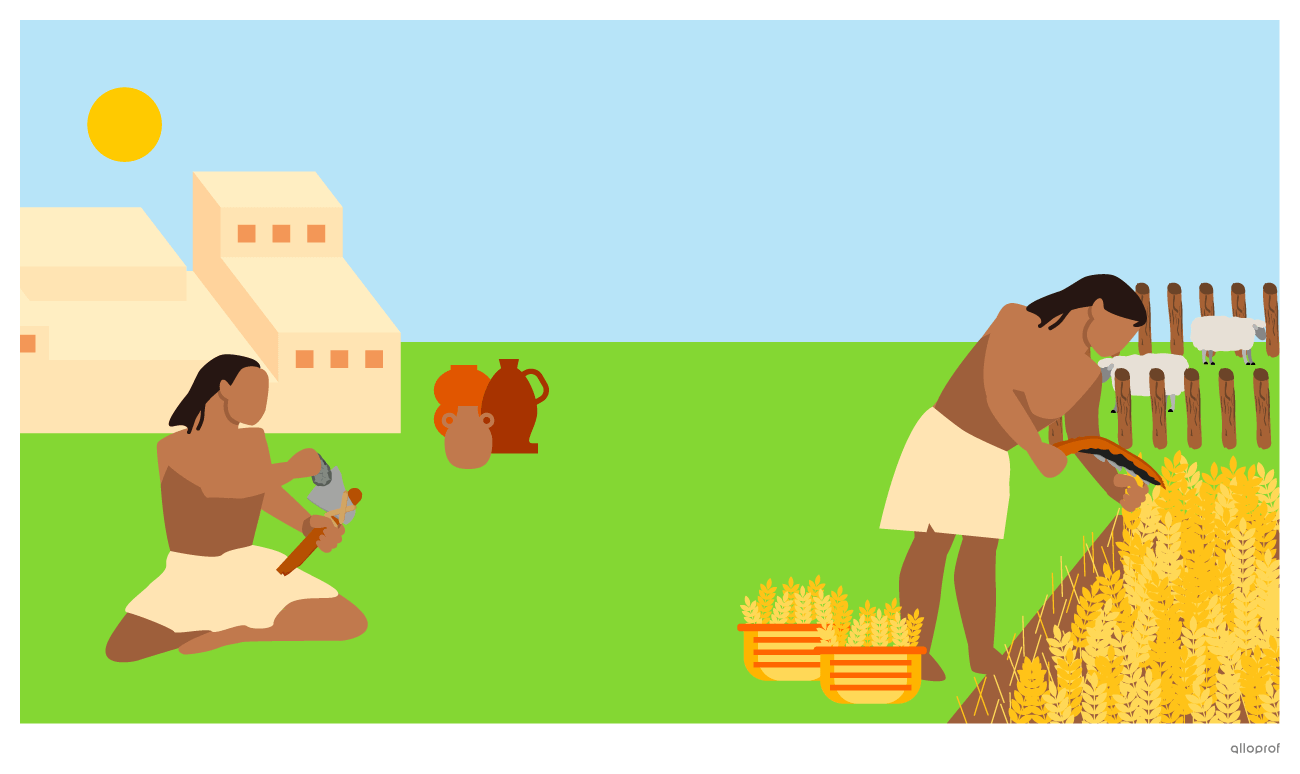
During Prehistory, a major change marked the transition between the end of the Paleolithic and the beginning of the Neolithic: sedentarization.
Sedentarization refers to the shift from a nomadic way of life (moving from one place to another) to a sedentary one (remaining in the same place).
The first humans were nomadic, meaning they travelled long distances to hunt and gather food. The warming of the climate at the end of the Paleolithic period brought changes to the environment in some regions. These changes helped make agriculture and livestock farming possible.
These new subsistence activities allowed humans to stop moving constantly in search of food; they began to settle permanently in one place. This change marks the beginning of the Neolithic period and the beginning of sedentarization.
A subsistence activity is an activity through which a person gets the resources needed to survive (e.g., food).
This change in people’s way of life led to the emergence of the division of labour, trade, and a new social organization. The new activities led sedentary populations to develop new tools.
Çatal Höyük was an example of a Neolithic village. Its inhabitants were sedentary and practised agriculture and livestock breeding. Archaeological digs at this site have helped us better understand how people lived during this period.

Things to remember about nomadic and sedentary ways of life | ||
|---|---|---|
| Way of life | Nomadic | Sedentary |
| Historical Period | Paleolithic | Neolithic |
| Main subsistence activities |
|
|
| Type of dwelling | Temporary (caves or small huts) | Permanent |
| Technical innovations |
|
|
To find out all you need to know about sedentarization, see the following concept sheets:
The events of sedentarization occurred before the common era (BCE). These dates can be identified in 3 different ways.
| With the mention BC (before Christ) after the date | Example: 3300 BC |
| With a negative sign before the date | Example: -3300 |
| With the expression BCE (Before Common Era) after the date | Example: 3300 BCE |