Subjects
Grades
To protect themselves and practise agriculture, humans started living together in groups. This led to the emergence of the first villages and a new social organization.
 100%
100%
 100%
100% 100%
100%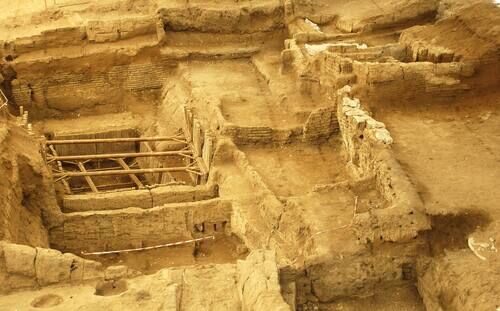 100%
100%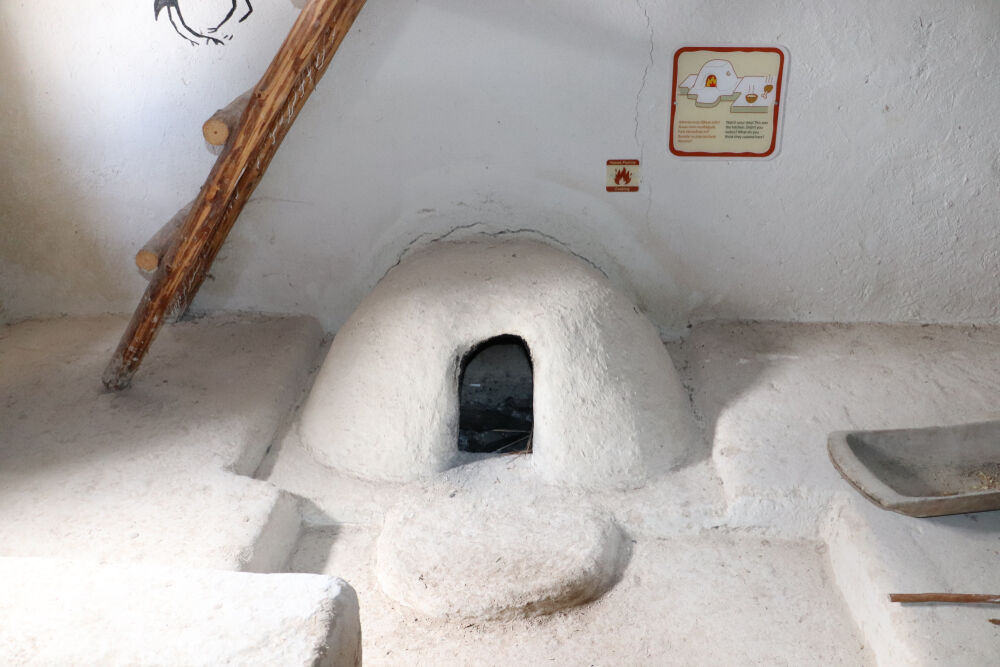 100%
100%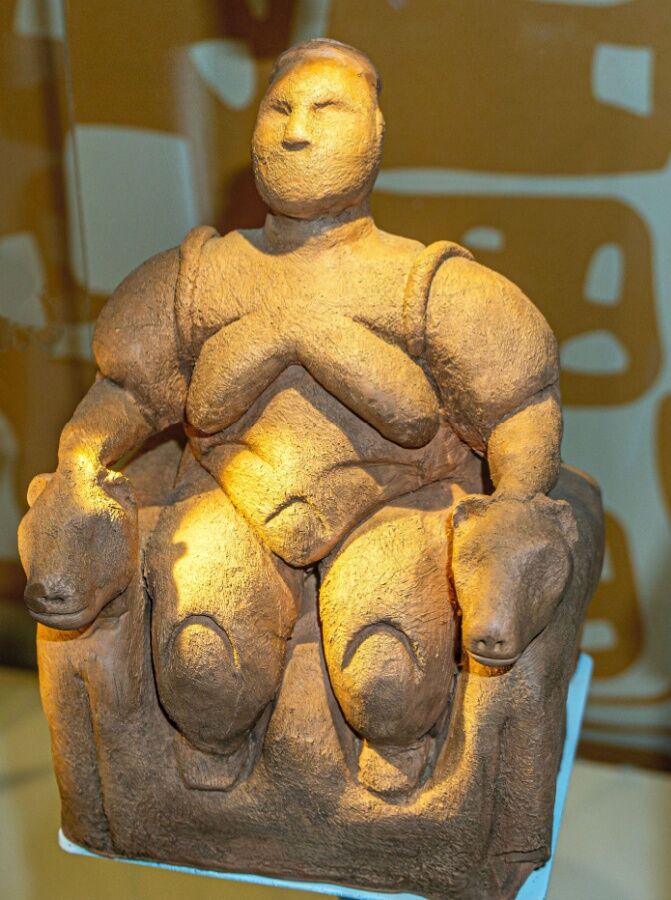 100%
100%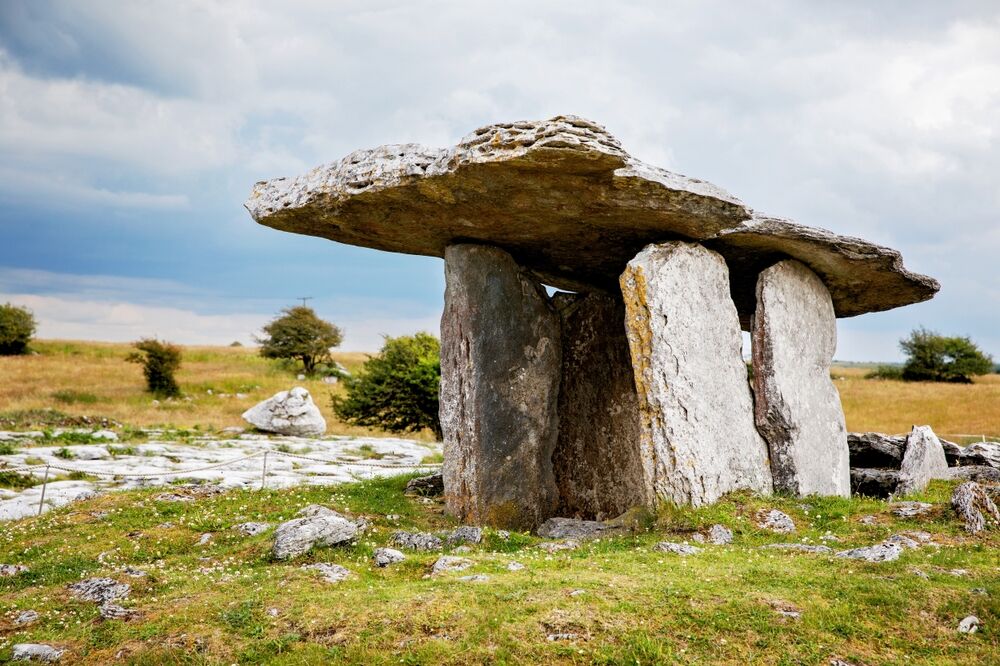
Better access to food led to significant population growth. Since people no longer had to move from place to place to feed themselves, they chose somewhere to settle permanently. They grouped together in greater numbers to better protect themselves and produce more food. This phenomenon led to the emergence of the first villages.
The first Neolithic villages consisted of a few hundred or even a few thousand inhabitants. Some of the villages had fortifications around them to protect the inhabitants, crops, and herds. The dwellings in the first villages were circular or semicircular.
Over time, the villages grew in size. Houses became rectangular and were built right next to each other, with an entrance through an opening in the roof.
A fortification is a structure used to protect against enemy attacks. It could be simple, like a palisade, or more elaborate, like a stone wall.
Mallaha, Mureybet, and Çatal Höyük were some of the oldest Neolithic villages. Studying the remains of these villages gives us a lot of information about how the first sedentary communities lived.
The term sedentary refers to a person or a group that settles permanently in a territory.

The Mallaha archaeological site is located in the region that is now the territory of Israel. It is one of the earliest sites showing evidence of a sedentary way of life, with features like:
During the time it was inhabited, Mallaha was located near marshes and dense forests. Since archaeologists have only uncovered part of the site, the village population has not been estimated.
The houses in Mallaha were circular or semicircular and partially dug into the ground. The walls were built with wooden posts, and their bases were made of pieces of stone.
The houses contained:
The site of Mallaha shows no traces of agriculture or livestock farming. Its inhabitants obtained their food by hunting, fishing, and gathering.
Various objects have been found at the site of Mallaha. They include serrated flint blades, a new type of blade that allowed people to make more efficient tools. Decorative objects have also been found, such as limestone figurines.
Burial sites have been found around the houses of Mallaha. Bodies were buried individually or in groups of 2 or 3. From the way the burial sites were organized and the small number of jewelry items found, it is hard to tell whether there was any social hierarchy at Mallaha.
Mureybet was another Neolithic village. It was located in what is now Syria. Archaeological excavations have uncovered some of the earliest evidence of agricultural activity. New ways of building houses were also discovered there.
The way houses were built in Mureybet changed over time. At first, the houses were partially dug into the ground, similar to those in the village of Mallaha.
Over time, houses were built at ground level, and later they were raised on foundations above the ground. The space between the rooms and the ground helped protect the house from the cold and damp. The space could also be used to store food.
At the same time, another important change took place: The houses started to be rectangular instead of circular.
Archaeological excavations have also uncovered buildings larger than Mureybet’s houses. These were likely used as community spaces.
Mureybet is the site where archaeologists have found the first evidence of agriculture. Its inhabitants grew barley, wheat, peas, and lentils. They also began livestock farming, raising goats and sheep.
The inhabitants also continued to gather wild plants and hunt for food.
Burial sites at Mureybet were located between the houses or in abandoned houses. Most bodies were buried individually. Some were buried with beads and pots, which suggests they may have had a higher social status.
Different materials were used to make tools and objects. The remains show:
The use of clay to make figurines and small containers
Çatal Höyük is an archaeological site located in what is now Turkey. This site is very important for the study of Neolithic societies. Archaeologists have found the remains of a distinctive architecture style at Çatal Höyük, as well as frescoes and other artistic elements
Çatal Höyük’s buildings had a distinctive architecture style. They were rectangular or square in shape and built very closely together. People moved around on top of the buildings and accessed indoor spaces by climbing down ladders through an opening in the roof.
The remains of Çatal Höyük
The base of the building walls can be seen in the photograph taken at the archaeological site.
The buildings were constructed with brick walls supported by wood and covered with clay.
Each home was made up of 1 or 2 rooms. There was a central room, an oven built into the wall, and benches to sit on.
A reconstruction of what an oven might have looked like in a house in Çatal Höyük
The people who lived in Çatal Höyük practised agriculture and livestock farming. They grew:
Irrigation techniques were likely used to water the cultivated fields.
The inhabitants also raised animals (livestock farming), mainly pigs, sheep, and goats.
Irrigation means watering land when there is not enough rain.
Craft production was very important at Çatal Höyük, with a number of production sites found. Artisans made weapons, such as obsidian daggers. Obsidian is a type of stone that did not naturally occur in this region. Its presence at Çatal Höyük shows that trade must have taken place between villages.
The objects found at the site also show that inhabitants mastered pottery techniques. Artisans made objects such as clay vessels. They could also carve and polish marble to make vases and jewelry.
Rooms decorated with frescoes have been found in several buildings. They depict scenes of hunting, animals, and deities. Baked-clay figurines representing gods and goddesses have also been found.
A figurine of a seated woman
Burial sites were found inside houses. Since all the burial sites contained objects, it is hard to tell if there was any social hierarchy. Burial sites with a single body were rare.
Remains are what is left of objects, buildings, or other traces of human activity.
What we know about Neolithic societies comes mainly from the remains they left behind. These remains tell us about the way people lived, their beliefs, and the social organization of the first villages.
Remains come in many forms:
Archaeologists carry out excavations to find these remains and learn about past societies and how people lived.
The Poulnabrone Dolmen, in Ireland
This structure served as a burial site for a number of people.
To access the rest of the sedentarization unit, you can consult the following concept sheets.
Social Organization
As more people lived together in villages and had to work together to carry out the tasks involved in agriculture, we may assume that Neolithic people developed a new system of social organization. A new social hierarchy began to emerge.
Since there are no written records describing this organization, it can only be studied through the remains left behind by these societies. Burial sites are a good clue for understanding whether a society had a hierarchy. If some people were buried alone with many objects and pieces of jewelry, while others were buried together in a single grave without any objects, we can infer that some individuals held a higher social status.
A higher social status could come from a person’s occupation (different occupations resulted from the division of labour). An artisan with special skills could have a higher status in the village. A merchant or someone who owned more property (tools, land, or houses) could also have more power and a higher social position.