Subjects
Grades
 100%
100%
 100%
100%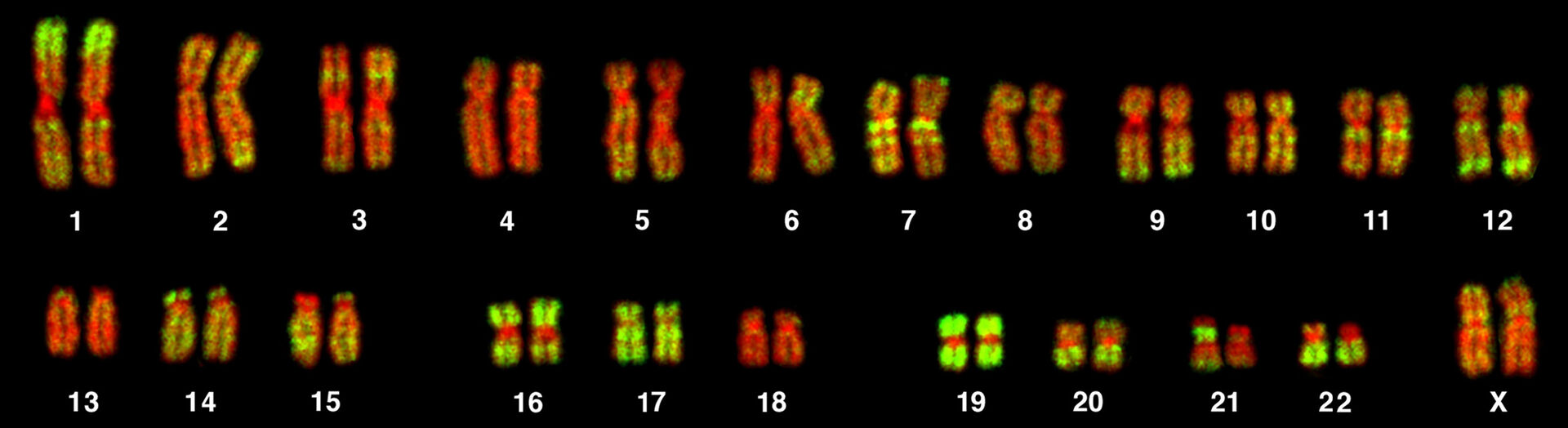
Genetics is the science that studies genes, their transmission from generation to generation, as well as their variation within species.
In recent years, with technological development, this field of study has been expanding rapidly and producing many discoveries. When we talk about genetics, we often refer to the heredity of an individual.
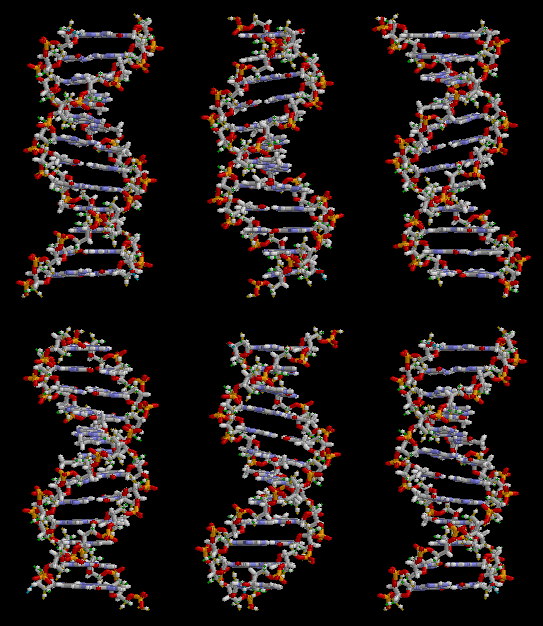
DNA (deoxyribonucleic acid) contains the genetic code which contains all the hereditary information of an individual. This molecule, in the form of a double helix, is the basic unit of genes.
A gene is a segment of DNA in which we find genetic information that allows the production of a particular molecule or that determines a specific character. This gene occupies a precise position in a chromosome.
In some cases, a single gene is responsible for an inherited characteristic, while in others, several genes are linked to the same characteristic. Genes don't simply determine the physical appearance of individuals. They also have a very important role in the functioning of cells. For example, it is in the genes that we find the "recipes" for the development of proteins.
Occasionally, some genes may be defective. Genetic diseases, such as cystic fibrosis, epilepsy, and certain types of cancer may be caused by genetic abnormalities.
A chromosome is the condensed version of DNA that forms only during cell division.
The number of chromosomes is always the same for all individuals of the same species, but it can vary from one species to another.
| Species | Number of chromosome pairs |
| Drosophila | 4 |
| Pigeon | 16 |
| Human | 23 |
| Cat | 19 |
| Cow | 30 |

The 23 pairs of chromosomes of a female human being.
In women, all pairs will have the XX form, while in men, the 23rd pair (the so-called sex chromosomes) will have the XY form, where a certain part of the genetic material from the father (the Y) will allow the sexual differentiation. It should be noted, however, that all other pairs in men will have the XX form.
Sometimes, certain errors occur during the formation of the zygote (fusion of the male and female gametes), which can lead to a form of trisomy (for example trisomy 21 or trisomy 18). In this case, an individual will have a triplet of chromosomes rather than a pair on one of the 23 existing pairs.