Subjects
Grades
 100%
100%
 100%
100%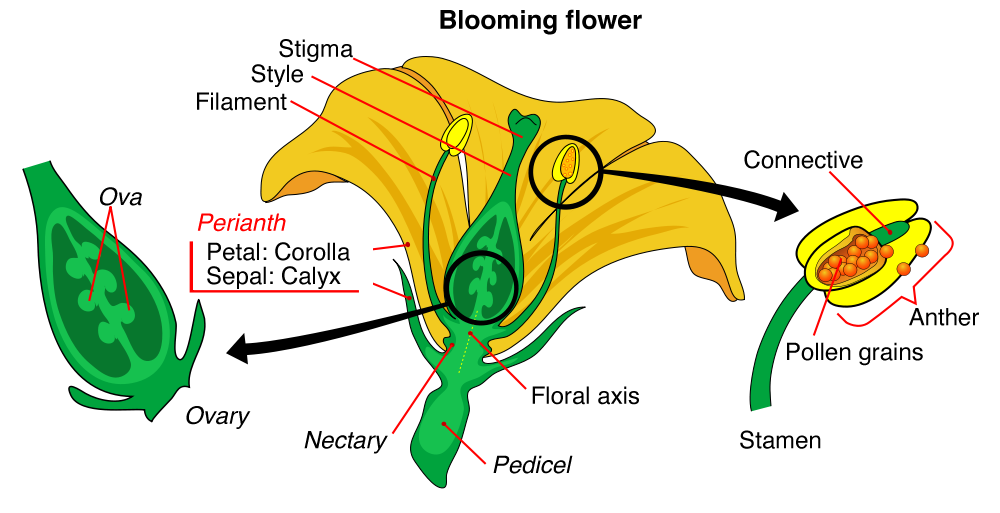 100%
100%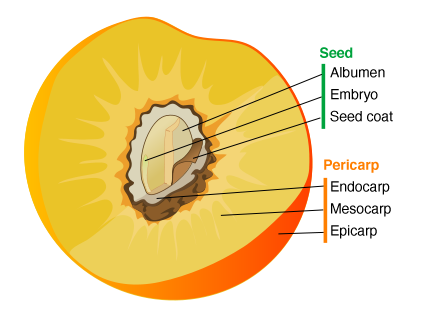
|
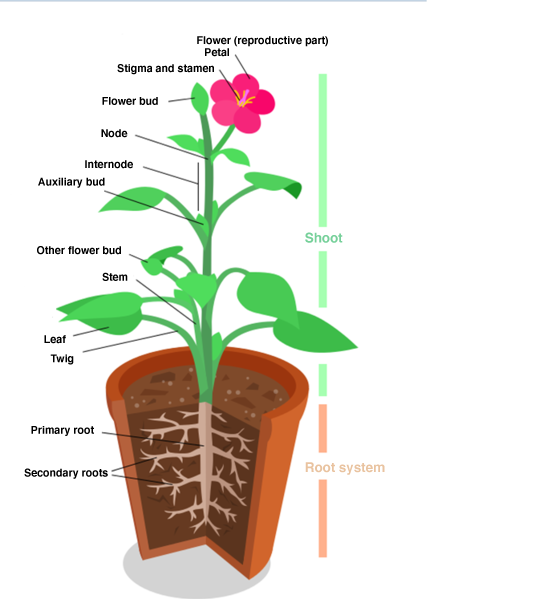
A flowering plant is made up of: |
|
|---|---|
|
Flowers |
These are the reproductive organs of the plant. |
|
Leaves |
Leaves are responsible for cellular respiration and photosynthesis. |
|
Stem |
The stem bears the leaves and flowers. It carries the sap (and therefore water and mineral salts) to the leaves and flowers. |
|
Roots |
Roots allow the plant to anchor itself in the soil. They serve to draw water and mineral salts necessary for the development of the plant. |
The fruits and flowers are essentially linked to reproduction. Here is a diagram showing the parts of the flower.
|
In a flower, from the outside to the inside, there are: |
|---|
|
Once the ova of the flower have undergone fertilization, the flower turns into a fruit. The following diagram shows the main structures of a fruit.
The vast majority of plants have three structures in common: roots, stem, and leaves. To these can be added structures related to reproduction such as flowers and fruits.
|
A flowering plant is made up of: |
|
|---|---|
|
Flowers |
These are the reproductive organs of the plant. |
|
Leaves |
Leaves are responsible for cellular respiration and photosynthesis. |
|
Stem |
The stem bears the leaves and flowers. It carries the sap (and therefore water and mineral salts) to the leaves and flowers. |
|
Roots |
Roots allow the plant to anchor itself in the soil. They serve to draw water and mineral salts necessary for the development of the plant. |

The fruits and flowers are essentially linked to reproduction. Here is a diagram showing the parts of the flower.
|
In a flower, from the outside to the inside, there are: |
|---|
|
Once the ova of the flower have undergone fertilization, the flower turns into a fruit. The following diagram shows the main structures of a fruit.