Subjects
Grades
Magnetism is a characteristic property of a substance that has the ability to be attracted or repelled by a magnet.
To better understand magnetism, we can study the behaviour of magnets and the magnetic field they generate.
 100%
100%
 100%
100%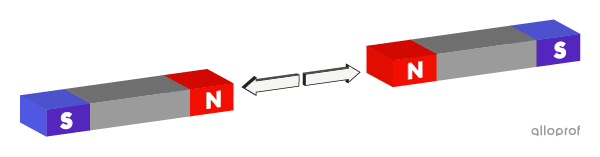 100%
100%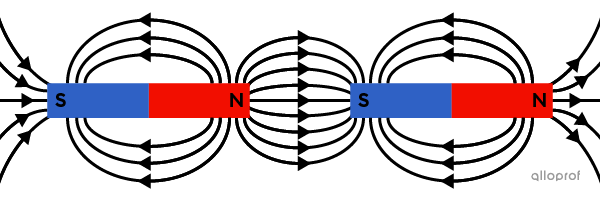 100%
100%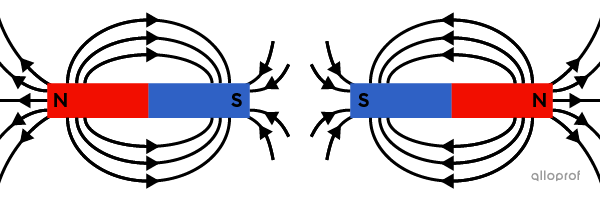 100%
100%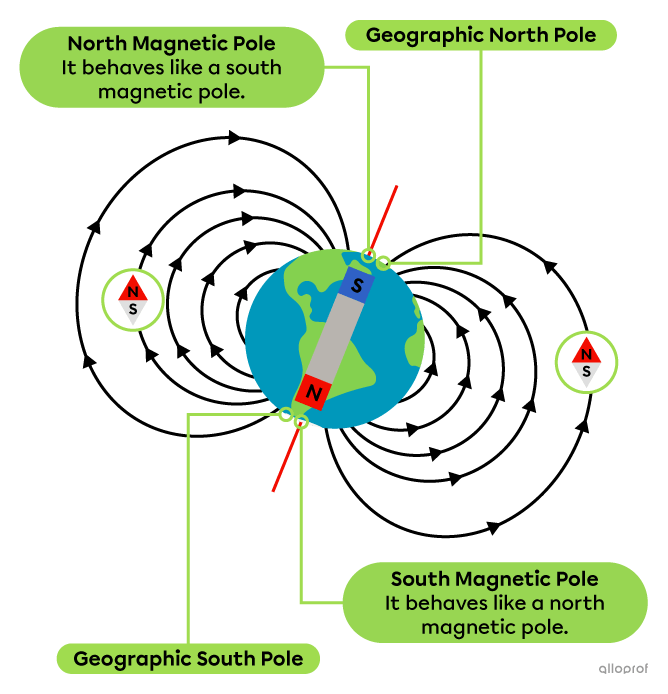
A magnet is an object that can attract or repel other magnets and can attract substances made from iron |\text{(Fe)},| cobalt |\text{(Co)},| nickel |\text{(Ni)},| or an alloy of these metals.
Although magnets vary in shape and size, they always have a north pole and a south pole.
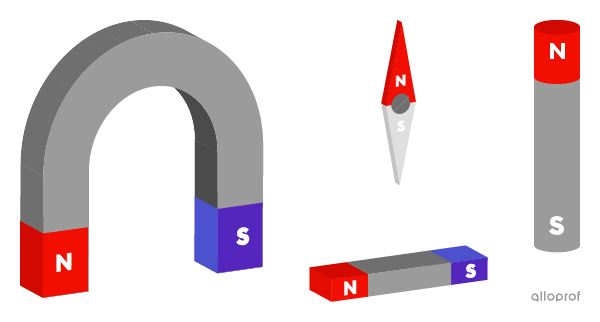
When magnets are placed close together, we notice the following effects:

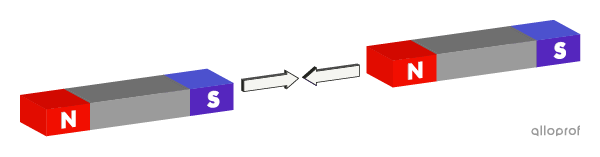
Opposite poles (south-north) attract each other.
Like poles (north-north) repel each other.
The attraction or repulsion between two poles is due to the magnetic field exerted by the magnets.
A magnetic field is the space in which the magnetic forces (attraction/repulsion) are exerted by a magnet or a moving electric charge.
The magnetic field of a magnet is not visible to the naked eye, but it can be represented by arrows called magnetic field lines.
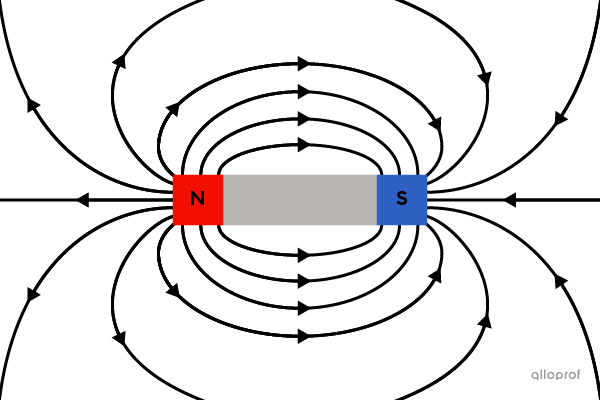
The Magnetic Field of a Bar Magnet
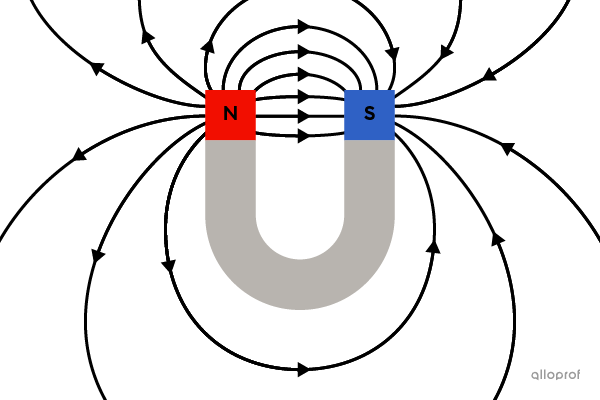
The Magnetic Field of a U-Shaped Magnet
One of the things magnetic field lines help us understand is the attraction or repulsion between two poles.
Opposite poles (north-south) attract each other.
Like poles (south-south) repel each other.
Because a compass’ needle is a magnet, we can see the effect a magnetic field has on it.
Move the compass around the bar magnet and observe how the needle behaves.
In the previous animation, we can see that:
Earth’s magnetic field, also known as the magnetosphere, is the magnetic field exerted by Earth’s outer core.
The Earth’s outer core is made up of iron |\text{(Fe)}| and nickel |\text{(Ni)}| in a liquid state, among other things. Their convection movements generate electrical currents and a magnetic field similar to that of a bar magnet.
If we imagine Earth’s outer core as a bar magnet, its south pole would be aligned with a point historically called the North Magnetic Pole located near the Geographic North Pole. This means that the so-called North Magnetic Pole actually behaves like a south magnetic pole.
A compass needle naturally follows the lines of Earth’s magnetic field.