Subjects
Grades
Magnetism is a characteristic property of a substance that has the ability to be attracted or repelled by a magnet.
To better understand magnetism, we can study the behaviour of magnets and the magnetic field they generate.
 100%
100%
 100%
100%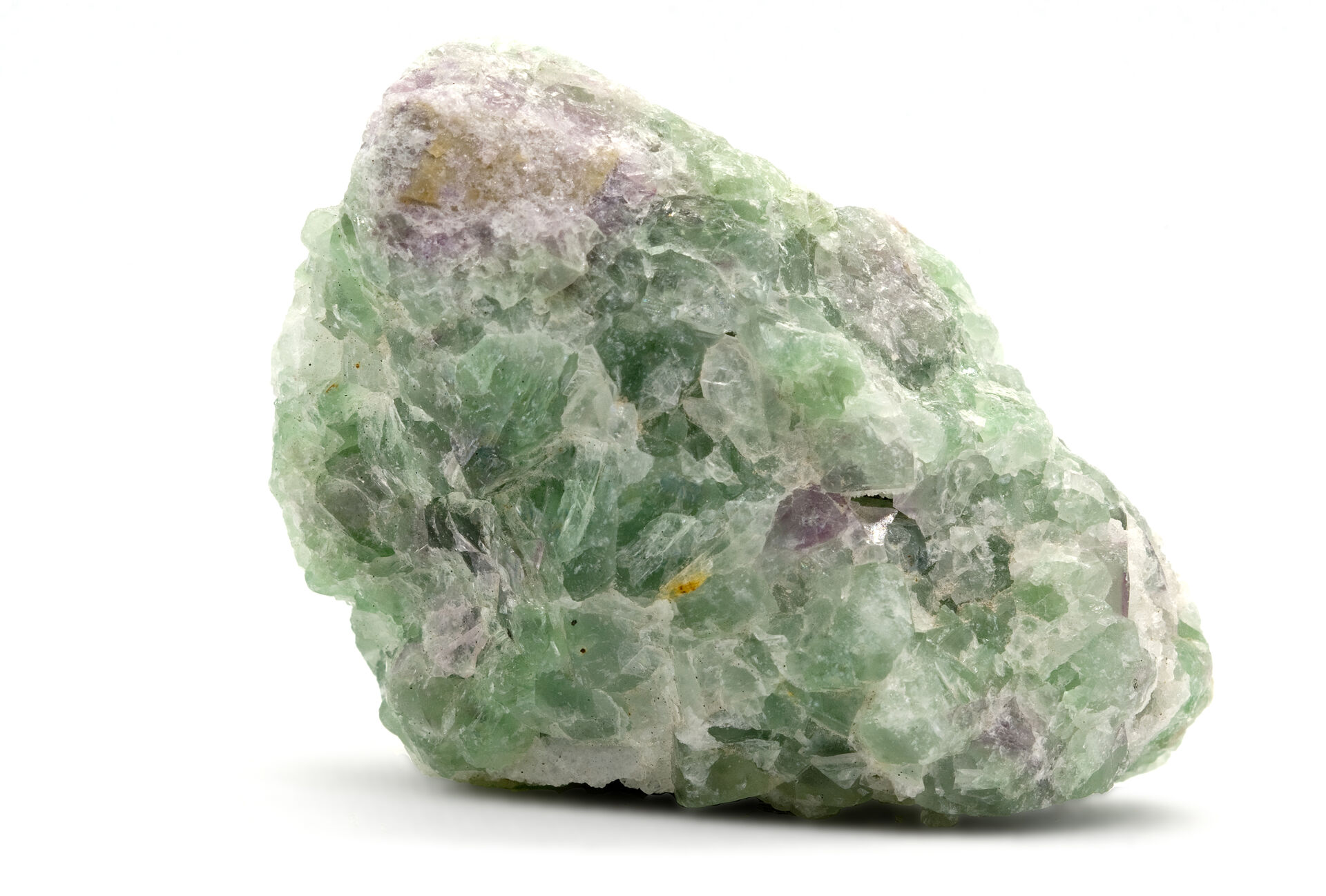 100%
100%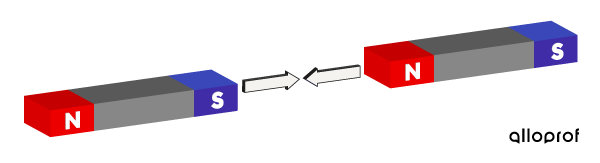 100%
100%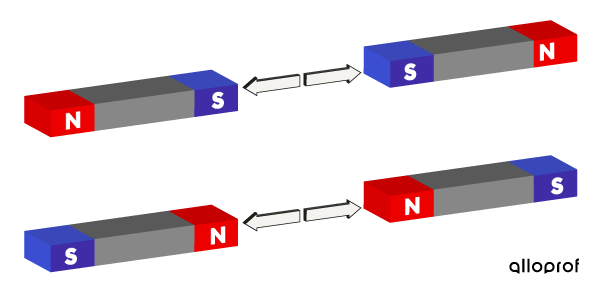 100%
100%
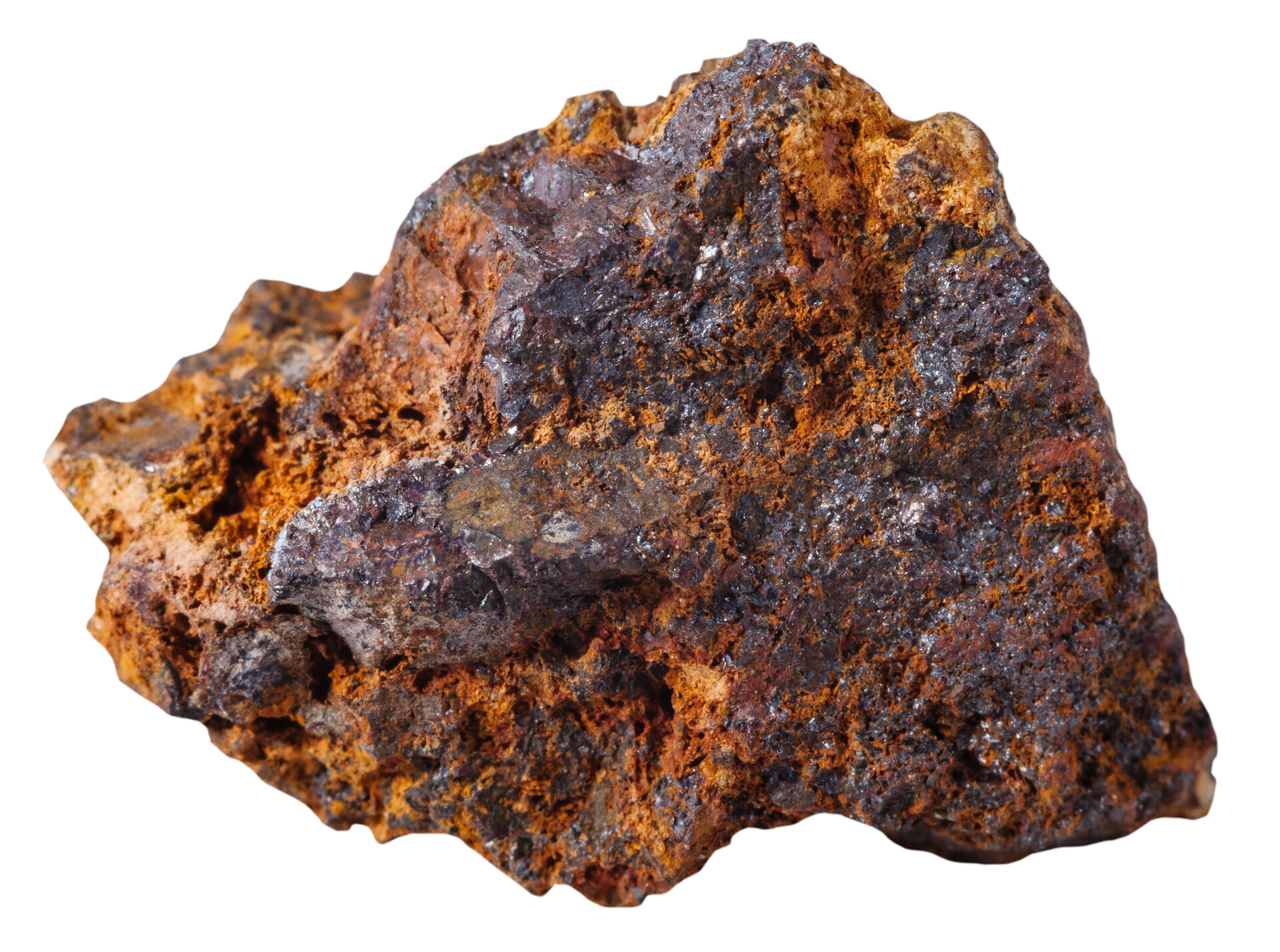
Hematite (iron ore) is attracted by magnets.
Fluorite is a non-magnetic substance. It is not attracted by magnets.

Hematite rock
Fluorite rock
The magnetism of a substance can be tested practically by bringing it close to a magnet.
A magnet is an object or device that has magnetic forces able to repel or attract certain objects. Magnets are can be made of iron |\text{(Fe)},| cobalt |\text{(Co)},| nickel |\text{(Ni)}|, or a mixture of these metals.
Although their shape and size vary, magnets always have a north pole and a south pole.
The north pole of a magnet is the pole that naturally points towards the Earth's geomagnetic north pole (near the Earth's geographic north pole). On the magnet, it is often identified by the letter N and the colour red.
The south pole of a magnet is opposite to the north pole. On the magnet, it is often identified by the letter S and the colours blue ou white. It can also have no colour at all.
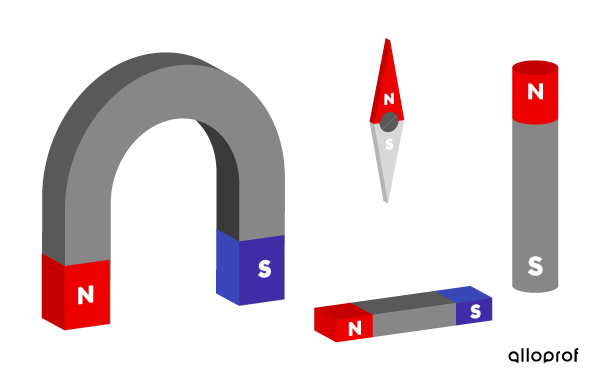
Magnets of various shapes and sizes
All around a magnet, magnetic forces exert an effect on other magnets nearby. This invisible area bounding the range of a magnet is called the magnetic field.
The magnetic field of a magnet cannot be seen with the naked eye, but the attraction and repulsion of tow poles can be observed:
The different poles (north and south) of these two magnets attract each other. These magnets attract each other.
Attraction between two magnets
The like poles (north-north or south-south) of these two magnets repel each other. These magnets undergo repulsion.
Repulsion between two magnets
Since the needle of a compass is a magnet, observing its behaviour in the vicinity of another magnet allows the identification of its magnetic poles.
Here is a U-shaped magnet with unidentified poles.
Bring a compass to one end of the U-shaped magnet and observe the needle’s behaviour.
The north pole of the compass is attracted to that end of the U-magnet.
Since their is an attraction, we can say that this side of the U-shaped magnet is definitely a south pole (north-south attraction).
Since a magnet always has a north pole and a south pole, the other end of the U-shaped magnet is inevitably a north pole.
Behaviour of a compass near a U-magnet