Subjects
Grades
 100%
100%
 100%
100%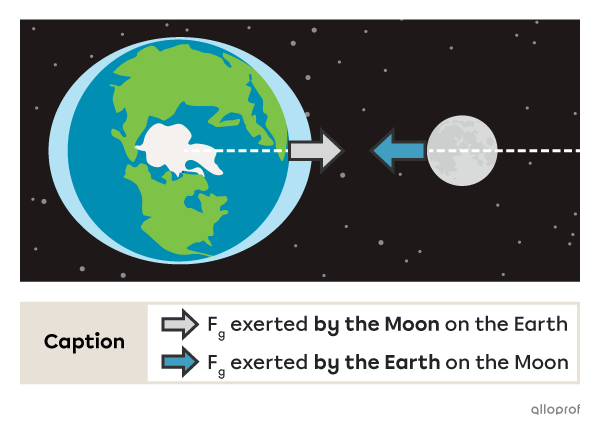 100%
100%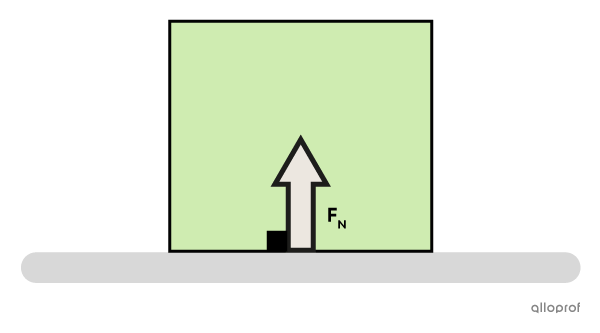
A force is an action that can set a body in motion, modify its movement, or deform it.
The unit used to measure force is the newton |\text{(N)}.| A force of |1\ \text{N}| gives an acceleration of |1\ \text{m/s}^2| to an object of |1\ \text{kg}.|
A force can be visually represented in a diagram by an arrow outline.
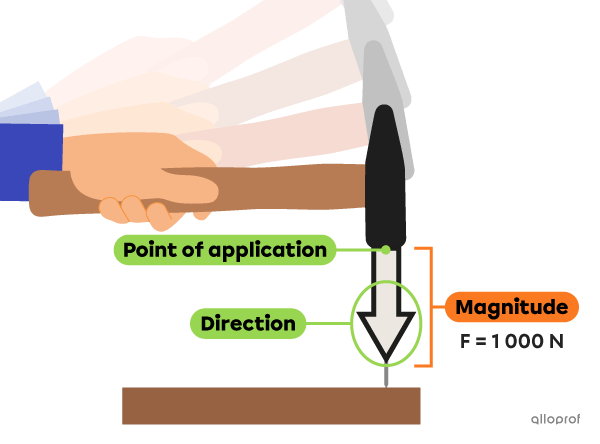
A hammer strike applies a downward force of around |1\ 000\ \text{N}| to the nail head.
Diagramming forces helps you understand how a technical object or technological system operates. In fact, certain forces are illustrated in a design plan.
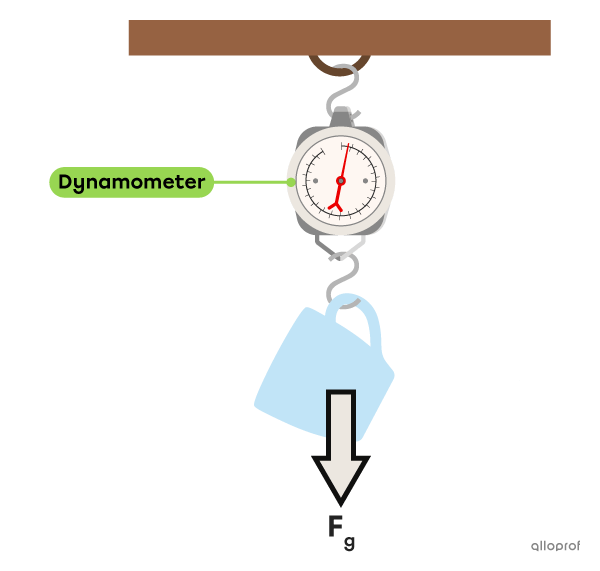
Gravitational force (Fg) is a force of mutual attraction between two bodies.
Normal force (FN) is the force exerted on an object by a surface in contact with it in order to support its weight. The normal force must always be perpendicular to the surface and directed toward the object.

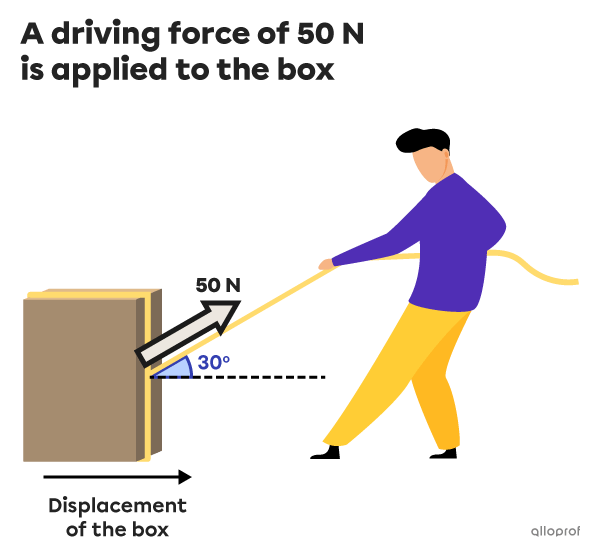
Driving force is the force applied to an object set it into motion or modify its movement.
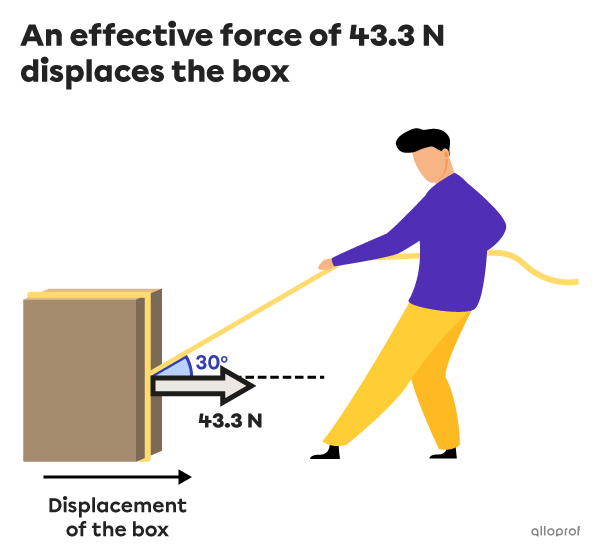
The effective force (Feff) is the component of the driving force that is parallel to the object’s displacement. It allows us to calculate the work (W) performed on the object.
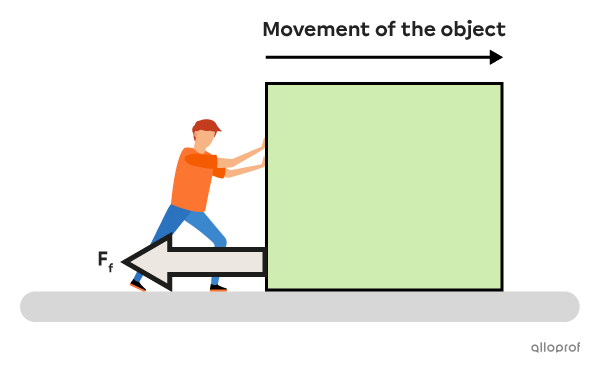
Frictional force (Ff) is a force that opposes the motion of an object when it is in contact with a surface (e.g., the ground) or a medium (e.g., the air).
Its intensity depends on several factors, such as the nature of the surfaces in contact and the weight of the object. In other words, the heavier the object and the more the two surfaces in contact adhere, the greater the frictional force.
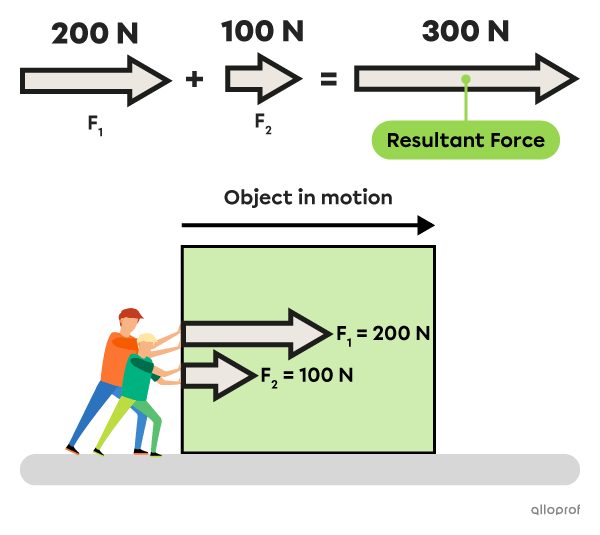
The resultant force (FR) is the combined effect of all the forces acting on an object.
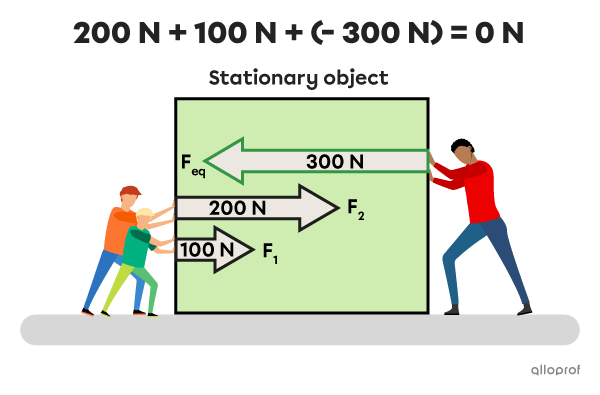
The equilibrant force (Feq) is the force that, when applied, cancels out the effect of other forces on the displacement of an object. The object is then said to be in equilibrium.
In other words, the equilibrant force to be added to a moving system is of the same magnitude as the resultant force, but in the opposite direction. So, when a system is in equilibrium, the resultant force of the system is zero.
Electrical force is a force of attraction or repulsion exerted between two electrically charged objects or charges, according to the law of electric charges.
Coulomb’s law states that the electrical force between two charged objects is proportional to the quantity of charges and the distance between them.
The area around a charged object where electrical force is exerted is called an electric field.

Electrical attraction forces are exerted between the electrons, generated by friction, on the balloon’s surface and the protons in the hair.
Magnetic force is a force of attraction or repulsion between two magnets, according to the law of poles.
Magnetic force may also be exerted by a magnet or electromagnet on a ferromagnetic material, such as iron, nickel, or cobalt.
The space around a magnet where magnetic forces are exerted is called a magnetic field.

A scrap magnet is an electromagnet that moves scrap metal by exerting a magnetic force of attraction.