Subjects
Grades
 100%
100%
 100%
100%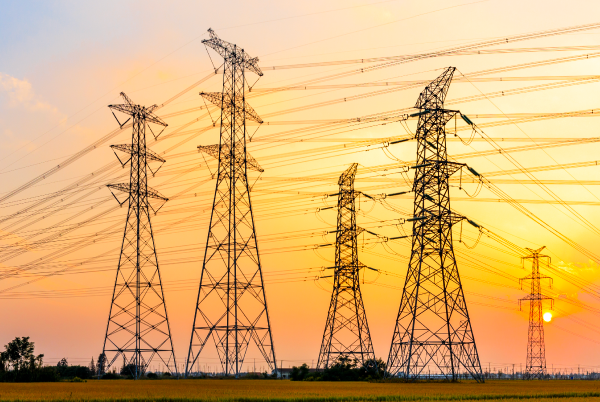 100%
100% 100%
100%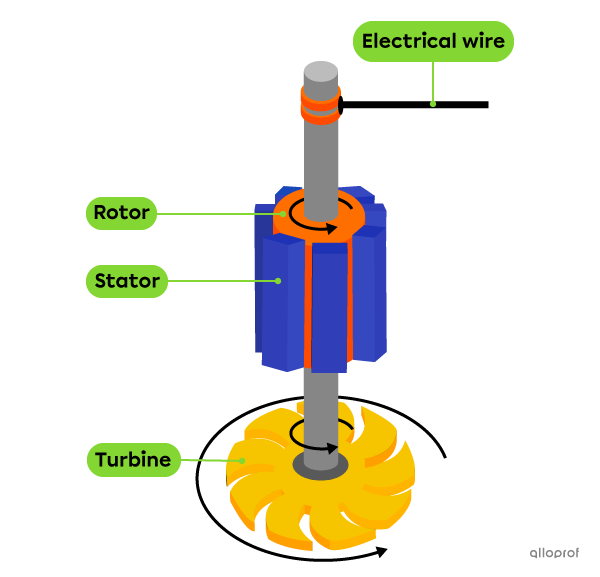 100%
100%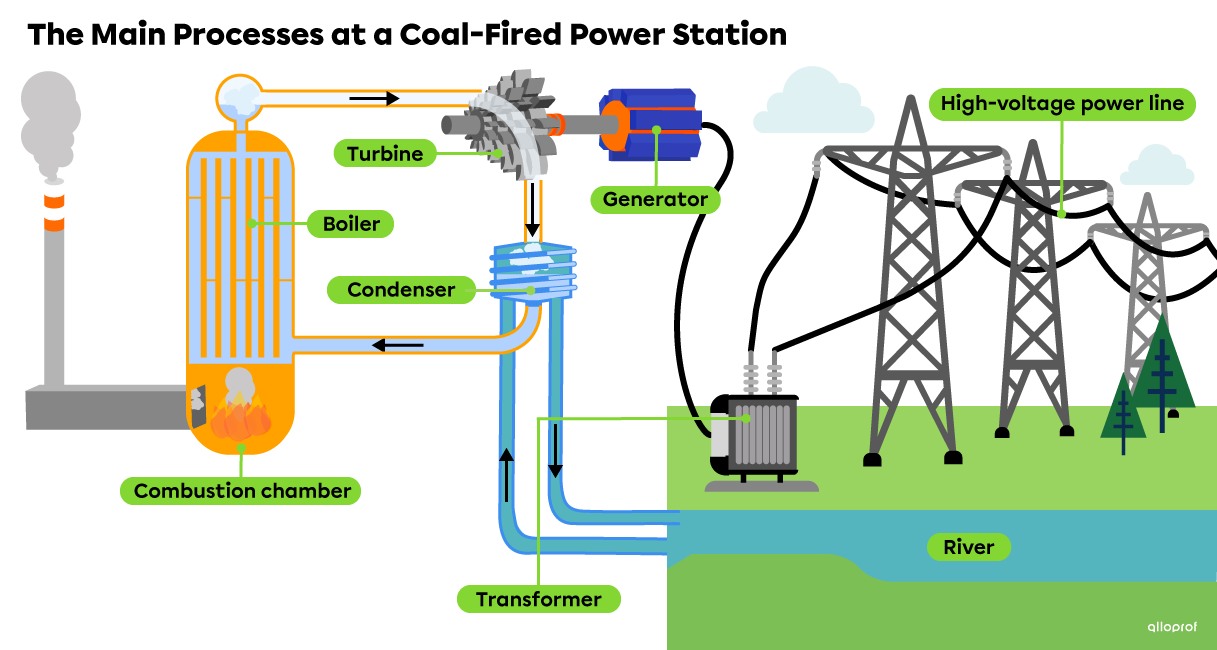 100%
100%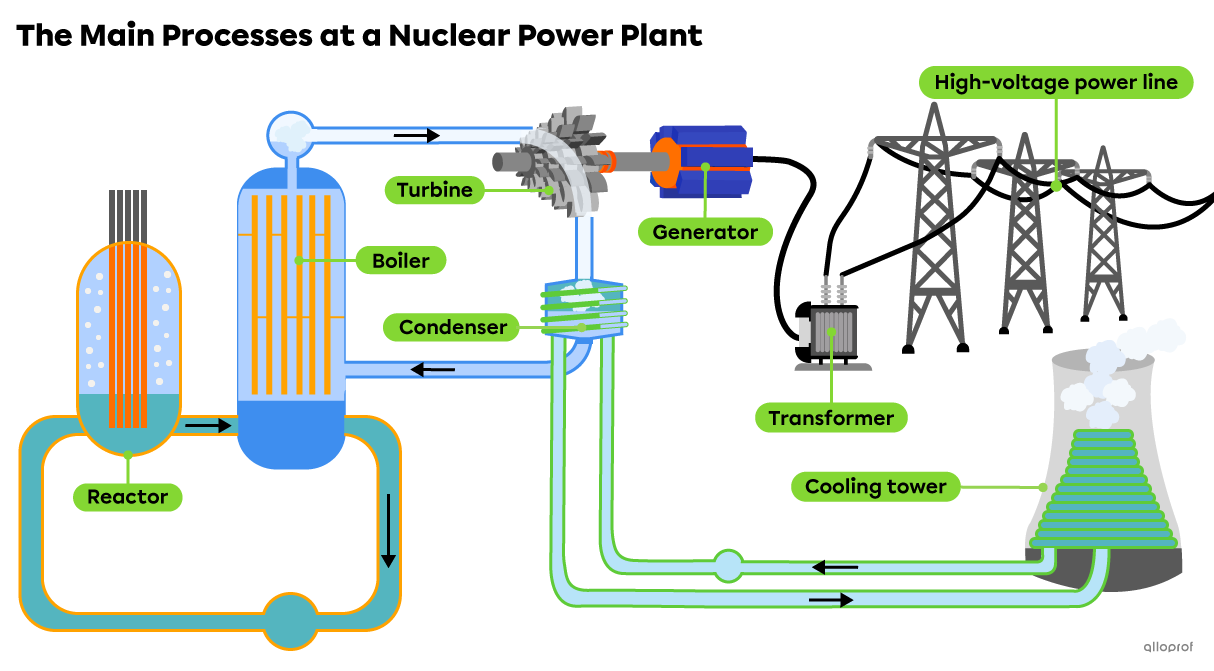 100%
100%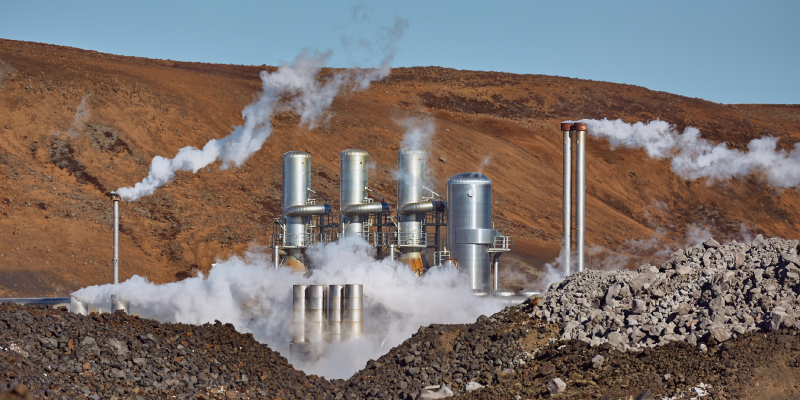 100%
100%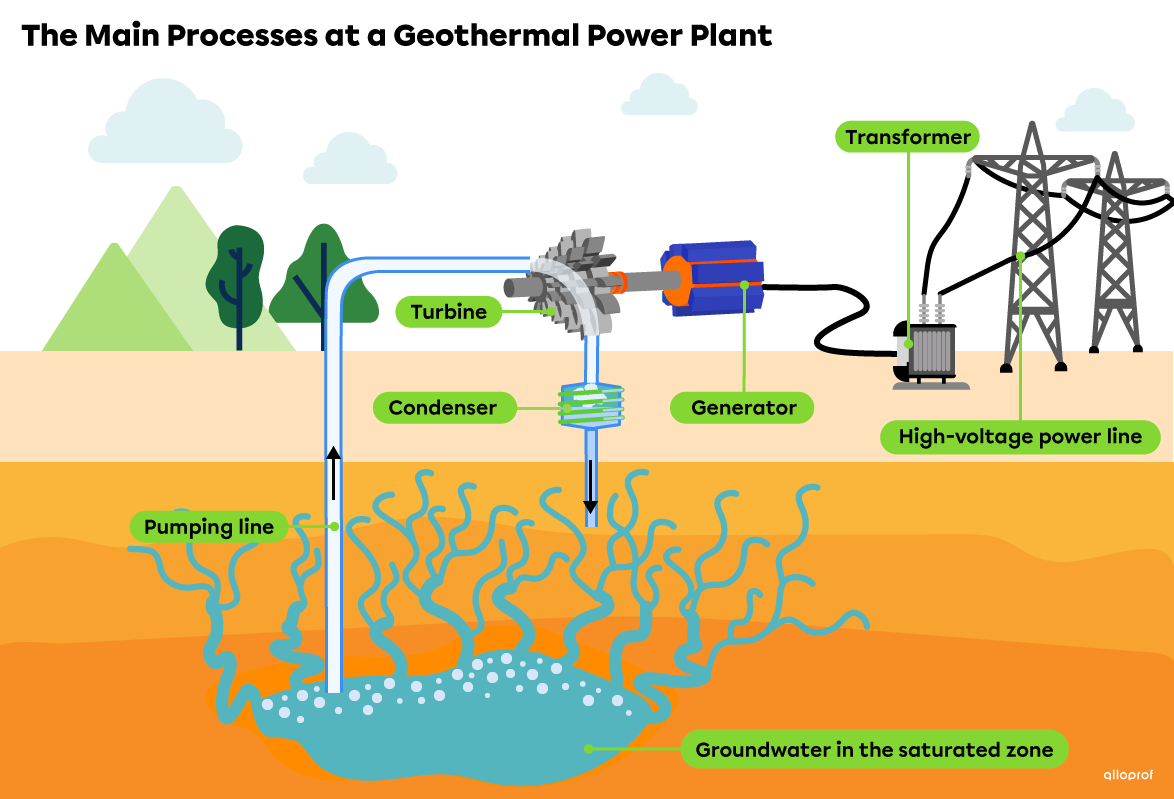 100%
100%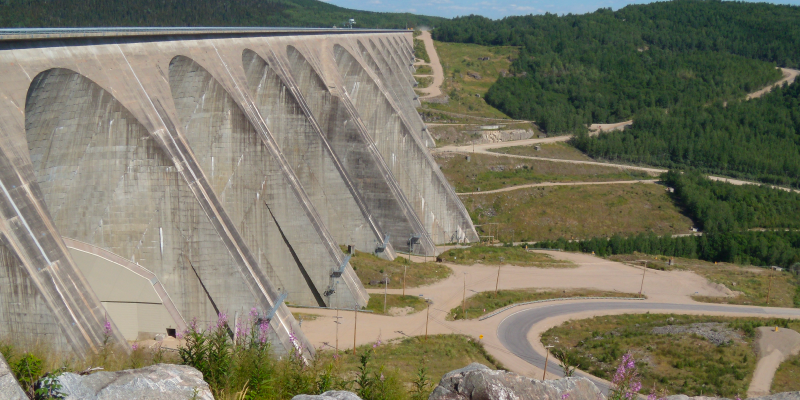 100%
100%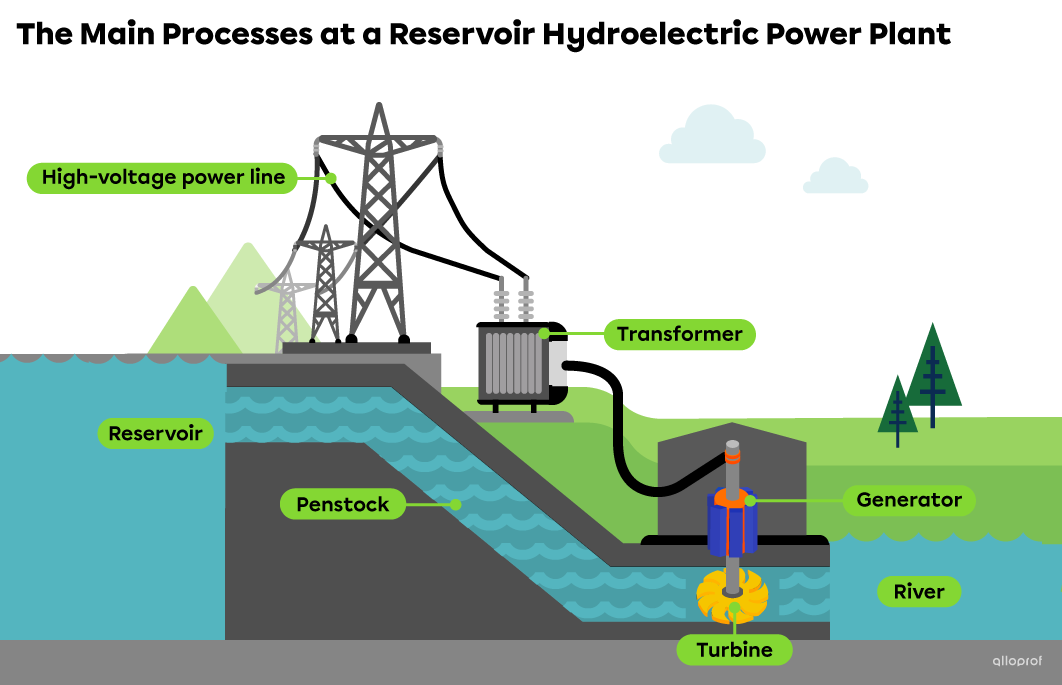 100%
100%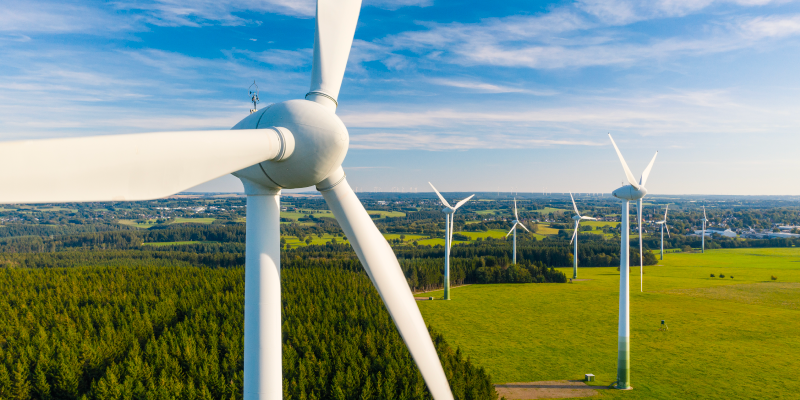 100%
100%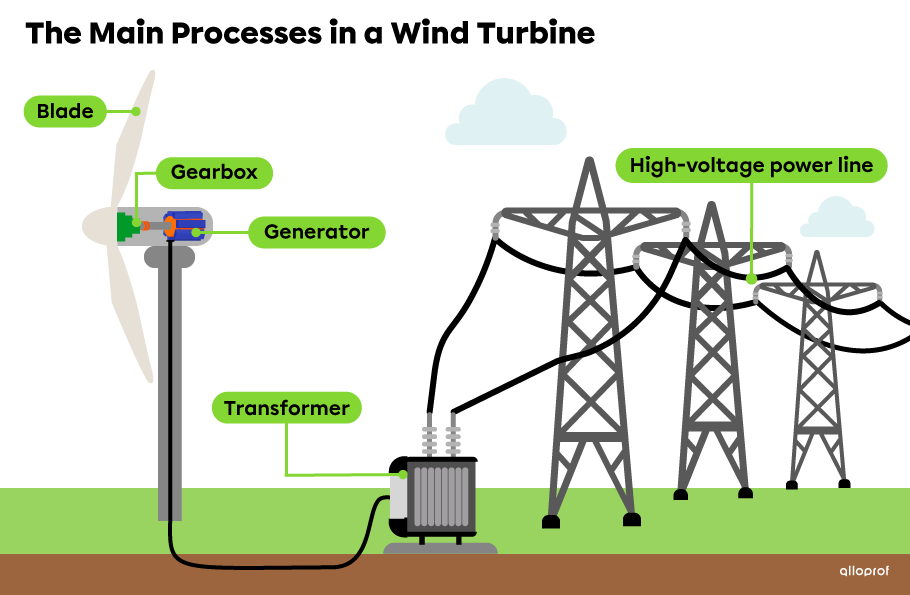 100%
100%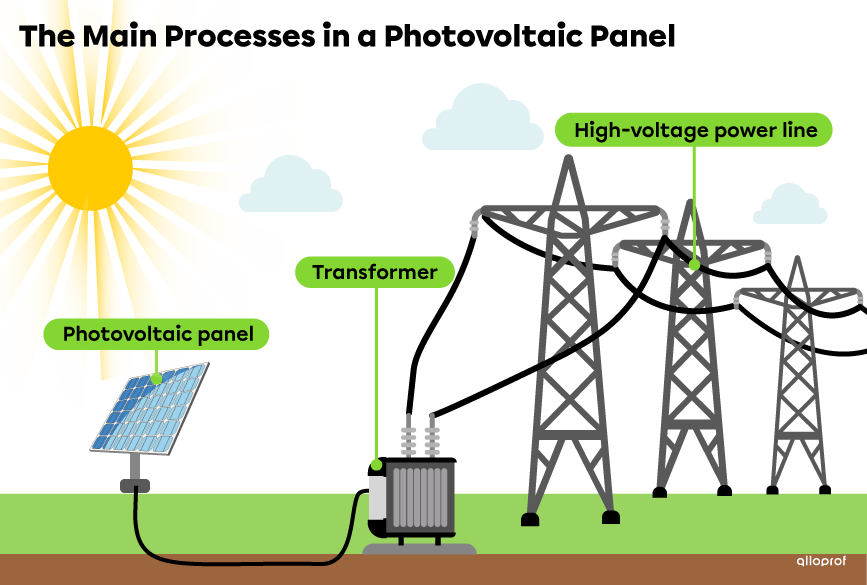
| Location | Process | Change(s) |
|---|---|---|
| Combustion chamber |
|
Chemical energy → Thermal energy |
| Boiler |
|
Thermal energy transfer Liquid water → Gaseous water (steam) Pressure increase Thermal energy → Mechanical energy |
| Turbine | Mechanical energy transfer Steam → Turbine and rotor |
|
| Generator |
|
Mechanical energy → Electrical energy |
| Transformer High-voltage power lines |
|
Voltage increase |
| Condenser |
|
Thermal energy transfer Gaseous water (steam) → Liquid water |
| Location | Process | Change(s) |
|---|---|---|
| Reactor |
|
Nuclear energy → Thermal energy |
| Boiler |
|
Thermal energy transfer Liquid water → Gaseous water (steam) Pressure increase Thermal energy → Mechanical energy |
| Turbine | Mechanical energy transfer Steam → Turbine and rotor |
|
| Generator |
|
Mechanical energy → Electrical energy |
| Transformer High-voltage power lines |
|
Voltage increase |
| Condenser |
|
Thermal energy transfer Gaseous water (steam) → Liquid water |
| Cooling tower |
|
Thermal energy transfer Hot water → Environment |
| Location | Process | Change(s) |
|---|---|---|
| Saturated zone (phreatic zone) |
|
Thermal energy transfer Mantle rocks → Infiltrated rainwater |
| Pumping line |
|
Decrease in pressure on liquid water Liquid water → Gaseous water (steam) Thermal energy → Mechanical energy |
| Turbine | Mechanical energy transfer Steam → Turbine and rotor |
|
| Generator |
|
Mechanical energy → Electrical energy |
| Transformer High-voltage power lines |
|
Voltage increase |
| Condenser |
|
Thermal energy transfer Gaseous water (steam) → Liquid water |
| Location | Process | Change(s) |
|---|---|---|
| Penstock |
|
Hydraulic energy → Mechanical energy |
| Turbine | Mechanical energy transfer Water flow → Turbine and rotor |
|
| Generator |
|
Mechanical energy → Electrical energy |
| Transformer High-voltage power lines |
|
Voltage increase |
| River |
|
None |
| Location | Process | Change(s) |
|---|---|---|
| Blades |
|
Wind energy → Mechanical energy |
| Gearbox |
|
Motion transmission with a speed change Blades → Rotor |
| Generator |
|
Mechanical energy → Electrical energy |
| Transformer High-voltage power lines |
|
Voltage increase |
| Location | Process | Change(s) |
|---|---|---|
| Photovoltaic cell (solar panel) |
|
Radiant energy → Electrical energy |
| Transformer High-voltage power lines |
|
Direct current → Alternating current Voltage increase |
Technological systems designed by humans serve different needs in modern life. They usually require electrical energy to operate.
With the help of different technological systems, energy is transformed into electricity and then transferred through an electrical grid to households. To use it, it is usually sufficient to plug an appliance into an electrical outlet.
The following images show the path of electricity from production to household use.
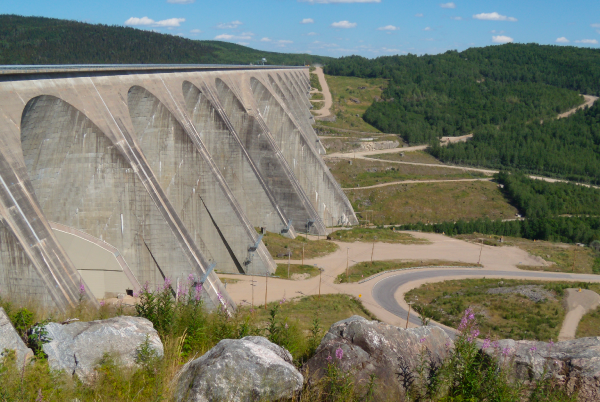
A hydroelectric power plant allows hydraulic energy (the mechanical energy of moving water) to be transformed into electricity.

The Daniel‑Johnson hydroelectric power plant in the Côte‑Nord region of Quebec
High-voltage power lines carry electricity over thousands of kilometres.
High-voltage power lines
A toaster uses electrical energy from the grid when plugged into an electrical outlet.
A toaster in use
The following table presents different technological systems used for generating electricity, the energy resource(s) they use and their origin.
|
Technological system for generating electricity (Click on the links below) |
Energy resource(s) | Origin |
|---|---|---|
| Thermal power plant | Biomass (biogas) |
Biosphere |
| Fossil fuels (coal, natural gas) |
Lithosphere | |
| Nuclear power plant | Radioactive elements (uranium, plutonium) |
|
| Geothermal power plant | Geothermal energy | |
| Hydroelectric power plant | Hydroelectricity (reservoir and run-of-river) |
Hydrosphere |
| Wind turbine (wind farm) | Wind | Atmosphere |
| Photovoltaic panel (solar farm) | Solar radiation | Space |
The majority of systems that generate electricity use a turbine-generator unit.
A turbine-generator unit
A turbine-generator unit, sometimes referred to simply as a generator, is a combination of a turbine and an alternator that work together to transform the mechanical energy of a moving fluid into electricity.
The turbine is the rotating component that receives the mechanical force of the fluid.
The generator is the component that receives the mechanical energy from the turbine and transforms it into electricity. It consists of a rotor and a stator.
The rotor is the moving part of the generator. Its outer wall consists of electromagnets (solenoids).
The stator is the fixed part of an alternator. It consists of copper coils with high electrical conductivity.
The role of the turbine-generator unit is to transform the mechanical energy of a moving fluid into electricity. This transformation takes place in the following way:
The turbine is driven in a rotational motion by the mechanical energy of a moving fluid (e.g. steam, waterfall, wind).
The rotor linked to the turbine undergoes a rotational motion, while the stator is stationary.
The interaction between the rotor (mobile) and the stator (stationary) generates an electrical current through electromagnetic induction.
A thermal power plant transforms the chemical energy contained in fossil fuels into electricity. For example, coal-fired power stations use coal as the source of chemical energy. The following sequence of transformations occurs:
Fossil energy (chemical energy) → Thermal energy → Mechanical energy → Electrical energy
Fossil energy is the chemical energy contained in the fossil fuels found in the lithosphere.
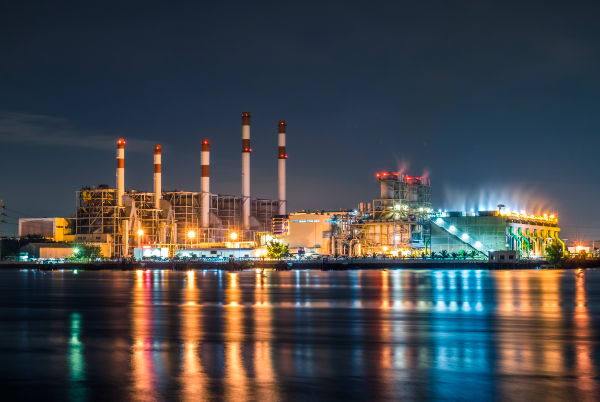
A coal-fired power station
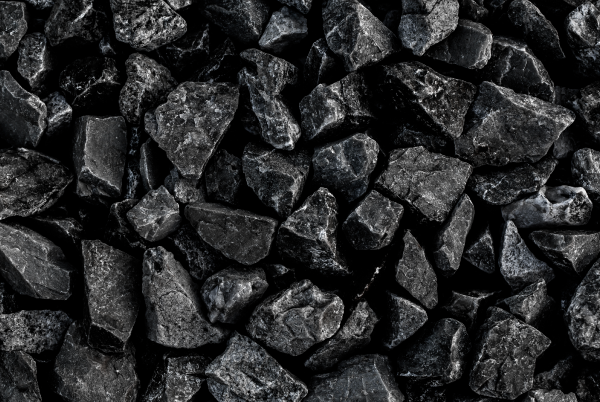
Coal
A thermal power plant involves many processes and subsystems, including one or more steam-driven turbine-generator units. The following diagram and table describe how electricity is generated at a coal-fired power station.
| Location | Process | Change(s) |
|---|---|---|
| Combustion chamber |
|
Chemical energy → Thermal energy |
| Boiler |
|
Thermal energy transfer Liquid water → Gaseous water (steam) Pressure increase Thermal energy → Mechanical energy |
| Turbine | Mechanical energy transfer Steam → Turbine and rotor |
|
| Generator |
|
Mechanical energy → Electrical energy |
| Transformer High-voltage power lines |
|
Voltage increase |
| Condenser |
|
Thermal energy transfer Gaseous water (steam) → Liquid water |
The use of coal and other fossil fuels to generate electricity has several environmental impacts. Fossil fuels are non-renewable resources, which produce greenhouse gases when burned.
In addition, other products of their combustion, such as sulphur dioxide |(\text{SO}_2)| and nitrogen oxides |(\text{NO}_x),| are partly filtered out and then released into the atmosphere through chimneys. These emissions contribute to the formation of acid rain.
A nuclear power plant transforms the nuclear energy contained in the nucleus of heavy isotope atoms extracted from the lithosphere (e.g., uranium and plutonium) into electricity in the following sequence of transformations:
Nuclear energy → Thermal energy → Mechanical energy → Electrical energy
In the reactor of a nuclear power plant, uranium and/or plutonium pellets are contained in long rods.
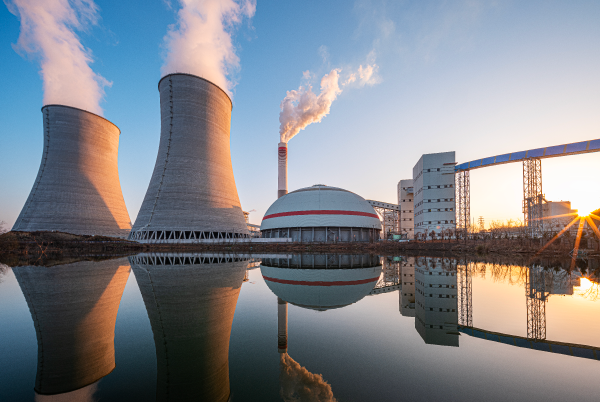
A nuclear power plant
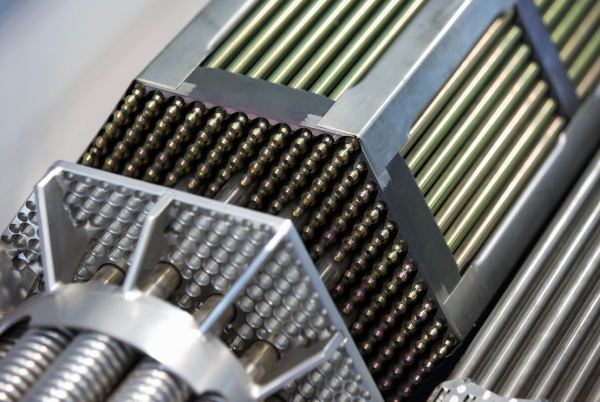
The rods of a nuclear reactor
A nuclear power plant involves many processes and subsystems, including one or more steam-driven turbine-generator units. The following diagram and table describe how electricity is generated at a nuclear power plant.
| Location | Process | Change(s) |
|---|---|---|
| Reactor |
|
Nuclear energy → Thermal energy |
| Boiler |
|
Thermal energy transfer Liquid water → Gaseous water (steam) Pressure increase Thermal energy → Mechanical energy |
| Turbine | Mechanical energy transfer Steam → Turbine and rotor |
|
| Generator |
|
Mechanical energy → Electrical energy |
| Transformer High-voltage power lines |
|
Voltage increase |
| Condenser |
|
Thermal energy transfer Gaseous water (steam) → Liquid water |
| Cooling tower |
|
Thermal energy transfer Hot water → Environment |
The use of uranium, plutonium and other nuclear fuels to generate electricity has several environmental impacts.
Nuclear fuels are non-renewable resources. Overall, their use to generate electricity is associated with low greenhouse gas emissions. However, the products of nuclear fission are radioactive and pose a danger to living organisms and the environment. The radioactive waste must be handled with care and specific methods must be followed to dispose of it.
A geothermal power plant transforms thermal energy from the lithosphere into electricity in the following sequence of transformations:
Geothermal energy (thermal energy) → Mechanical energy → Electrical energy
Geothermal energy is the thermal energy of the Earth’s core.
There are different ways to generate electricity using the Earth's internal heat. The method discussed in this concept sheet is based on pumping hot groundwater from a saturated zone, sometimes called a phreatic zone, below the water table. The saturated zone is a layer of rock and soil where the gaps between them are completely saturated with water.
A geothermal power plant
A geothermal power plant involves many processes and subsystems, including one or more steam-driven turbine-generator units. The following diagram and table describe how electricity is generated at a geothermal power plant.
| Location | Process | Change(s) |
|---|---|---|
| Saturated zone (phreatic zone) |
|
Thermal energy transfer Mantle rocks → Infiltrated rainwater |
| Pumping line |
|
Decrease in pressure on liquid water Liquid water → Gaseous water (steam) Thermal energy → Mechanical energy |
| Turbine | Mechanical energy transfer Steam → Turbine and rotor |
|
| Generator |
|
Mechanical energy → Electrical energy |
| Transformer High-voltage power lines |
|
Voltage increase |
| Condenser |
|
Thermal energy transfer Gaseous water (steam) → Liquid water |
Geothermal energy is a non-renewable resource. Overall, its use to generate electricity is associated with low greenhouse gas emissions.
A hydroelectric power plant coupled with a reservoir transforms mechanical energy into electricity by taking advantage of the position and speed of water in the following sequence of transformations:
Hydraulic energy → Mechanical energy → Electrical energy
Hydraulic energy is the mechanical energy associated with the movement of water in the hydrosphere.
A hydroelectric dam in the Côte‑Nord region of Quebec
A hydroelectric power plant involves many processes and subsystems, including one or more steam-driven turbine-generator units. The following diagram and table describe how electricity is generated at a reservoir-type hydroelectric power plant.
| Location | Process | Change(s) |
|---|---|---|
| Penstock |
|
Hydraulic energy → Mechanical energy |
| Turbine | Mechanical energy transfer Water flow → Turbine and rotor |
|
| Generator |
|
Mechanical energy → Electrical energy |
| Transformer High-voltage power lines |
|
Voltage increase |
| River |
|
None |
Hydroelectric power is a renewable resource. Overall, its use to generate electricity is associated with low greenhouse gas emissions.
However, the use of moving water to produce electricity has several environmental impacts. Among other things, the construction of a reservoir and a dam leads to the diversion of streams and the flooding of areas upstream of the power plant.
A wind turbine, either on its own or as part of a wind farm, transforms the mechanical energy of the wind into electricity in the following sequence.
Wind energy → Mechanical energy → Electrical energy
Wind is a movement of air masses in the atmosphere driven by their pressure, temperature and humidity.
Wind energy is the mechanical energy of wind.
Wind turbines
Several processes take place in such a set-up, including the use of a turbine-generator unit driven by the wind. The following diagram and table describe how electricity is generated by a wind turbine.
| Location | Process | Change(s) |
|---|---|---|
| Blades |
|
Wind energy → Mechanical energy |
| Gearbox |
|
Motion transmission with a speed change Blades → Rotor |
| Generator |
|
Mechanical energy → Electrical energy |
| Transformer High-voltage power lines |
|
Voltage increase |
Wind energy is a renewable resource. Overall, its use to generate electricity emits negligible amounts of greenhouse gases.
However, the use of wind to generate electricity has environmental impacts. Among other things, due to their large size, wind turbines change the appearance of the landscape. In addition, wind turbines can be a source of noise pollution.
A photovoltaic panel, commonly called a solar panel, transforms the sun's radiant energy into electricity in the following transformation:
Radiant energy → Electrical energy
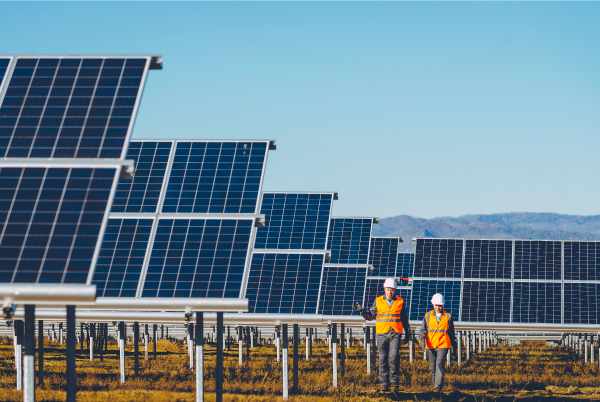
A solar farm

A photovoltaic cell - part of a photovoltaic panel
| Location | Process | Change(s) |
|---|---|---|
| Photovoltaic cell (solar panel) |
|
Radiant energy → Electrical energy |
| Transformer High-voltage power lines |
|
Direct current → Alternating current Voltage increase |
Solar energy is a renewable resource. Overall, its use to generate electricity is associated with low greenhouse gas emissions.
However, the use of sunlight to produce electricity has environmental impacts. These impacts are mainly related to the extraction of silicon ores required to manufacture photovoltaic panels and the burial of toxic substances when a panel reaches its end of life.