Matières
Niveaux
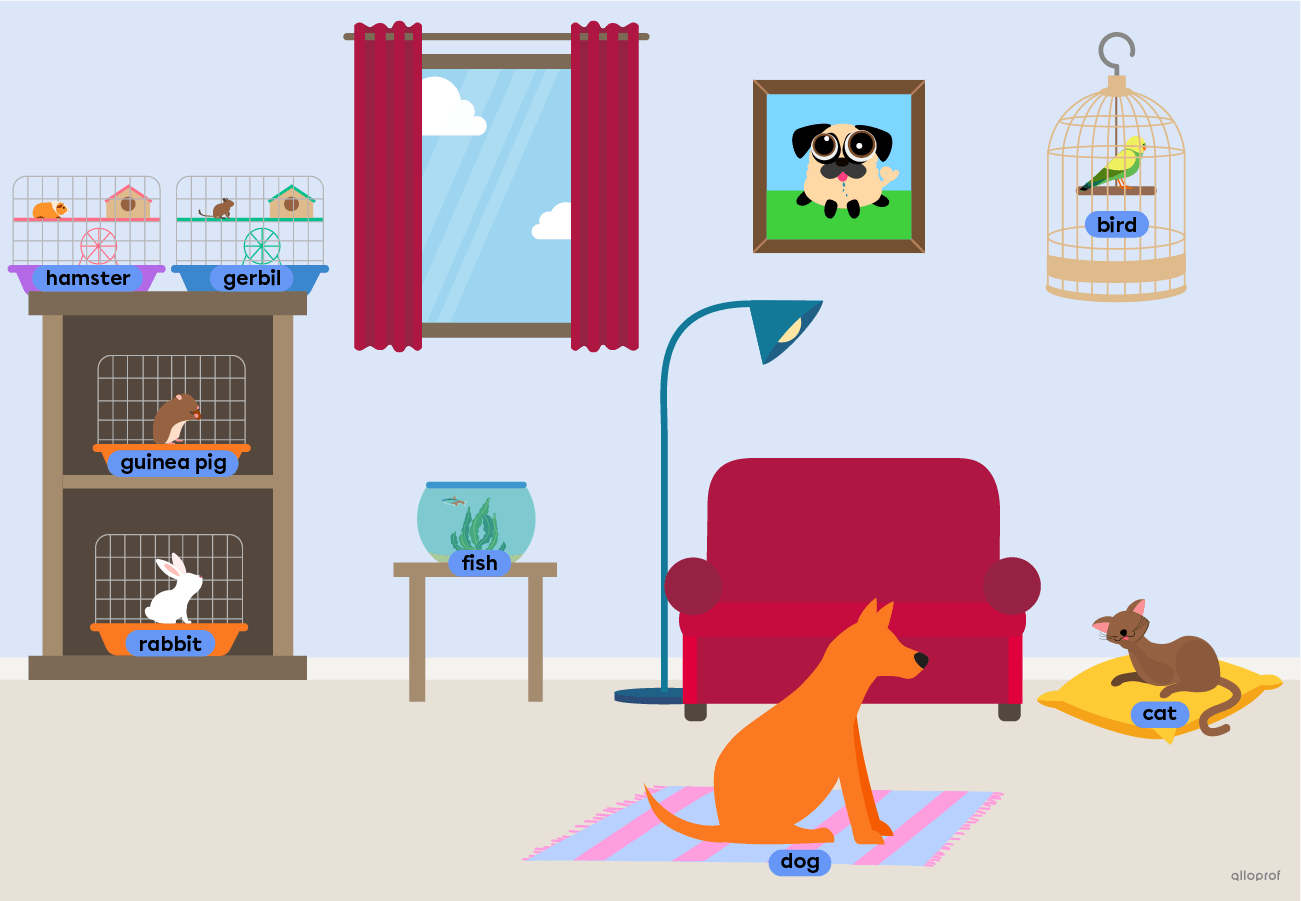
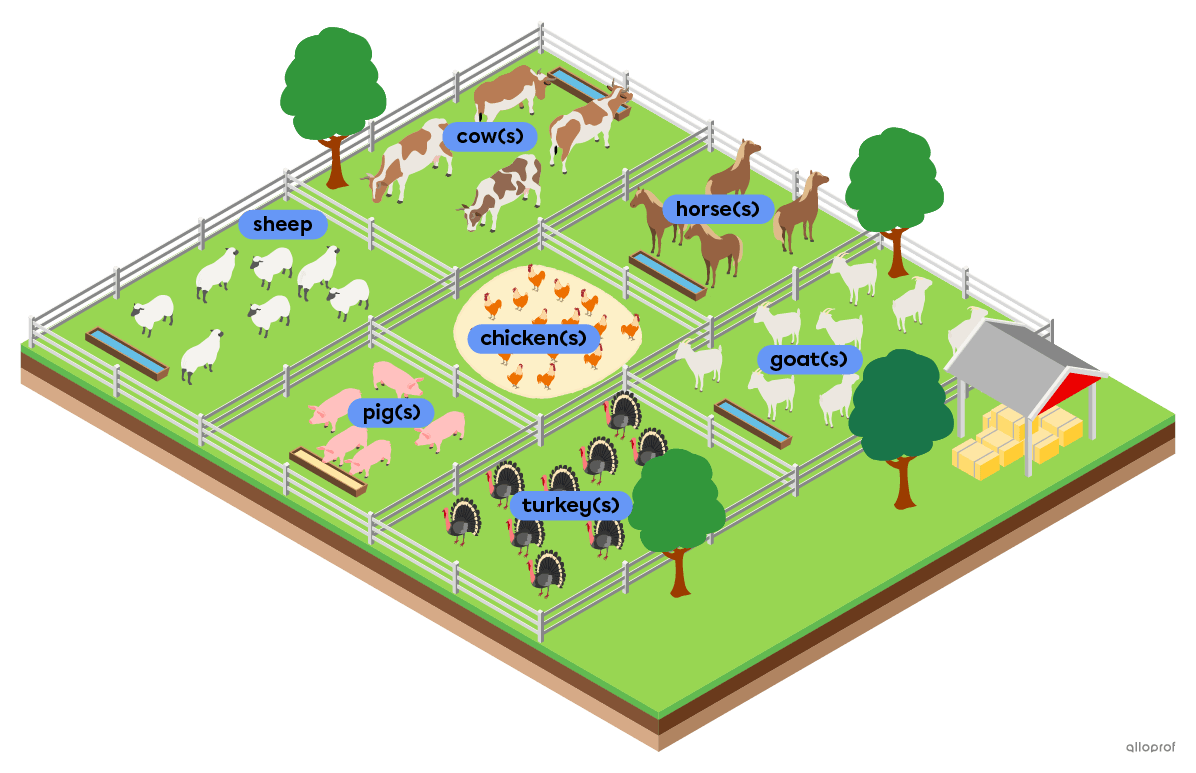
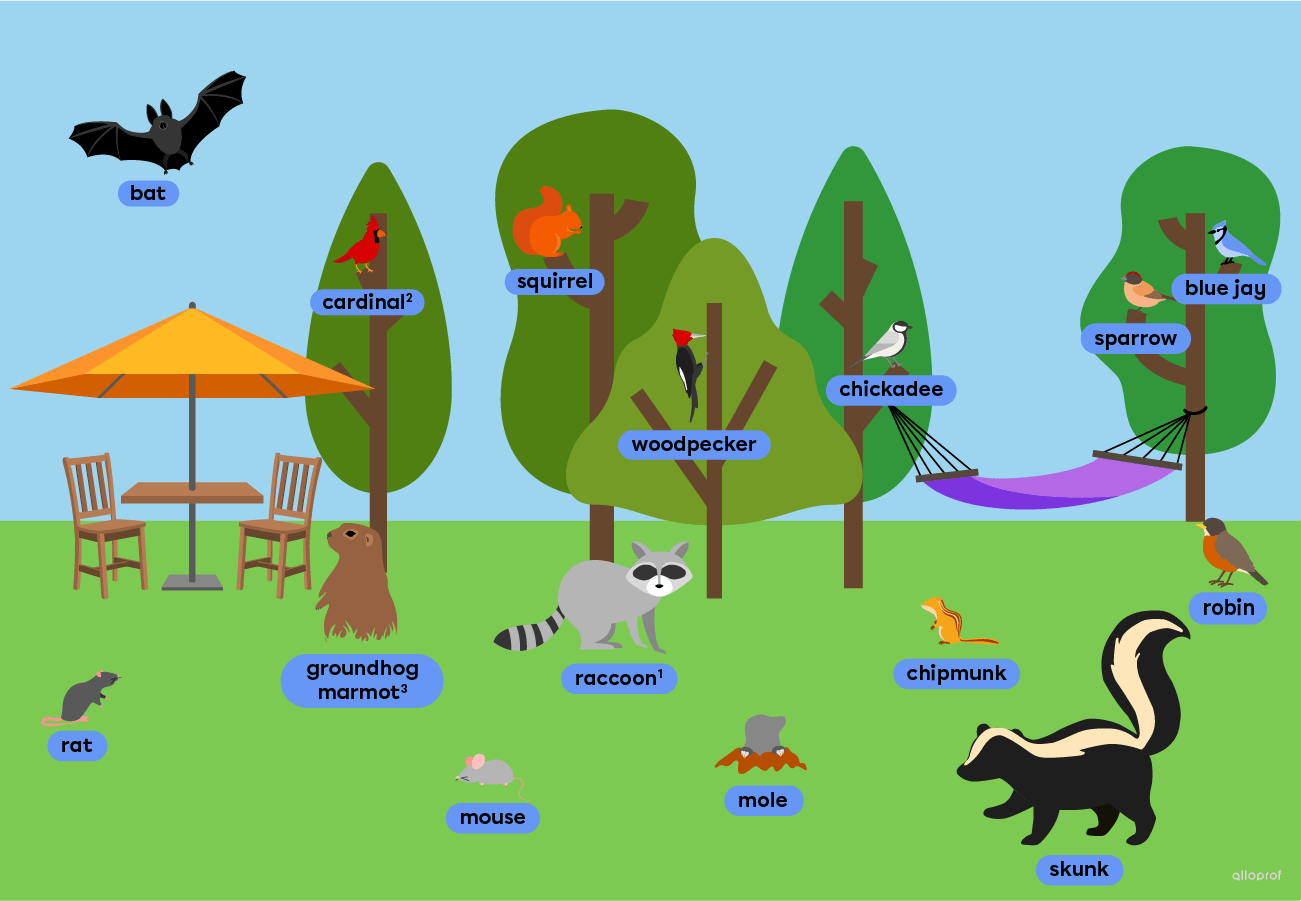
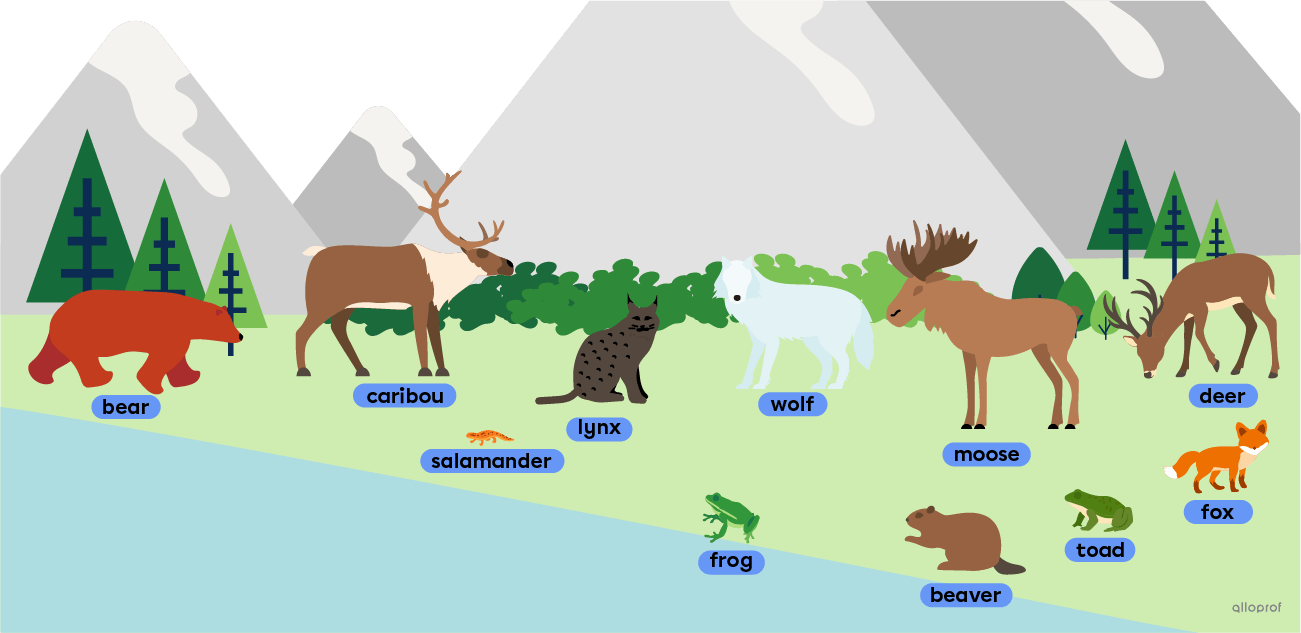
Vocabulary on the theme of animals.
 100%

 100%
 100%
 100%
 100%
 100%
 100%
 100%
 100%
 100%
 100%
 100%
 100%
 100%
 100%
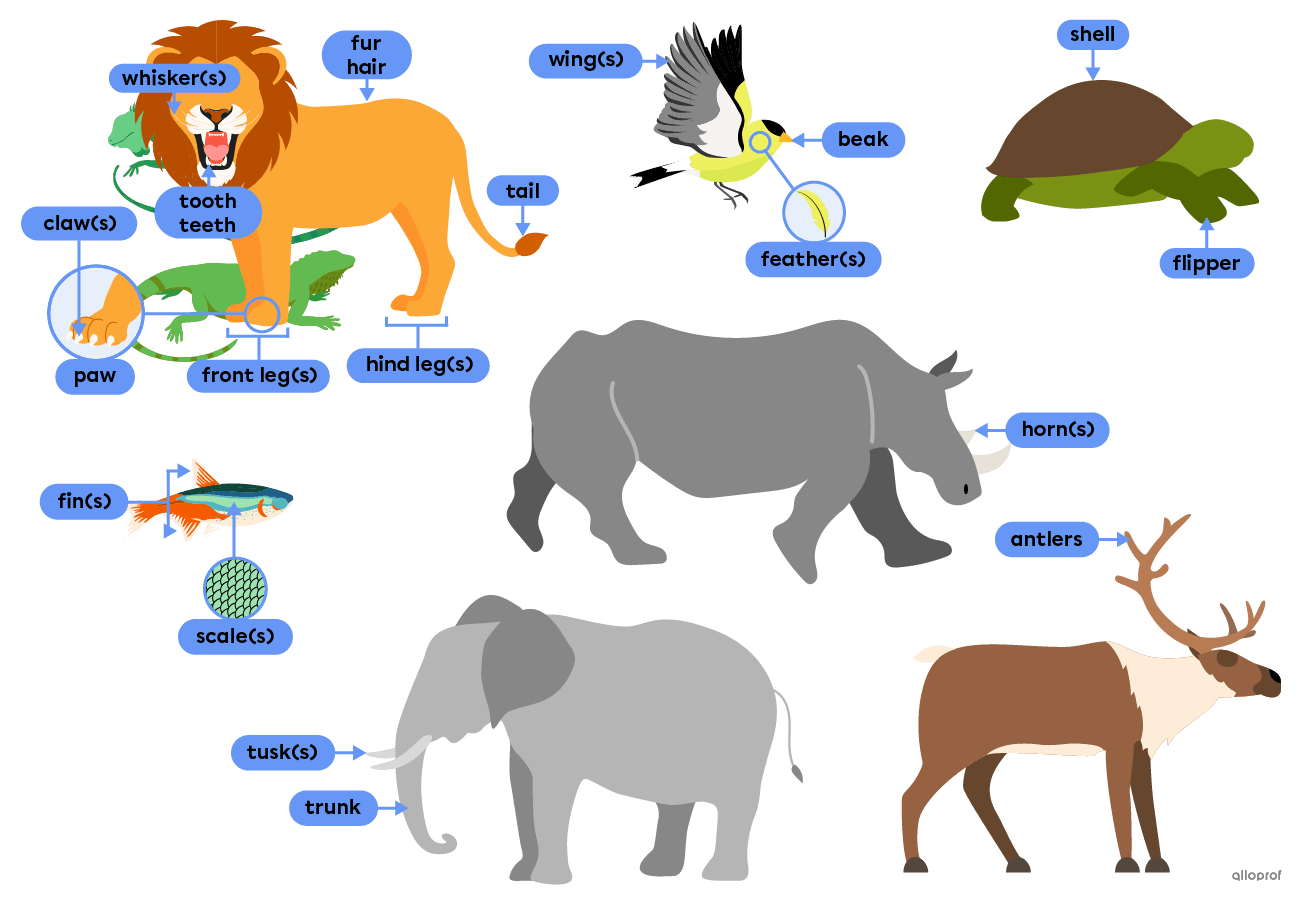
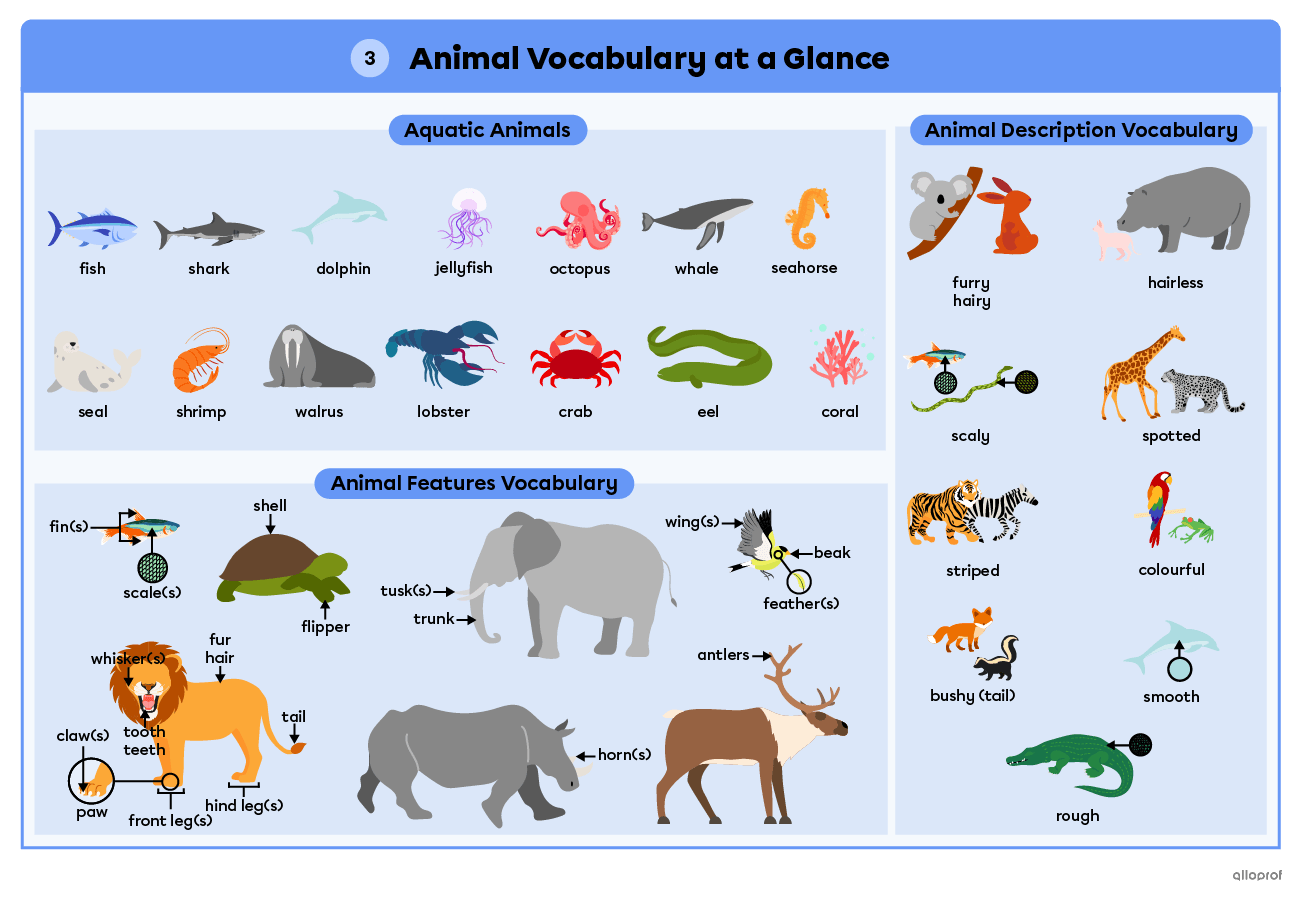
| Feature | Definition |
| snout | The long, protruding part of an animal’s face that includes the nose, mouth and jaws. |
| bill | A synonym of “beak.” |
| hoof (singular) hooves (plural) | The hard, protective covering on the feet of certain animals, such as horses, pigs and deer. |
| talon | A sharp, curved claw found on the feet of birds of prey, such as eagles, owls and hawks. |
| pincers | A type of claw found on crustaceans, such as lobsters and crabs. |
| fangs | Long, sharp pointed teeth. |
| gills | A specialized breathing organ for underwater breathing. |
| spike | Hard, thick and permanent pointed parts of the body. Found mostly on lizards. |
| spine | Thinner, needle-like points that are usually attached to the skeleton or fins. Found on hedgehogs and echidnas. |
| quill | A type of sharp spine that can come out of the animal’s skin. Found on porcupines. |
| crest | A growth or a group of feathers on the very top of an animal's head. Found on blue jays, cockatoos and the basilisk lizard. |
| Description | Definition | Examples |
| mammal | An animal with body hair or fur, that is warm-blooded and that produces milk to feed its babies. | • cats • elephants • whales |
| reptile | A cold-blooded animal that has dry, scaly skin and lays eggs. | • lizards • turtles • snakes |
| amphibian | A cold-blooded animal that lives part of its life in water and on land, that lays eggs. | • frogs • salamanders • axolotls |
| crustacean | An animal that lives mostly in water and has a hard outer shell | • crabs • lobsters • shrimps |
| feline | Animals of the cat family. | • domestic cats • lions • tigers |
| canine | Animals of the dog family. | • domestic dogs • wolves • foxes |
| warm-blooded | Animals that maintain their body temperature by creating heat. | • mammals (including humans) • birds |
| cold-blooded | Animals with changing body temperature that cannot generate heat. | • reptiles • fish • amphibians |
| biped (noun) bipedal (adjective) | That walks on 2 legs. | • humans • birds • kangaroos |
| four-legged quadruped | That walks on 4 legs. | • cats • horses • crocodiles |
| vertebrate | An animal that has a backbone. | • mammals • birds • fish |
| invertebrate | An animal without a backbone. | • crustaceans • octopuses • jelly fish |
| herbivore | Animals that feed on plants such as grass, leaves, fruits, flowers and bark. | • cows • pandas • rabbits |
| carnivore | Animals that feed on meat. | • cats • dolphins • eagles |
| omnivore | Animals that feed both on plants and meat. | • bears • raccoons • pigs |
| insectivore | Animals that feed on insects or bugs. | • chameleons • frogs • bats |
| predator | Animals that hunt, catch and eat other animals. | • cats • polar bears • orcas |
| prey | Animals that are hunted by predators. | • deer • chicken • smaller fish species |
| domestic domesticated | Animals that have been tamed and kept by humans as pets, for work or as a resource. | • cats • dogs • horses |
| wild | Animals that live in their natural environment. | • wolves • deer • elephants |
| nocturnal | Animals that are active at night. | • bats • raccoons • owls |
| solitary | Animals that live by themselves. | • polar bears • moose • tigers |
| territorial | Animals that protect a specific territory from other animals. | • lions • wolves • red squirrels |
| venomous | Animals that can produce and inject harmful toxins (venoms). | • box jellyfish • vipers • stingrays |
| horned | Animals that have horns. | • antelopes • rhinoceroses • bison |
| bearded | Animals that have a growth of hair, feathers, on their chin or throat. | • bearded dragons • goats • orangutans |
| woolly | Animals covered in thick curly hair (wool). | • sheep • alpacas • llamas |
| webbed feet | Feet with skin connecting toes together, serving as natural flippers. | • ducks • frogs • beavers |
| wingspan | The distance from the tip of one wing to the tip of the other wing when they are spread wide open. | Sparrow wingspan: 18-25 cm Albatross wingspan: 3.5-3.5 m |
| to hunt | To look for, chase, and catch another animal for food. |
| to scavenge | To search for and eat dead animals or food discarded by other animals. |
| to forage | To search for and gather food resources. |
| to soar | To fly very high, without flapping wings, with very little effort. |
| to shed | To naturally lose part of a covering, such as fur, skin, feathers or horns. |
| to molt | To shed old feathers, hair, skin, or an entire shell to make way for new growth. |
| to nest | To build and occupy a nest in order to attract a mate or lay eggs. |
| to lay eggs | Action in which a female animal produces and pushes an egg out of her body. |
| to hatch | To break out of an egg. |
| to flock | To gather or move together in a large group, generally used for birds and sheep. |
| to migrate | To move from one region or habitat to another, usually according to the seasons. |
| to camouflage | To hide by blending in with the colours, patterns or shapes of the surroundings. |
| to mimic | To copy the appearance, behaviour or sound of another animal or object. |
| to hibernate | To spend the winter in a deep, sleep-like state. |
| to groom | To clean, brush and take care of its skin, fur or feathers. |
| to bask | To lie or sit in a warm, sunny spot, to soak up heat. |

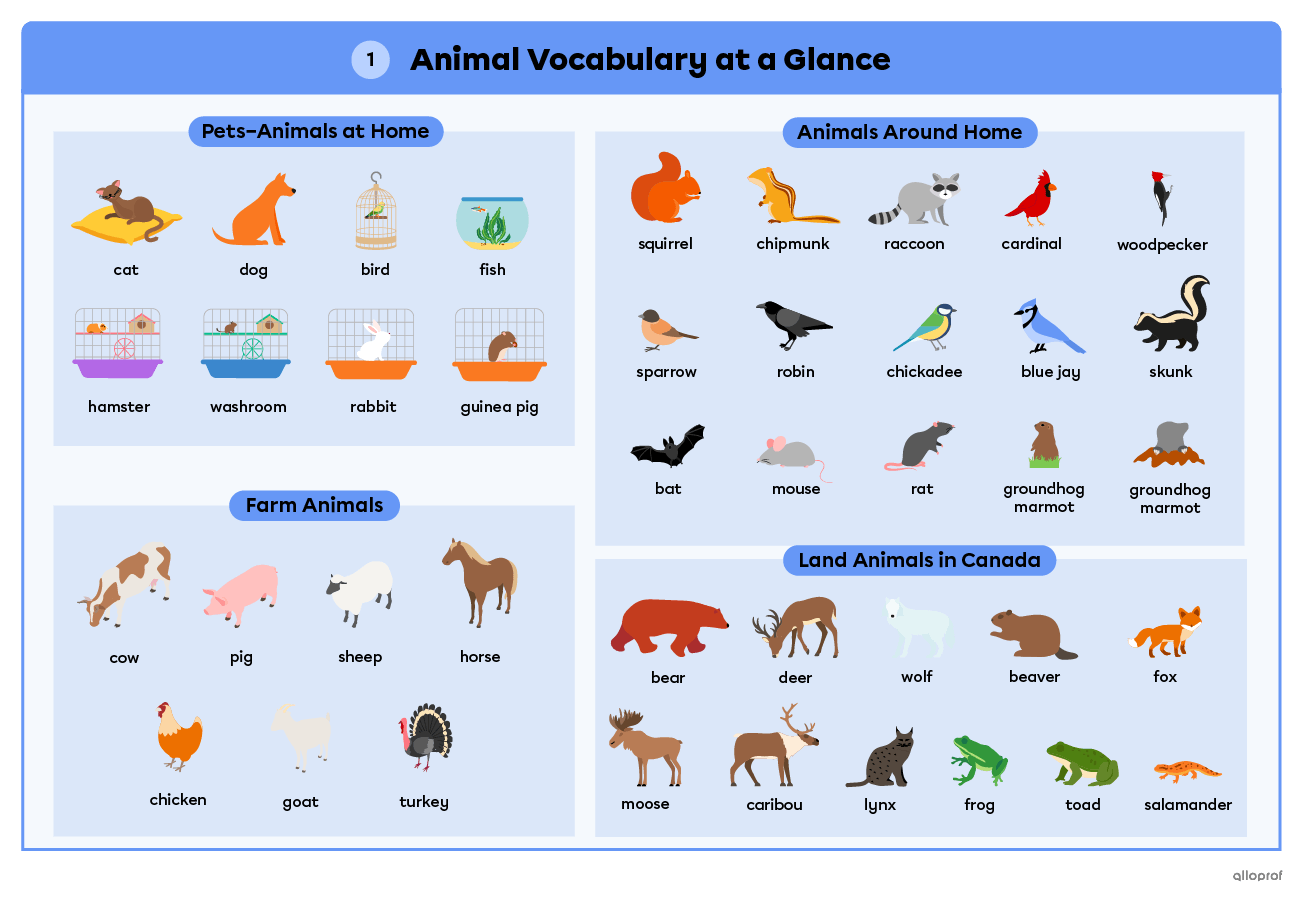
1raccoon: The word raccoon is sometimes also spelled with 1 -c: racoon.
2cardinal: The cardinal is also called the northern cardinal and the red cardinal.
3groundhog: Groundhog is the accurate name for the animal, however, the name marmot is widely used to refer to this animal in the province of Quebec.
(Coming soon)
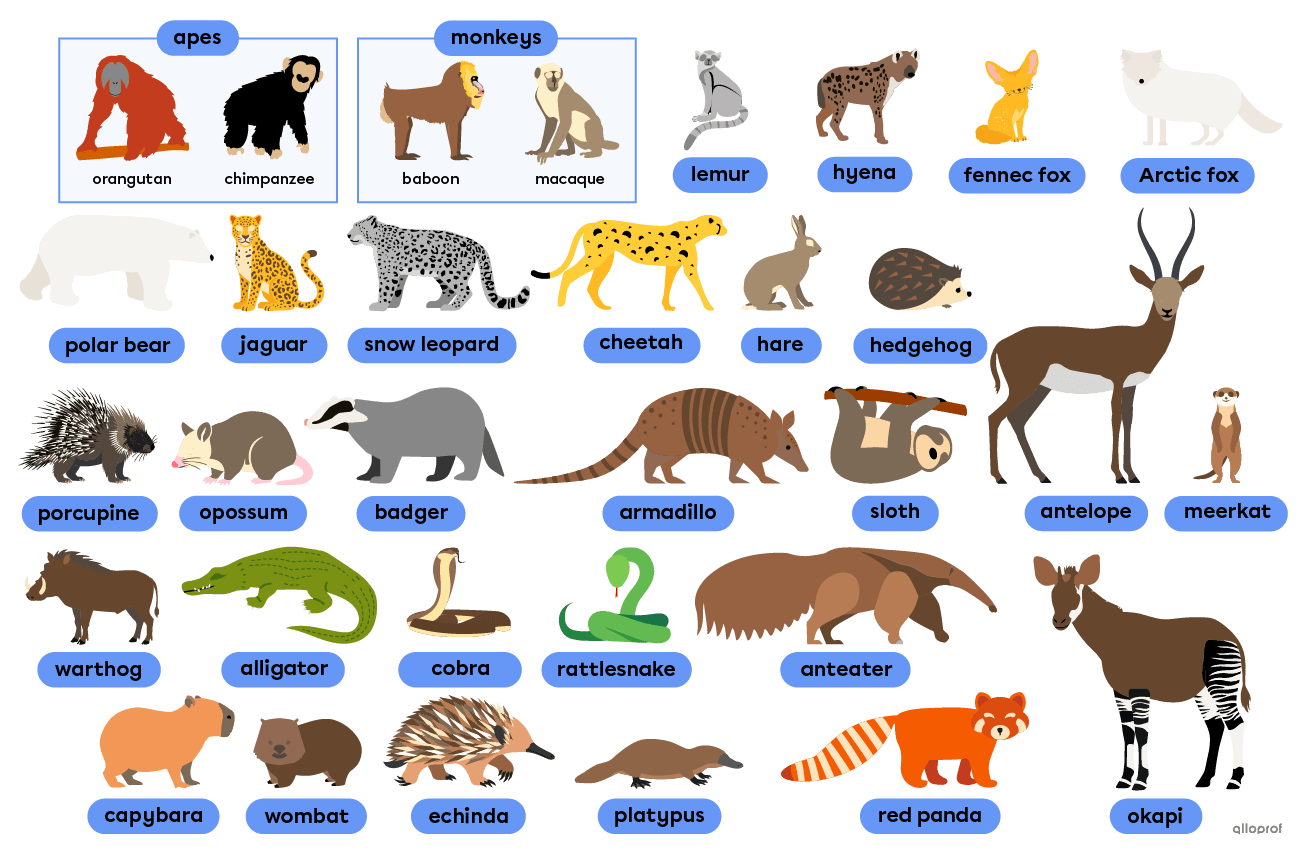
1Apes vs. 2monkeys
Key differences
| Apes | Monkeys | |
| Size | Generally larger (5 to 220 kg) | Smaller (100 g to 50 kg) |
| Tail | No tails | Most species have tails |
| Movement | Swing from branch to branch | Run on branches and leap from branch to branch |
| Can walk on 2 legs | Mostly walk on 4 limbs |
3Alligator vs. crocodile
Key differences
| Alligators | Crocodiles | |
| Size | Smaller (225-450 kg) | Larger (up to 1000 kg!) |
| Nose/snout | U-shaped | V-shaped |
| Teeth showing when mouth is closed | Upper teeth only | Both upper and lower teeth |
| Feet | Webbed feet | Separated toes |
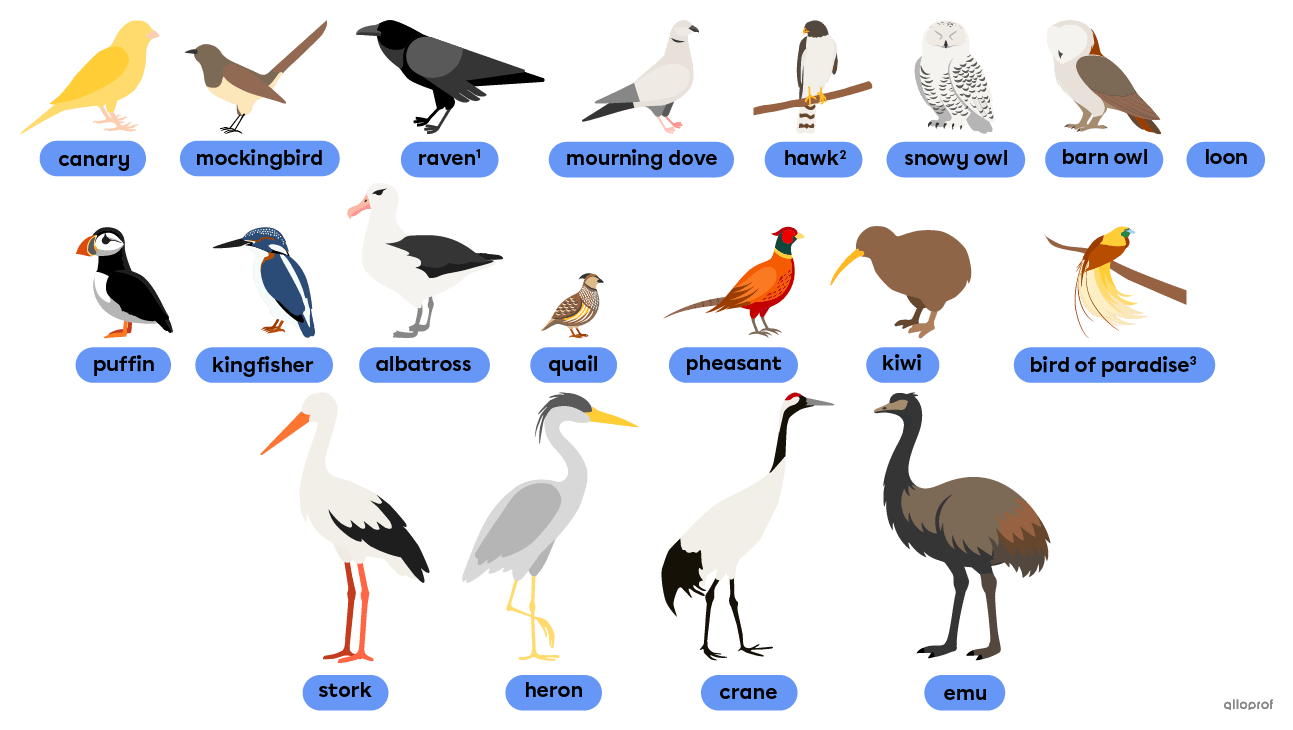
1Raven vs, crow
Key differences
| Ravens | Crows | |
| Size | Larger (55-70 cm long) | Smaller (40-53 cm long) |
| Beak shape | Hooked beak | Pointed beak |
| Tail shape | Diamond-shaped | Fan-shaped |
2Hawk vs. falcon
Key differences
| Hawks | Falcons | |
| Size | Larger (45-66 cm long) | Smaller (36-65 long) |
| Wing shape | Shorter, broader wings built for soaring. | Longer, narrower wings built for speed. |
3Birds of paradise
Birds of paradise are a large group of birds with over 40 different species.
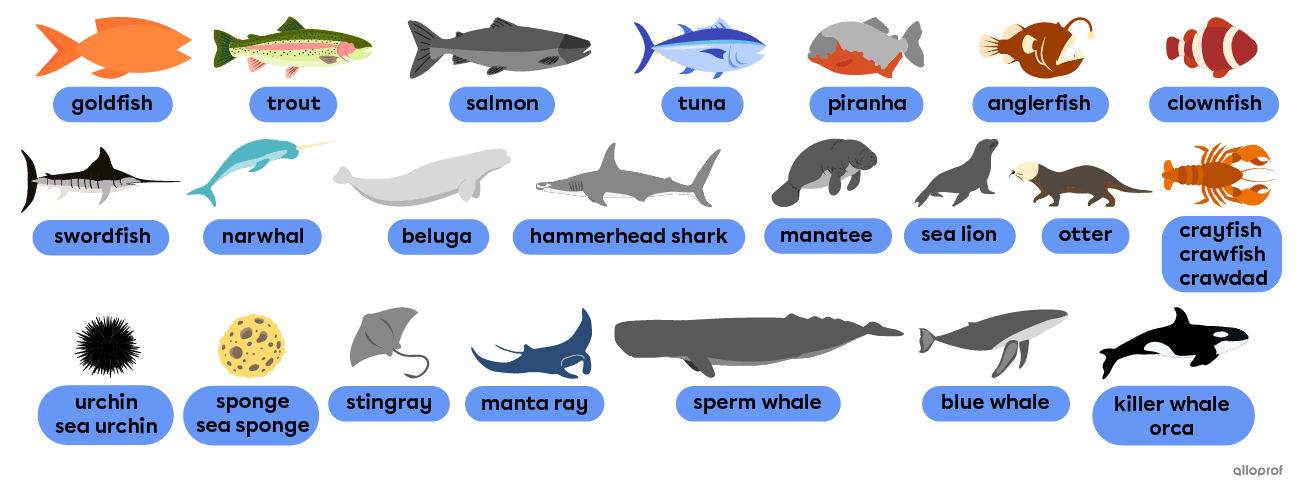
1Sea lion vs. seal
Key differences
| Sea lions | Seals | |
| Ears | External ear flaps | Ear holes without flaps |
| Flippers | Short | Long |
| Fur-covered | Skin-covered | |
| Claws on 4 flippers | Claws only on hind flippers | |
| Movement on land | Use flippers to walk | Move in a caterpillar-like motion |
| Feature | Definition |
| snout | The long, protruding part of an animal’s face that includes the nose, mouth and jaws. |
| bill | A synonym of “beak.” |
| hoof (singular) hooves (plural) | The hard, protective covering on the feet of certain animals, such as horses, pigs and deer. |
| talon | A sharp, curved claw found on the feet of birds of prey, such as eagles, owls and hawks. |
| pincers | A type of claw found on crustaceans, such as lobsters and crabs. |
| fangs | Long, sharp pointed teeth. |
| gills | A specialized breathing organ for underwater breathing. |
| spike | Hard, thick and permanent pointed parts of the body. Found mostly on lizards. |
| spine | Thinner, needle-like points that are usually attached to the skeleton or fins. Found on hedgehogs and echidnas. |
| quill | A type of sharp spine that can come out of the animal’s skin. Found on porcupines. |
| crest | A growth or a group of feathers on the very top of an animal's head. Found on blue jays, cockatoos and the basilisk lizard. |
| Description | Definition | Examples |
| mammal | An animal with body hair or fur, that is warm-blooded and that produces milk to feed its babies. | • cats • elephants • whales |
| reptile | A cold-blooded animal that has dry, scaly skin and lays eggs. | • lizards • turtles • snakes |
| amphibian | A cold-blooded animal that lives part of its life in water and on land, that lays eggs. | • frogs • salamanders • axolotls |
| crustacean | An animal that lives mostly in water and has a hard outer shell | • crabs • lobsters • shrimps |
| feline | Animals of the cat family. | • domestic cats • lions • tigers |
| canine | Animals of the dog family. | • domestic dogs • wolves • foxes |
| warm-blooded | Animals that maintain their body temperature by creating heat. | • mammals (including humans) • birds |
| cold-blooded | Animals with changing body temperature that cannot generate heat. | • reptiles • fish • amphibians |
| biped (noun) bipedal (adjective) | That walks on 2 legs. | • humans • birds • kangaroos |
| four-legged quadruped | That walks on 4 legs. | • cats • horses • crocodiles |
| vertebrate | An animal that has a backbone. | • mammals • birds • fish |
| invertebrate | An animal without a backbone. | • crustaceans • octopuses • jelly fish |
| herbivore | Animals that feed on plants such as grass, leaves, fruits, flowers and bark. | • cows • pandas • rabbits |
| carnivore | Animals that feed on meat. | • cats • dolphins • eagles |
| omnivore | Animals that feed both on plants and meat. | • bears • raccoons • pigs |
| insectivore | Animals that feed on insects or bugs. | • chameleons • frogs • bats |
| predator | Animals that hunt, catch and eat other animals. | • cats • polar bears • orcas |
| prey | Animals that are hunted by predators. | • deer • chicken • smaller fish species |
| domestic domesticated | Animals that have been tamed and kept by humans as pets, for work or as a resource. | • cats • dogs • horses |
| wild | Animals that live in their natural environment. | • wolves • deer • elephants |
| nocturnal | Animals that are active at night. | • bats • raccoons • owls |
| solitary | Animals that live by themselves. | • polar bears • moose • tigers |
| territorial | Animals that protect a specific territory from other animals. | • lions • wolves • red squirrels |
| venomous | Animals that can produce and inject harmful toxins (venoms). | • box jellyfish • vipers • stingrays |
| horned | Animals that have horns. | • antelopes • rhinoceroses • bison |
| bearded | Animals that have a growth of hair, feathers, on their chin or throat. | • bearded dragons • goats • orangutans |
| woolly | Animals covered in thick curly hair (wool). | • sheep • alpacas • llamas |
| webbed feet | Feet with skin connecting toes together, serving as natural flippers. | • ducks • frogs • beavers |
| wingspan | The distance from the tip of one wing to the tip of the other wing when they are spread wide open. | Sparrow wingspan: 18-25 cm Albatross wingspan: 3.5-3.5 m |
| to hunt | To look for, chase, and catch another animal for food. |
| to scavenge | To search for and eat dead animals or food discarded by other animals. |
| to forage | To search for and gather food resources. |
| to soar | To fly very high, without flapping wings, with very little effort. |
| to shed | To naturally lose part of a covering, such as fur, skin, feathers or horns. |
| to molt | To shed old feathers, hair, skin, or an entire shell to make way for new growth. |
| to nest | To build and occupy a nest in order to attract a mate or lay eggs. |
| to lay eggs | Action in which a female animal produces and pushes an egg out of her body. |
| to hatch | To break out of an egg. |
| to flock | To gather or move together in a large group, generally used for birds and sheep. |
| to migrate | To move from one region or habitat to another, usually according to the seasons. |
| to camouflage | To hide by blending in with the colours, patterns or shapes of the surroundings. |
| to mimic | To copy the appearance, behaviour or sound of another animal or object. |
| to hibernate | To spend the winter in a deep, sleep-like state. |
| to groom | To clean, brush and take care of its skin, fur or feathers. |
| to bask | To lie or sit in a warm, sunny spot, to soak up heat. |
(Coming soon)