Learning to spell is essential for understanding the meaning of words and texts. However, this skill isn't just about learning lists of words by heart. Rather, it’s a whole process of decoding that often involves discovering visual and sound patterns that become easy to identify as children familiarize themselves with words.
This sequence of 10 practical activities is designed to support children in Cycle 2 of primary school (grades 3 and 4) by providing you with tools to understand the "why" and "how" of words and sentences.
They’re designed to fit easily into your family routine and to be done in order. They were created specifically to help children with learning disorders, but all children can benefit from them!
Required materials:
- Sheets of paper and pencils, or a dry-erase board
- A list of spelling words currently being studied
- A variety of children's picture books
- A reference tool (poster, dictionary, etc.)
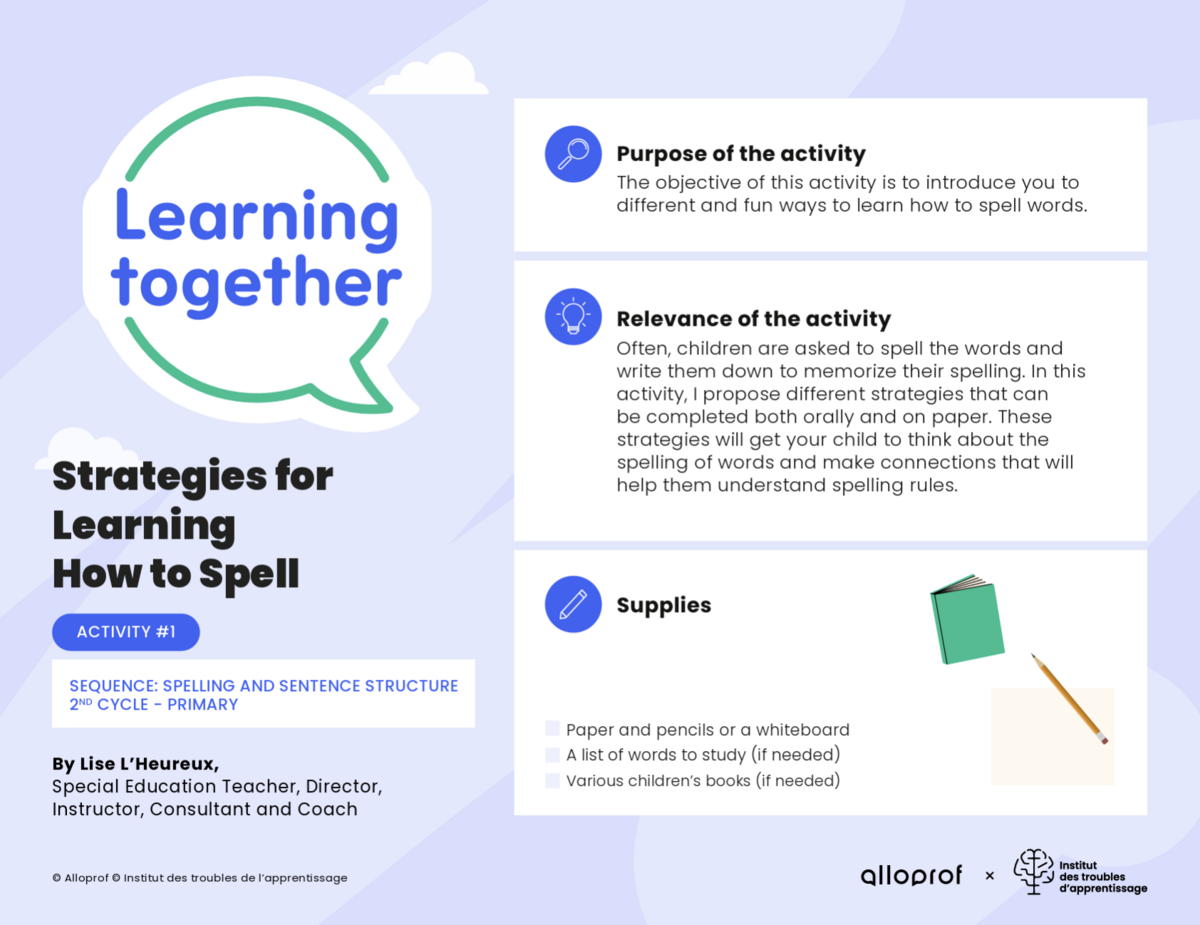
Activity #1: Strategies for Learning How to Spell
This opening activity proposes turning word memorization into a fun brain warm-up session. It presents different approaches to get your child thinking about language patterns rather than simply spelling words by heart. For example, you will be invited to create funny sentences with your child and find words that share similar sounds.
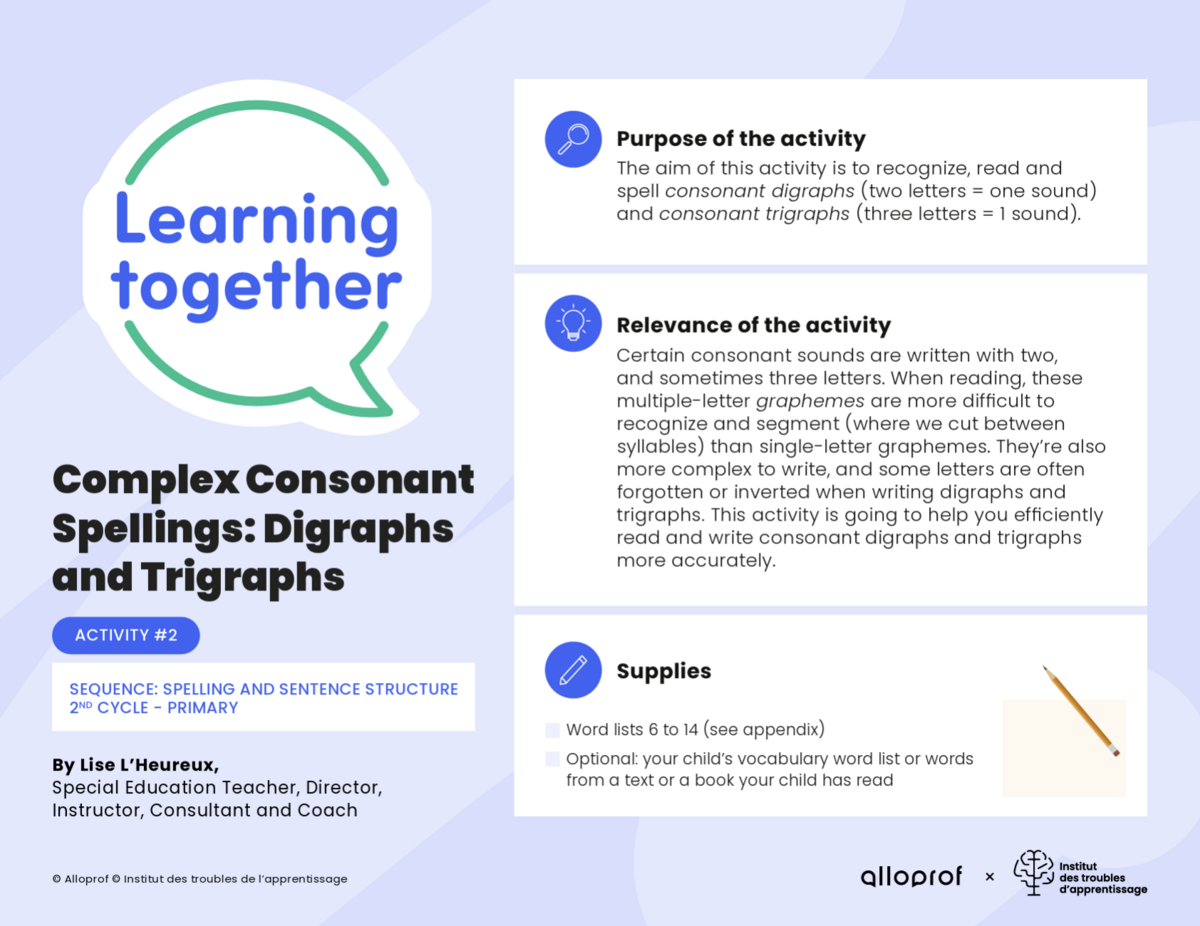
Activity #2: Complex Consonant Spellings: Digraphs and Trigraphs
This activity proposes turning the challenge of multi-letter sounds into a fun decoding game. It presents different approaches to help your child easily spot and spell consonant digraphs and trigraphs (two or three letters that make a single sound), rather than struggling with syllable gaps or inverted letters. By looking at how words are built together, your child will spot common spelling mistakes and feel more comfortable when reading and writing.
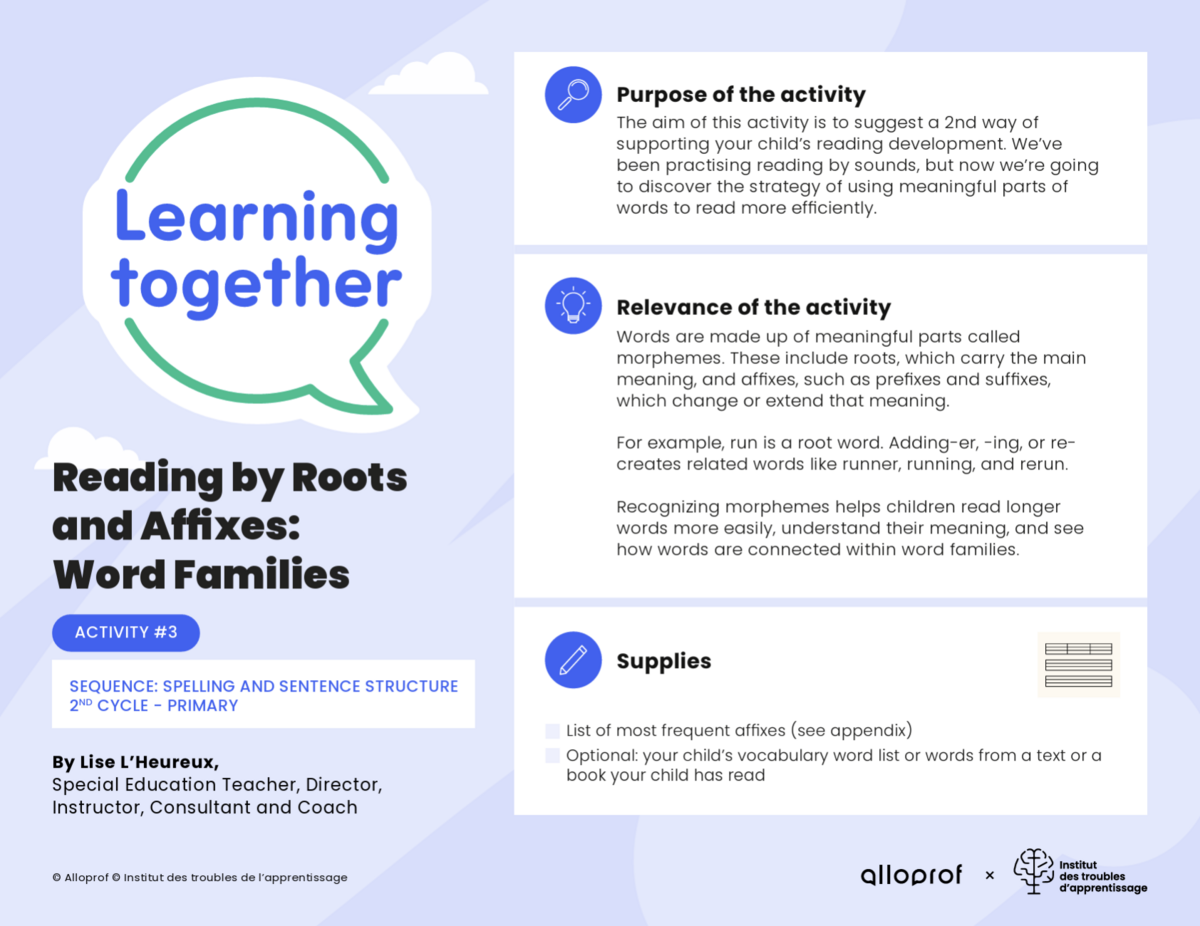
Activity #3: Reading by Roots and Affixes: Word Families
This activity proposes a second way to support your child’s reading by shifting the focus from individual sounds to the meaningful building blocks of words. It presents simple ways to help your child notice word families and see how changing a word's ending or beginning changes its meaning. For example, you will look at how a familiar word like run can easily grow into runner or rerun, making it much easier for them to read and understand longer, more complex words.
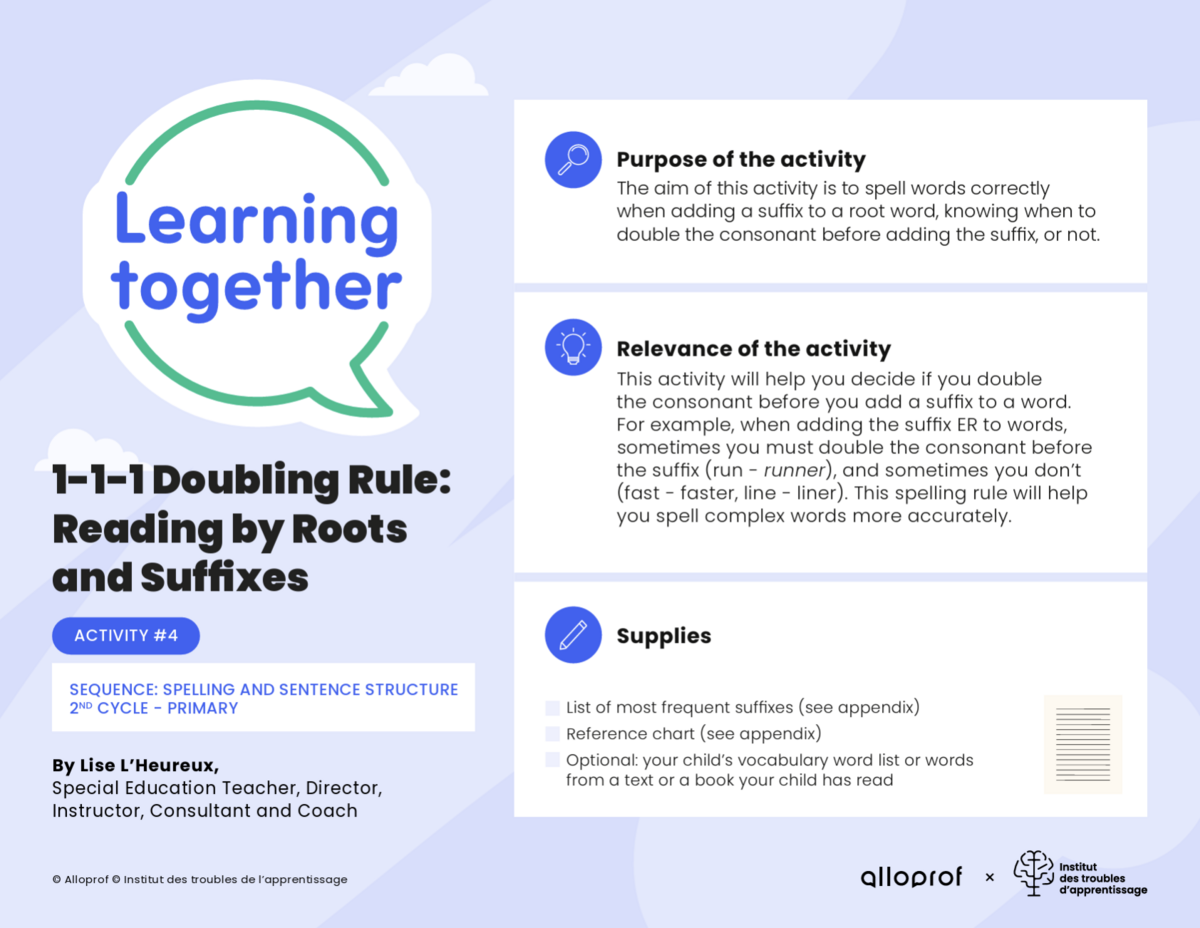
Activity #4: 1-1-1 Doubling Rule: Reading by Roots and Suffixes
This fourth activity proposes a practical way to help your child master a tricky spelling rule: knowing when to double a consonant before adding a suffix. It presents a clear method to figure out why words like run become runner, while words like fast or line don't double their letters. For example, you will look at simple word patterns together, helping your child avoid common spelling mistakes and feel more confident when writing longer words.
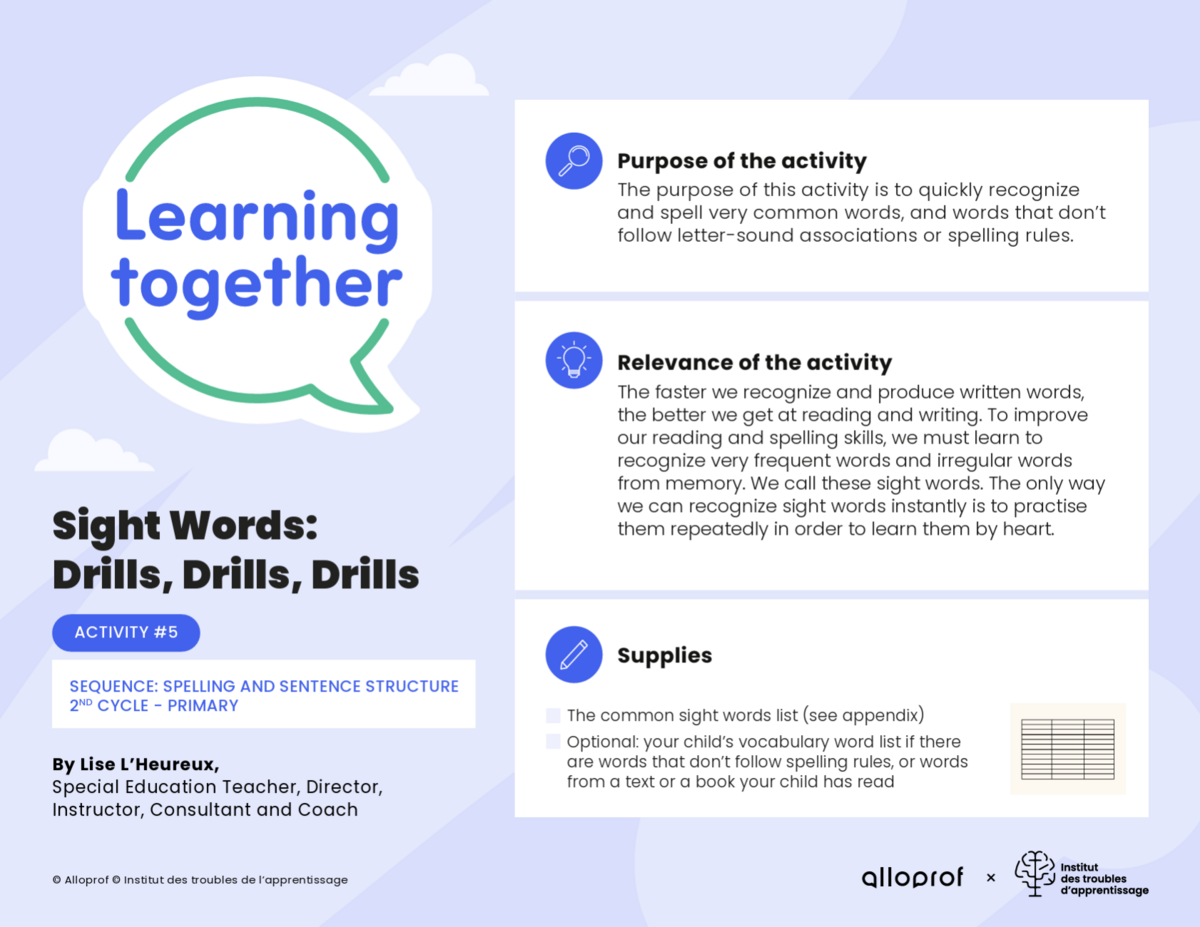
Activity #5: Sight Words: Drills, Drills, Drills
This fifth activity proposes a straightforward way to help your child quickly recognize and spell common or irregular words from memory. It presents practice methods for sight words—those frequent or tricky words, like of, said, or who, that don't follow regular spelling rules and can't easily be sounded out. For example, you will help your child practise these words repeatedly until they can read and write them instantly, making their everyday reading much faster and more automatic.
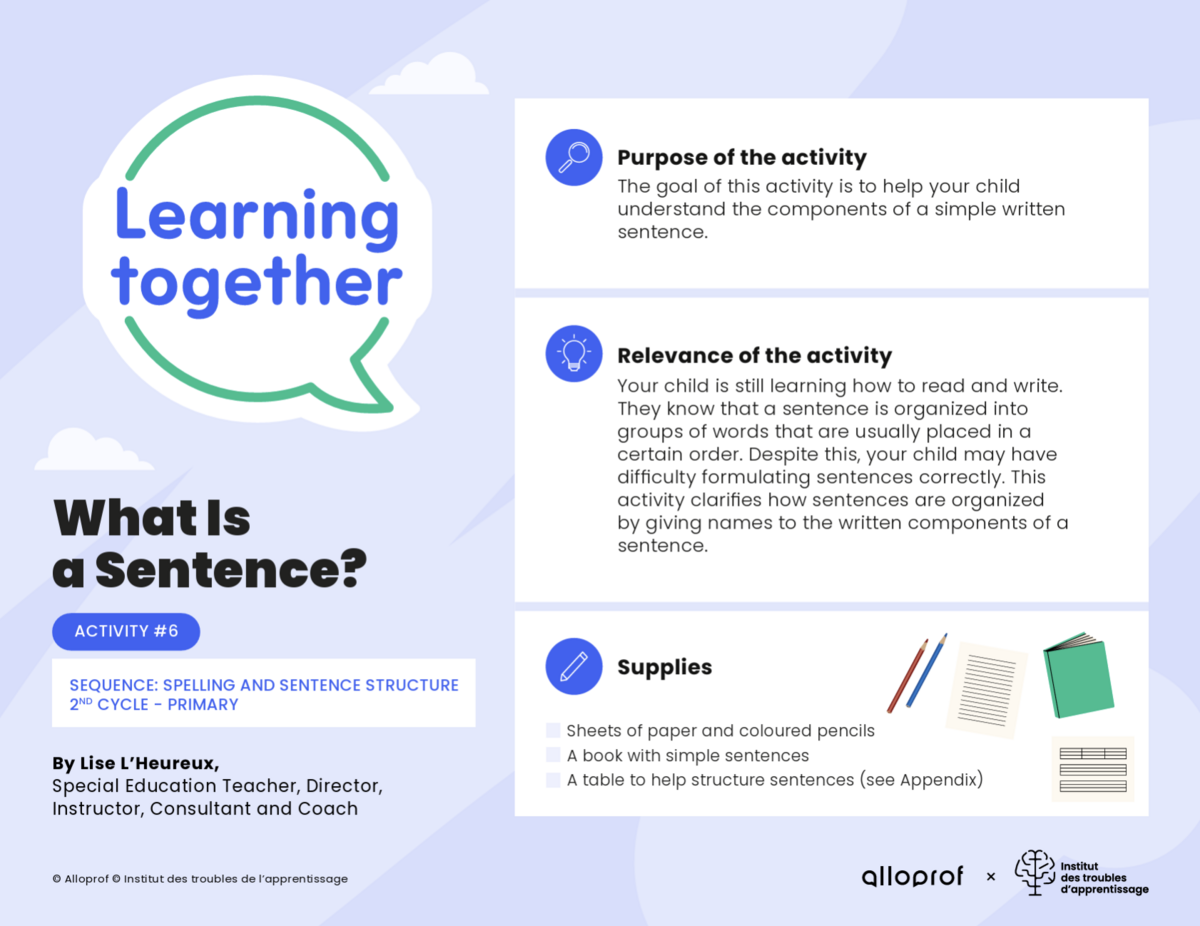
Activity #6: What Is a Sentence?
This activity proposes a clear way to help your child understand how a simple sentence is built and organized. It presents simple checkpoints to help them look at their own writing and figure out what makes a sentence complete, rather than just a random string of words.
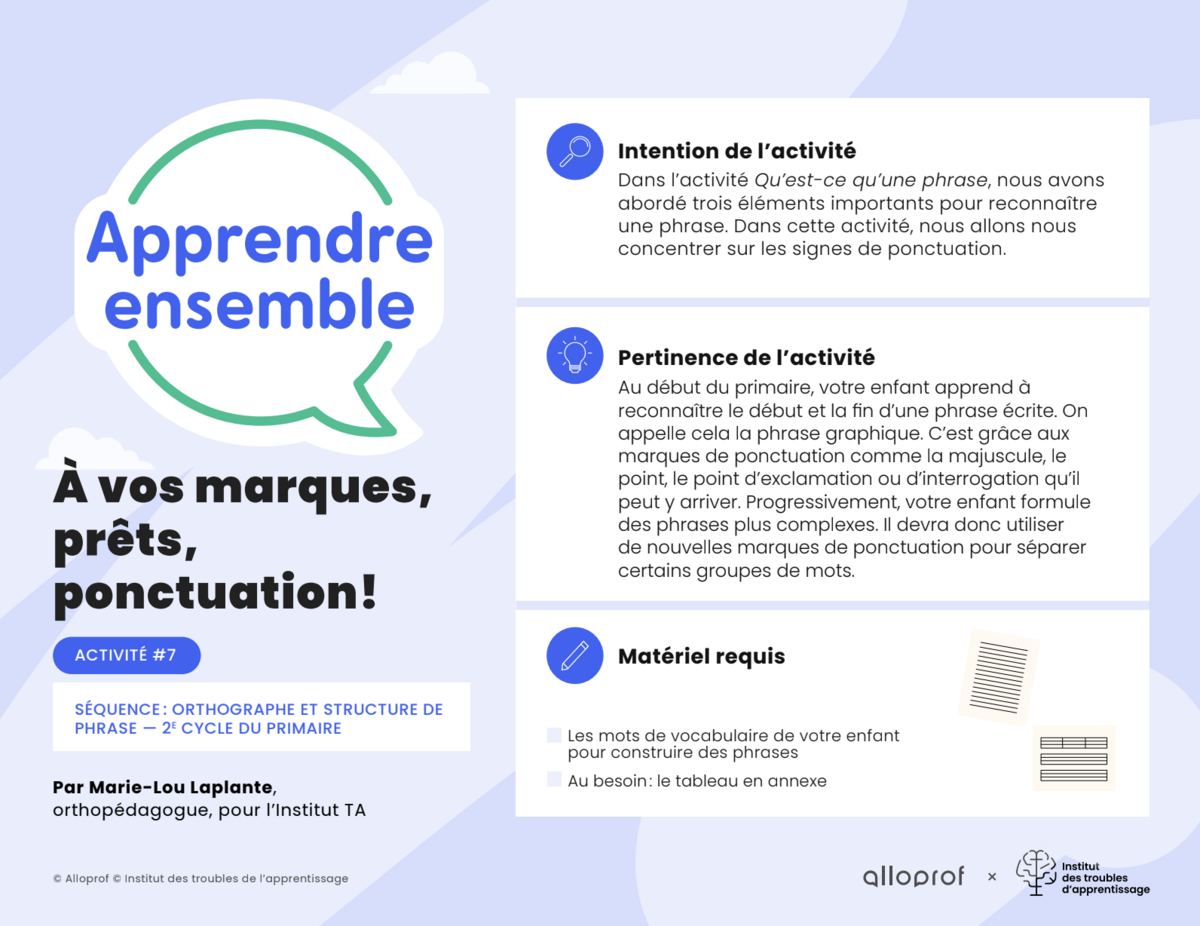
Activity #7: On your Marks, Ready, Set, Punctuate!
This seventh activity proposes a straightforward way to help your child master punctuation marks and improve the flow of their writing. It presents simple strategies to show how capital letters, periods, and commas prevent ideas from running together into one long, confusing sentence. For example, you will look at how pausing and adding the right punctuation makes a sentence clear and easy to follow.
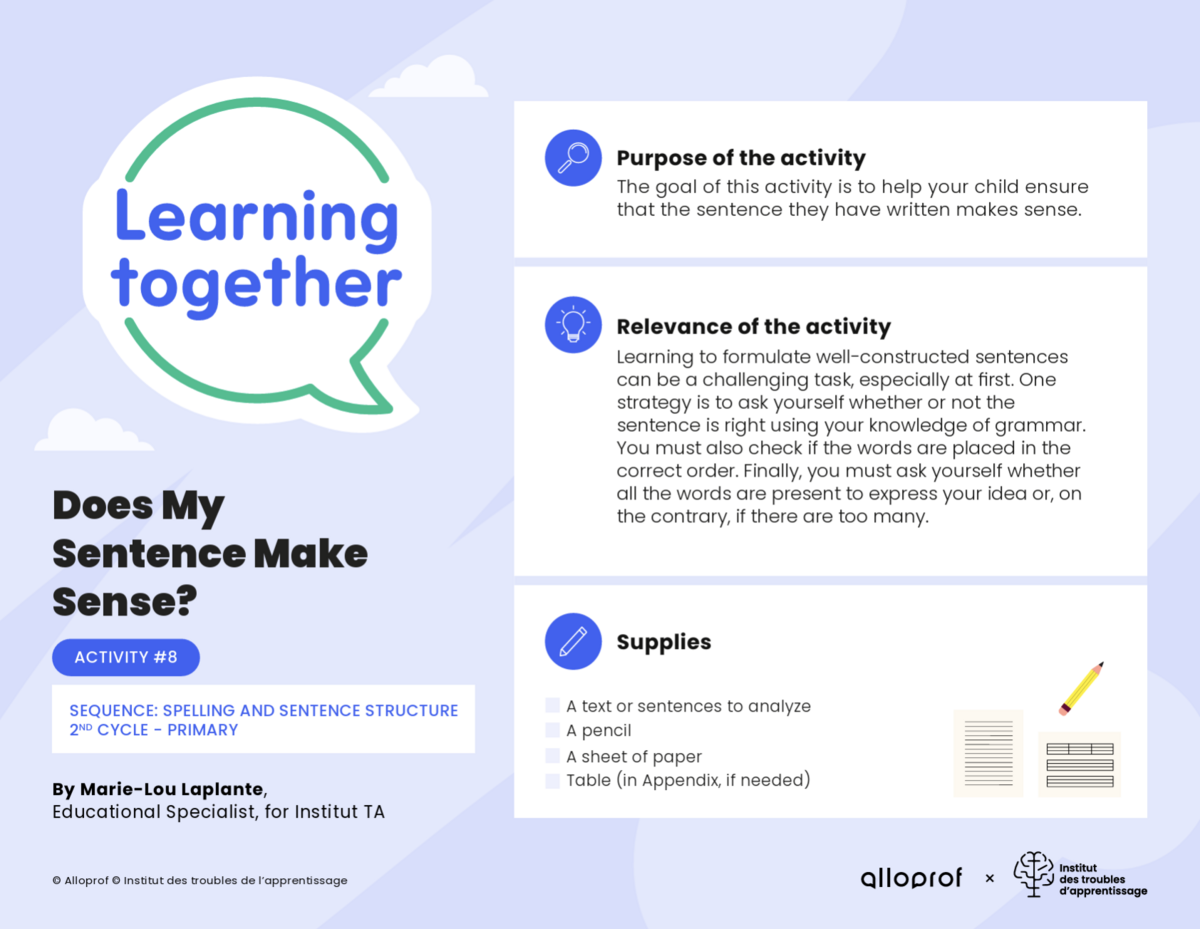
Activity #8: Does My Sentence Make Sense?
The goal of this activity is to propose a practical way to help your child check that their written sentences actually make sense and flow correctly. It presents simple steps to verify word order and ensure that no essential words are missing or accidentally repeated. For example, you will practise reviewing sentences together to make sure the message is clear and easy to understand, helping your child spot quick mistakes and build better writing habits.
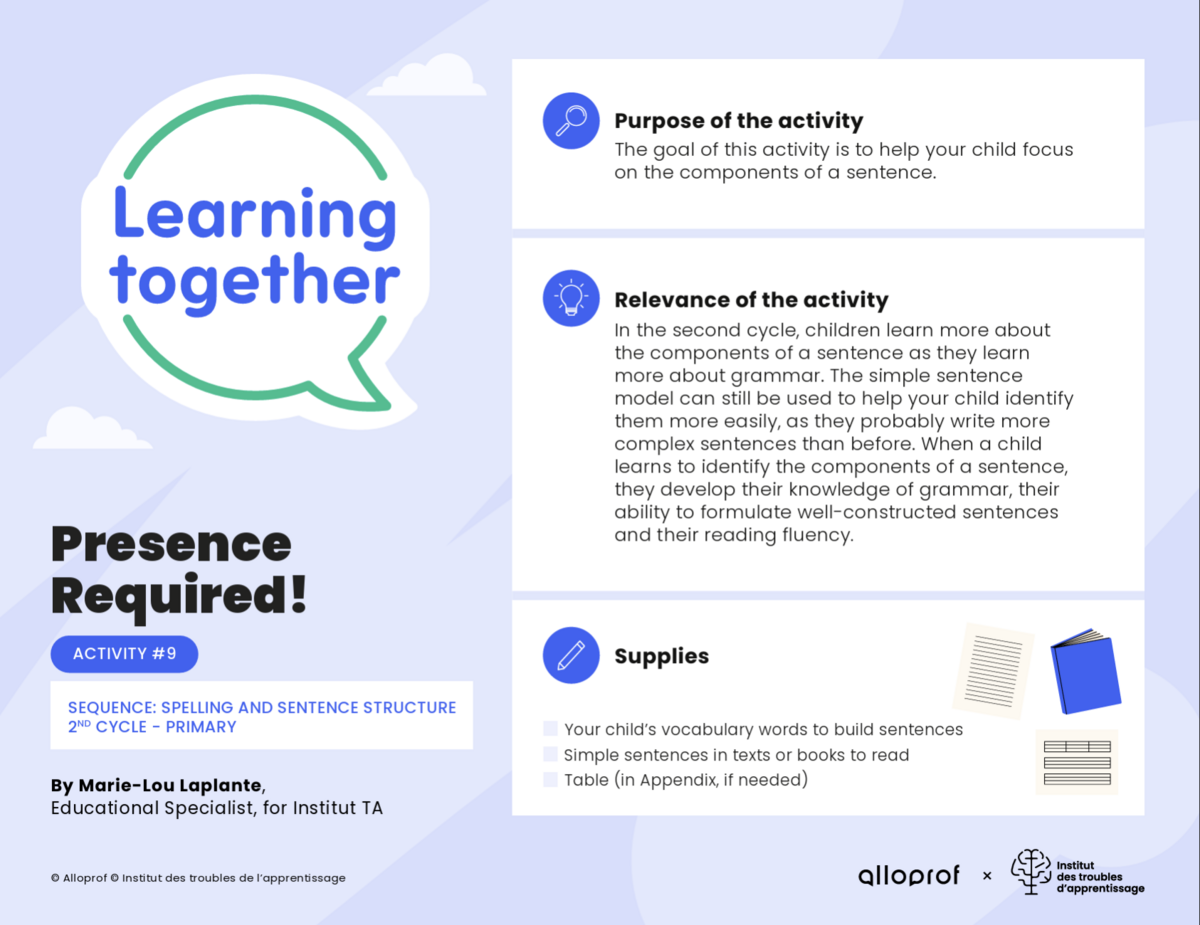
Activity #9: Presence Required!
This ninth activity proposes a useful way to help your child break down a sentence into its essential grammatical parts. It presents a simple questioning strategy to ensure that both the subject (who or what the sentence is about) and the predicate (what they are doing or their state of being) are always present. By looking at incomplete ideas together and asking the right questions to fill in the missing pieces, your child can naturally write more complete and grammatically correct sentences.
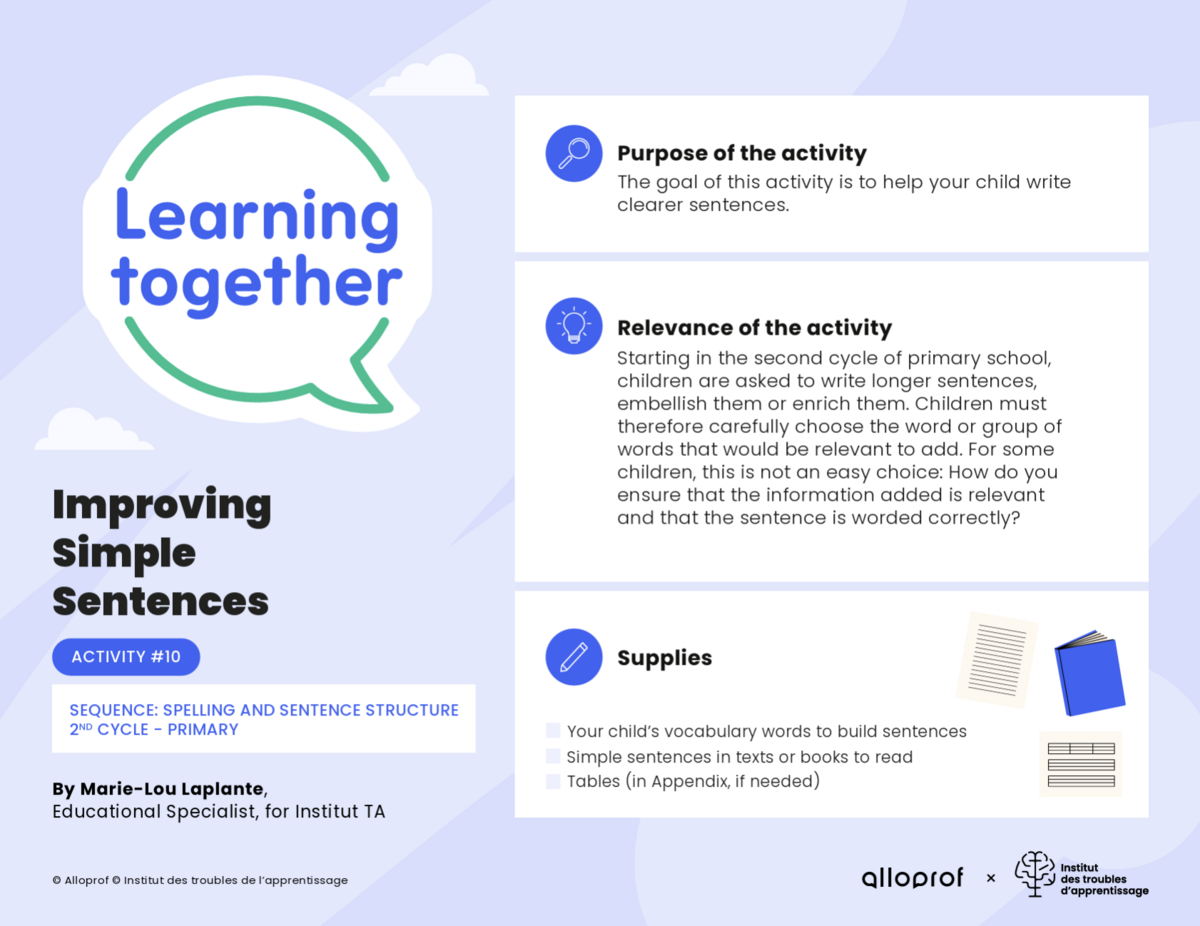
Activity #10: Improving Simple Sentences
Congratulations on reaching the final activity! This closing session proposes a fun way to help your child expand their sentences and make their writing more interesting. It presents simple ways to guide your child in adding descriptive details—like answering where, when, or how something happens—without making the sentence confusing. For example, you will take a simple sentence, then practise adding relevant information, giving your child the tools to write longer, clearer, and more expressive sentences.
More on Learning Together Topic
Congratulations! You’ve completed the entire series!
This sequence of activities is part of a larger collection of tools and resources designed to support your child’s literacy and numeracy development. It presents an invitation to explore our Learning Together topic, where you will find a variety of practical activities to guide your child in reading, writing, and math. For example, you can browse through these extra resources at your own pace to find new, everyday ways to keep practising and learning together.
Additonal Resources
Explore our other resources to help guide and support your child’s spelling and sentence structure skills.
The activities were developed by Marie-Lou Laplante, remedial teacher, for the Institut des troubles d’apprentissage, Institut TA.