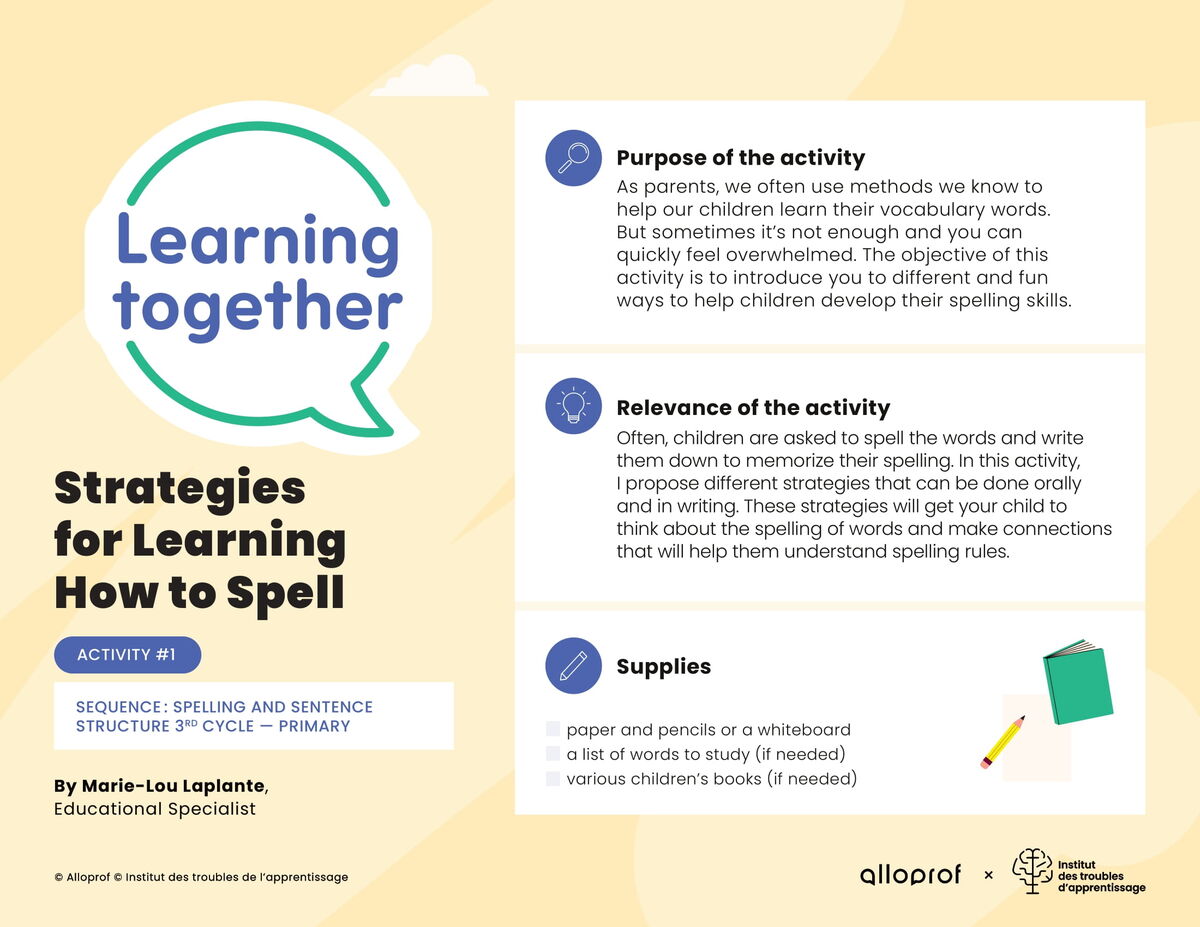
Activity #1: Strategies for Learning How to Spell
This activity presents five oral and written strategies intended to make learning to spell more enjoyable and complement the methods learned at school. It is designed to help your child memorize spelling words more effectively and retain new knowledge over the long term.
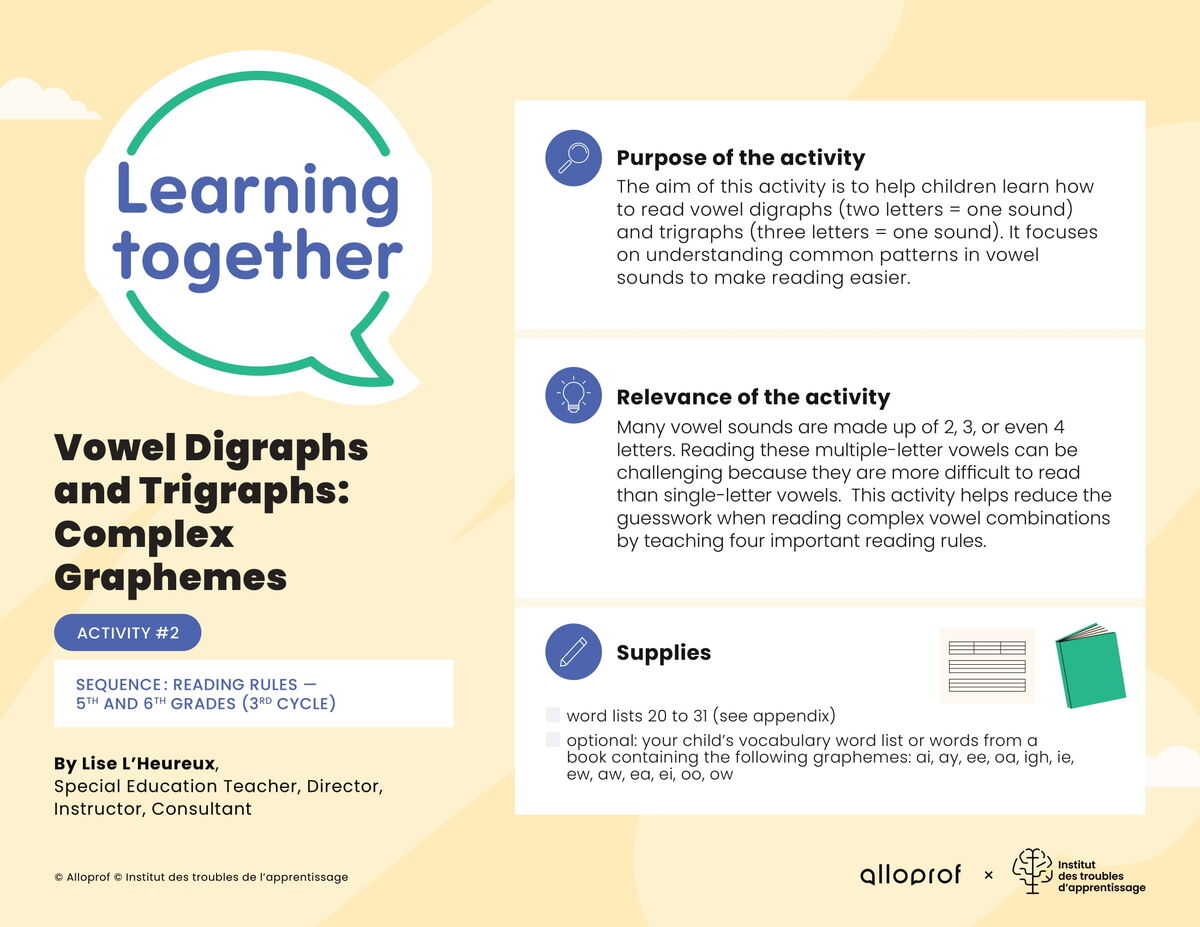
Activity #2: Vowel Digraphs and Trigraphs: Complex Graphemes
Breaking words down into syllables and sounds is very helpful for learning how to spell. This activity helps your child understand how to make the most of this method, which is useful for writing about 50% of words. Note that for more complex words, other strategies will need to be used.
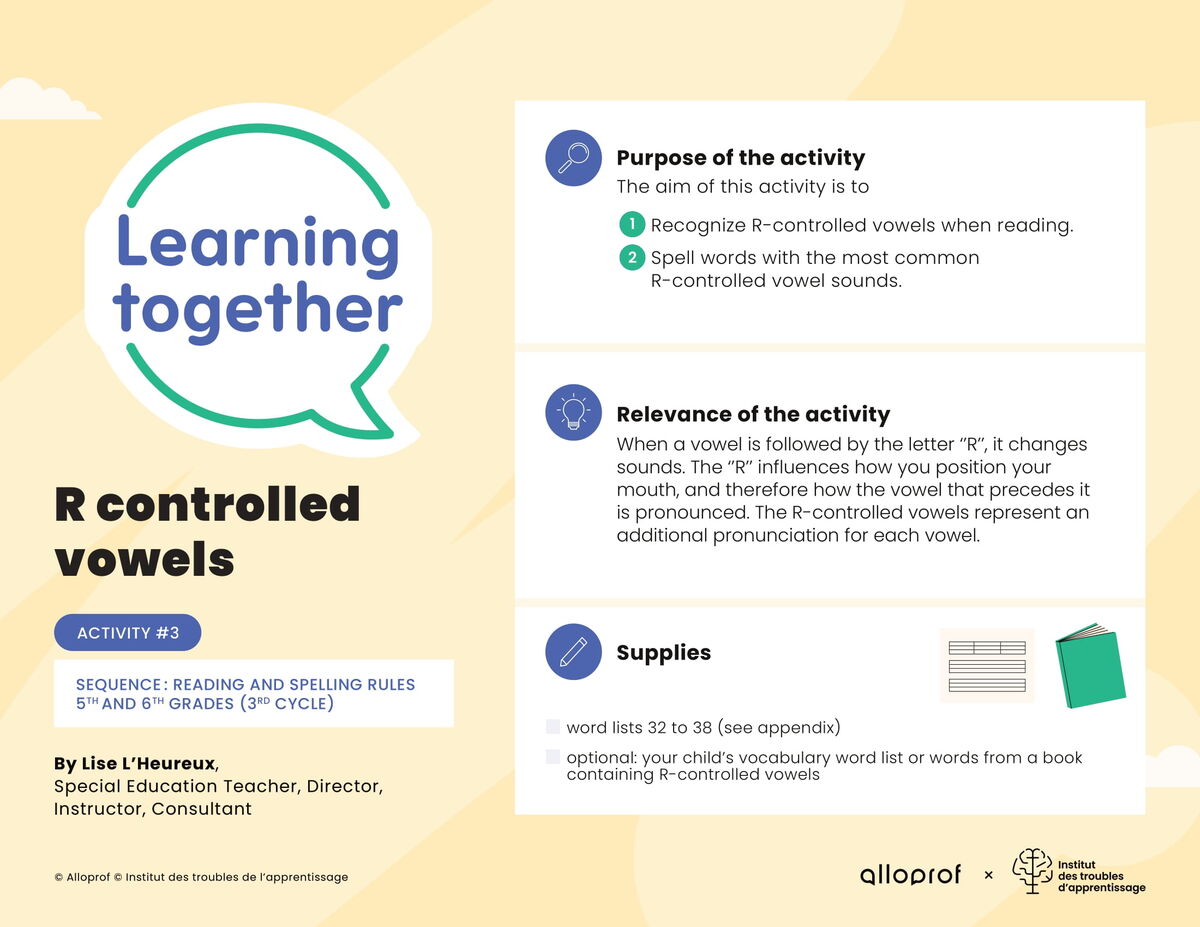
Activity #3: R controlled vowels
About 80% of the words in the French language are made up of small units of meaning. By identifying these elements—such as prefixes and suffixes—it becomes easier to read, understand the meaning of words, and spell them correctly.
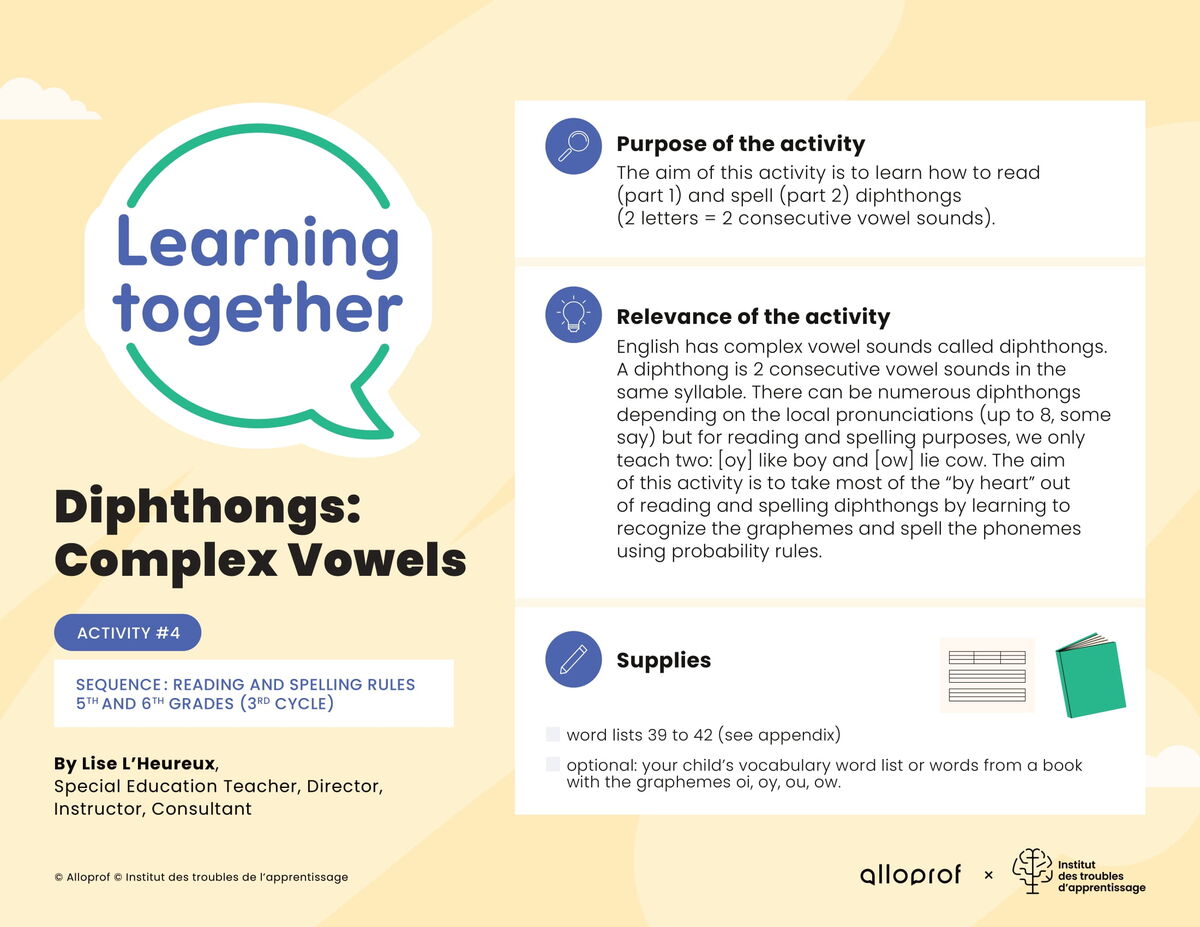
Activity #4 : Diphthongs: Complex Vowels
This activity teaches your child a third strategy for memorizing spellings: using visual cues and spelling patterns, which will help them better identify the correct spelling!
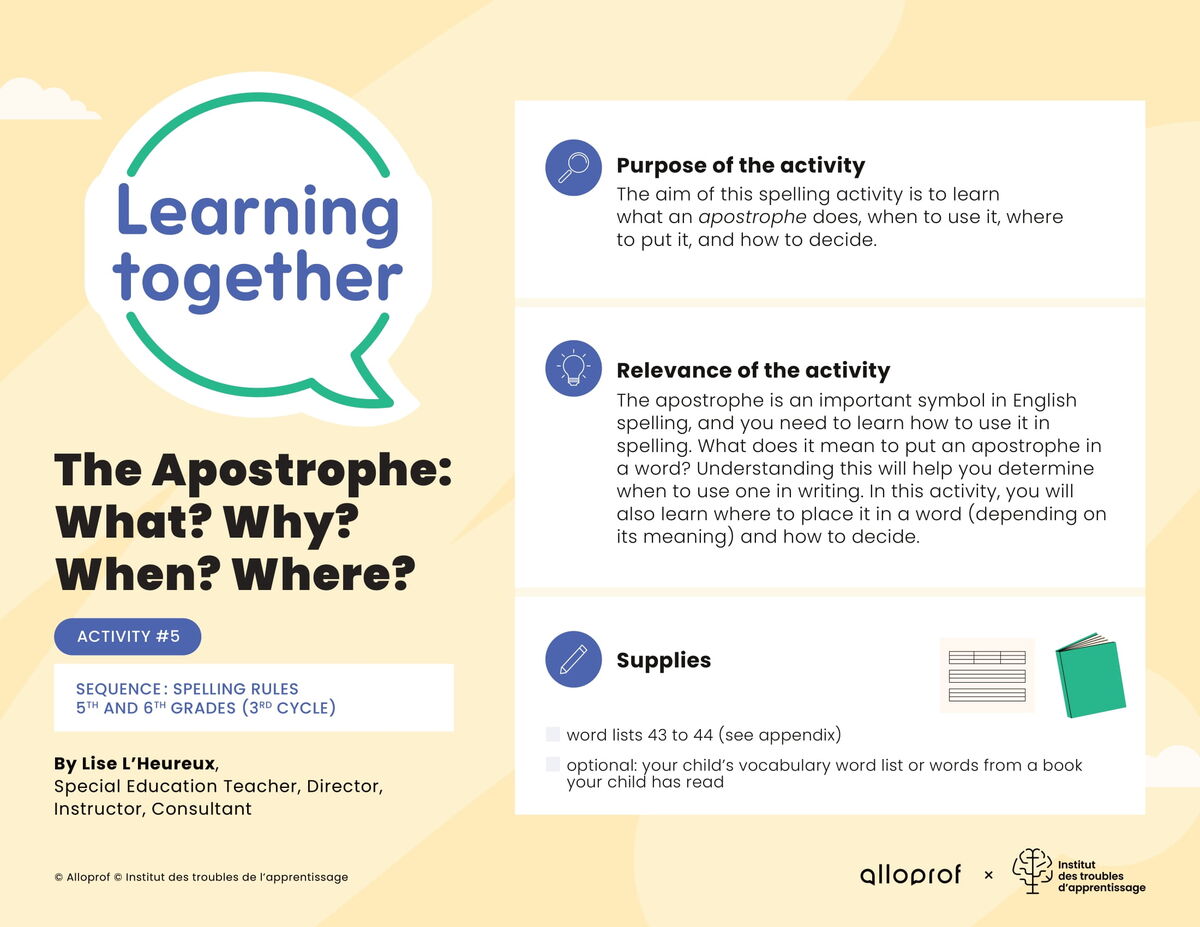
Activity #5: The Apostrophe: What? Why? When? Where?
The purpose of this activity is to introduce your child to another method of learning spelling based on comparison. Comparing words using various phonetic, semantic, and visual clues is a key strategy for identifying their similarities!
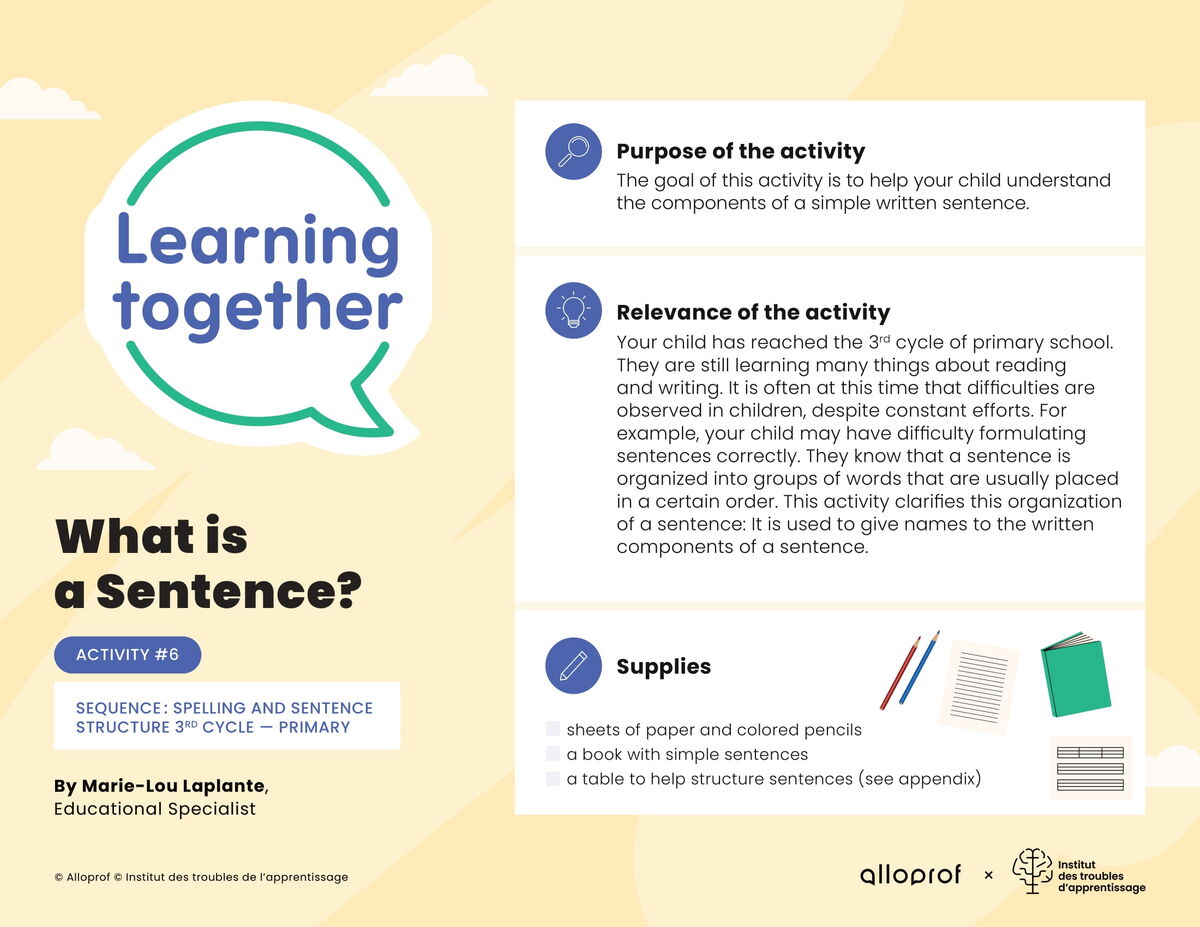
Activity #6 : What is a Sentence?
Some kids in Cycle 3 of elementary school still have trouble building coherent, meaningful sentences, even if they’re making good progress in reading and writing. The goal of this activity is to teach your child to understand and identify the structure of a basic sentence.
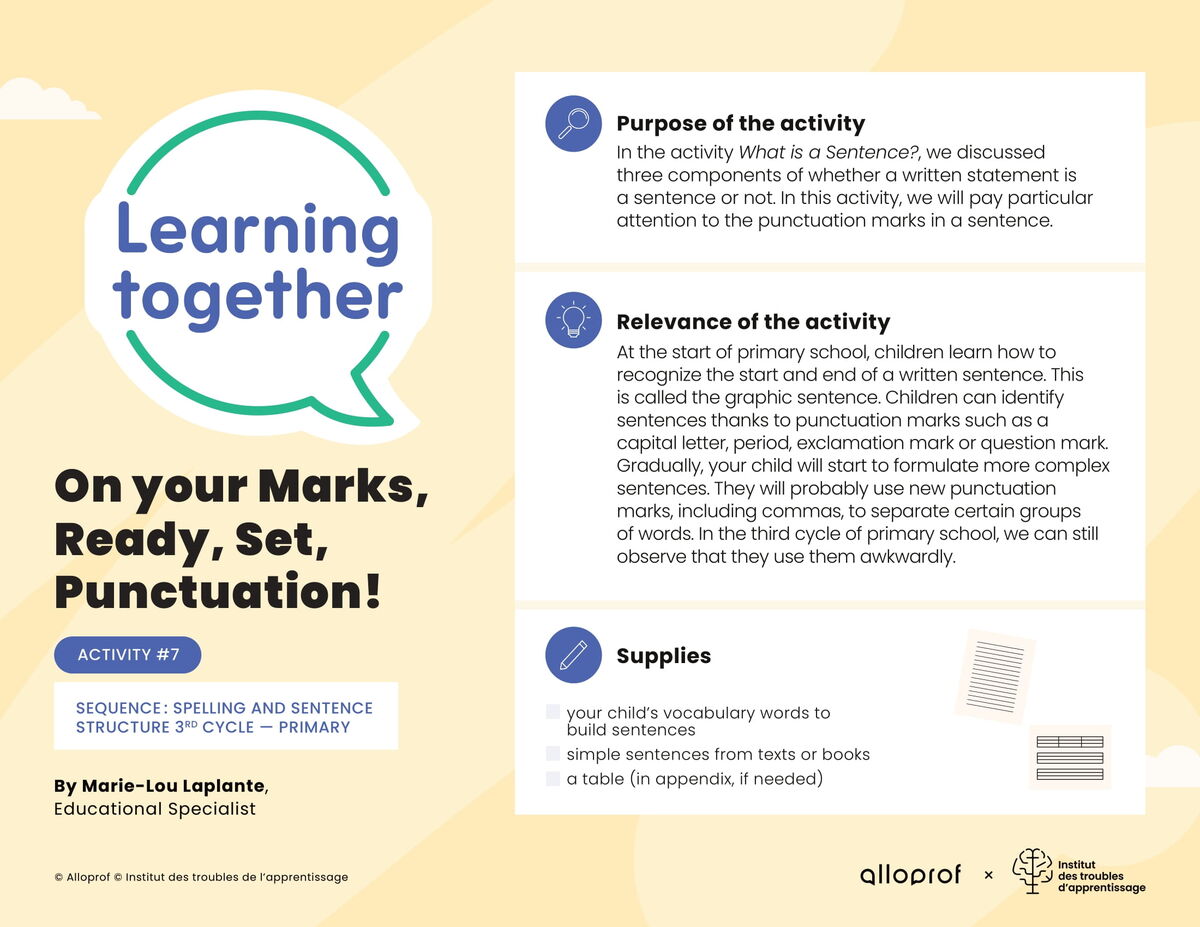
Activity #7: On your Marks, Ready, Set, Punctuation!
In elementary school, children learn to recognize the beginning and end of a sentence using capital letters and end punctation. As they get older and start writing longer sentences, they need to master other punctuation marks such as commas. This activity focuses on learning punctuation marks once a child has mastered the structure of a sentence.
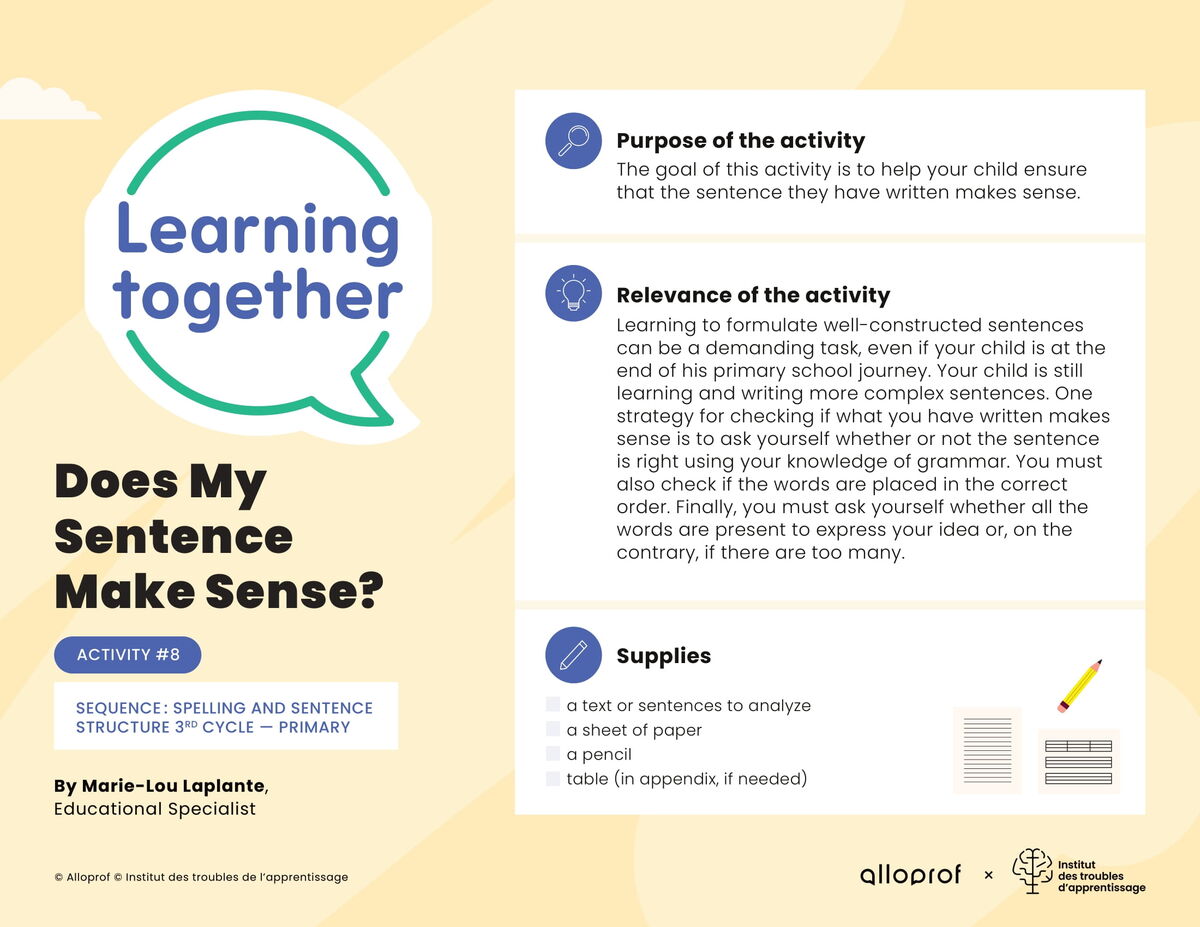
Activity #8: Does My Sentence Make Sense?
The goal of this activity is to show your child strategies for making sure that their sentences are understandable and meaningful. They need to make sure that every sentence clearly conveys their ideas, check that the words are in the right order, and make sure they don’t have too many or too few words.
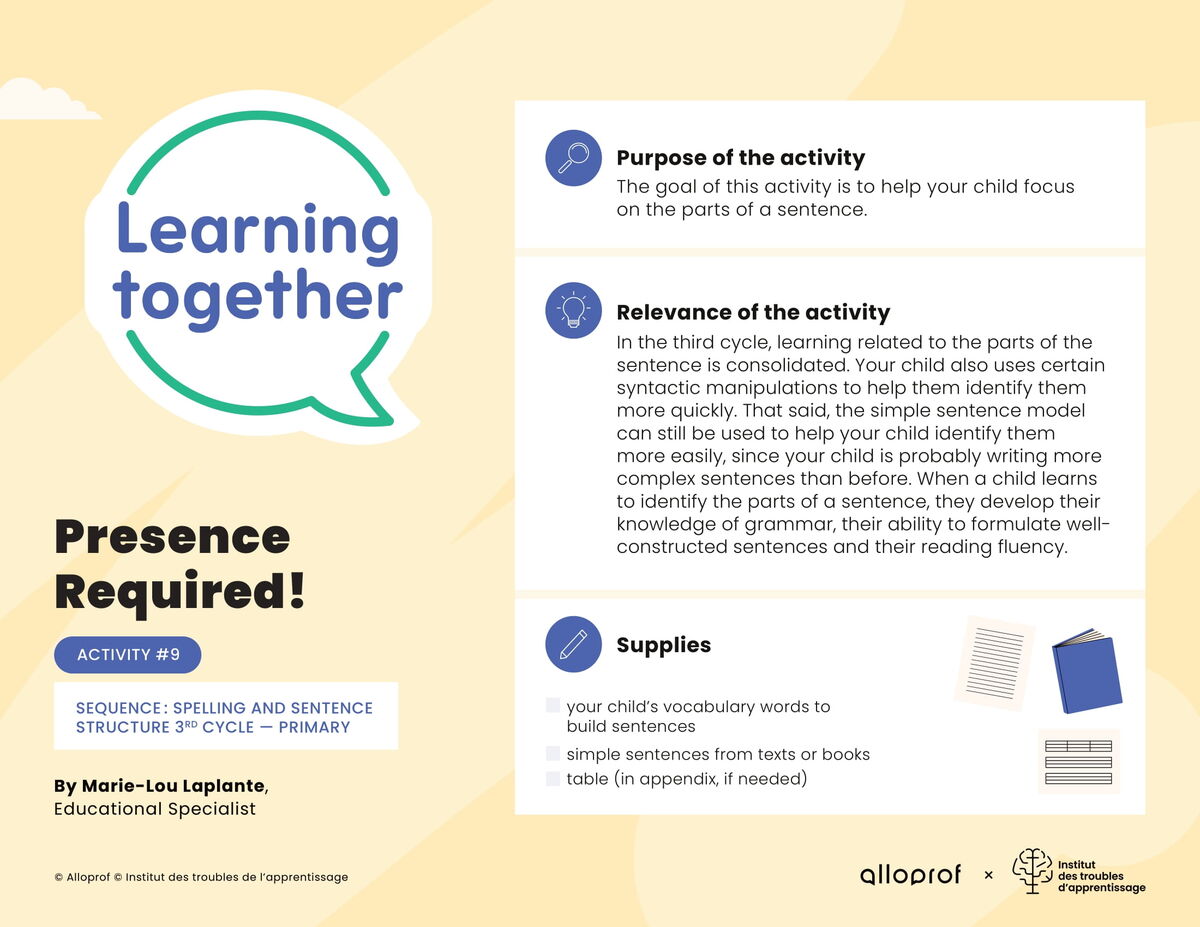
Activity #9: Presence Required!
This activity is designed to encourage your child to focus on the components of a sentence. In Cycle 3, children start using syntactic manipulation to practise identifying them. Being able to identify the parts of a sentence helps students build grammatical skills, formulate sentences more easily, and read more fluently.
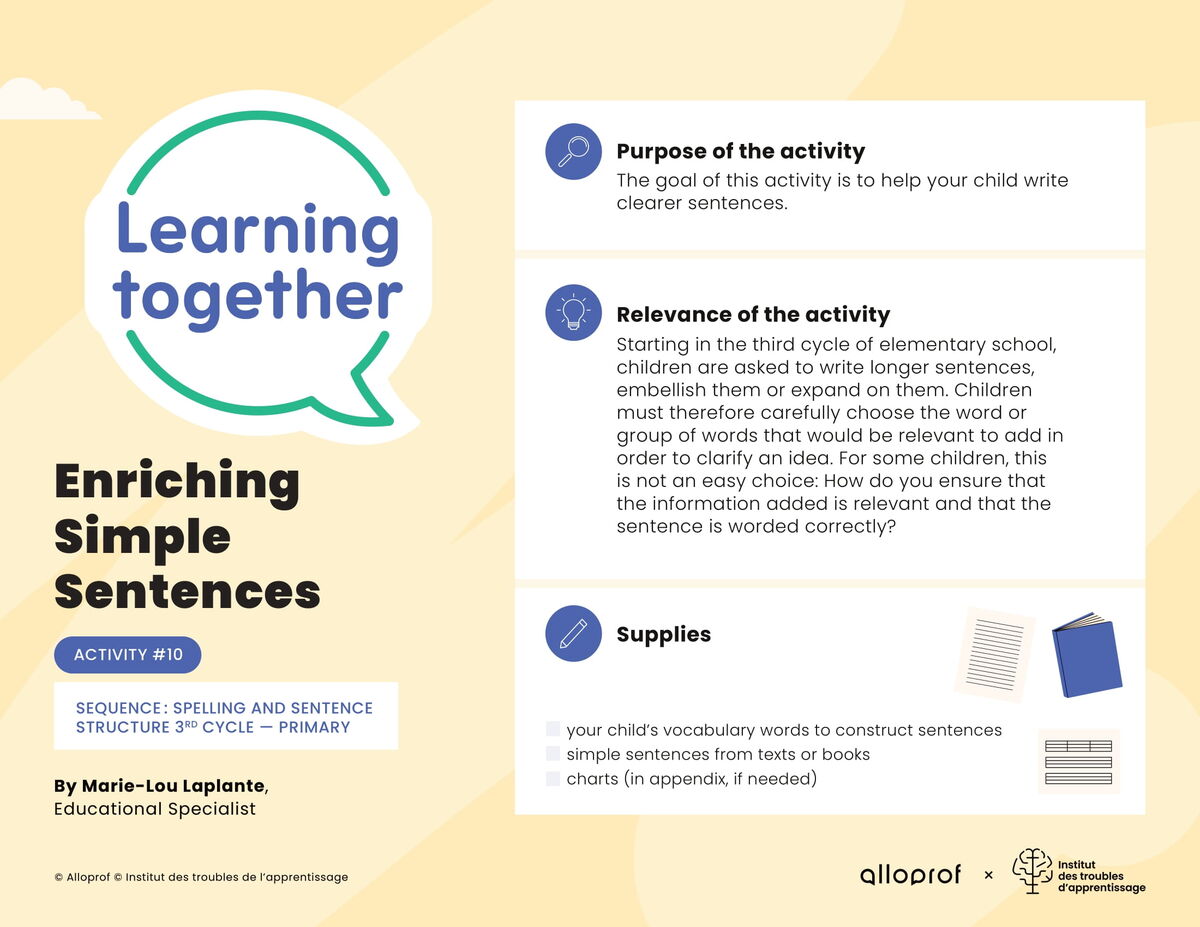
Activity #10: Enriching Simple Sentences
Well done! You’ve made it to the final activity! This activity helps your child expand their sentences by adding relevant details. This will help them learn to express their ideas more precisely and clearly.
More on Learning Together Topic
This sequence is part of a collection of tools and resources to help your child develop reading, writing, and math skills.
Check out our featured topic Learning Together to explore our entire collection of activities!