Helping Your Child Develop Good Online Behaviour | Poster

Article

Between homework, video games, messaging with friends, and endless videos playing on loop, kids today spend a lot of time in front of screens. So it’s only natural that you’d want to teach your child how to be safe and respectful online. However, instead of constantly giving your child verbal reminders—which they likely often forget just a few minutes later—try this simple tool they can refer to at a glance to reinforce good online behaviour. That’s why we created this poster. It’s designed for your child—plus it makes your life easier as a parent.
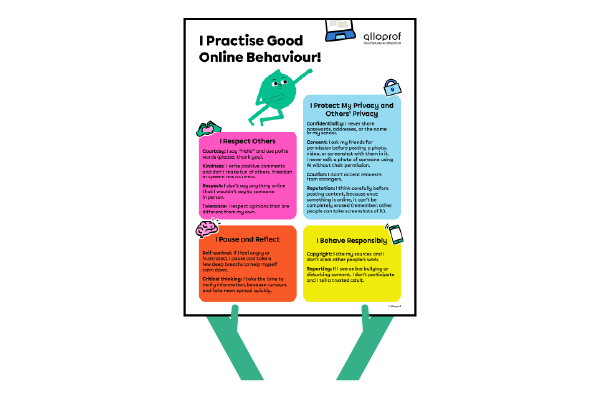
What Are Good Online Behaviours?

This poster about good online behaviour covers the basic principles of online etiquette. It’s presented in a simple and easy-to-understand way for your child and explains the importance of them doing the following: 

  • Being respectful in messages and comments, just as they would be in person.  
  • Thinking before posting a photo or information about someone and asking for that person’s permission before posting.
  • Never sharing personal information. 
  • Respecting opinions that are different from their own. 
  • Thinking critically about the accuracy of published information. 
  • Telling an adult if they see online bullying or disturbing content.

     
Preview: Poster on Good Online Behaviour

How to Use This Poster

It’s important to keep in mind that this poster is no substitute for parental guidance. Rather, it’s fantastic when used hand in hand with your guidance because it can spark regular, nonjudgmental conversations on the topic and act as a visual reminder.

This poster is an excellent starting point, but it’s most effective when you combine it with open conversations with your child about their online activities and with clear, age-appropriate rules (screen time, which apps are allowed, appropriate content). That way, you can help your child spend time online in a mindful, respectful, and safe way.


Where and How to Put Up the Poster

The effectiveness of this tool depends largely on where it’s posted. Here’s where to display it for best results: 

  • Near the main screen in your home: On the wall next to the family computer or tablet area, or placed on the desk. 
  • At your child’s eye level, so that it’s easy to see and not just decorative.  
  • In a room shared by your family, which may support screen use in common areas. 
     

References