Subjects
Grades
Direct speech involves repeating the exact words spoken by the speaker without any changes.
Indirect speech involves restating what another person said in your own words while preserving the intended meaning. It is also called reported speech.
When forming sentences reporting direct speech, place:
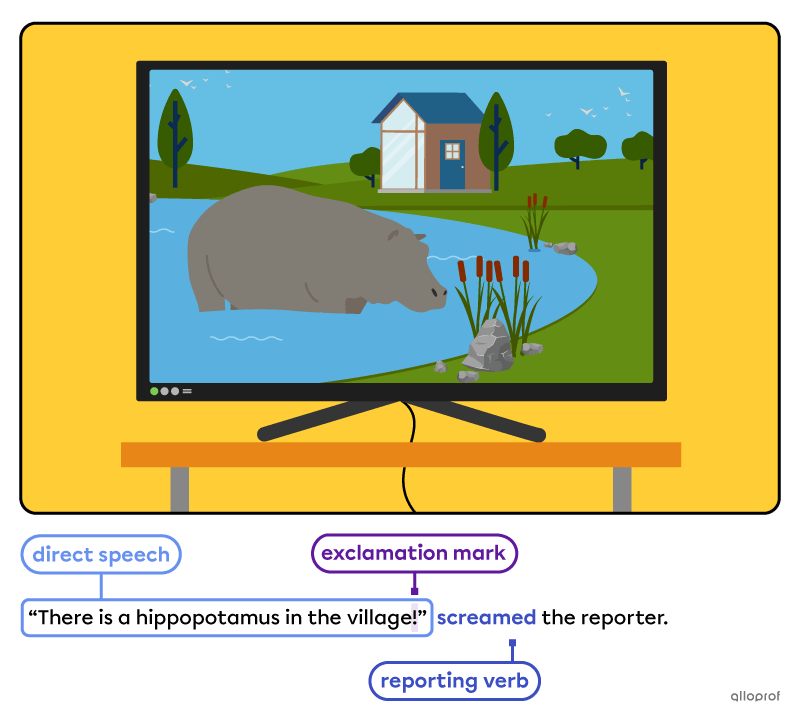
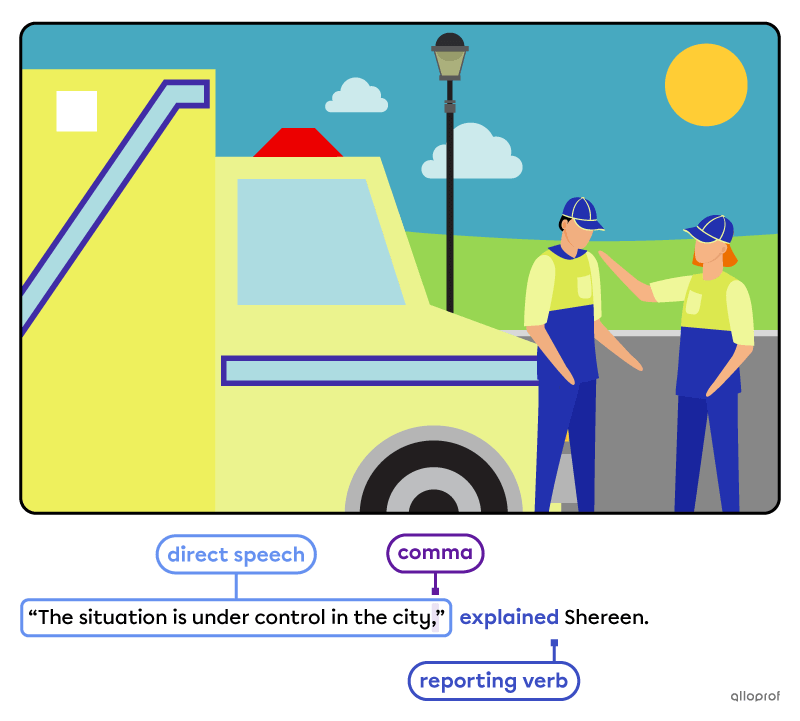
a reporting verb before or after the direct speech
the exact words reported in quotation marks
the appropriate punctuation inside the quotation marks
*When the reporting verb is after the direct speech:
no punctuation is needed between the direct speech and the reporting verb
the reporting verb begins with a lowercase letter
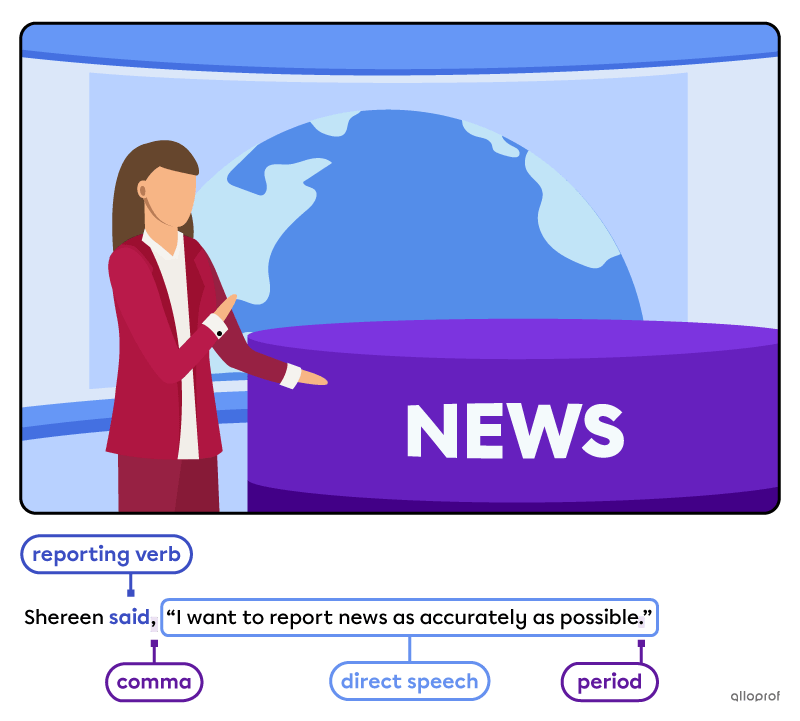
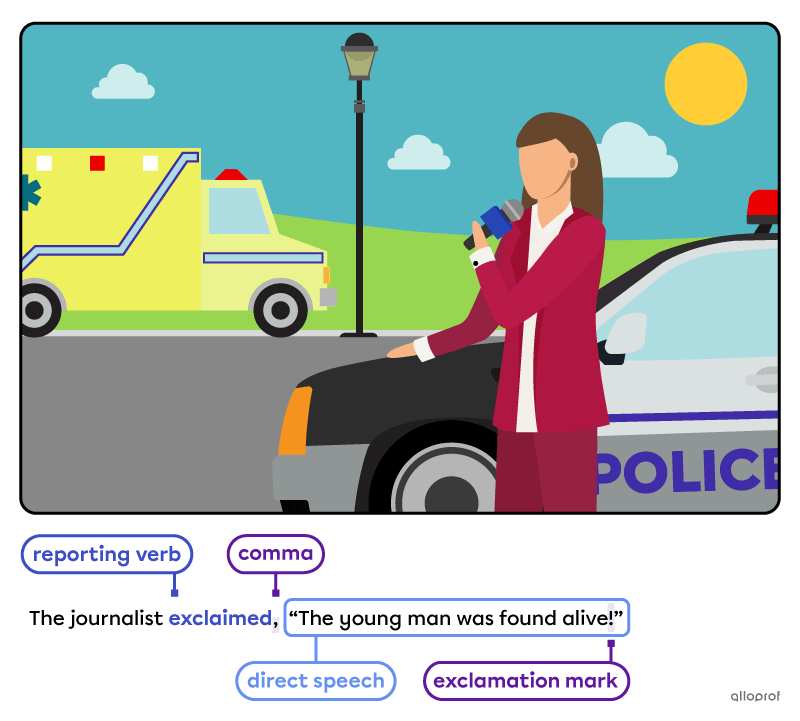
As a general guideline, use a comma before direct speech.
However, a colon can also be used in some cases.
Here are some guidelines.
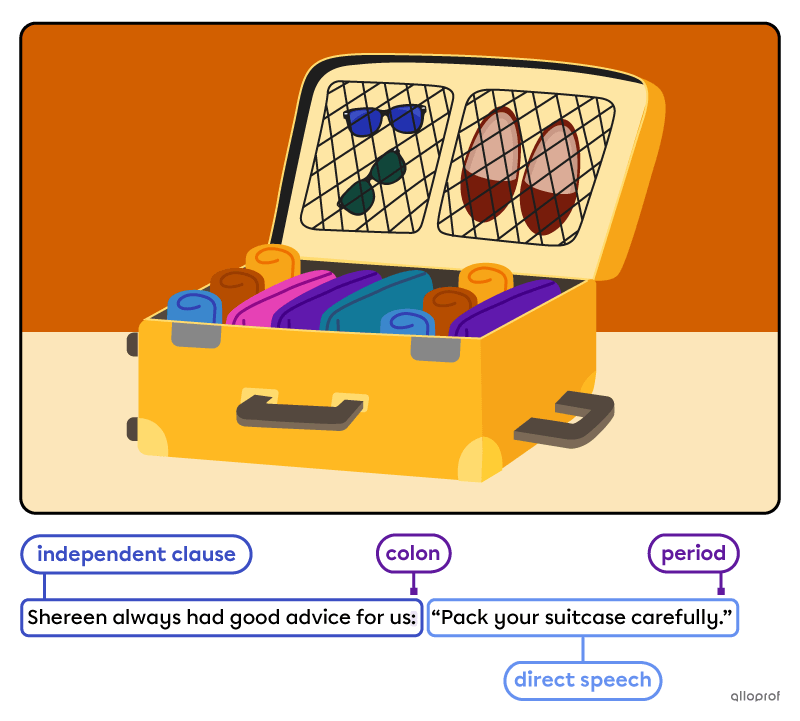
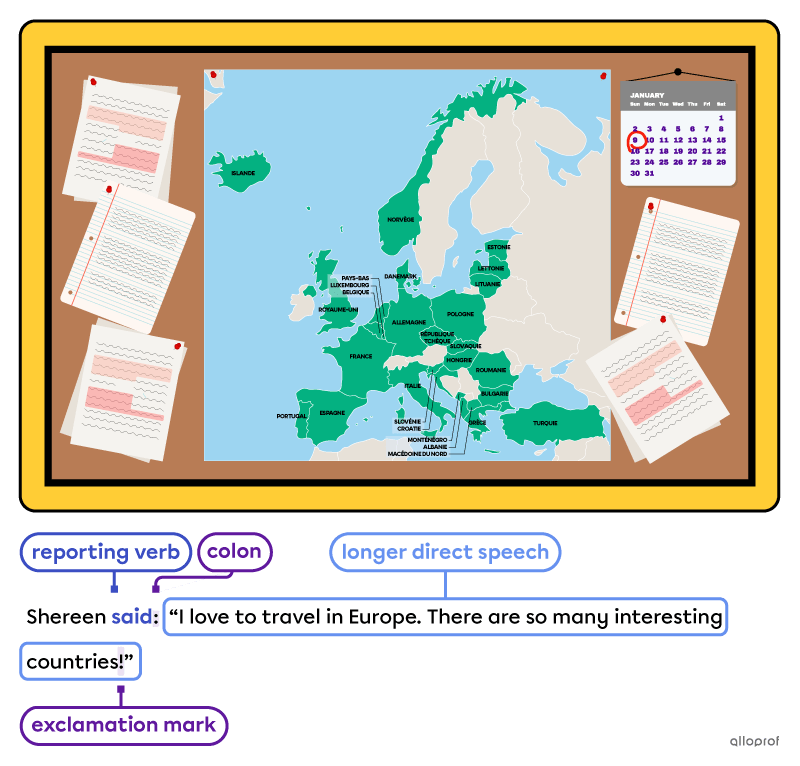
Use a colon before the direct speech:
When the reporting clause is an independent clause
When the direct speech in quotation marks is more than one sentence
When the reporting clause is an independent clause.
When the direct speech is one or more than one sentence.
In fiction, there are situations where characters say something to other characters. To write dialogue, use direct speech.
Follow these guidelines to help you write dialogue:
Start on a new line for each new character’s speech.
Use quotation marks to enclose the exact words spoken by the character.
End your line of speech with punctuation.
Place a reporting clause after the direct speech.*
In situations where you want to split the direct speech of a character into parts:
Insert the reporting clause between the direct speech parts to specify who is speaking.
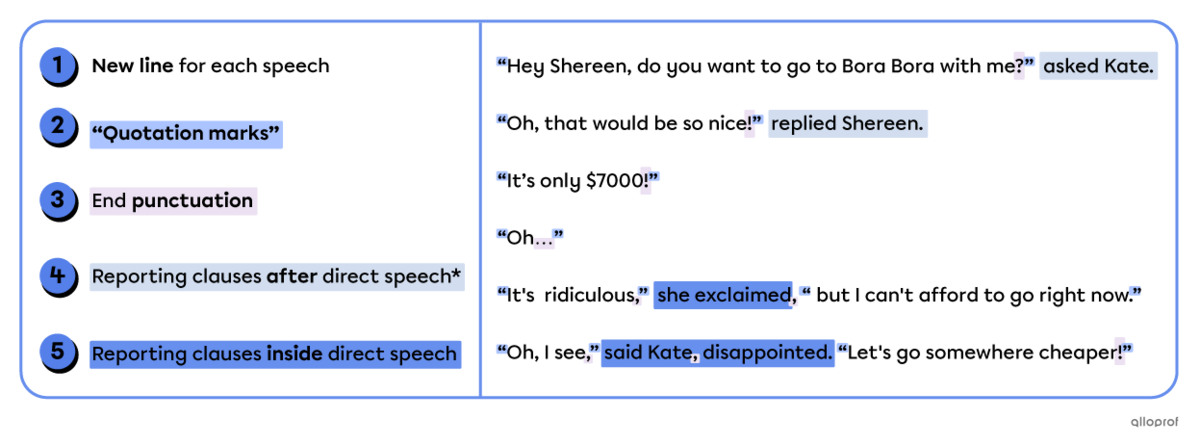
*If it becomes clear who is talking, the reporting clause is not mandatory.
When forming sentences reporting indirect speech you need:
a reporting verb
an optional indirect object to add information
the demonstrative adjective that*
the reported words keeping the intended meaning
* The demonstrative adjective that is optional and can be removed in most reported speech.
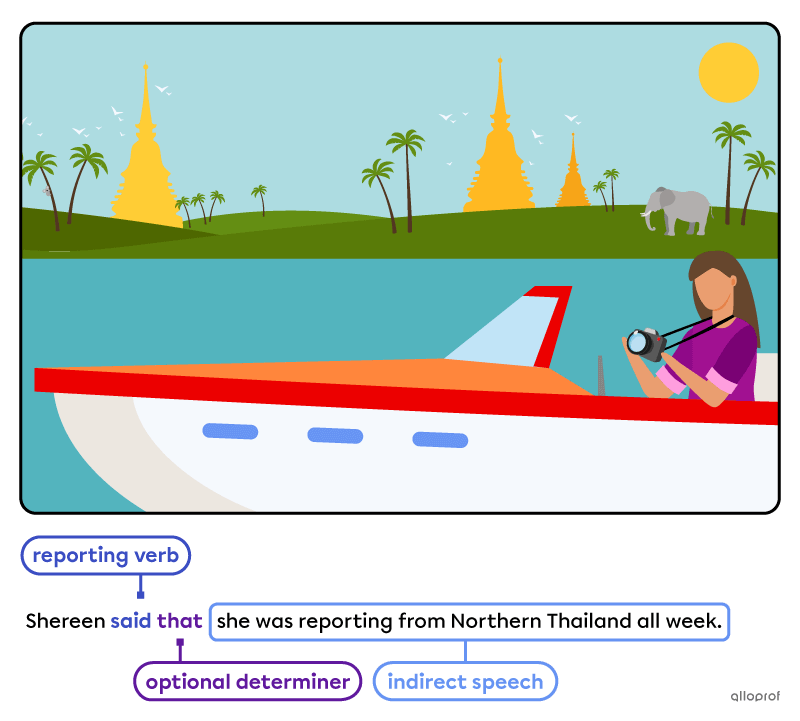
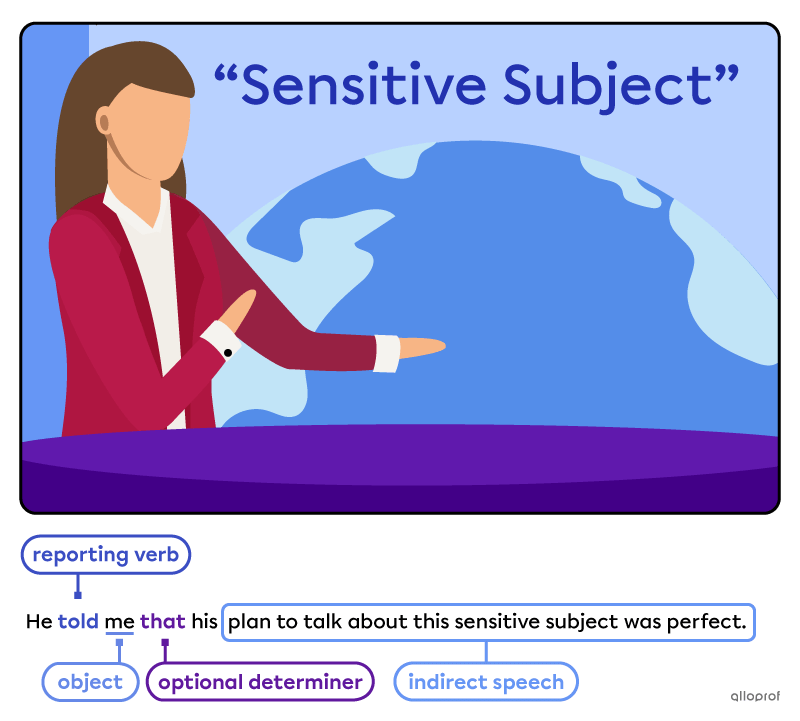
An object can be added between the reporting verb and that to give additional information on who is being spoken to.
Pay attention to these possible changes when converting a direct speech into an indirect one:
Changes in the verb tense
Changes in person and pronoun
Usually, when reporting speech, backshift* the verb tenses to change direct speech into indirect speech.
*To backshift means to bring the verb tense back one tense. In other words, change the future into the present or present into the past.

When reporting speech that is still relevant or true, it is not necessary to change the verb tense.

When reporting speech, adjust the person and pronoun so that it fits with who said what.

Here are some examples on how verb tenses are backshifted* when direct speech is changed into indirect speech.
*To backshift means to bring the verb tense back one tense. In other words, change the future into the present or present into the past.
|
Direct Speech |
→ |
Indirect Speech |
|
simple present |
→ |
simple past |
|
simple past |
→ |
past perfect |
|
present perfect |
→ |
past perfect |
|
present continuous |
→ |
past continuous |
|
past continuous |
→ |
perfect continuous |
|
future (will) |
→ |
would + verb |
|
future (going to) |
→ |
present continuous |
|
→ |
past continuous |
|
|
imperative |
→ |
infinitive |