Subjects
Grades
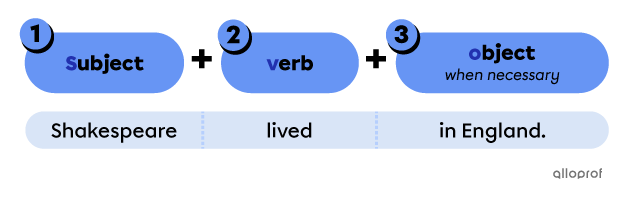
The usual structure of a sentence is:
Subject + Verb + Object (SVO)
To make a sentence, you usually need:
a subject (S): the person, people or thing(s) doing the action
a verb (V): the action (can sometimes be separated into a main verb and an auxiliary verb)
an object (O): information that adds context to the subject’s action (when necessary)

This theatre company performs Hamlet.

I like Shakespeare’s comedies.

This play ended well.
Sometimes, adverbs or transition words can be added to the sentence.
Adverbs can be placed just before the verb.
|
S |
Adverb |
V |
O |
|
His characters |
often |
fight. |
|
|
We |
finally |
understood |
the character's pain. |
Adverbs can also be placed between the auxiliary verb and the main verb.
|
S |
Auxiliary verb |
Adverb |
V |
O |
|
Theatre companies |
are |
still |
producing |
Shakespeare's plays. |
|
Romeo |
will |
always |
love |
Juliet. |
When a transition word is placed at the beginning of a sentence, before the subject, use a comma after it.
|
Transition word, |
S |
V |
O |
|
As a result, |
Shakespeare |
became |
famous. |
|
However, |
some people |
doubt |
his authorship. |
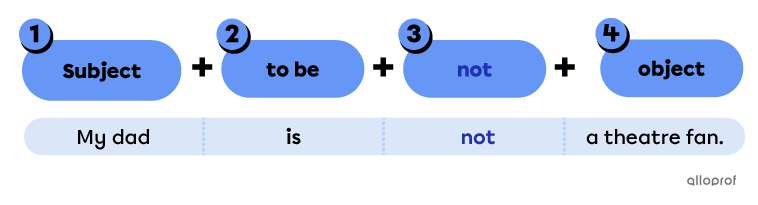
To make a negative sentence in the simple present or simple past with to be, you usually need:
a subject: the person, people or thing(s)
the verb to be
the function word not
an object: information that adds context to the sentence
|
Subject |
to be + not |
Object |
|
Shakespeare |
was not |
an only child. |
|
You |
are not |
an actor. |
|
Cordelia |
is not |
greedy. |

“To be or not to be, that is the question."
Verbs other than to be use an auxiliary verb to form a negative sentence.
In this case, the structure usually is:
a subject: the person, people or thing(s) doing the action
the auxiliary verb: first part of the verb or helping verb.
the function word not
a verb: the action (in its base form)
an object*: information that adds context to the sentence (when necessary)
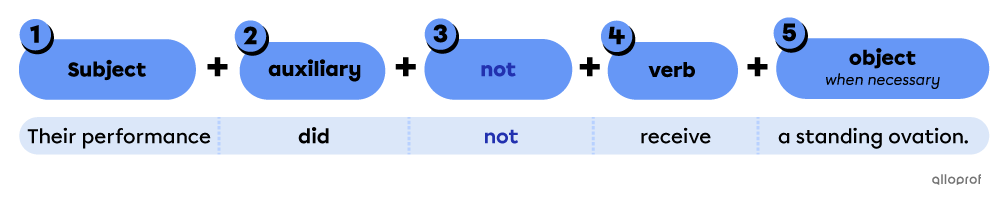
* The object is not always necessary.
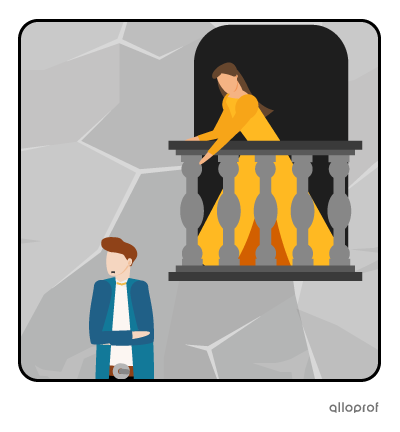
Romeo will not court Juliet.

I do not like his comedies.

The audience was not listening quietly.