Subjects
Grades
 100%
100%
 100%
100%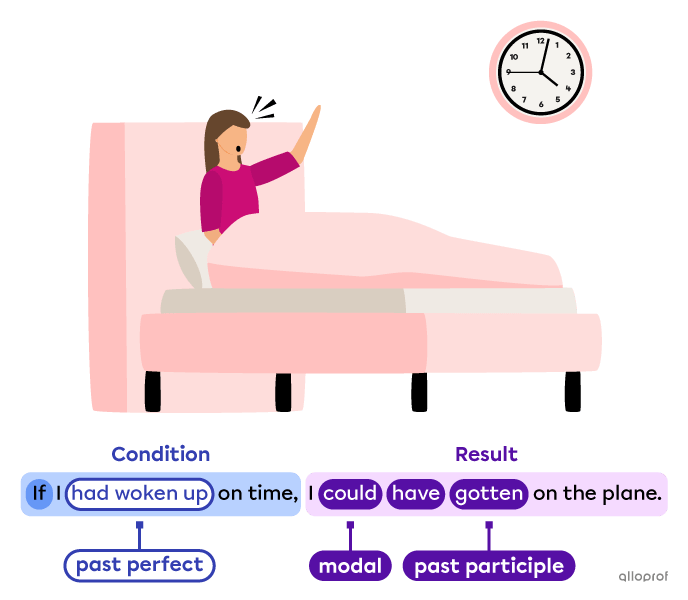 100%
100%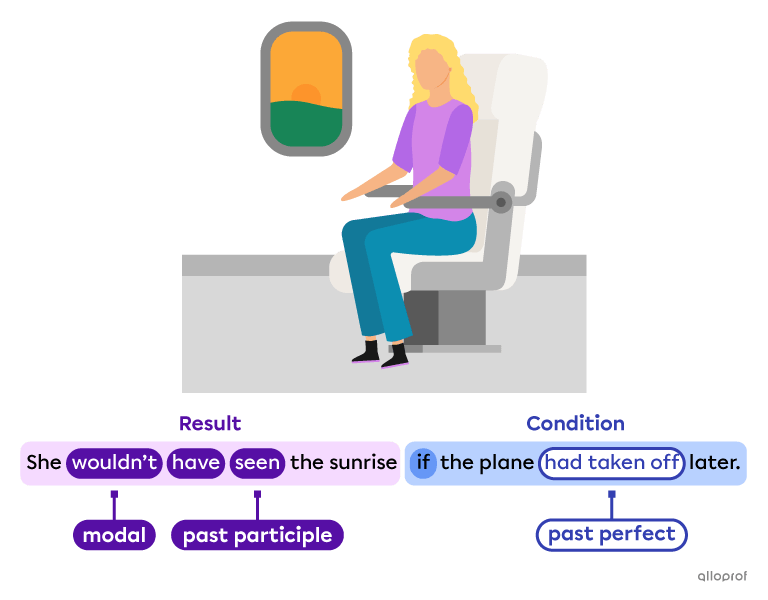
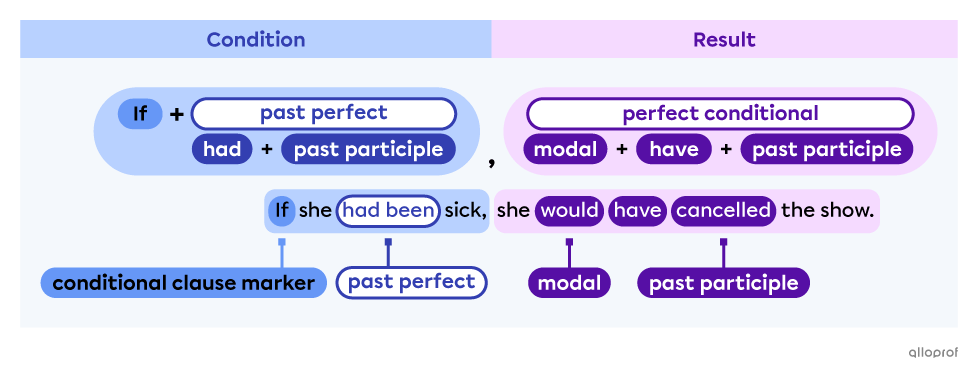
Third conditional sentences are used to express how the present would be if something different had happened in the past.
The third conditional is also called the unreal conditional because both the condition and the result are hypothetical/imaginary.
The usual structure of third conditional sentences is:

Conditional sentences contain two clauses:
Conditional clause (commonly called the if-clause)
the condition/situation
dependent clause—it needs the hypothetical result to form a complete sentence
contains a conditional clause marker—subordinating conjunction such as the words “if,” “when,” “as,” etc.
Main clause
the result
independent clause—makes sense on its own
Third conditional sentences are commonly used to:
imagine something that could have happened in the past
express regrets about the past