Subjects
Grades
 100%
100%
 100%
100% 100%
100%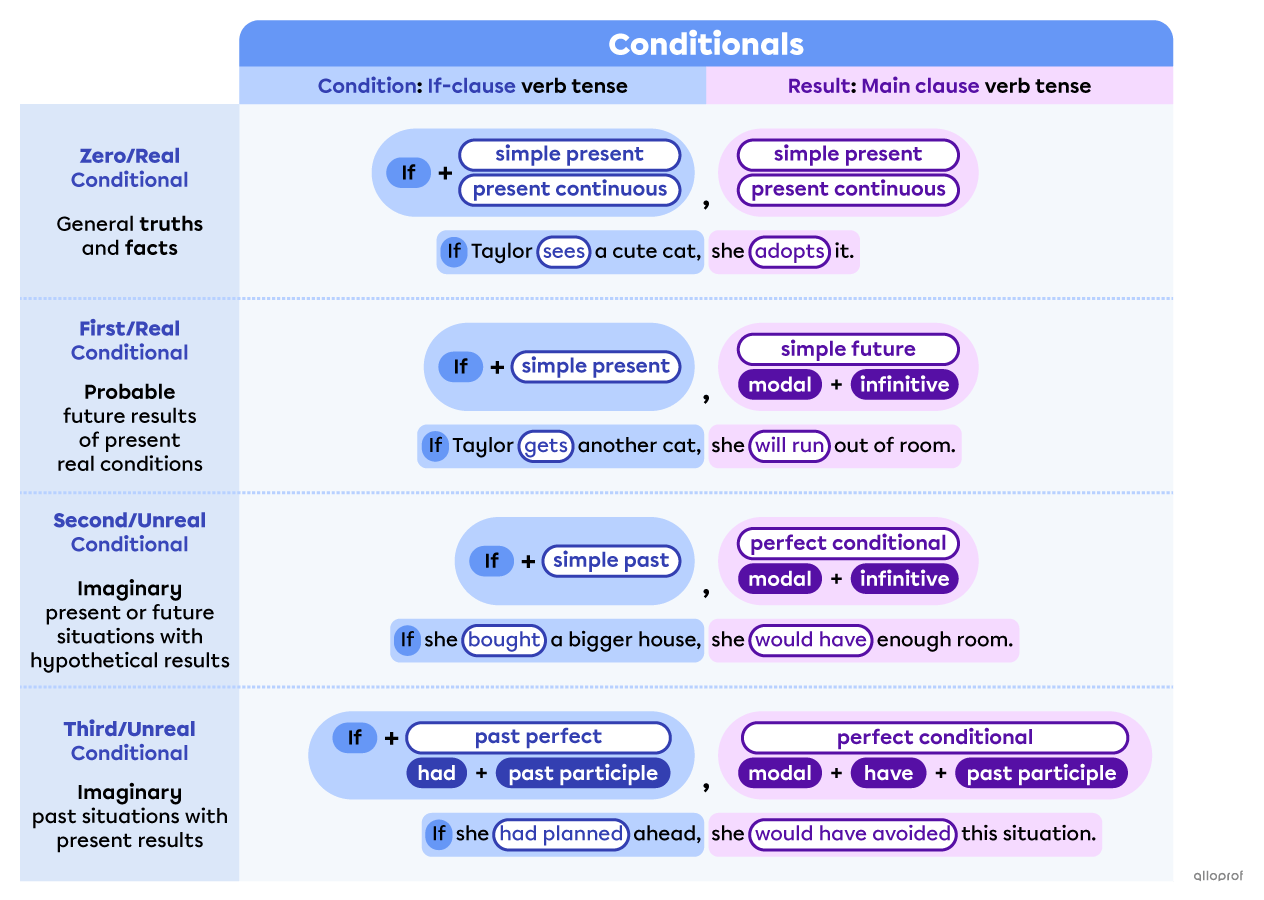
The conditional mood is used in hypothetical situations; situations in which the result depends on whether a situation happens or not.
Conditional sentences connect real or unreal situations to possible or impossible results.
The conditional mood can express:
what actually happens
what will happen
what could happen
what might have happened
what we wish would have happened
Conditional sentences contain two clauses:
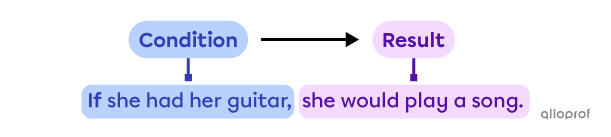
Conditional clause (commonly called the if-clause): the condition/situation
Main clause: the result
The if-clause is a dependent clause. To form a complete sentence, it needs the hypothetical result.

The condition If she had her guitar, does not form a complete sentence. It needs the result, she would play a song to be a complete sentence.
Clauses can be moved around in a sentence without changing the meaning.
In writing, there is a minor difference:
When the if-clause (condition) comes first, a comma follows it to separate it from the main clause (result).
If the main clause (result) comes first, punctuation isn’t necessary.
Each conditional type follows a clear structure.
To learn more about the zero conditional, click here.
To learn more about the first conditional, click here.
To learn more about the second conditional, click here.
To learn more about the third conditional, click here.
Although if is the most common word used to introduce a conditional clause, there are other conditional clause markers such as:
|
Example |
Replaces |
|
|
Unless |
I won’t pass my driving exam UnlessI study now. |
I won’t pass my driving exam if I don’t study now. |
|
When |
When she sleeps, she snores. |
If she sleeps, she snores. |
|
As long as |
You can live with me as long as you don’t make a mess. |
You can live with me if you don’t make a mess. |
|
Had |
Had I known you were waiting for my call, I would’ve called you sooner. |
If I had known you were waiting for my call, I would’ve called you sooner. |
|
Should |
Should you develop any other symptoms, please stay home until they are gone. |
If you develop any other symptoms, stay home. |
|
Provided |
They can travel with us provided they have valid passports. |
They can travel with us if they have valid passports. |
|
Or |
You have to stop worrying or you won’t be able to sleep. |
If you don’t stop worrying, you won’t be able to sleep. |
|
Suppose |
Supposing he doesn’t have his identification card with him, can he still get in? |
If he doesn’t have his identification card with him, can he still get in? |
|
Whether or not |
I’ll be in the living room whether you need me or not. |
I’ll be in the living room if you need me. I’ll be in the living room even if you don’t need me. |