Subjects
Grades
It’s entirely possible that you jump for joy anytime your teacher mentions an upcoming group project. It’s also entirely possible that you don’t share your classmates’ enthusiasm at hearing those particular words. Together, we’ll explore different reasons why group projects can be difficult, with the aim of making your experience as positive as possible!
 100%
100%
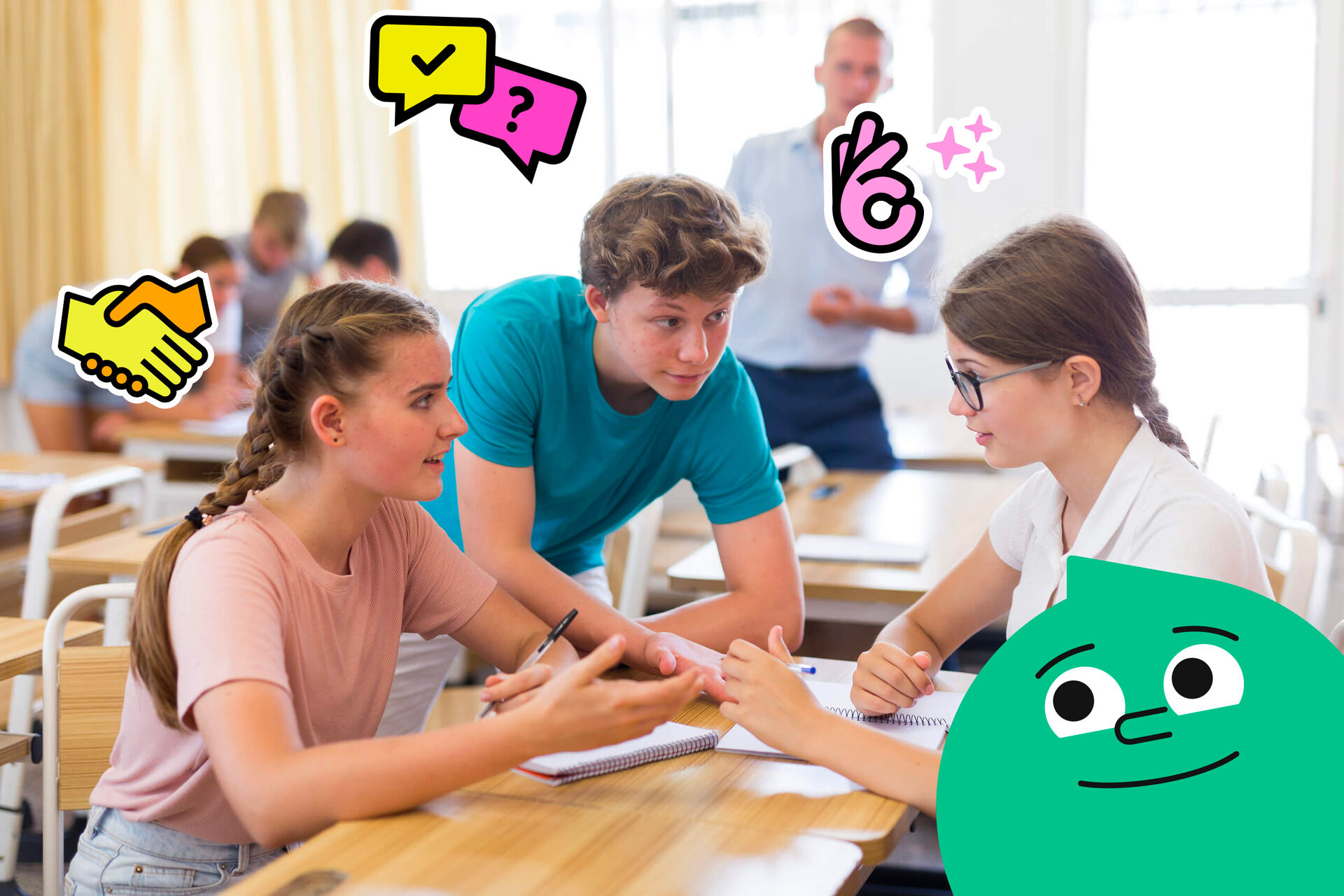

Sometimes, it’s hard to understand why teachers insist on assigning so many group projects. Rest assured that they’re doing it for a good reason. There are numerous benefits to working with your peers, including the following:
Of course, simply being aware of the benefits of group work doesn’t guarantee you’ll have a perfect experience. Read on for tips regarding specific situations.
Teams for group projects are typically formed in one of two ways: Either the students choose who they work with, or the teacher does. In both cases, there are things to watch out for.
Awesome, I get to hang out with my best friends. This is gonna be fun!
Not so fast: Teaming up with friends isn’t always the best idea. You may have different working methods, which could cause tension. Will you feel comfortable correcting your friends if needed? Will you be disciplined enough to stay on task without chatting too much?
In some cases, it’s wiser to pick teammates who, even if you’re not especially close, better complement your strengths and weaknesses and have the same level of motivation
Argh, we’re in assigned groups. The teacher separated friends on purpose.
Assigned groups have their benefits too! You get to know new people and potentially learn new ways of doing things, all of which can broaden your perspective. It’s also good preparation for the workplace, where you generally won’t have a say in who you work with. The important thing is to be open and respectful. You may be pleasantly surprised!
Group projects can lead to disagreements, and disagreements sometimes lead to conflict. Whether the issue is clashing personalities, opposing work styles, or something else, it’s perfectly normal to not always get along with your teammates.
The key is to learn how to manage your differences. Here are some tips to keep in mind:
At the end of the day, take comfort in the fact that no group project lasts forever. In a few days or weeks, the project will be over, and you’ll all be free to move on to other things!
During group projects, it’s common for each person to have a specific role for the duration of the assignment, such as secretary, spokesperson, facilitator, or timekeeper. This keeps everyone accountable and prevents misunderstandings about who’s in charge of what.
The role you end up with may not align with your interests or skills. Don’t forget that even seemingly minor roles are crucial for the success of the team. You may also learn something from taking a role you didn’t really want, such as what you like and don’t like doing in group projects. The next time you have to pick a role, you’ll have a better argument—one based on experience—for turning this one down.
At the start of a group project, there’s often a point when the group maps out the assignment’s various steps and components and divvies them up according to each person’s strengths and interests. It’s an ideal opportunity to check that everyone has an equal workload and, if not, to make changes.
Sometimes, a task can be more complicated than expected and take longer than originally planned. If you notice that not everyone in your group is doing the same amount of work, it’s vital to bring it up as soon as possible, voice your concerns, and suggest how different tasks could be adjusted.
In a group project, there should never be only one person doing all the work! If that happens, the team needs to discuss the issue and do something about it, because it’s crucial for everyone to contribute.
If you’re a bit of a perfectionist (or have teammates who are!), there’s a good chance tensions will arise due to differences in standards. Some students are content just to get a passing grade, whereas others won’t accept anything less than an A+. Both points of view are valid; it’s important to listen to your teammates’ needs and to be flexible and open to compromise.
One strategy that can help get everyone on the same page is to set up a progress tracker. At the start of the project, as a team, create a project work schedule. Here’s an example:
By agreeing as a team on a few key deadlines, you’ll all be committed to the same project schedule. This puts a little pressure on students who tend to procrastinate while putting those who are anxious about getting a good grade more at ease.