Subjects
Grades
To access the other concept sheets in the Cities Subject to Natural Hazards unit, check out the See Also section.
 100%
100%
 100%
100%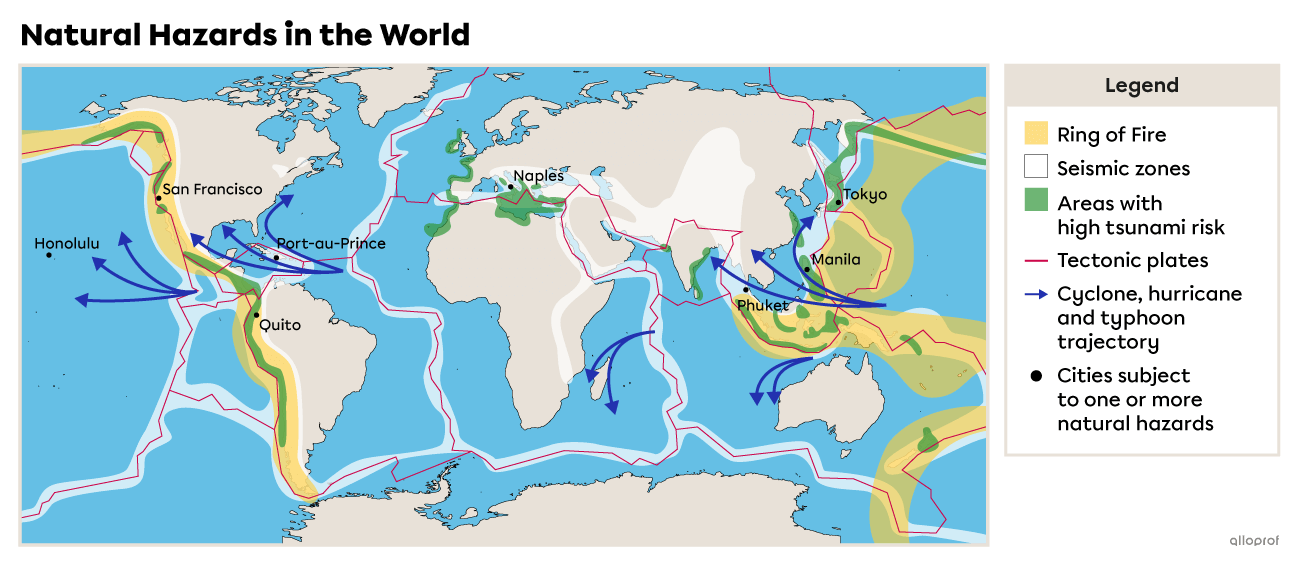
A natural hazard is a danger related to a natural phenomenon.
A city is subject to natural hazards when there is the possibility of one or more natural phenomena occurring. In this instance, the territory is considered unstable because natural hazards are difficult to predict.
A natural phenomenon is an event that occurs in nature, without any human intervention. This could be an earthquake, hurricane, aurora borealis, etc.
The term instability refers to the unpredictability and danger related to natural phenomena in a territory.
| Natural Phenomenon |  |
A natural phenomenon is an event that occurs in nature, whether inhabited or not. |
|---|---|---|
| Natural Hazard |  |
A natural phenomenon is also a natural hazard when there is the possibility (meaning risk) of human casualty or material damage. |
| Natural Disaster |  |
A natural disaster refers to a natural phenomenon that causes material damage or human casualty. |

Moments in the video :
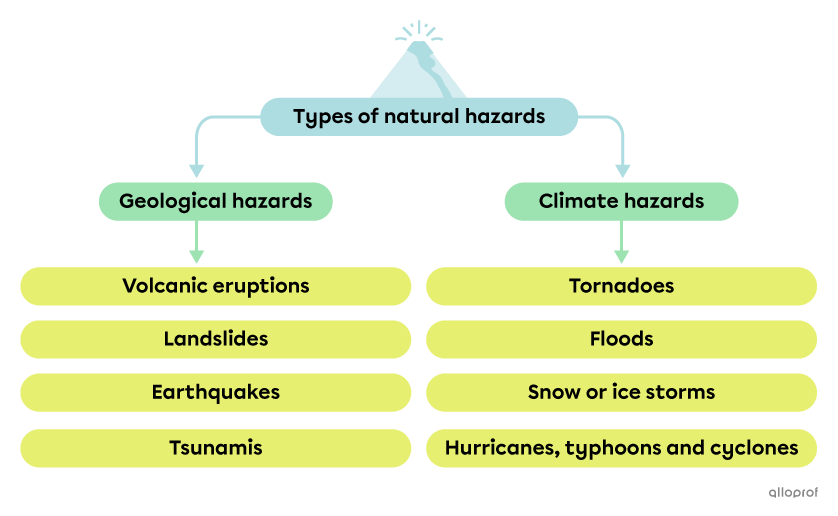
There are two types of natural hazards: natural geological hazards and natural climate hazards.
A natural hazard is not an artificial risk.
| Natural hazard | Artificial risk |
|---|---|
 |
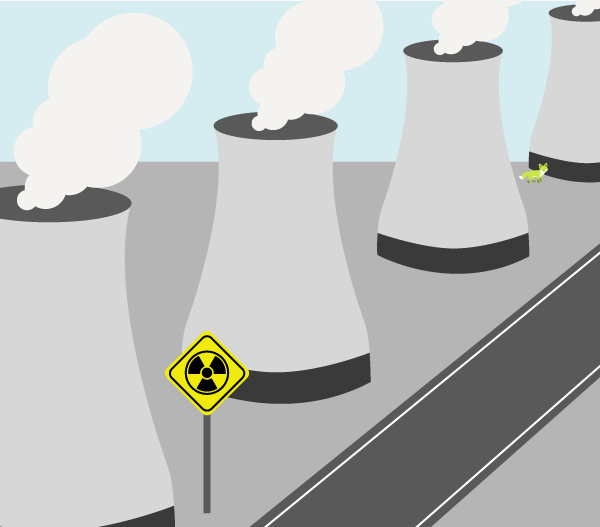 |
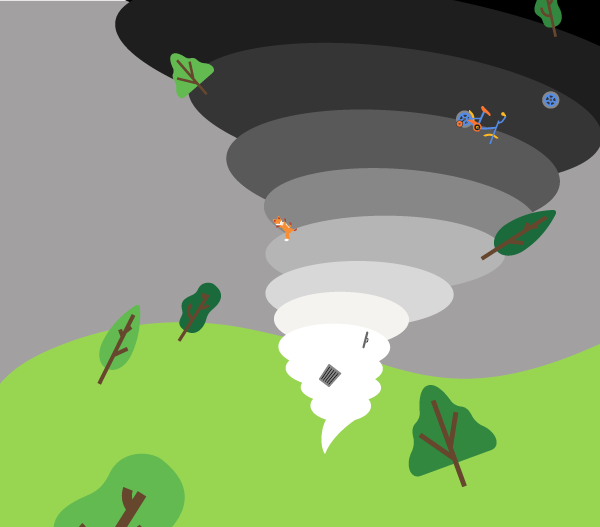
| A natural hazard refers to a danger related to a natural phenomenon. | An artificial risk is a danger related to human action. |
A natural phenomenon is impossible to avoid. A volcano cannot be stopped when it starts to erupt and a hurricane cannot be knocked off its course. For this reason, prevention is the best way to reduce the impacts of these natural hazards.
The most important issue for cities subject to natural hazards is prevention. It is important to protect its population and material goods when a natural disaster occurs.
Prevention refers to all of the measures taken to reduce or avoid the impacts of a natural disaster.
The following case studies of San Francisco, Manila and Quito address more specifically the types of natural hazards and the characteristics of a city subject to natural hazards, as well as the issue of prevention in a city subject to natural hazards.
To access the rest of the unit, you can consult the following concept sheets.