Subjects
Grades
For more concept sheets in the Energy-Producing Regions unit, go to the See Also section.
 100%
100%
 100%
100%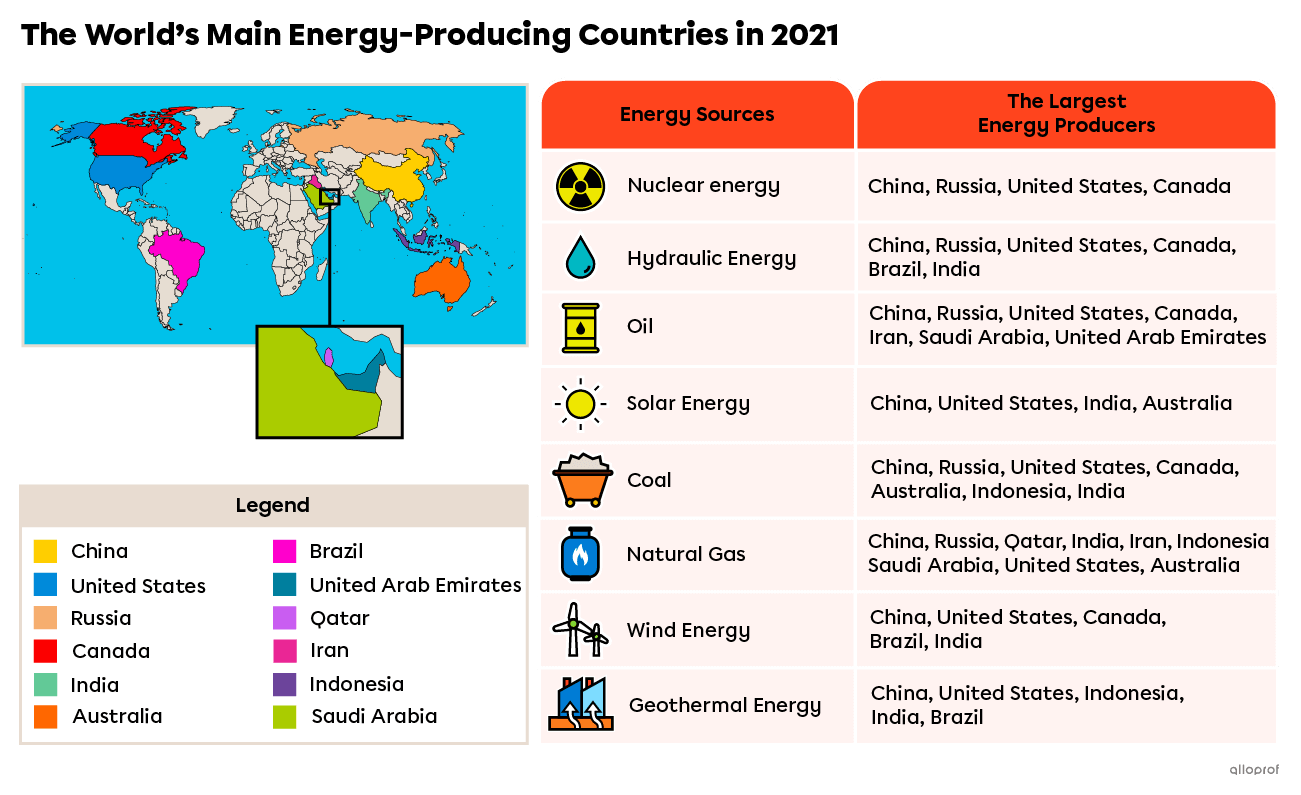
An energy-producing region is a territory that is organized and developed to enable the exploitation, transformation, and commercialization of a natural resource that can be used as an energy source.
Energy-producing regions are important because most of our daily activities rely on various energy sources.
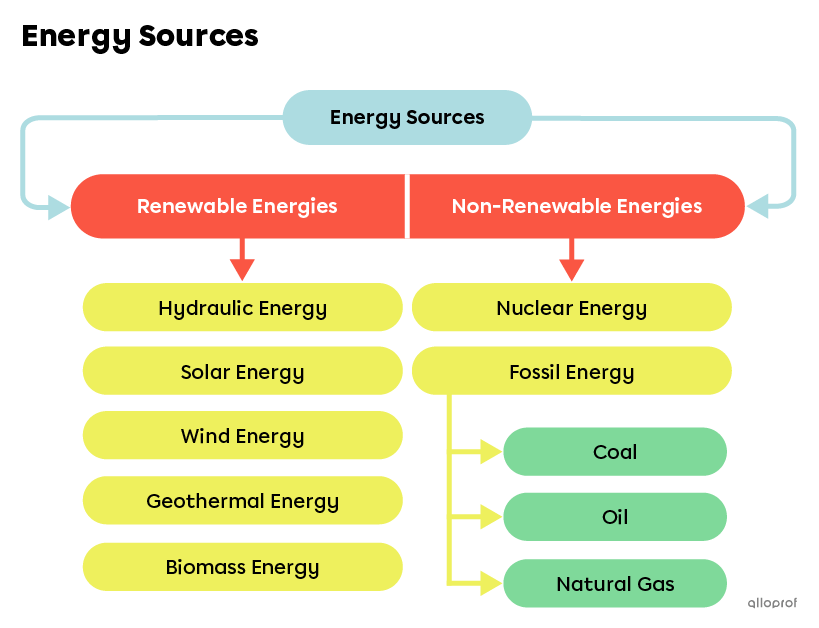
There are 2 categories of energy sources:
A renewable energy source comes from a renewable natural resource, meaning a resource that does not run out or that regenerates rapidly.
A non-renewable energy source comes from a non-renewable natural resource, meaning a resource that runs out as it is exploited, or that takes millions of years to regenerate.

Hydraulic energy is used to create hydroelectricity.
Various planning and developments are needed in an energy-producing region. The infrastructures vary according to the type of energy produced. However, generally speaking, using any energy type requires infrastructures for exploitation, transformation, and transport.
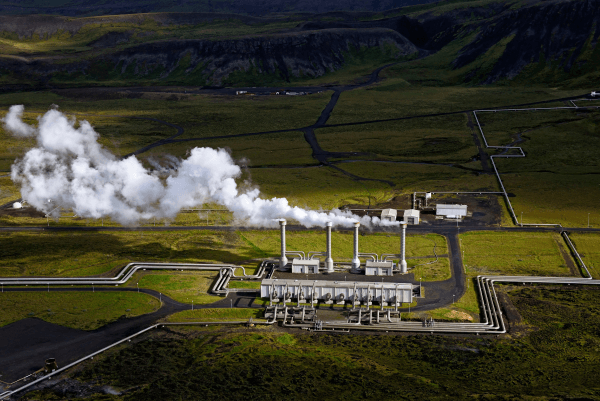
A Geothermal Power Plant in Iceland
Geothermal power plants are an example of transformation infrastructures.
To learn more about this topic, see the concept sheet The Characteristics and the Planning and Development of an Energy-Producing Region.
Every country in the world has energy resources. However, not all countries exploit those energy sources. What’s more, since energy resources are not equally distributed across the planet, some countries have a greater diversity or greater reserves of energy sources. Those countries often become the world’s main energy producers.
Energy-producing regions face 2 main issues.
One of these issues is meeting the world’s energy needs. Energy production is not always sufficient to meet demand, leading to a number of problems and consequences, including the energy dependence of some countries on others.
The other issue is establishing energy sources that have the least negative impact on the environment.
For more details, see the concept sheet The Issues of an Energy-Producing Region.
To access the rest of the unit, see the following concept sheets.