Subjects
Grades
To access the other concept sheets in the Tourism module, consult the See Also section.
 100%
100%
 100%
100%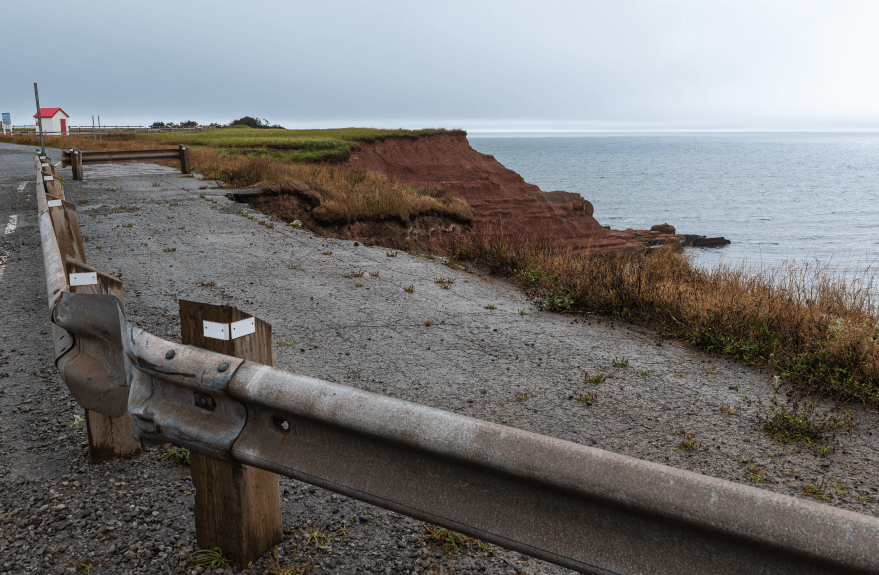
The Îles-de-la-Madeleine form an archipelago of 12 islands in the Gulf of St. Lawrence. Many of the islands are connected by dunes or bridges. The islands cover an area of 202 km2 [1] and are located around 200 km southeast of the Gaspésie coast. It's possible to get there by plane or ferry.
These islands are part of the tourist region of Îles-de-la-Madeleine.
An archipelago is a group of islands.

The Îles-de-la-Madeleine region is a very popular tourist destination in Quebec. The islands welcomed 63 250 tourists[2] in the summer of 2019. With impressive landscapes and 300 km of beach around the islands, the region attracts many people looking for beach tourism, ecotourism or adventure tourism[3].
The Îles-de-la-Madeleine region is unique in that its beaches are relatively windy, allowing for a variety of activities such as windsurfing, flyboarding (kitesurfing) or sailing excursions. There's also sea kayaking, canoeing and scuba diving.
Several forest trails are ideal for hiking, horseback riding and cycling.
This cove features a magnificent beach that stretches out at the foot of a steep cliff. It offers spectacular scenery.
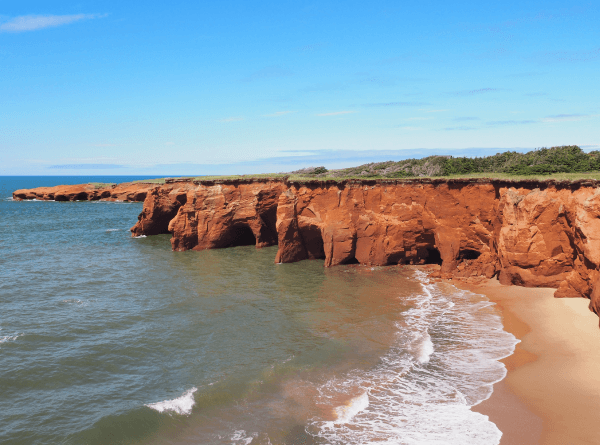
La Belle Anse de Fatima
This island is located towards the south of the archipelago. It is home to the largest forest in the Îles-de-la-Madeleine, as well as several cafés, boutiques and cultural venues.

Île du Havre Aubert
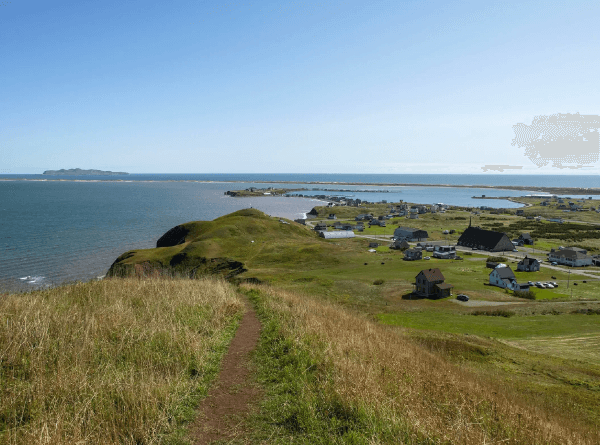
Île du Havre aux Maisons offers wonderful panoramic views. There are many houses with traditional Îles-de-la-Madeleine architecture.
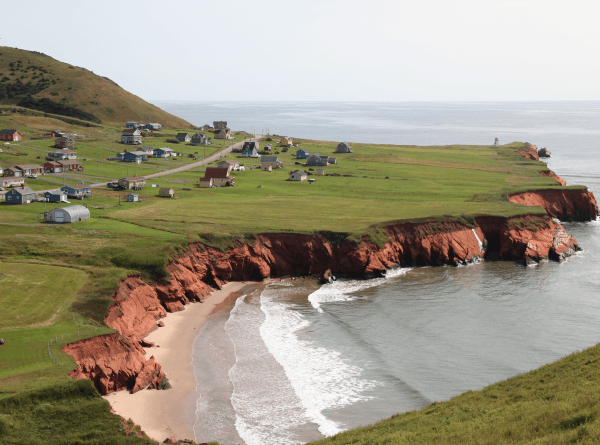
The Île du Havre aux Maisons
Île d'Entrée has an area of 7 km2[5]. It is the only inhabited island not connected to the rest of the archipelago by land. The inhabitants’ main livelihood is fishing.
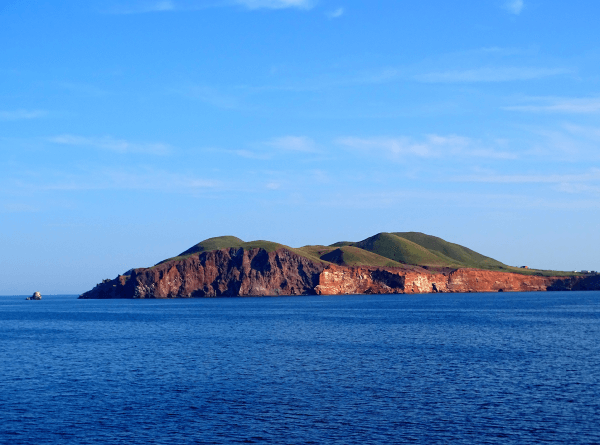
Île d’Entrée
A wide variety of seafood and fish: lobster, crab, scallops, mussels, halibut and mackerel, among others, can be enjoyed in the Îles-de-la-Madeleine thanks to local fishing.
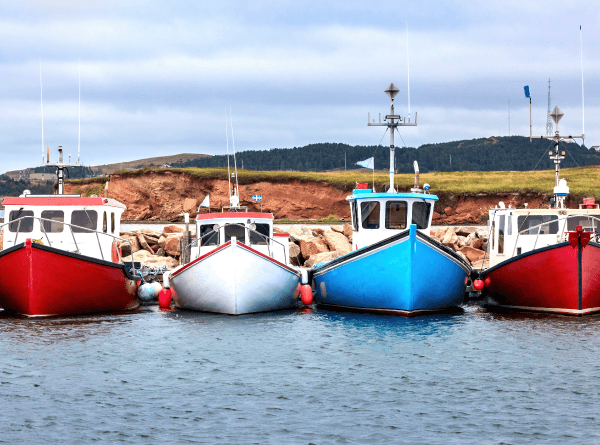
Seafood is an Îles-de-la-Madeleine specialty
Tourism is the second most important economic activity in the region. As a result, several infrastructures have been built to welcome tourists all year round.
Several amenities had to be built so that tourists could easily access the islands. The ferry increased its transport capacity, since 80% of tourists prefer this mode of transportation[3]. The port of Cap-aux-Meules has also been designed to accommodate cruise ships. The islands are also accessible by airplane, as there is an airport at Havre-aux-Maisons. A single road links the islands, Route 199, and tourists can get around by:
The archipelago offers several accommodation options. There are a few hotels, but B&Bs, inns, cottages and camping remain the most popular choices among tourists. Îles-de-la-Madeleine has several restaurants, highlighting seafood and local produce.
Infrastructure has been put in place to showcase the archipelago's landscapes and attractions, such as:
Various tours are organized to showcase the activities available
The Circuit des Saveurs offers a chance to meet the many local producers and craftspeople of the Îles-de-la-Madeleine. The tour takes in the wharves, farms, cafés and restaurants, the smokehouse and the market.

The Sentiers Entre Vents et Marées were set up by the inhabitants of the islands. The route is 230 km long and circles the island. It has 56 km of beach, 83.5 km of paved roads, 61.5 km of trails and 30.5 km of unpaved roads[7].
The Circuit des Arts features some 15 art stores, studios and galleries, showcasing the work of artists and artisans from the islands.

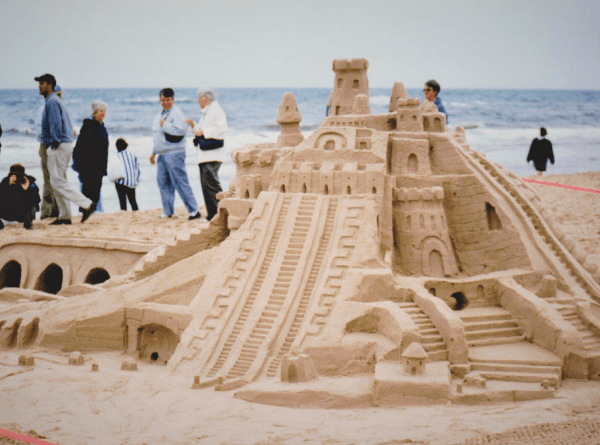
The Îles-de-la-Madeleine also organize an array of festivals and events to attract tourists such as the Festival acadien, the Festival littéraire des Îles, the Festival de Cirque des Îles, the Concours de Châteaux de Sable des Îles and many others.
The presence of large numbers of tourists on the Îles-de-la-Madeleine makes managing drinking water and waste more difficult.
The archipelago's fragile ecosystems are also affected since they deteriorate rapidly if they are over-visited. A number of measures have therefore been put in place to prevent, or at least slow down, this degradation, such as:
These measures aim to protect certain sand dunes, their vegetation and seabird nesting sites.
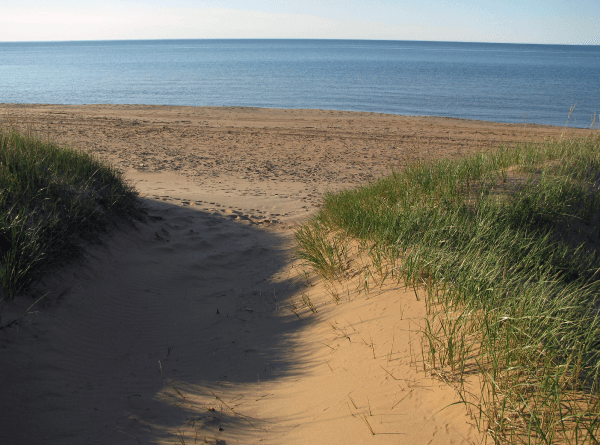
Vegetation helps prevent the erosion of dunes.
Another threat to the Îles-de-la-Madeleine is the erosion of the riverbanks (or shores). Year after year, a part of the territory is washed away by the sea. Infrastructures such as buildings and roads are at risk due to the fact that the land on which they are located is disappearing.
Erosion is the degradation of soil by wind, water or human action.
Roads had to be moved due to coastal erosion.
One of the causes of this erosion is the lack of protection of the coast during winter. In the past, the archipelago was surrounded by ice in winter, which protected the coasts. Today, there is hardly any ice left to fulfill this role. Another cause is rising sea levels. The higher the water level, the more extensive the erosion.
Certain protective measures are put in place to try and protect the coasts of the Îles-de-la-Madeleine. One such measure involves adding pebbles (or cobbles) to the beaches. Pebbles form a protective barrier, helping to preserve cliffs and shorelines.
To access the rest of the module, please consult the following concept sheets.
Tourisme Îles de la Madeleine. (s.d.). Paysages. https://www.tourismeilesdelamadeleine.com/fr/decouvrir-les-iles/particularites-regionales/paysages/
Larose, Isabelle. (2021, 21 octobre). Bilan touristique des Îles: 10% moins de visiteurs en 2021 qu’en 2019. Radio-Canada. https://ici.radio-canada.ca/nouvelle/1833550/bilan-touristique-iles-de-la-madeleine-2021
Boisvert, C., Roy-Cadieux, F., Krysztofiak, V., Poulou-Gallet, C., Riendeau, J. et Ste-Marie, P. (2015). Espace Temps - 1re secondaire [cahier de savoirs et d’activités]. ERPI.
Marc-Lautenbacher. (2018, 20 août). Village Havre-aux-Maisons, Iles des la Madeleine, Canada [Photographie]. Wikimedia Commons. https://commons.wikimedia.org/wiki/File:Village_Havre-aux-Maisons,_Iles_des_la_Madeleine,_Canada.jpg
Tourisme Îles de la Madeleine. (s.d.). Île d’Entrée. https://www.tourismeilesdelamadeleine.com/fr/decouvrir-les-iles/les-iles/ile-d-entree/#carte
Tourisme Îles de la Madeleine. (s.d.). Circuit des saveurs [Image en ligne]. (URL).*
Tourisme Îles de la Madeleine. (s.d.). Sentiers entre Vents et Marées. https://www.tourismeilesdelamadeleine.com/fr/decouvrir-les-iles/experiences/nature/randonnee-pedestre/sentiers-entre-vents-et-marees/
Bonjour Québec. (s.d.). Sentiers entre Vents et Marées [Photographie]. (URL).*
Tourisme Îles de la Madeleine. (s.d.). Circuit des arts [Image en ligne]. (URL).*
Corporation des Châteaux de sable des Îles. (s.d.). Château de sable [Photographie]. (URL).*
Shields, Alexandre. (2023, 8 février). Ottawa veut créer une aire marine protégée aux îles de la Madeleine. Le Devoir. https://www.ledevoir.com/environnement/780994/ottawa-veut-creer-une-aire-marine-protegee-aux-iles-de-la-madeleine-d-ici-2025
Larose, Isabelle. (2022, 1 août). Pénurie de logements : un autre été difficile aux Îles-de-la-Madeleine. Radio-Canada. https://ici.radio-canada.ca/nouvelle/1901679/penurie-logement-iles-de-la-madeleine-ete-2022-service-aide-logement
Larose, Isabelle. (2021, 8 décembre). Boom domiciliaire aux Îles : un territoire à la croisée des chemins. Radio-Canada. https://ici.radio-canada.ca/nouvelle/1846011/construction-maisons-iles-de-la-madeleine-revision-schema-amenagement-parc-regional-eclate-sondage
*Extrait employé par Alloprof conformément à la Loi sur le droit d'auteur dans le cadre d'une utilisation équitable aux fins d’éducation [https://laws-lois.justice.gc.ca/fra/lois/c-42/page-9.html].