Subjects
Grades
 100%
100%
 100%
100%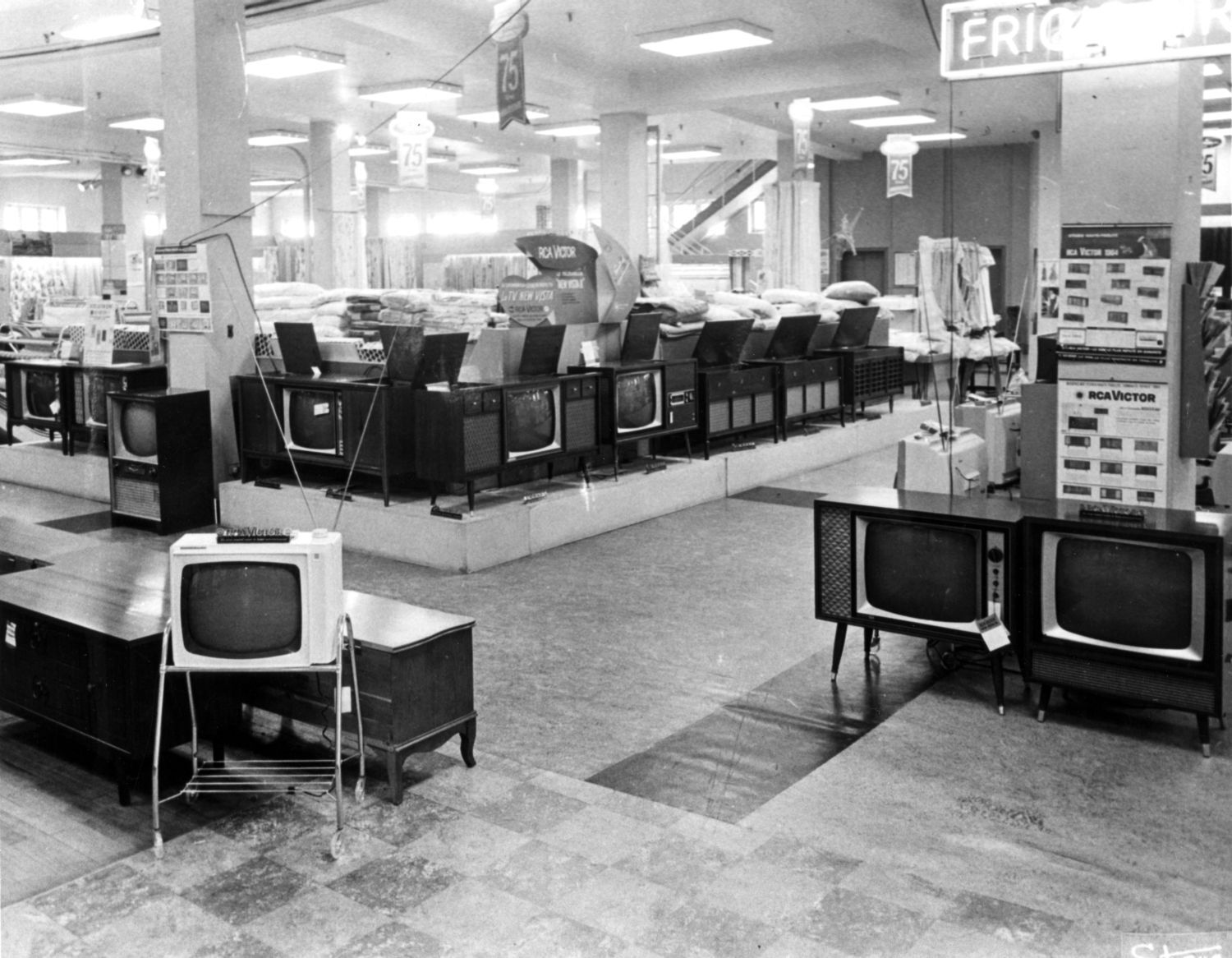 100%
100%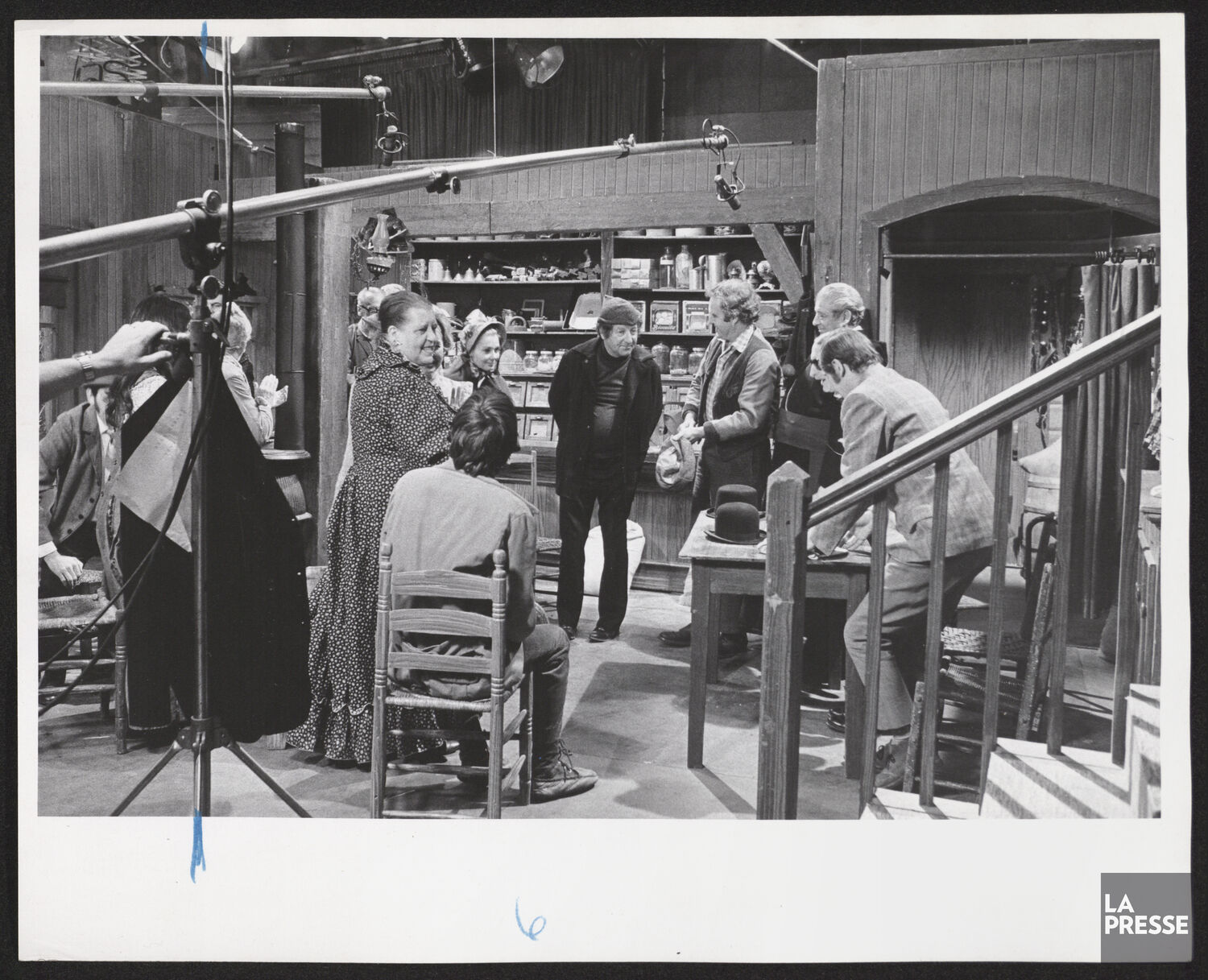
After World War II, Canada experienced widespread prosperity. Coming out of the Great Depression, people now had more buying power than ever before.
Purchasing power is the quantity of goods and services that a person can buy based on their income.
This period of economic growth had major effects on consumerism.
This rise in consumerism marked the beginning of Americanization—the adoption of American culture, particularly regarding lifestyle, leisure, and consumer habits.
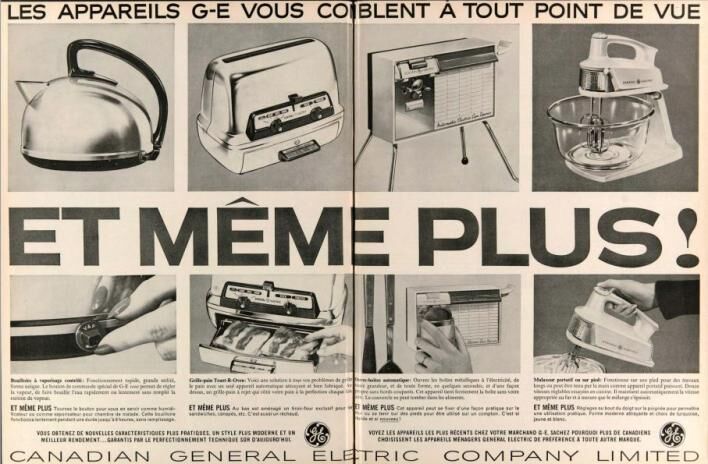
With greater buying power, Quebecers wanted to purchase more products. They gradually adopted the American way of life, believing that happiness came from owning as many things as possible. More and more advertisements to sell various products were produced. As a result, household appliances, like refrigerators and electric stoves, became more common in Quebec and Canadian homes.

An advertisement from May 1960 for General Electric household appliances
Companies use advertisements to promote an ever-increasing variety of products.
In addition to various goods, consumer culture encouraged people to own both a car and a house. This led to the rise of suburbs, which require the building of different infrastructures, like roads, to meet the needs of the population.
Despite this wave of modernization, traditional gender roles persisted, with women staying home and men going to work. Many companies promoted the idea of “queen of the hearth,” which promoted the image of a perfect, happy wife at home raising the children. It also discouraged women from getting jobs. This period was marked by waves of both modernism and traditionalism.
The growing purchasing power of consumers encouraged Quebecers to buy more and more products. At the same time, advertising became increasingly present in newspapers, magazines, radio, and the newest medium of the time–television. Companies were now using advertising to get the attention of consumers.
Ads for products related to hobbies and leisure were becoming very popular. People could afford to spend more, and they had more free time to enjoy these products.
The impact of advertising was also visible in fashion. While people once prioritized repairing or reusing their clothes, the arrival of advertising prompted them to buy new clothes in keeping with the latest fashion trends.
Television was gradually replacing radio as a source of information and entertainment. The television was created in 1926 and several new television channels were created that same year. French Canadians watched soap operas, the news and sports.
By 1956, television was all the rage, with 2.3 million televisions in Canada[2]. It allowed information to reach many people at the same time, which contributed to the development of mass media. Advertisers took advantage of this to sell products to consumers.
Mass media, like TV and radio, is able to disseminate the same message to a large number of people at the same time (like TV and radio).
In 1955, the first local television station was set up in Jonquière. Regions far away from Montreal, including Chicoutimi and Magog, also created their own stations. These local stations broadcast customized programs to the public to reduce the growing influence of American channels. Television was a way to express French-Canadian culture and identity and showcase local talents.
Popular programs at the time included:
Cultural programs also featured Quebec artists.
Filming of the television show Les Belles Histoires des pays d’en haut
This show was broadcast from 1956 to 1970 on Radio-Canada.