Subjects
Grades
The capitulation of Montreal, in 1760, marked the beginning of the military regime. This was a temporary administration of New France while waiting for the end of the Seven Years' War and the signing of the Treaty of Paris in 1763. The regime’s goal was to maintain order in the colony by imposing various conditions on the population, such as surrendering their weapons and swearing an oath of allegiance to the British King.
On September 8, 1760, the Governor General of New France, Pierre de Rigaud de Vaudreuil and the Major General of the British army, Jeffrey Amherst, signed the capitulation of Montreal. Vaudreuil had decided to surrender after considering the numerical superiority of the British troops and the exhaustion of his army. However, he negotiated this capitulation by imposing certain conditions to protect the rights of the Canadiens. Montreal’s surrender (capitulation) marked the end of the War of the Conquest.
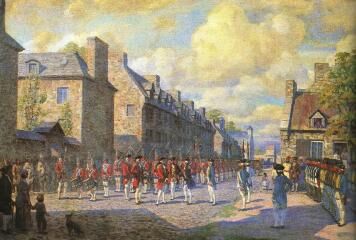
Surrender of New France in 1760
Surrender of New France in 1760
The War of the Conquest ended in North America at the end of 1760. But the Seven Years’ War raged on between France and Great Britain until 1763. A provisional government was set up in the colony while awaiting the conclusion of the war and the fate of New France: the military regime (1760–1763). The objective of this military regime was to run the colony and maintain peace and order.
With the military regime, the colony fell under the command of British military authorities led by General Jeffrey Amherst. Similar to the French Regime, the districts of Montreal, Quebec City and Trois-Rivières were still overseen by individual governors, but these were now British military officers.
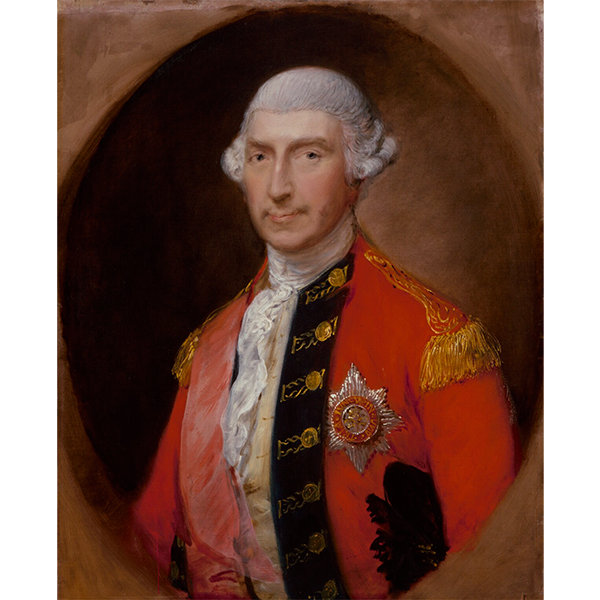
Jeffery Amherst
An institution is an organization governed by rules and laws that fulfills a specific role in society. This role may be political, social, economic, religious, etc.
To better understand what an institution is, you can watch the following video What Is… an Institution?
Few changes were made to the institutions of New France. For example, bureaucrats and militia captains stayed in their positions. The militia captains were employed for the benefit of the British authorities since they provided a link between the vast majority of the population, who were Canadiens (Francophone and Catholic), and the British authorities (Anglophone and Anglican). Therefore, they could convey the orders of the authorities to the population.
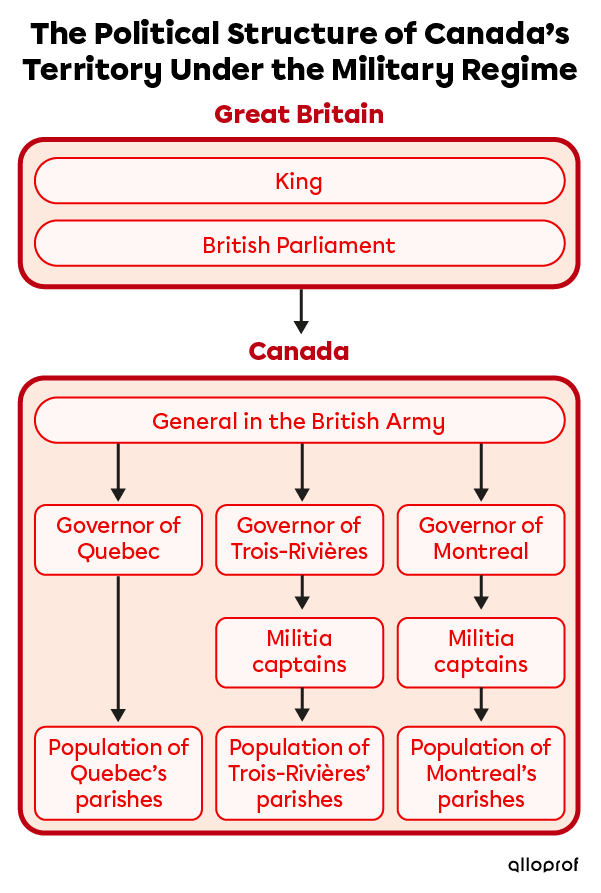
The Canadiens retained several rights during the military regime. First, they were authorized to keep ownership of their land and property. The majority of French institutions were preserved: French civil law remained applicable, and the Canadiens were allowed to practise the Catholic religion and speak French.
However, they were subject to certain conditions. First, the Canadiens had to surrender their arms to avoid a rebellion. They also had to swear allegiance to the British King, George III, which meant promising loyalty and obedience to him. Finally, French criminal laws were replaced by English criminal laws.
The British authorities' tolerant attitude towards the Canadian population was greatly influenced by the fact that the number of Canadians on the territory was much larger than the number of British people (soldiers, merchants, etc.). The British authorities therefore chose not to disrupt the inhabitants' habits to ensure their cooperation and maintain peace in the colony until the end of the war in Europe.
Before the War of the Conquest, 60 000 people lived in Canada (New France). Even though most of the population decided to remain in the conquered colony, approximately 4000 Canadiens emigrated during the 3 years of the military regime. Most were nobles, military officers, large-scale fur traders and administrators.
Yet, few British immigrated to the colony. Only a few hundred British merchants and adventurers arrived, attracted by trade, especially in furs.
Immigration is when a person arrives in a foreign country (host country) to settle temporarily or permanently.
To better understand the concepts of migration, immigration and emigration, watch the following video Migration.
The War of the Conquest was very difficult for New France. The Quebec region was particularly devastated following this major conflict. Part of the city of Quebec was destroyed and villages were completely demolished.
The habitants suffered from famine because many crops were destroyed. The British authorities were therefore faced with the massive undertaking of rebuilding the colony.
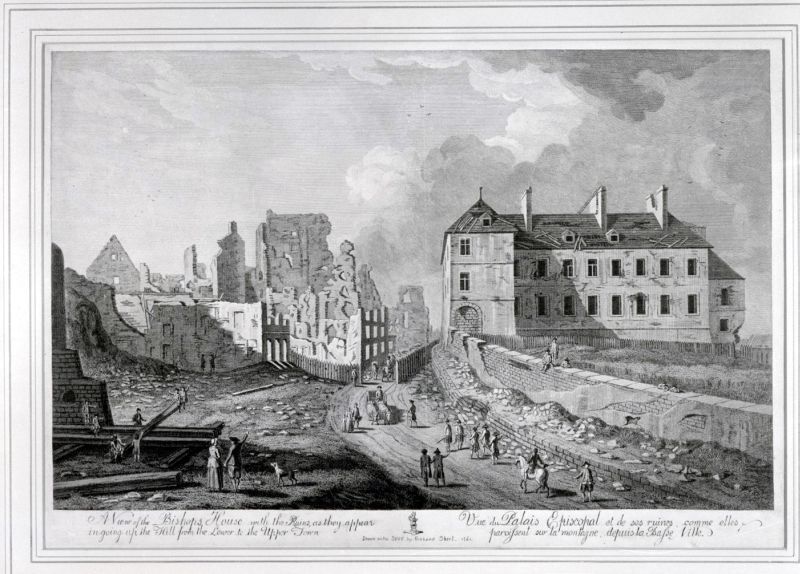
The Episcopal Palace and destruction in the City of Quebec circa 1770
The military regime came to an end in 1763 with the signing of the Treaty of Paris and the implementation of the Royal Proclamation.