Subjects
Grades
A bar graph presents the results of a survey using bars.
For example:
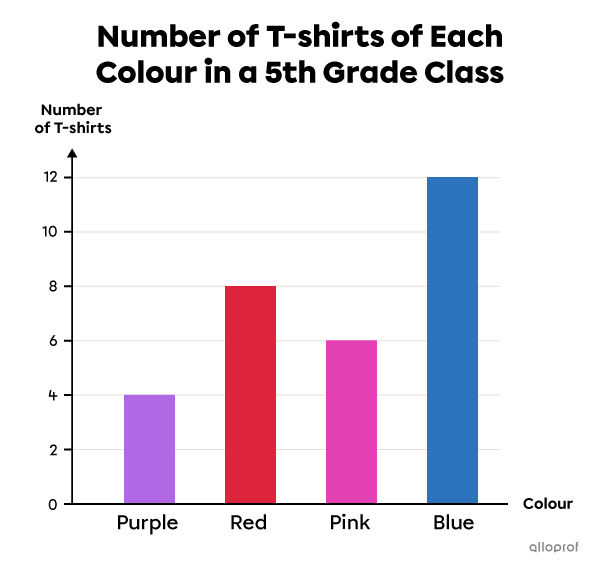
A bar graph always has a title which introduces the subject of a survey.
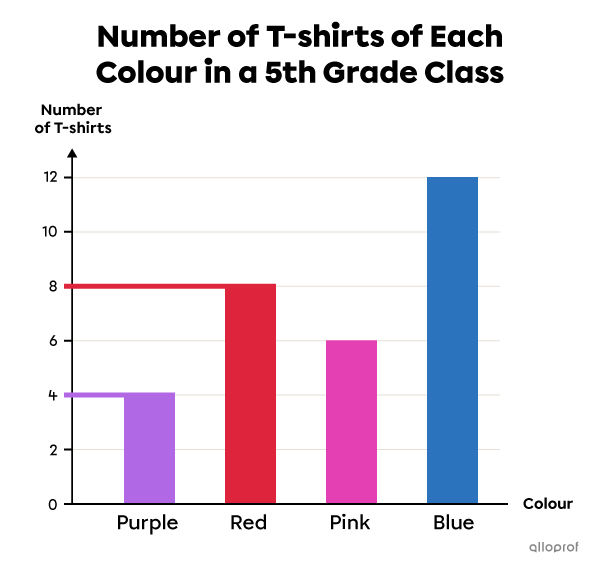
The title indicates that this bar graph represents the number of t-shirts of each colour in a 5th grade class.
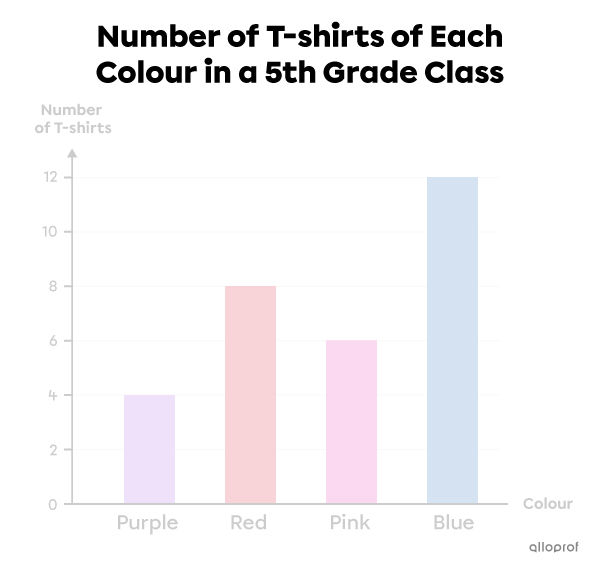
A bar graph has 2 axes: a horizontal axis and a vertical axis. Each axis has a label that indicates what it represents.
In the following graph, the horizontal axis represents the colour of the t-shirts. The vertical axis represents the number of t-shirts.
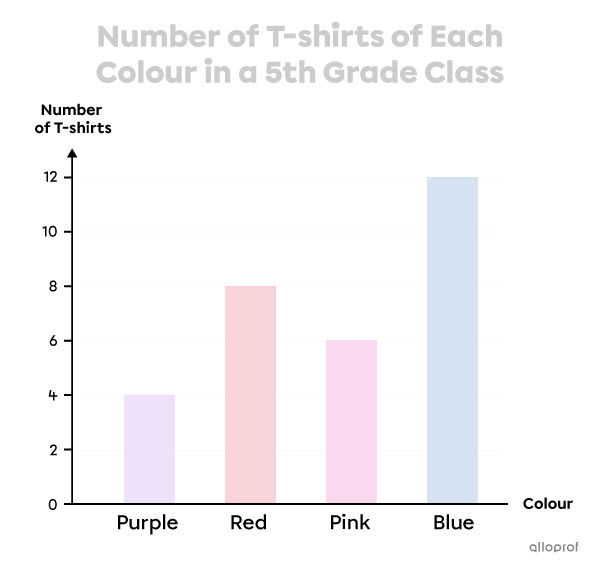
The scale on the vertical axis contains equal intervals.
The interval between the numbers on the vertical axis is +2.
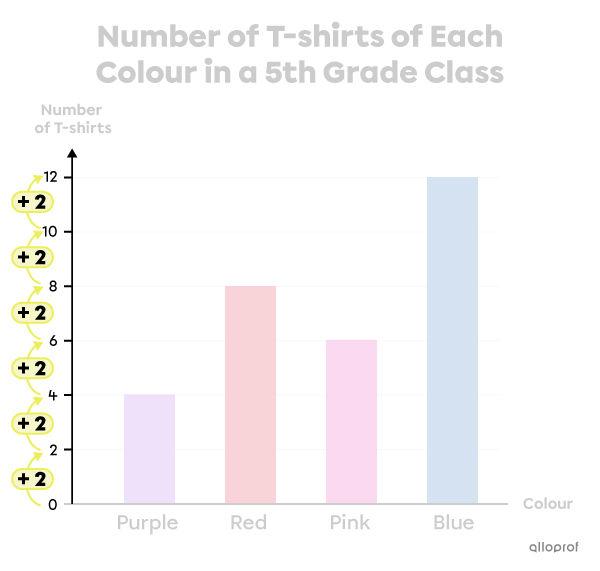
In a bar graph, the data (results) are represented using bars. The number associated with the height of the bar indicates the amount of data in each category.
The number associated with the height of the purple bar indicates that there are 4 purple t-shirts. The height of the red bar indicates that there are 8 red t-shirts.
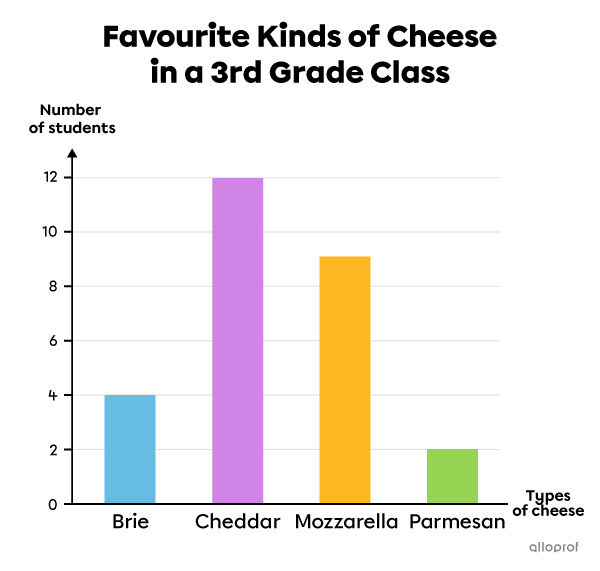
To interpret a bar graph, analyze each part of the graph while keeping in mind the question asked.
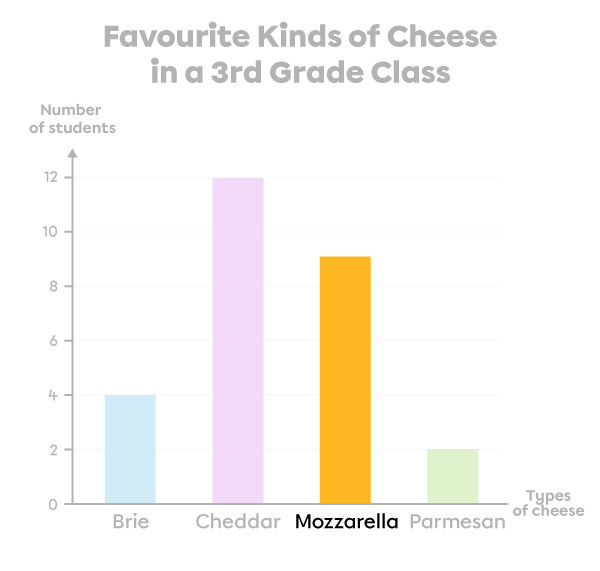
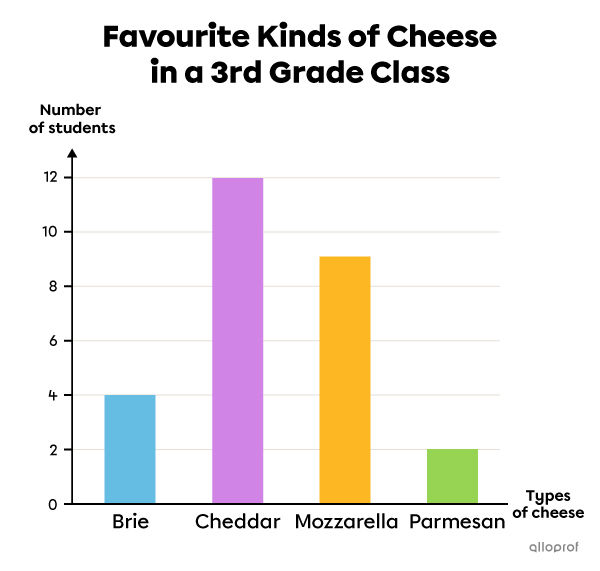
How many students prefer mozzarella cheese?
|  |
| 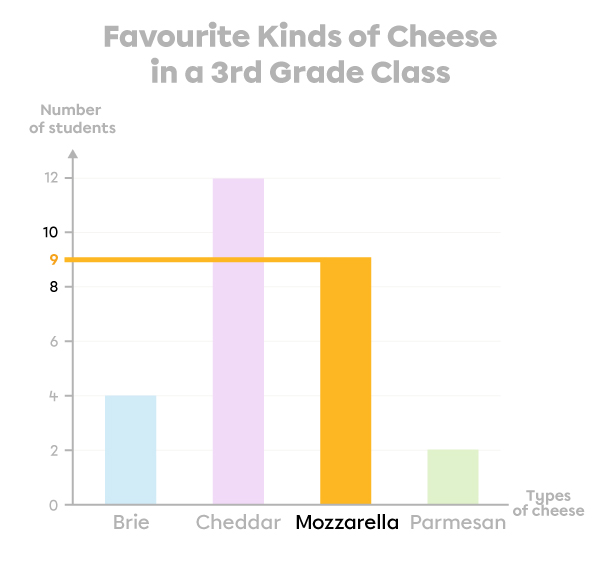 |
9 students prefer mozzarella cheese.
How many students are there in this 3rd grade class?
| 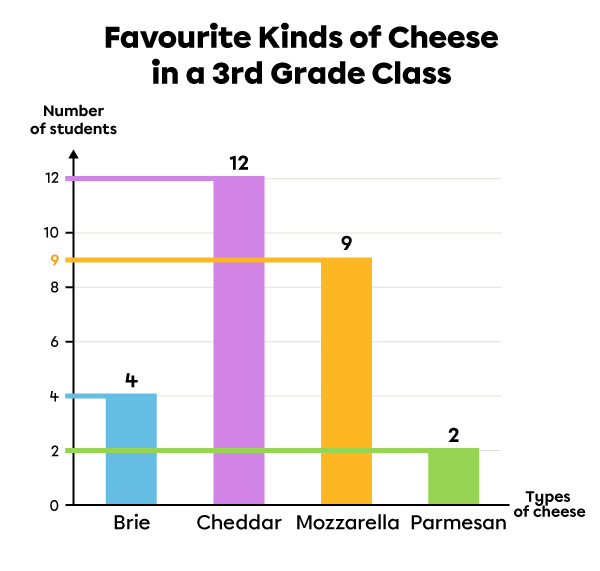 |
| 4 + 12 + 9 + 2 = 27 |
There are 27 students in this class.