Subjects
Grades
 100%
100%
 100%
100%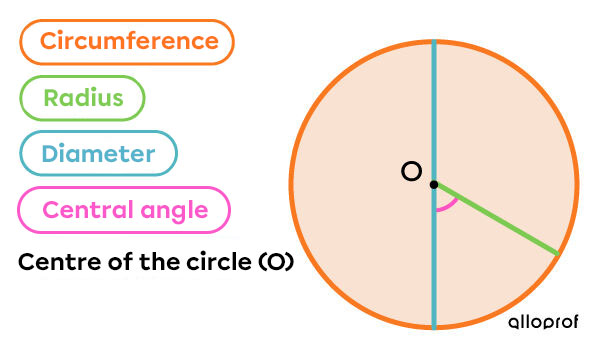 100%
100%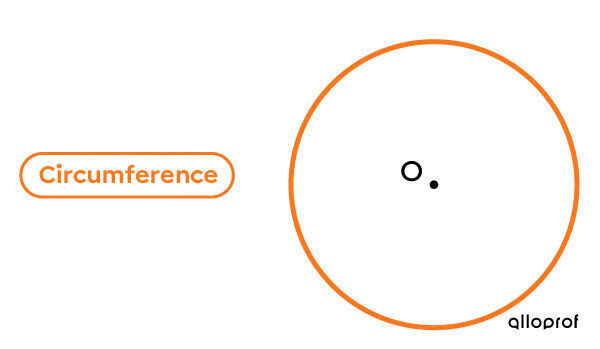 100%
100%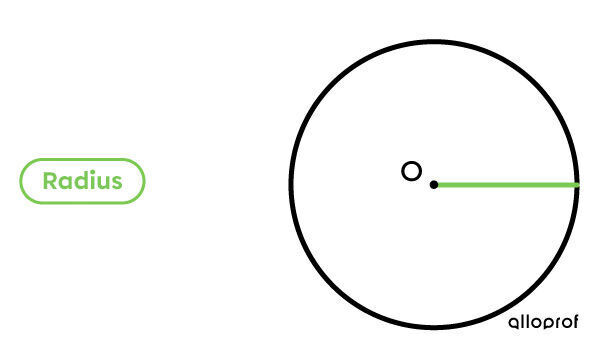 100%
100%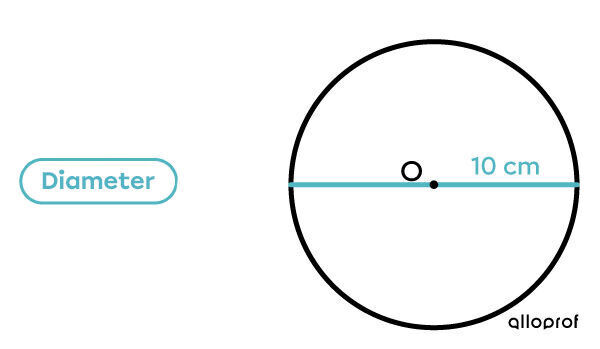 100%
100%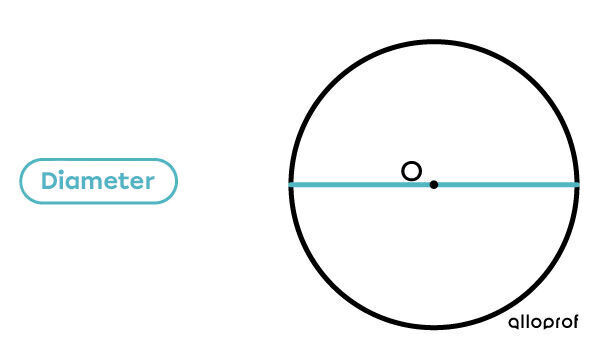 100%
100%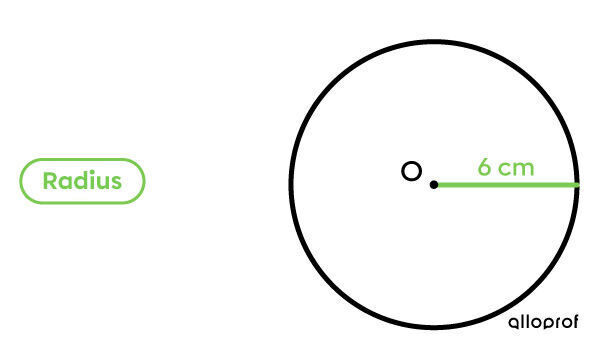 100%
100%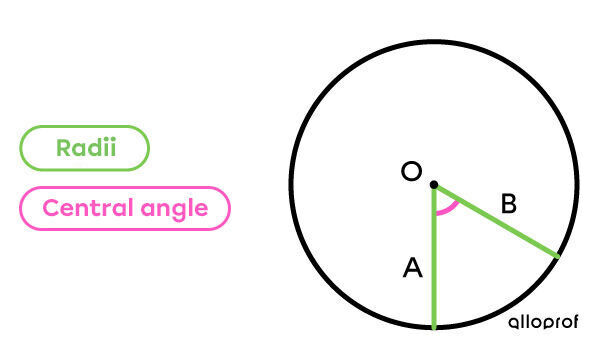
Moments in the video :
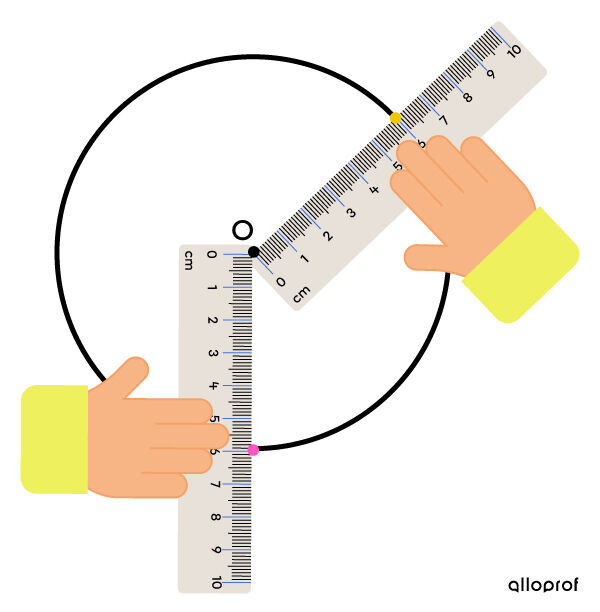
A circle is a plane figure formed by a curved and closed line. All points on the curved line are located at an equal distance from the centre of the circle (O).
Example:
The yellow and pink dots are at an equal distance from the centre of the circle.

The different parts of a circle can be described using specific vocabulary.
Here is a circle and its different parts.
The circumference is the measurement of the line that forms the circle’s contour.
Example:
The radius of a circle is a straight line (segment) connecting the centre of the circle (O) to any point on the circle’s contour.
Example:
The radius can be measured at any point on the circle.
Example:
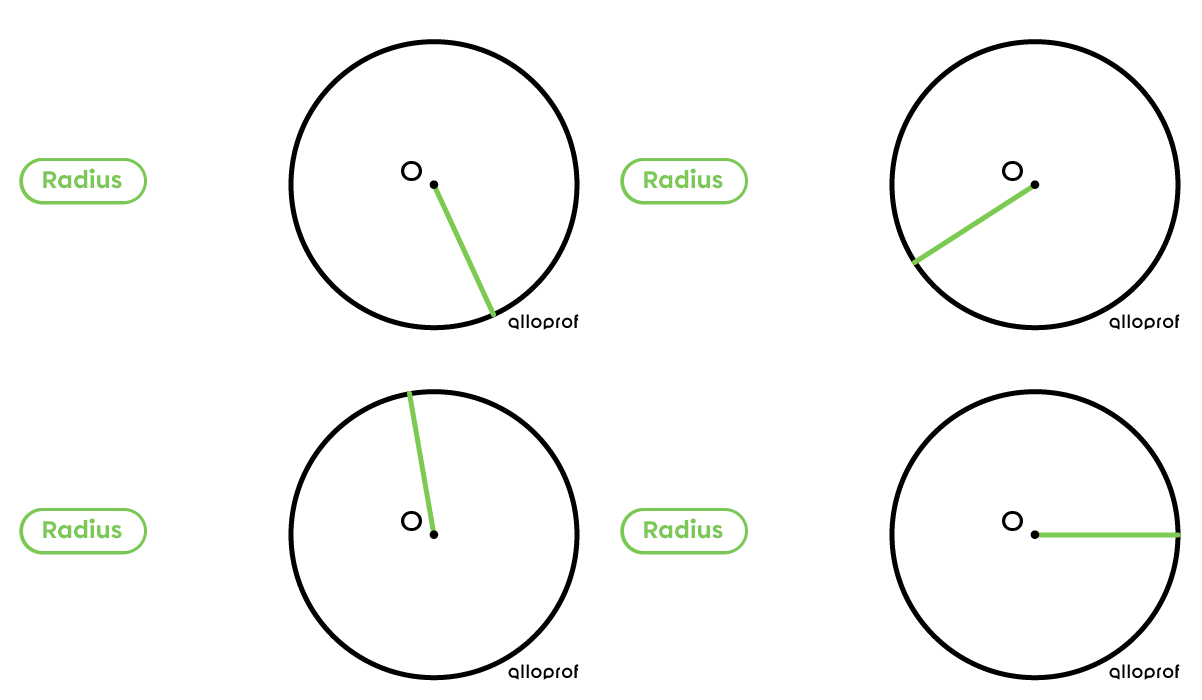
The measurement of the radius is always half the diameter.
This circle has a diameter of |10| centimetres (cm). What is the measurement of the radius?
The diameter of a circle is a straight line (segment) connecting two opposite points of the circle and passing through the centre (O).
Example:
The diameter can be measured at any point on the circle.
Example:
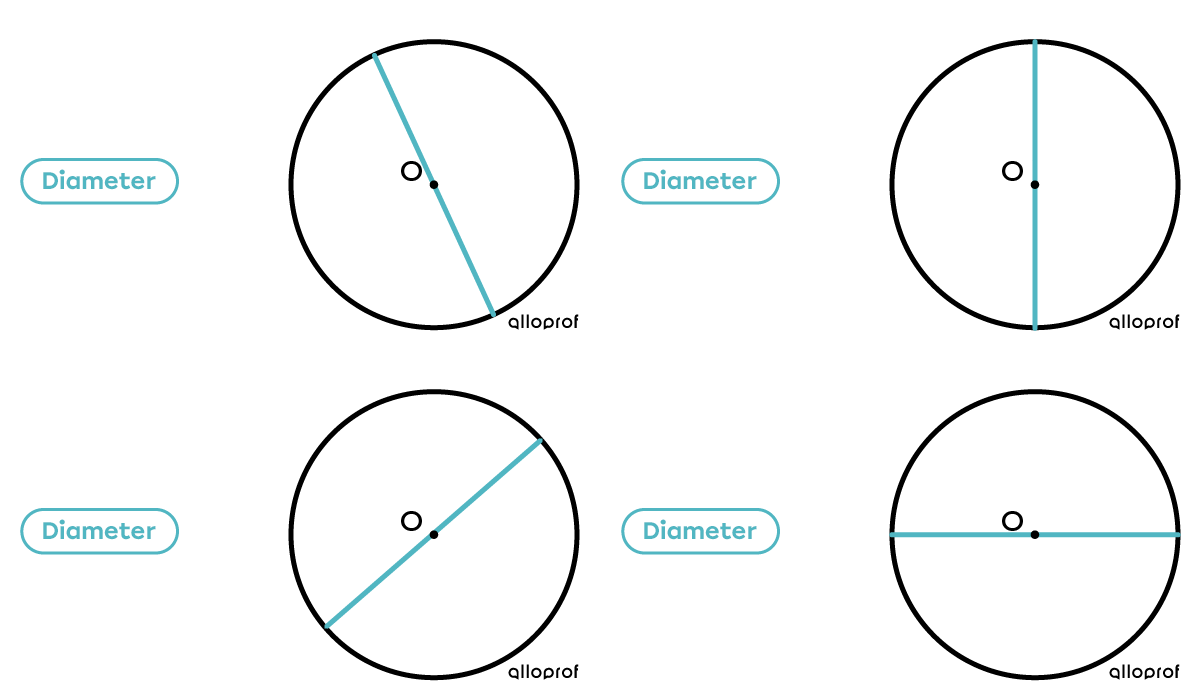
The measurement of the diameter is always twice the radius.
This circle has a radius of |6| centimetres (cm). What is the measurement of the diameter?
The central angle of a circle is an angle (|\angle|) formed by 2 radii and the vertex is located at the centre of the circle (O).
Example:
The central angle in the example is written |\angle|AOB.
The measurement of the central angle is always between |0^\circ| and |360^\circ.|
To learn how to measure an angle using a protractor, see the concept sheet Measuring Angles with a Protractor.