Matières
Niveaux
 100%
100%
 100%
100% 100%
100%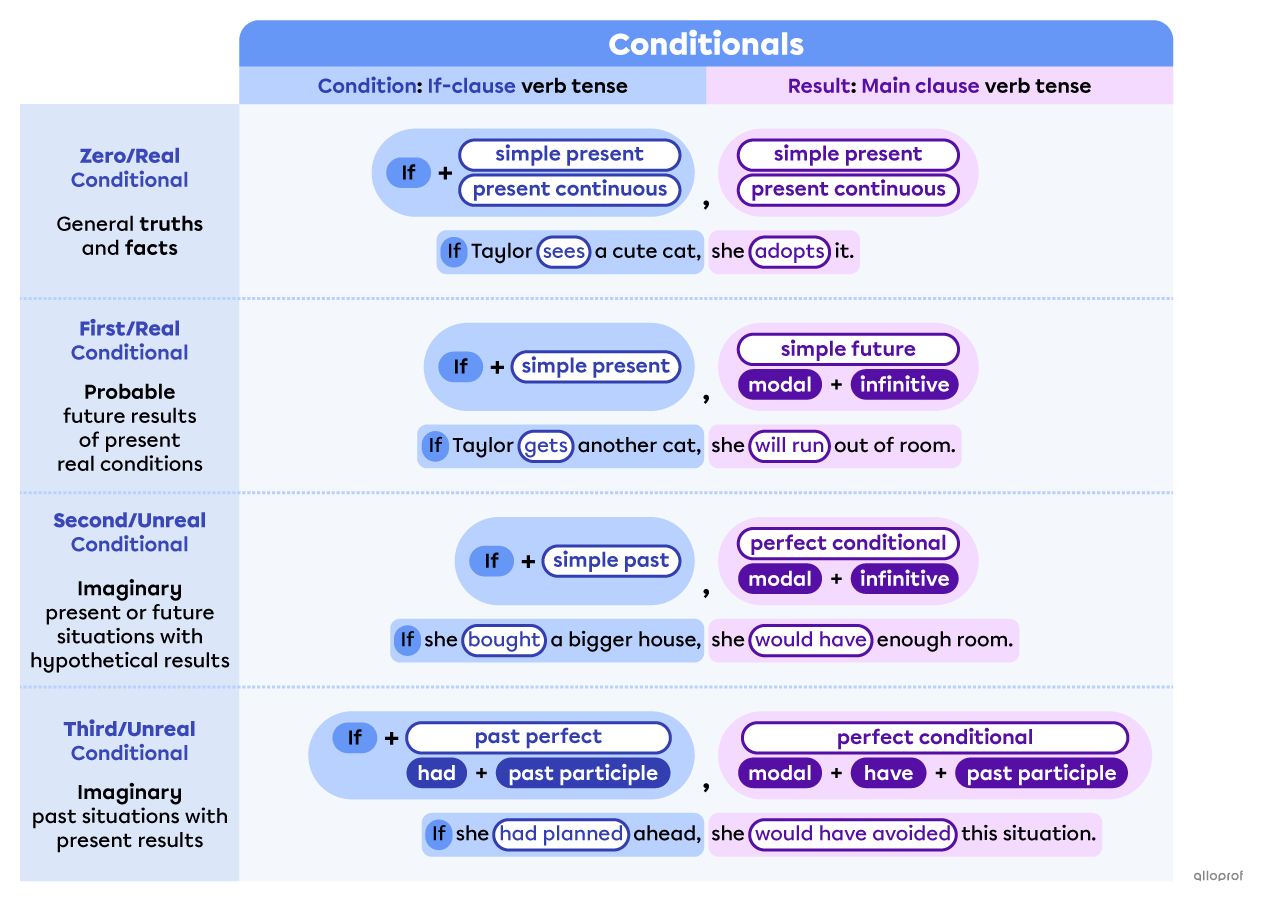
The conditional mood is used in hypothetical situations; situations in which the result depends on whether a situation happens or not.
Conditional sentences connect real or unreal situations to possible or impossible results.
The conditional mood can express what:
actually happens
will happen
could happen
might have happened
in a particular situation.
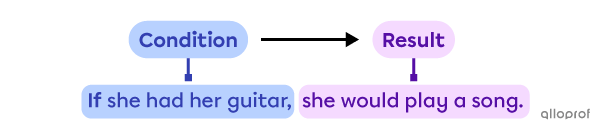
Conditional sentences contain two clauses:
Conditional clause (commonly called the if-clause): the condition/situation
Main clause: the result
The if-clause is a dependent clause. To form a complete sentence, it needs the hypothetical result.

The condition “If she had her guitar,” does not form a complete sentence. It needs the result, “she would play a song.’’ to be a complete sentence.
Clauses can be moved around in a sentence without changing the meaning.
In writing, there is a minor difference:
When the if-clause (condition) comes first, a comma follows it to separate it from the main clause (result).
If the main clause (result) comes first, punctuation isn’t necessary.
Each conditional type follows a clear structure.
To learn more about the zero conditional, click here.
To learn more about the first conditional, click here.
To learn more about the second conditional, click here.
To learn more about the third conditional, click here.