Matières
Niveaux
 100%
100%
 100%
100%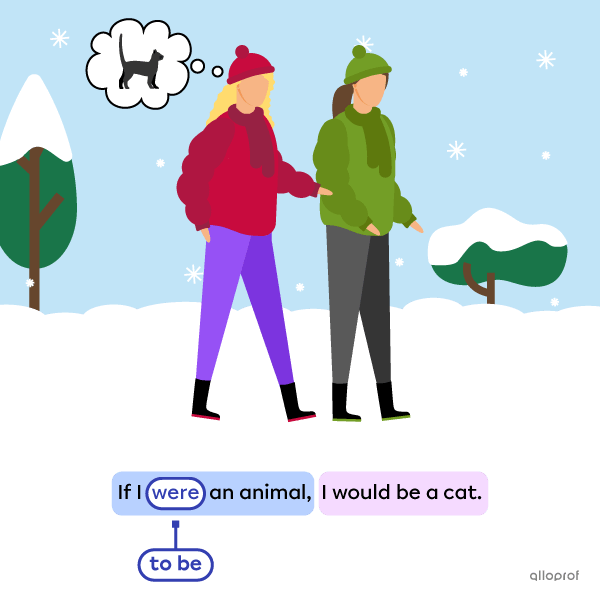 100%
100%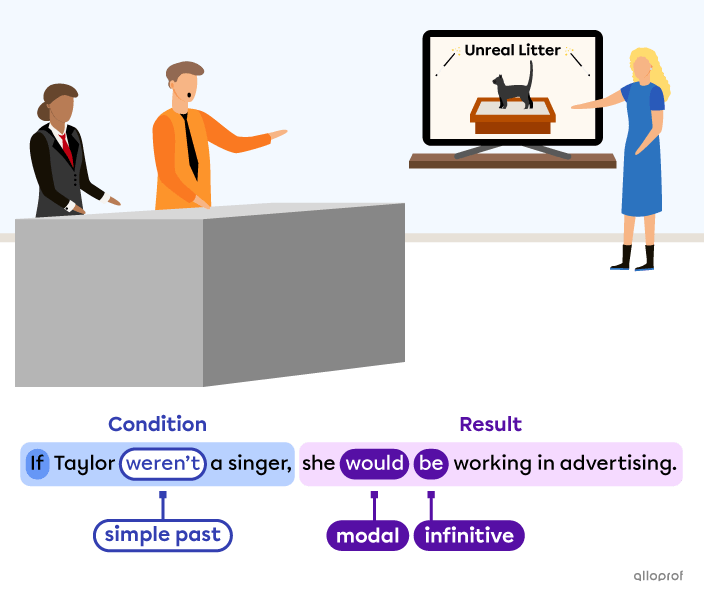 100%
100%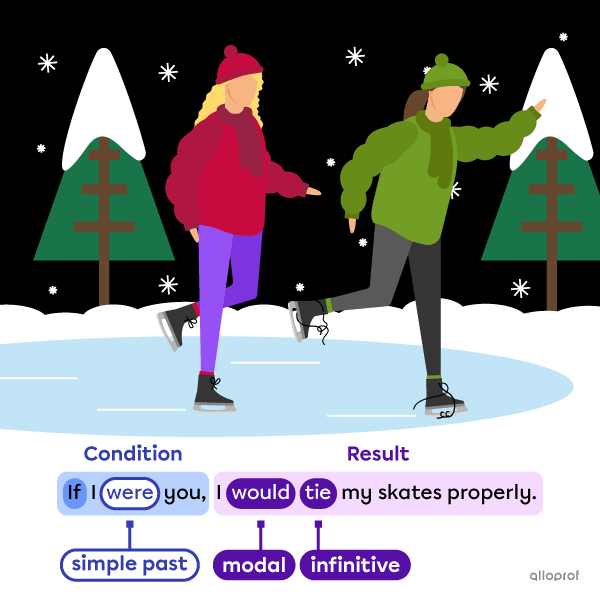 100%
100%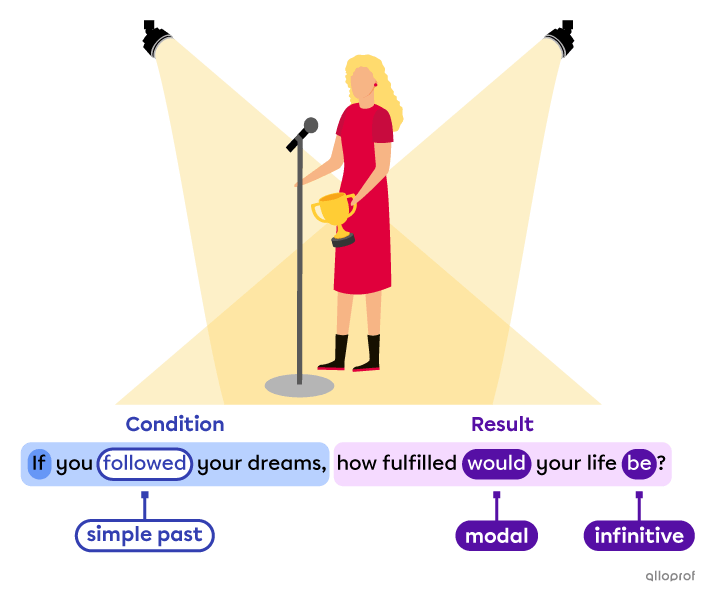 100%
100%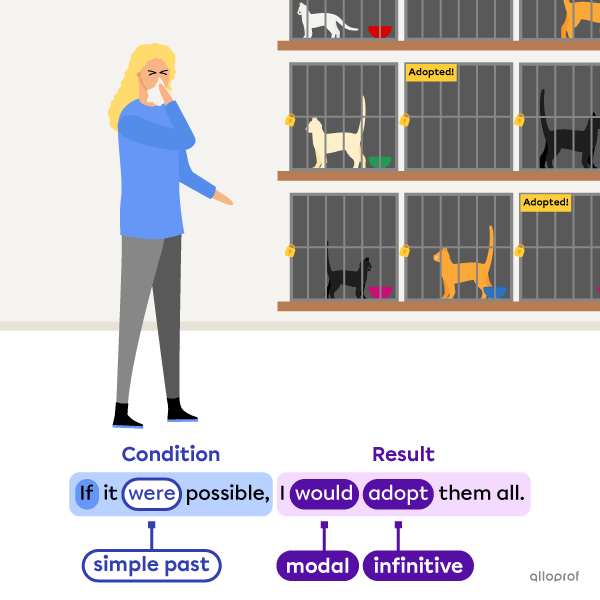
The second conditional is used to express present or future hypothetical conditions and their improbable/impossible results.
Second conditional sentences are commonly used to:
imagine a different life
give advice
ask hypothetical questions
explain a reasoning
The second conditional is also called unreal conditional because it is used to talk about situations that can’t happen in the present and are unlikely to happen in the future.
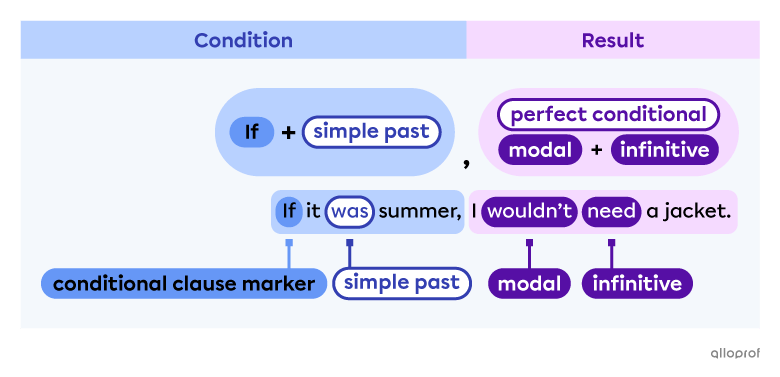
The usual structure of second conditional sentences is:

Conditional sentences contain two clauses:
Conditional clause (commonly called the if-clause)
the condition/situation
dependent clause—it needs the hypothetical result to form a complete sentence
contains a conditional clause marker—subordinating conjunction such as the words “if,” “when,” “as,” etc.
Main clause
the result
independent clause—makes sense on its own
The verb to be in the simple past is conjugated was in the first (I) and third (he/she/it) person singular and were in every other one (you/we/they).
However, with the second conditional, in Canadian English, were is used whatever the subject of the verb is.
Were is used to express that a situation is unreal, not possible.
In this example, being an animal is an unreal, impossible situation for this woman: she is human. We need to use were.