Matières
Niveaux
 100%
100%
 100%
100% 100%
100%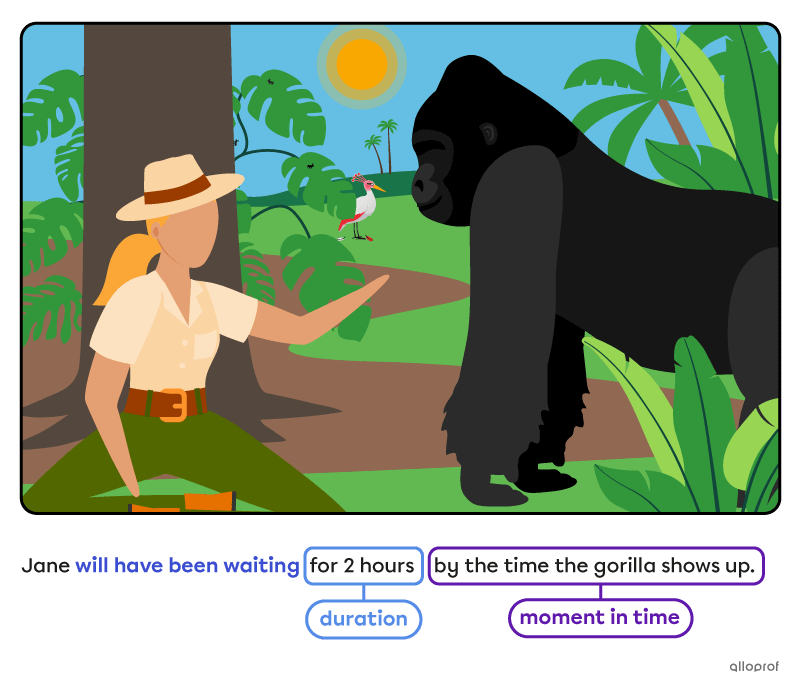 100%
100%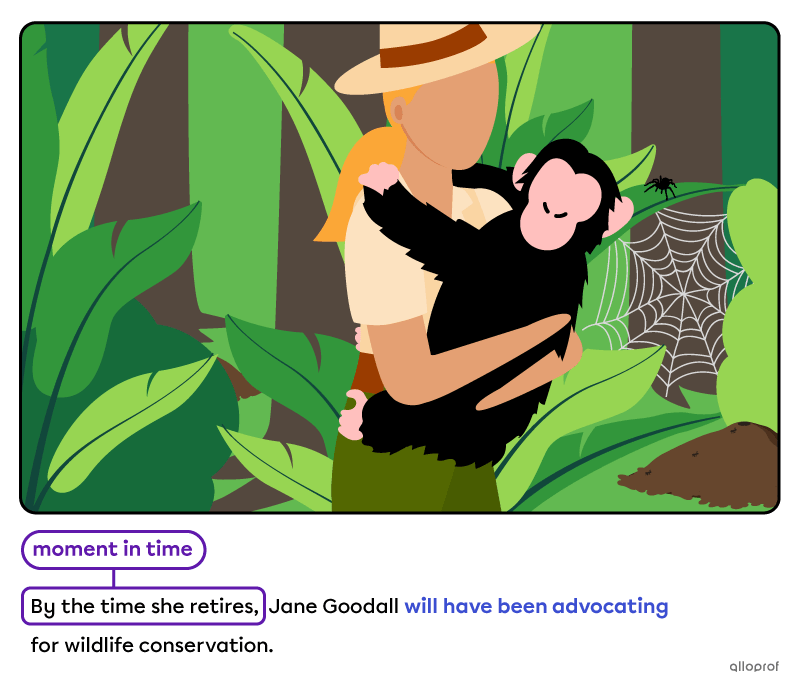 100%
100%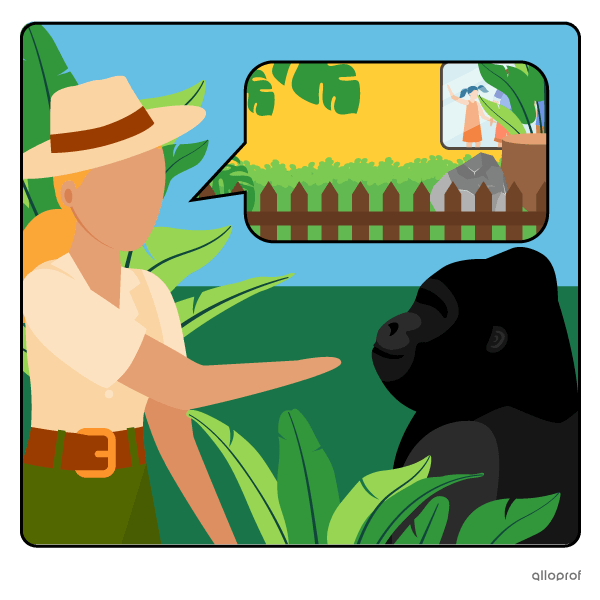 100%
100%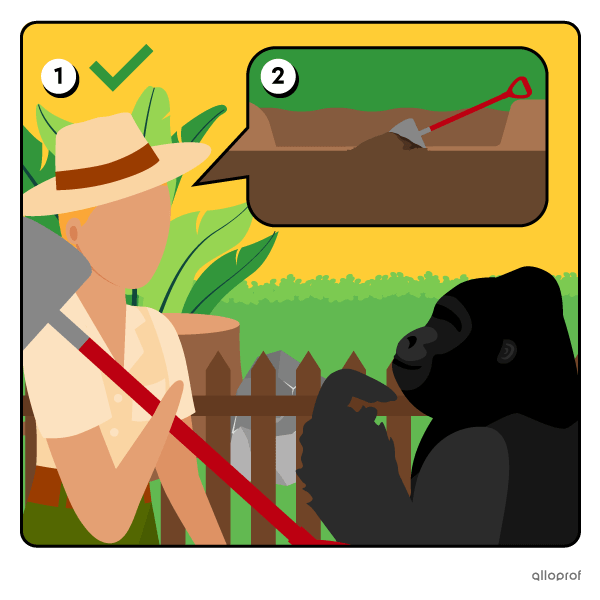 100%
100% 100%
100% 100%
100% 100%
100% 100%
100% 100%
100% 100%
100%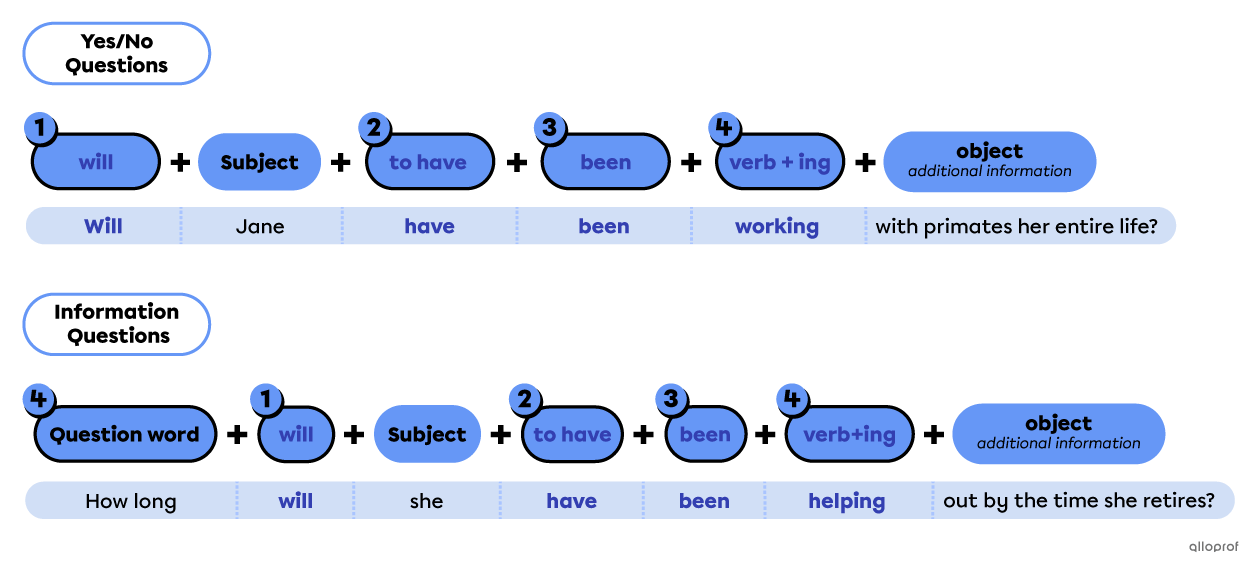
The future perfect continuous tense is used for actions that continued up to a point in the future.
A proper implied or explicit context is necessary when using this verb tense.
The future perfect continuous is commonly used to describe:
the duration of an action up to a certain point in the future
the cause and effect an action will have on a future action

The duration of an action up to a certain point in the future
The cause and effect a future action will have on a future action
It implies that her actions have already left quite a mark on wildlife conservation around the globe.
Using the future perfect continuous verb tense usually requires a proper implied or explicit context.
There are differences between the simple future, future perfect, future continuous or the future perfect continuous.
Here are some examples to show possible uses and differences between each future tense.
Jane will build a habitat for the primates tomorrow.
It implies:
The action, build, will occur tomorrow, without specifications as to how long or when exactly.
Jane will have built a habitat before digging a moat.
It implies:
The action, build, will be completed before digging a moat in the future.
Jane will be building a habitat when the visitors arrive.
It implies:
The action, build, will be ongoing during a specified period of time tomorrow.
By 4 p.m., Jane will have been building a habitat for more than 2 hours with her partner.
It implies:
The action, build, will have been ongoing for more than 2 hours by a specified moment in time.
Some main verbs do not always refer to a dynamic action. Stative verbs refer to states of being, emotions, opinions, preferences or senses.
Stative verbs aren’t usually used in continuous tenses since they show the state of the subject.
|
Don’t X |
Do ✔ |
|
Jane will have been loving working with primates. X |
Jane loves working with primates. ✔ |
|
She will have been understanding sign language. X |
She understands sign language. ✔ |
Points to remember when forming future perfect continuous affirmative sentences:
Place the auxiliary verb will after the subject.
Place the base form of the auxiliary verb to have.
Place the auxiliary verb been.
Use the continuous form of the main verb (verb+ing).
Points to remember when forming future perfect continuous affirmative sentences:
Place the auxiliary verb will after the subject.
Place the function word not.
Place the base form of the auxiliary verb to have.
Place the auxiliary verb been.
Use the continuous form of the main verb (verb+ing).
Points to remember when forming questions in the future perfect continuous:
Place the auxiliary modal verb will before the subject for yes/no questions.
Use the base form of the auxiliary verb to have.
Place the auxiliary been.
Use the continuous form (verb+ing) form of the main verb.
For information questions only:
Place a question word at the beginning.
Yes/no questions
|
Will |
Subject |
have |
been |
verb+ing |
object? |
|
Will |
Jane |
have |
been |
travelling |
the world for 2 months by the end of the year? |
|
Will |
she |
have |
been |
working |
on the project non-stop for a week by next Monday? |
Information questions
|
Question Word |
Will |
Subject |
have |
been |
verb+ing |
object? |
|
How long |
will |
Jane |
have |
been |
waiting |
for gorillas to communicate with her? |
|
By what date |
will |
she |
have |
been |
living |
in her new house for a year? |