Materials & Resources Vocabulary

Fiche | Anglais

Vocabulary on the theme of materials and resources.

Earth-Based Materials

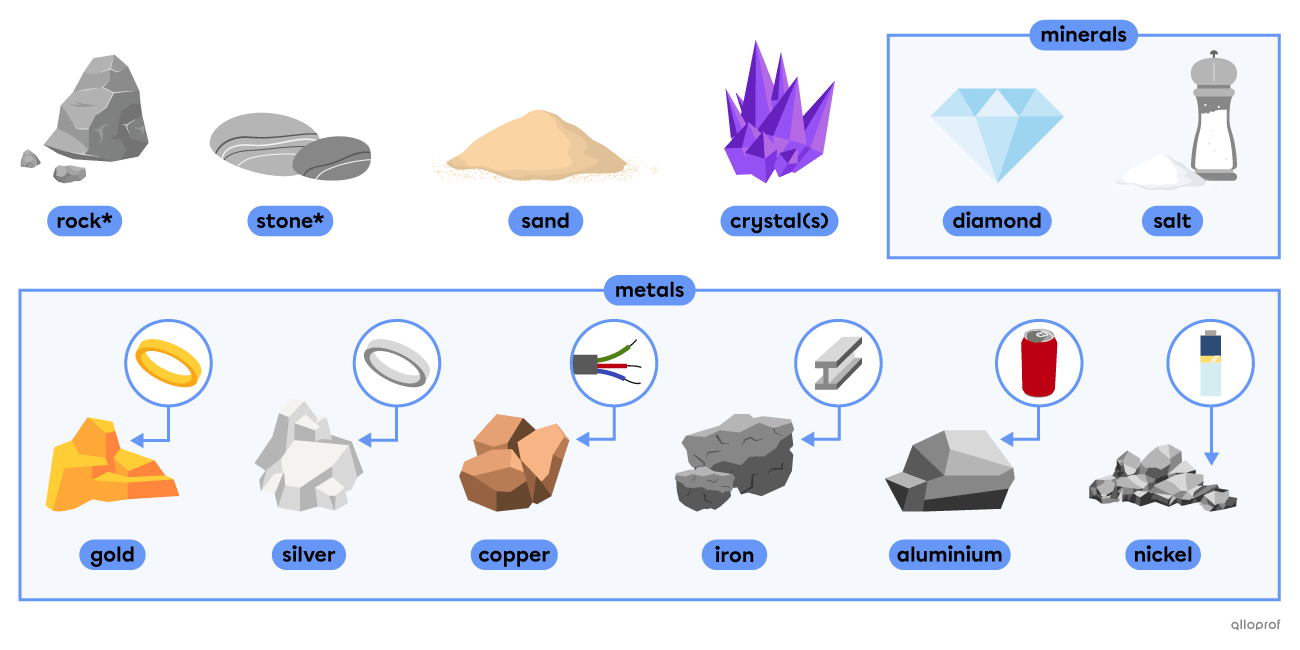
Earth-based materials vocabulary such as rock, salt and copper.

*Rock vs stone

Though many people use the words rock and stone interchangeably, they technically have different meanings.
Here are the main differences:

 rockstone
FormationNaturally occurringErosion and weathering 
SizeVery large (boulders to mountain size)Small to medium (pebbles to building stones)
Where it is foundIn nature, as a raw natural materialMaterial used for construction, landscaping or as a tool

Click to listen to the Earth-Based Materials.

Plant-Based Materials

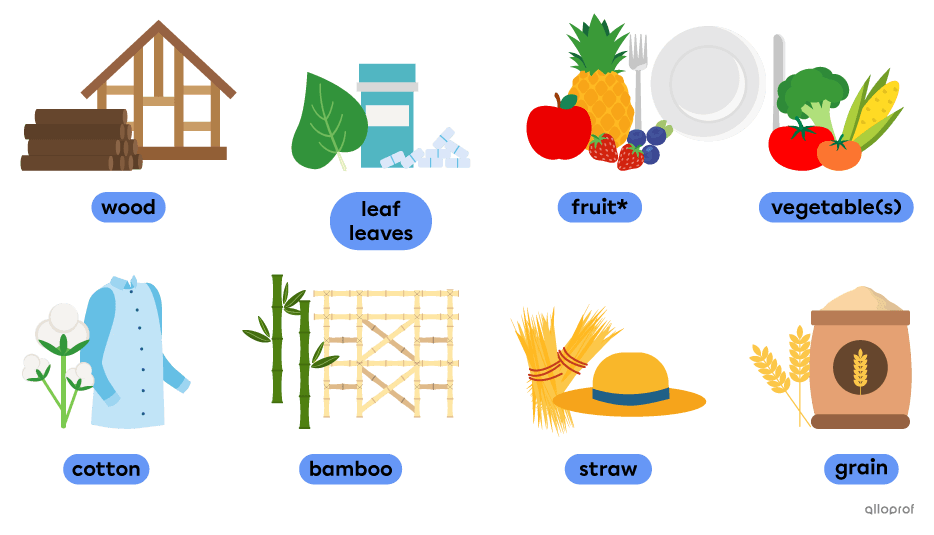
Plant-based materials vocabulary such as wood, fruit and grain.

*The noun fruit can be both countable and uncountable, depending on its use.
In most cases, fruit is uncountable (no -s) because it refers to a group of food as a whole, much like cereal or water.
Examples: I like fruit. Fruit is healthy for you.

It is countable (with -s) when it refers to types or categories of fruit.
Examples: Apples and oranges are very different fruits. The store has a great selection of tropical fruits.

Click to listen to the Plant-Based Materials.

Animal-Based Materials

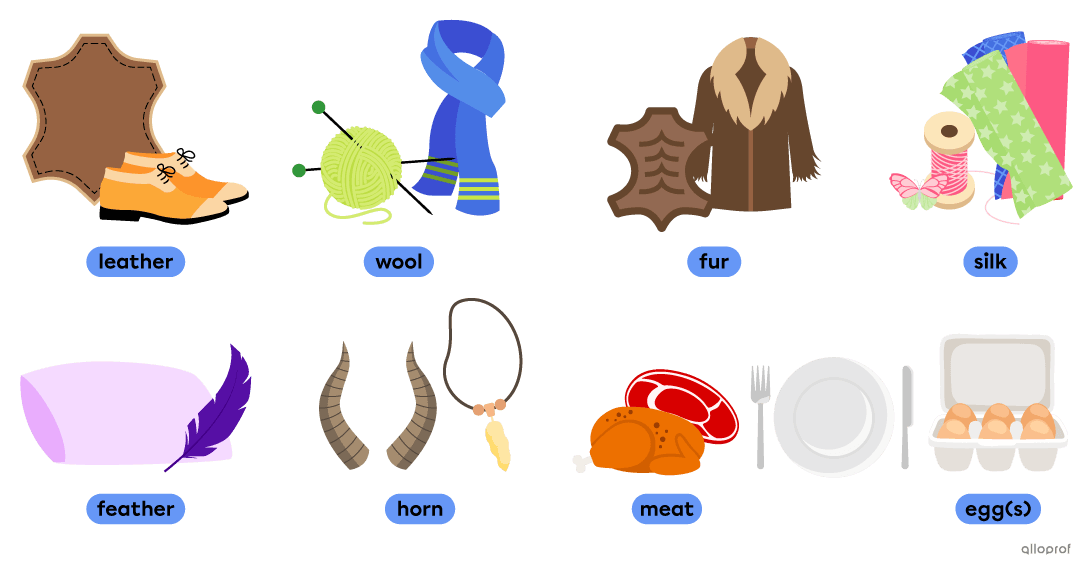
Animal-based materials and resources vocabulary such as leather, wool and meat.

Click to listen to the Animal-Based Materials.

Natural Resources & Energy

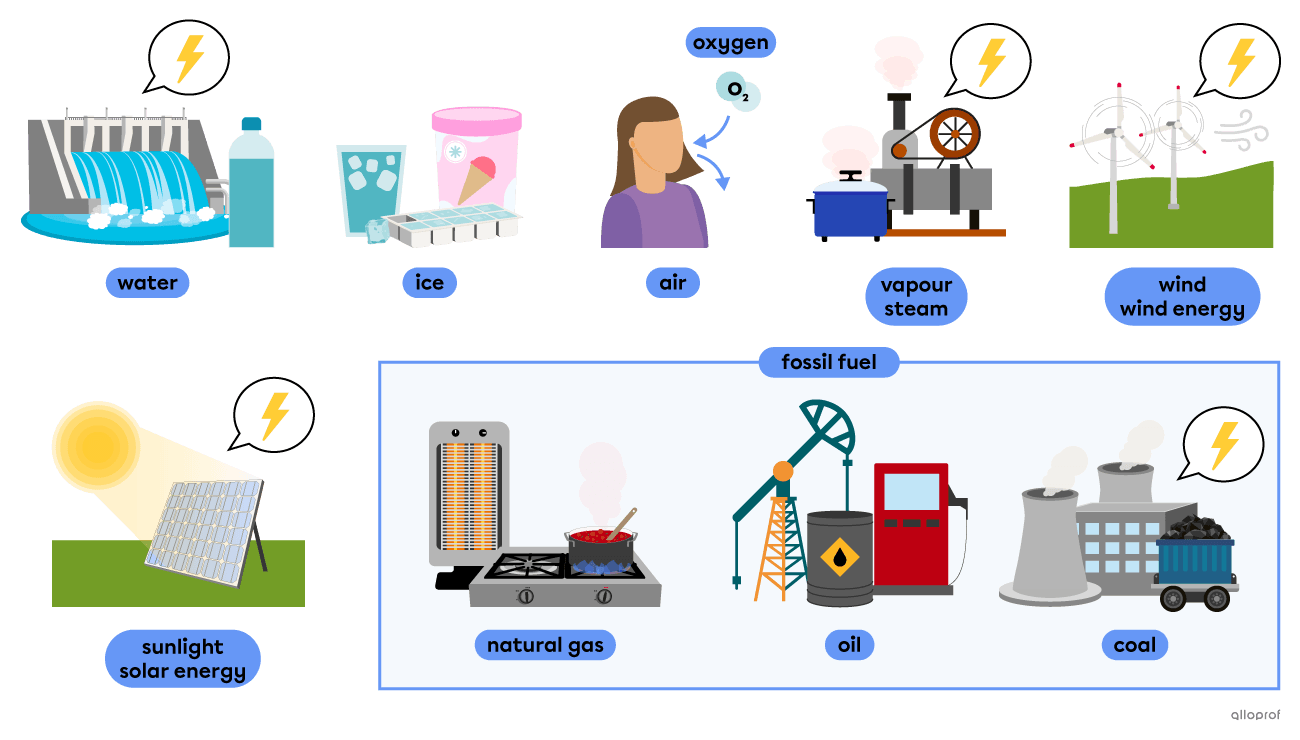
Natural energy and resources vocabulary such as water, sunlight and oil.

Click to listen to the Natural Resources & Energy.

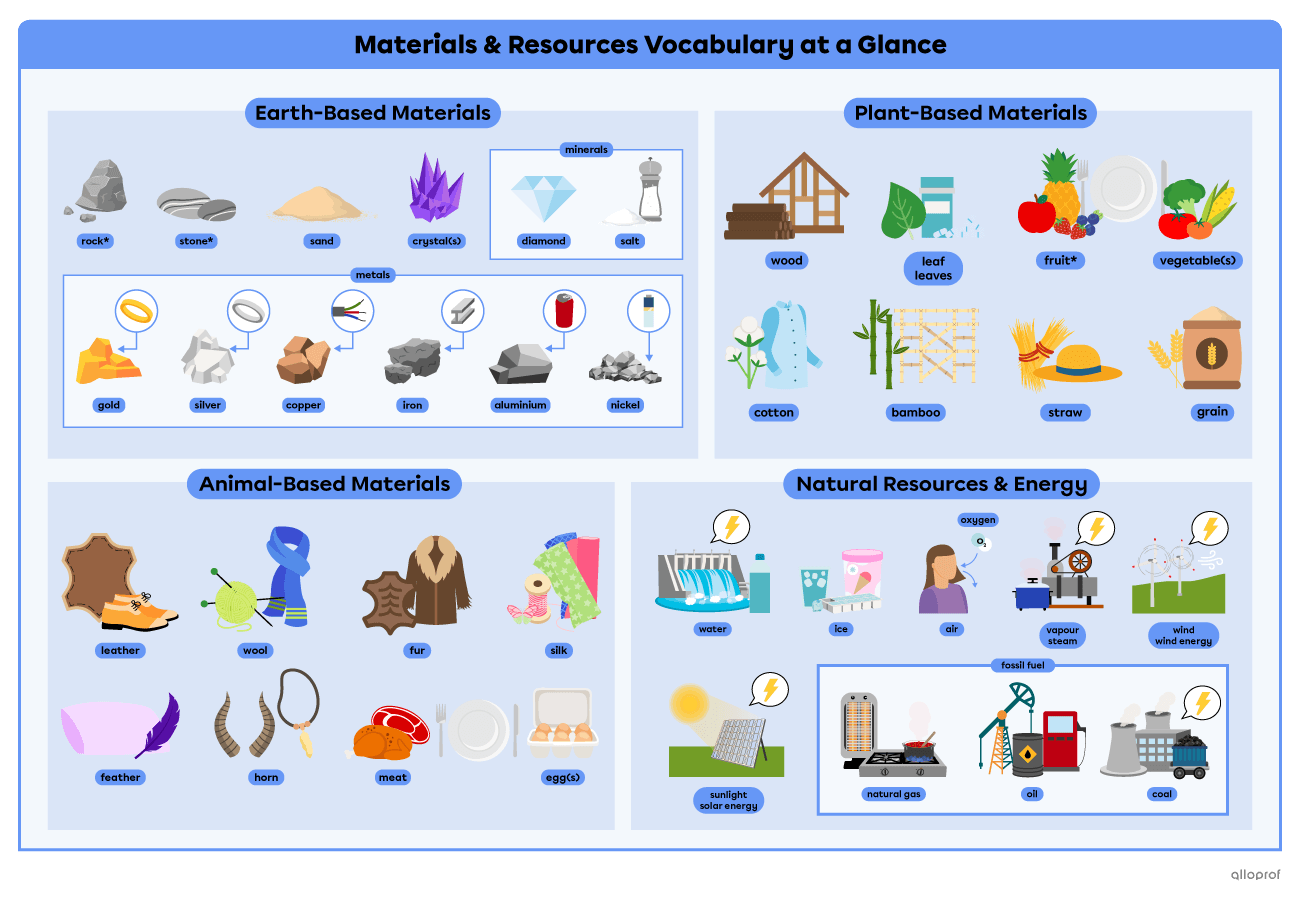
Materials & Resources Vocabulary at a Glance

Summary for materials and resources vocabulary.

Materials & Resources Vocabulary Exercise

(Coming Soon)

Advanced Materials & Resources Vocabulary

Advanced Earth-Based Materials

  • soil
    The top layer of earth. It is a natural material made of minerals, water, air and organic matter.
  • clay
    A heavy, sticky type of earth used to make bricks, pottery and tiles.
  • gravel
    A collection of many small, loose stones. Used for walkways, driverways and water control.
  • silt
    A fine dust-like material found at the bottom of rivers or lakes.
  • ore
    A mineral or rock that contains valuable minerals or metals.
  • uranium
    A radioactive metal used to create large amounts of energy.

Types of rocks

  • granite
    A very strong and heavy rock made from cooled magma (melted rock). Used as building stones and in monuments and countertops, etc.
  • limestone
    A soft rock formed from shells and animal remains. Used as building stones, an ingredient in cement and concrete, and to reduce soil acidity, among other things
  • marble
    A hard, smooth colourful rock formed from limestone. Used to make walls, floors, countertops, sculptures, etc.
  • sandstone
    A rock made of grains of sand tightly stuck together. Used as building stones and in glass manufacturing, etc.
  • slate
    A hard, grey rock that breaks into very thin, flat sheets. Used as roof tiles and an electrical insulator.
  • chalk
    A type of powdery white limestone. Used for writing and drawing, and reducing soil acidity.

Types of minerals

  • quartz
    A very hard, crystalline mineral. Used in watchmaking, glass-making, jewellery.
  • asbestos
    A mineral made of small, shot fibres with fireproof properties. Its use is now prohibited in many countries due to health risks.
  • graphite
    A soft, shiny mineral made of carbon. Used in pencil- making, battery- making, steel-making.
  • gemstone
    A beautiful, rare mineral that is cut and polished into a gem to make jewellery or decorations.
  • gem
    A cut, polished and shaped gemstone.
  • ruby
    A red, valuable gemstone. Used in jewelry and as a laser crystal.
  • emerald
    A green, valuable gemstone. Mostly used in jewellery.
  • agate
    A common mineral with colourful patterned stripes. Used in jewellery, carvings and beads.
  • garnet
    A common hard, abrasive mineral, famous for its dark red colour, but also found in other colours. Used in jewellery, sand blasting and as a water-jet cutter.
  • sapphire
    A valuable gemstone famous for its dark blue colour, but also found in other colours. Used in jewellery, watchmaking and electronic components.

Types of metals

  • lead
    A soft, heavy, dense metal. Used for radioactivity shielding and battery manufacturing.
  • zinc
    A shiny, bluish-white metal that does not rust easily. Used for coating other metals to prevent rust and to make alloys (brass, bronze).
  • cobalt
    A hard shiny grey metal. Used in battery- making, heat- resistant alloys and pigment for the colour blue.
  • platinum
    A dense, valuable silvery-white metal. Used in car exhaust systems and jewellery.

Advanced Plant & Animal-Based Materials

Plant-based materials

  • bark
    The outer layer that covers the trunk and branches of a tree. Used to make cork, medicine and paper.
  • resin
    A thick, sticky liquid that comes from certain plants and trees. Used to make glue, varnish and perfume.
  • sap
    A fluid that flows in plants and trees. Maple sap is used to make maple syrup.
  • amber
    Fossilized tree resin. Used to make jewelry and ornamentation.
  • timber
    Wood that comes from cut trees, ready to be used as a material for construction or making a variety of objects.
  • fibre (plant-based)
    Thin, hair-like strands of material from plants. Cotton plant fibres are used to make clothing.
  • flax
    A tall, slender plant with blue flowers. Its stem contains fibre used to make fabrics, like linen.
  • hemp
    A tall, fast-growing plant with strong fibres used to make rope, canvas and strong fabrics.
  • rubber
    A stretchy, flexible material made from the milky liquid found in certain tropical trees. Used to make tires, shoes and medical equipment.
  • cork
    Light, tough, and flexible material that comes from the thick bark of the cork oak tree. Used for wine stoppers, flooring and walls.
  • crops
    Plants grown by farmers in large quantities t for food, clothing or other resources.

Animal-based materials

  • wildlife
    Animals that live in the wild, free from humans.
  • livestock
    Animals kept on a farm or ranch, used for food (meat, milk, eggs), materials (wool, leather) or work (farming or transport).
  • fishery
    An organized area or business where fish and other sea creatures (like shrimp or lobster) are caught or raised to be used by humans.
  • hide
    The skin of a large animal that is treated for use as a material.
  • ivory
    A hard, smooth, white material that comes from the tusks of animals like elephants, walruses, and narwhals.
  • bone
    Hard, white piece of an animal skeleton. Used in the past to make tools, weapons and jewellery.
  • shell
    A hard outer layer that covers and protects an animal, like a seashell. Used to make jewellery, concrete and fertilizer.
  • beeswax
    A natural wax made by honeybees. Used to make candles, skincare products and lubricants.
  • fibre (animal based)
    Thin, hair-like strands of material from animals. Sheep hair is used to make wool.
  • biomass
    Organic material that comes from plants and animals. Used as a renewable energy source.
  • biofuel
    Fuel made from biomass.

Advanced Natural Resources & Energy

  • freshwater
    Water that contains very little or no salt, and is safe for humans, animals and plants to drink.
  • saltwater
    Water with a high concentration of salt, not drinkable. Used for fisheries, transportation and evaporated to make salt.
  • groundwater
    Water that is underground, below the surface of the Earth.
  • surface water
    Water that is on the surface of the Earth, like lakes, rivers and seas.
  • rainwater
    Freshwater from falling rain.
  • humidity
    Water vapour. Used for plant growth and to generate energy.
  • carbon dioxide
    An invisible gas in the Earth’s atmosphere. Essential food for plants to grow.
  • hydroelectricity
    Electricity made from the power of moving water.
  • tidal energy
    Energy generated by the rise and fall of an ocean (tide).
  • ocean currents
    The continuous movement of ocean water. Used for transportation, beneficial for fisheries and to power turbines to create energy.
  • geothermal energy
    Heat that comes from inside the Earth. Used to generate heat and electricity.
  • nuclear energy
    Powerful energy stored inside the centre of an atom. Used to generate electricity.

Environmental & Extraction Terms

  • resource
    Material found in nature that humans use to survive or to make things.
  • raw material
    A basic, natural substance that has not been changed or processed yet.
  • extraction
    The process of taking or pulling something out of the Earth.
  • mining
    The process of digging into the Earth to take out valuable minerals or metals.
  • quarrying
    The process of extracting stone, rock, sand or gravel from the surface of the Earth.
  • drilling
    The process of making a deep hole in the Earth to reach liquid or gas resources.
  • refining
    The process of removing unwanted parts from raw material, keeping only what is needed.
  • manufacturing
    The process of making products from raw materials.
  • recycling
    The process of turning waste materials into reusable materials to make products.
  • renewable
    Natural resources or materials that are naturally replaced over a short period of time. Meaning they will not run out.
  • non-renewable
    Natural resources or materials that exist in limited amounts and cannot be replaced.
  • sustainable
    Using resources wisely so that they last for future generations.
  • biodegradable
    Material that can naturally break down.
  • depleted
    A material or resource that has been used up almost entirely.
  • decay
    The process where dead plants or animals are broken down. A of natural recycling.
  • deforestation
    The clearing or cutting down of forests by humans over large areas.
  • conservation
    The protection and wise use of natural resources.

Exercise – Advanced Materials & Resources Vocabulary

'