How to help your child develop learning strategies

Article
Update : March 14, 2023

Learning strategies are tools designed to help kids improve their academic skills. In broad terms, they can help your child learn, memorize, and apply the concepts they’re taught in school.
Foster their autonomy

Your child needs to have a certain level of autonomy before they can effectively make use of learning strategies. You can help them become more autonomous by encouraging them to do the following:

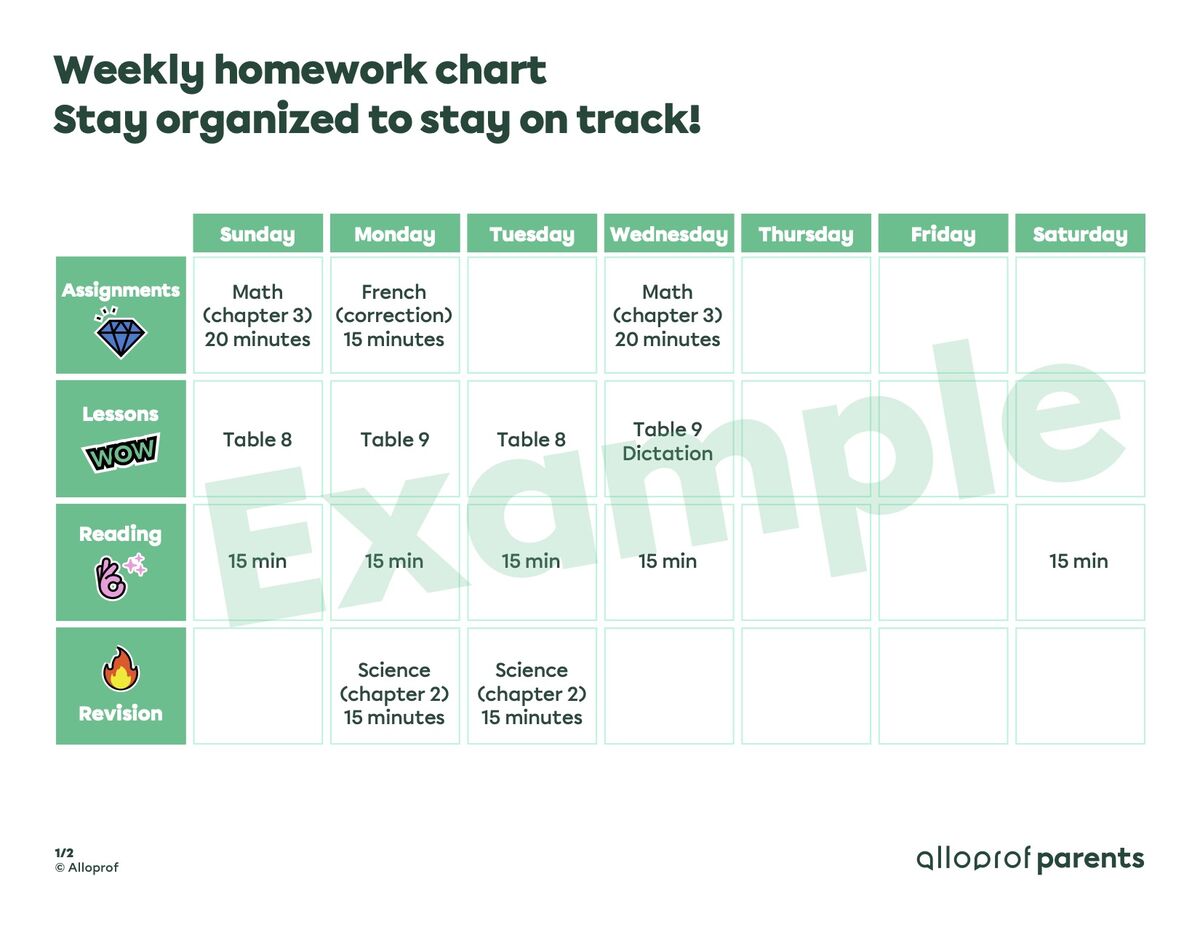
  • Use a homework chart
  • Use their agenda
  • Take the time to set goals
  • Meet deadlines
  • Ask for help when they need it
  • Remember to bring home their schoolbooks
  • Etc.

Encourage self-regulation

For learning strategies to be successful, your child needs to be able to self-regulate—in other words, manage their thoughts, emotions, and behaviour, both at home and at school. You can help them develop this skill by encouraging healthy habits:

Identify their ideal learning time and environment

Before your child decides on a particular learning strategy, it’s important for them to consider factors such as what time of day they’re most productive and what their ideal study environment looks like. These variables may affect not only their ability to concentrate, but also the quality of their work. Ask your child to think about the following questions:

  • “How much time do I have to complete this task?”
  • “Do I need a break?”
  • “Do I tend to be more productive after school or after dinner?”
  • “Have I chosen a workspace where it’s easy to stay focused?”
  • “Do I have all the materials I need?”
  • “Am I comfortable?”
  • Etc.

Help them improve their memory

By encouraging your child to adopt cognitive strategies (i.e., strategies related to understanding and retaining information), you can help them train their memory. Here are some examples:

  • Underscore useful and relevant information (write it down, underline it, draw a box around it, etc.)
  • Retain information through repetition (say it a few times out loud, write it down several times, do a series of related exercises, etc.)
  • Separate pieces of information according to their characteristics (identify the steps of a process, sort the information, etc.)
  • Look for elements that make it possible to establish relationships and compare information (look for differences, similarities, causes and effects, patterns, etc.)
  • Paraphrase information in your own words (rearrange sentences, summarize, draw analogies, etc.)
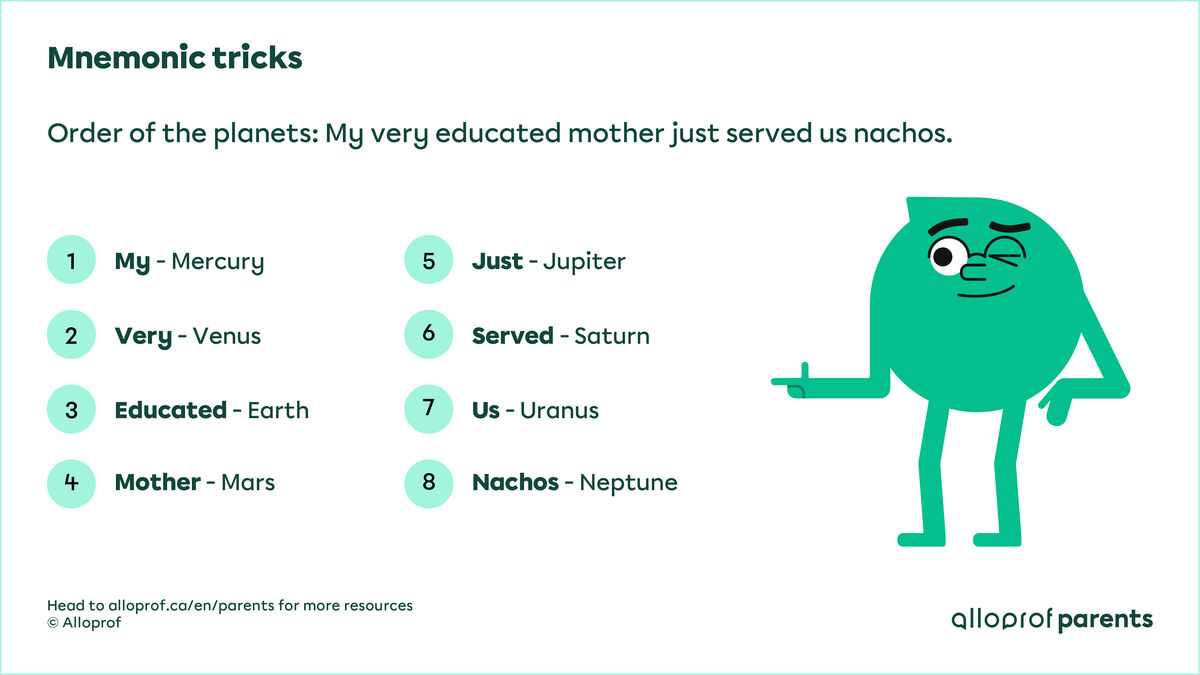
  • Organize information in sets and according to particular characteristics (group similar items, create mnemonic devices, make diagrams and timelines, etc.)
  • Etc.

Show them how to simplify tasks

There are also many learning strategies related to performance and productivity. Essentially, these are strategies that make it easier to complete a task. Here are some of the most common:

  • Assess the value of the information (compare reports, make estimates, etc.)
  • Verify the quality of the information (characterize it, confirm the absence or presence of elements related to the task at hand, etc.)
  • Express your understanding of the information (write, draw, verbalize, etc.)
  • Reformulate the information in simple terms (clarify an explanation, rewrite mathematical symbols in words, etc.)
  • Etc.
Tips and tools

Since memory is closely linked to learning strategies, consider helping your child improve their working memory.

Collaborators

Writting : Alloprof Parents' team

References