The best tools for helping your child learn French
Topic
Update : February 13, 2025
As a parent, it’s only natural to prioritize your child’s mastery of French. If you’re looking for the best resources to help your child learn French, this dossier is for you. Psst! Sign up to receive emails with practical tips on how to better support your child!

The fact that French is Quebec’s official language is only one of the many good reasons to learn it in school. That said, mastering French is bound to present children with a certain number of challenges. This is why we’ve compiled the most relevant tools and practical resources to help you support your child’s academic success.

Learning French can sometimes seem like an obstacle course. Fortunately, a few fun activities can help cultivate a passion for the language. We offer a selection of creative games to stimulate your youngster’s enthusiasm for French.

Is your teen less than excited about French? No problem! Spark their interest in this subject by offering appealing activities sure to captivate. Here are five ideas for piquing their curiosity!

Mathematics and French may seem like completely different disciplines, but in reality, they go hand in hand! Strong reading skills are crucial for understanding mathematical word problems. Here are five interdisciplinary activities that will help your child develop French and mathematics skills at the same time.

If your child suffers from dyslexia or dysorthography, try suggesting various amusing activities to stimulate their interest in reading and writing and, in turn, help with their homework.
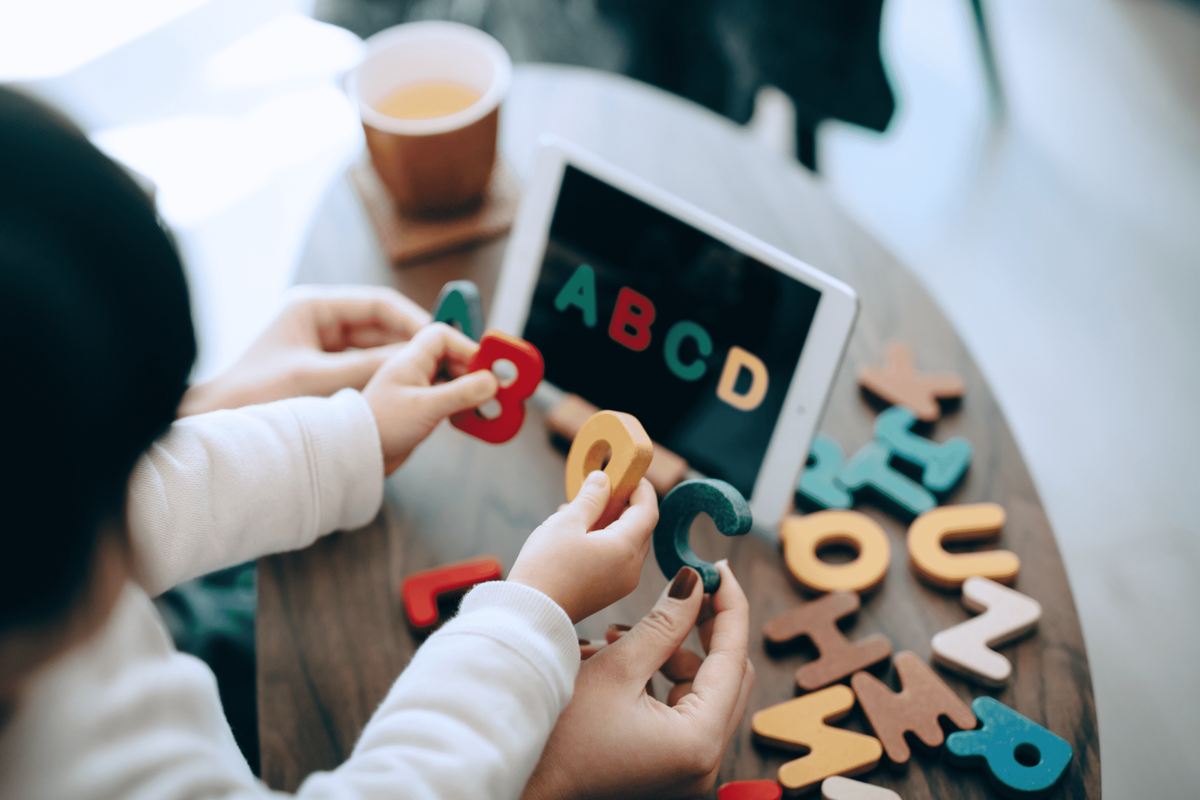
Dysorthography is a learning disability that affects the acquisition and mastery of spelling. It is not uncommon for this disorder to coexist with dyslexia. Children coping with dysorthography have difficulty associating letters with their corresponding sounds and forming mental representations of words. Read this blog post to learn more about this learning disability and discover strategies for supporting your child.

Dysphasia is a developmental language disorder that can make formulating sentences and understanding speech difficult. Fortunately, there are ways to support children with this disorder. Explore them here!

Assistive technology can be a great help to students with learning disorders. Those that facilitate reading and writing can help students participate fully at school.

Children see writing as an new way to interact with those around them and are often eager to master this skill. However, small obstacles may arise as learning progresses. Fortunately, there are a number of techniques for motivating your child to keep trying. Discover them in this article.

Adopting certain basic tactics can help your child develop fluent, neat handwriting. Find practical tips in this article.

Kids who learn the alphabet and begin playing with words and sounds at an early age are more likely to stay the course and do well in school. This article suggests ways to help your child become familiar with letters and sounds.

After learning to read and write, children are then tasked with synthesizing fictional texts. To succeed, they must not only understand the content but also analyze the text in depth to extract key elements. Here are some strategies to help you achieve these goals.

For many children, writing is a real headache. They may find mastering its many rules and exceptions a daunting task. Fortunately, there are a number of practical tips for helping children overcome writing difficulties. Check out these useful tips.

Learning to write without mistakes can be tough. Fortunately, there are simple, effective tips for helping your child improve their writing. Discover them in this article.

Writing a text can sometimes be complex as it requires precision and attention to detail. Children become increasingly independent as they advance through school using methods acquired through experience. They may still need parental guidance, however. Here’s a checklist to ensure you’re providing effective support.
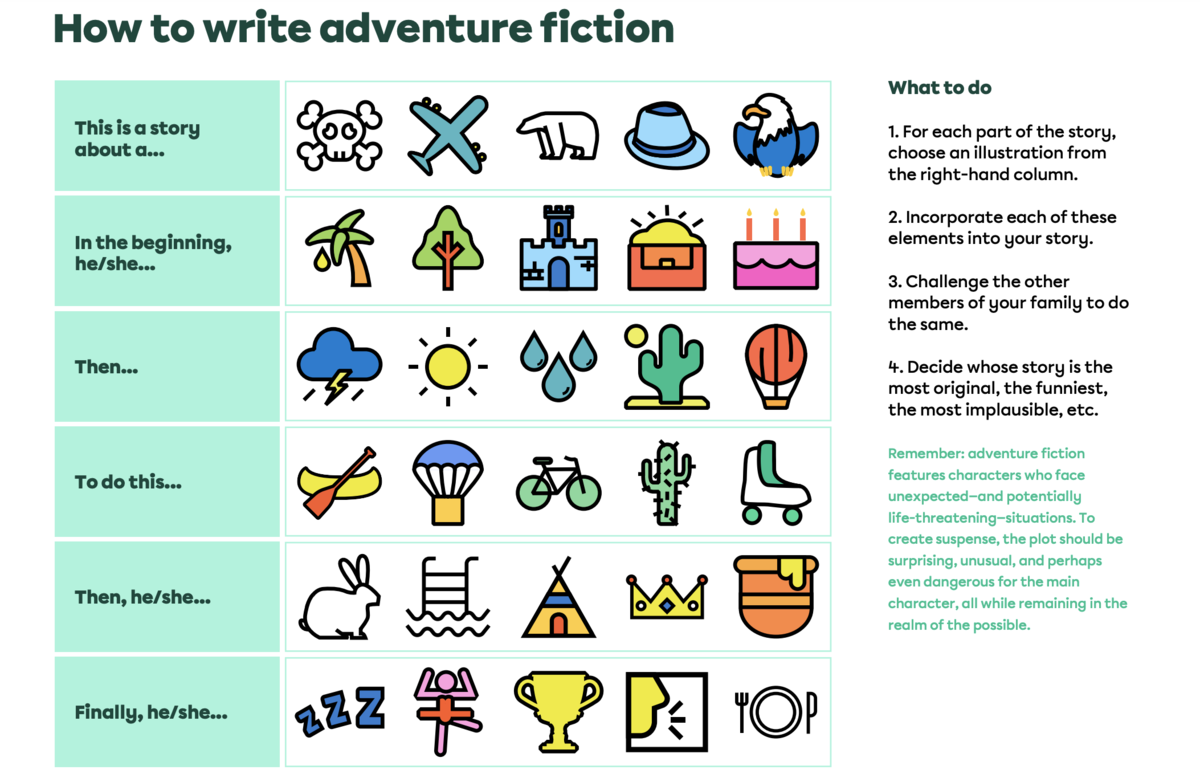
This game is the perfect way to unleash the imagination and overcome writer’s block. Your child will enjoy creating stories using different book genres.

Jean-François Quessy discovered how to help his child enjoy reviewing verbs. Curious to know how? He shares his best tips in this blog post.

The richness and colour of the French language is illustrated best by its homophones, words that are pronounced the same but differ in meaning and spelling. Check out five entertaining games sure to help your child master these subtleties.

Alloprof’s mandalas are charming illustrations that provide children with an engaging way to distinguish between the most common homophones. This activity is an easy, affordable, and relaxing way to learn lots of homophones!

Words are essential for not only academic success but also for sharing thoughts, emotions, and needs. Committing them to memory can be hard, however. Why not use games to help your child expand their vocabulary or memorize new expressions?
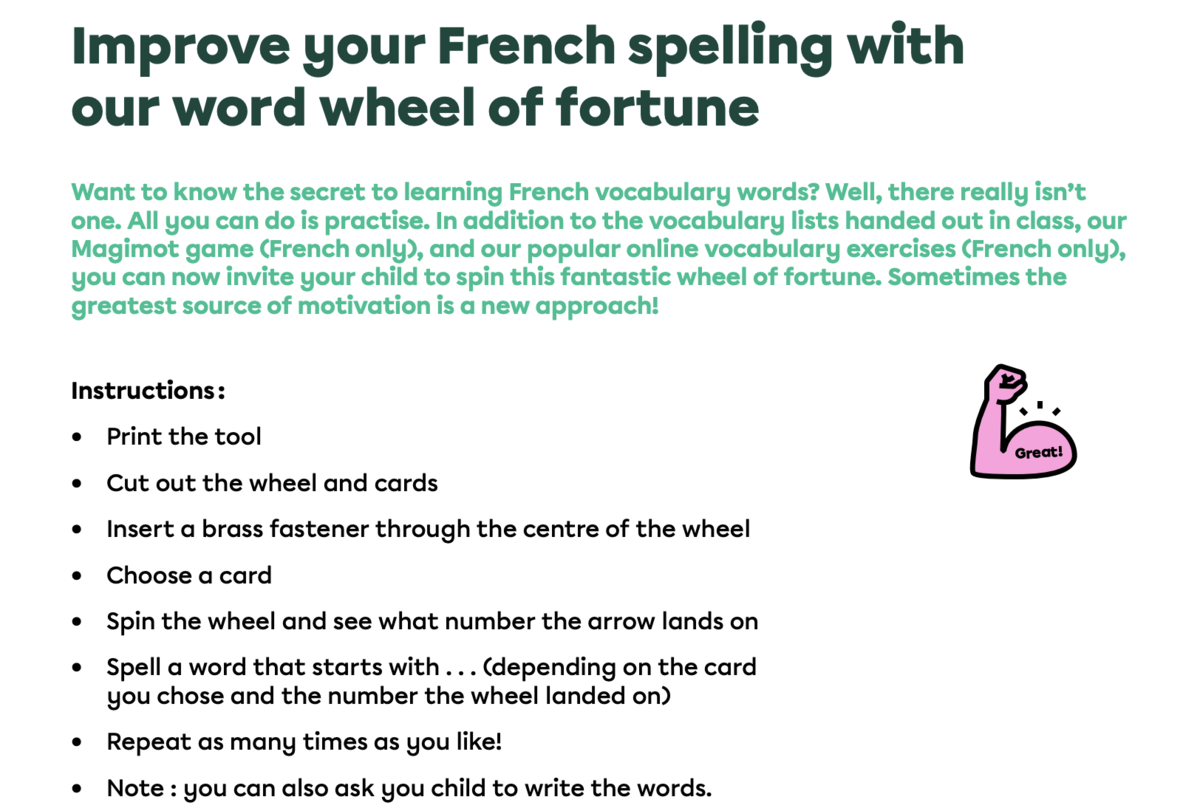
Regular practice is key to learning vocabulary words. In addition to word lists from class, Magimot, and our interactive online vocabulary exercise, introduce your child to this wheel of fortune. A bit of originality may be just what you need to rekindle motivation.

From the day they start elementary school, students are expected to add around 400 words to their vocabulary every year. If your child questions the value of regularly learning new vocabulary words, explain that having a large and diverse vocabulary increases their chances of academic success. Find more good reasons to learn new vocabulary words in this article.

Learning new words every week plays a vital role in children’s educational success. Turn this chore into a pleasant experience with five playful suggestions.
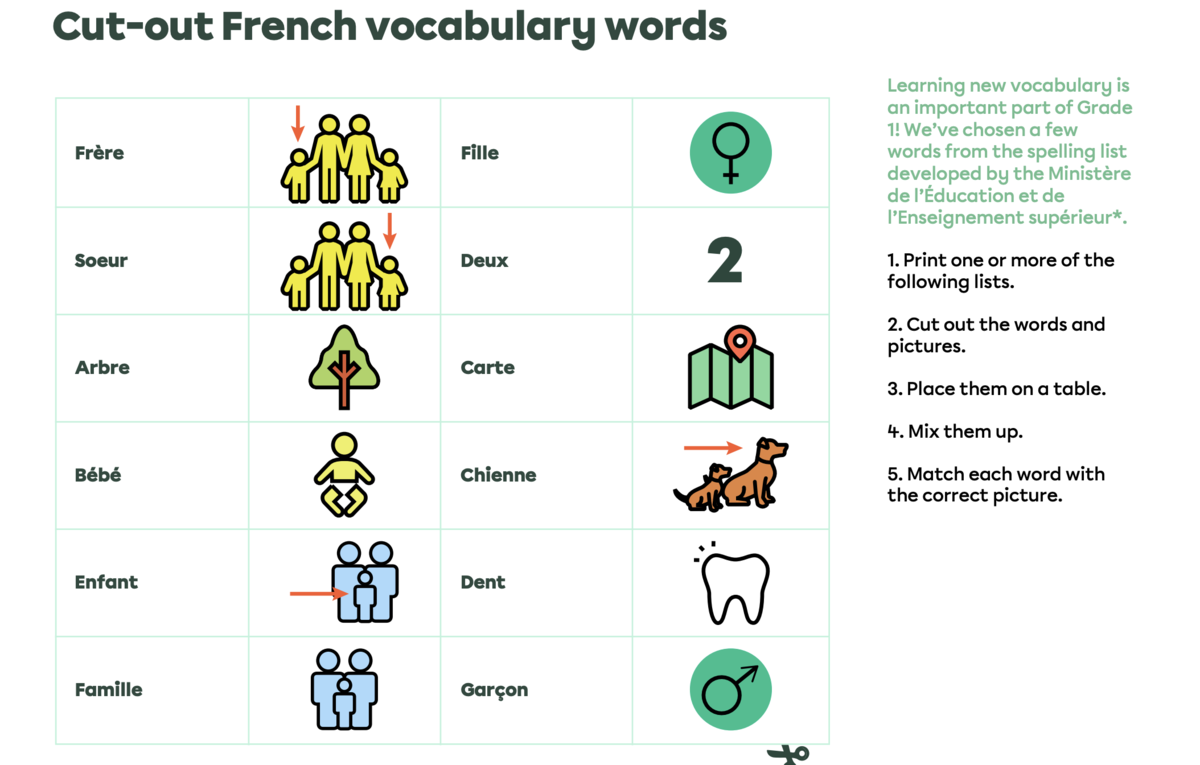
Learning new vocabulary words is an important part of Grade 1! Here are a few words from spelling lists developed by the Ministry. Your child will enjoy practising with this fun activity!

As the end of the school year approaches, Grade 4 students enroled in French-language schools across Quebec will take the French exam given by the Ministry, also known as the “ministry exam.” Your child may become anxious about their first official exam. Fortunately, we have some practical advice to help guide you through this challenging time.

At the end of Grade 6, all students in Quebec are evaluated in French (if enroled in French-language schools) and mathematics by the Ministère de l’Éducation et de l’Enseignement supérieur. Read this article to find out how to help your child prepare and have the best chance of succeeding.

Secondary II students enroled in French-language schools are required to take the compulsory French examination administered by Quebec’s Ministère de l’Éducation et de l’Enseignement supérieur. Here’s how you can help your child prepare.

Here are a few tips to help your teen prepare for the uniform French exam given by the Ministère de l’Éducation et de l’Enseignement supérieur at the end of high school.

Is your teen getting ready to graduate from high school and preparing for the uniform French as a Second Language (Enriched) exam given in Secondary V? This article offers practical advice for exam preparation.

As your child gets ready to graduate from high school, now’s the time to prepare for the uniform French as a Second Language exam (Core) program, given in Secondary V. Read this article for some useful tips on helping them pass this test.
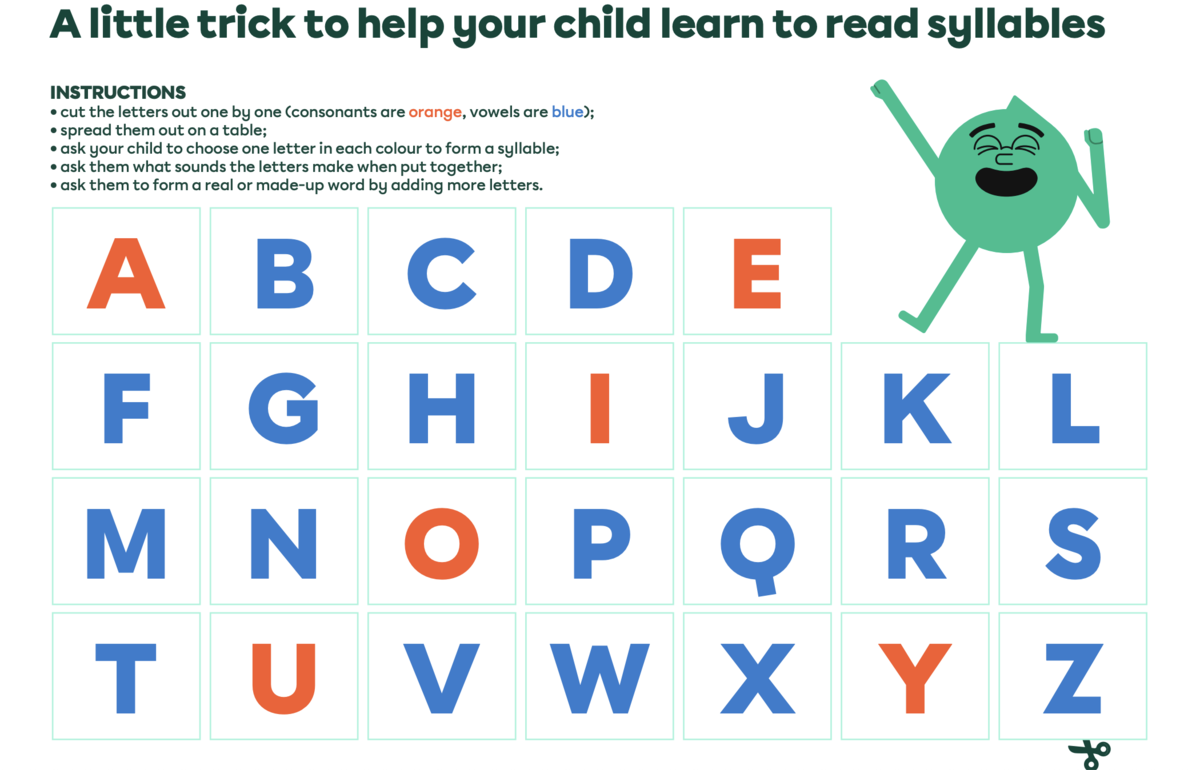
Use these cut-out letters to help your child practise syllables and start forming their first words.
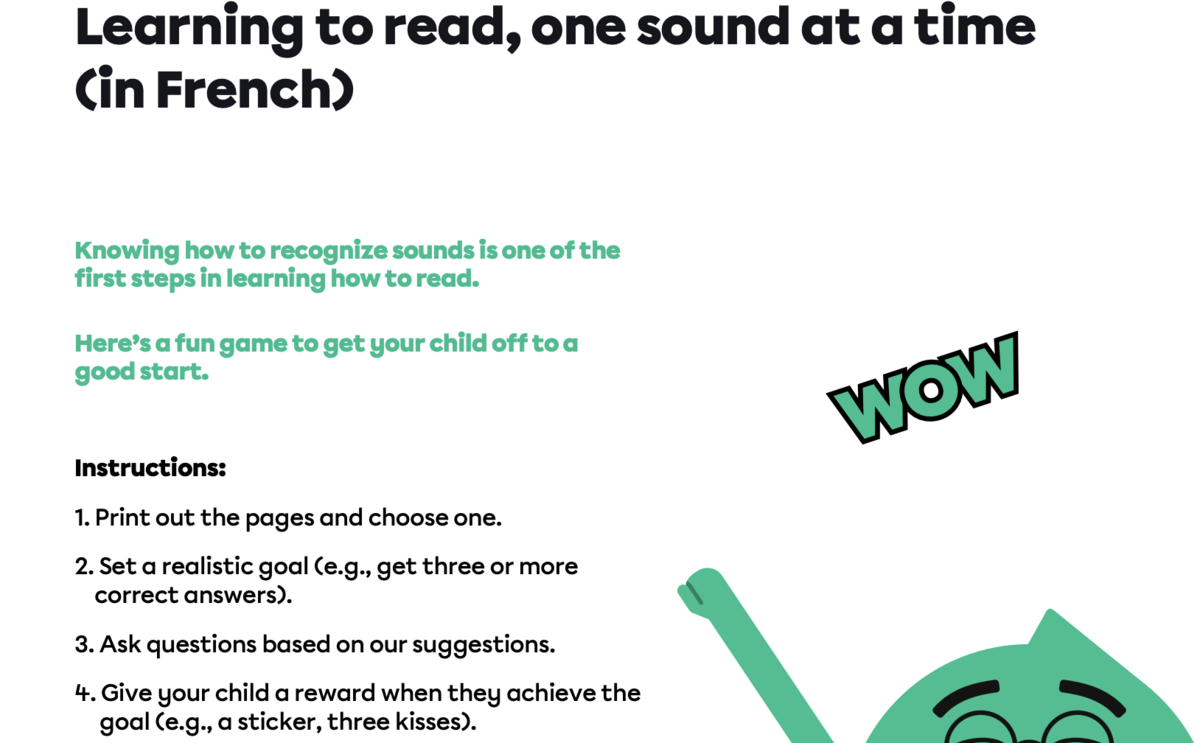
Use this tool to combine play with helping your child recognize sounds and gradually read for longer periods.

You don’t have to be an avid or gifted reader to instill a love of reading in your children. The most important thing is to reinforce discussions about the importance of reading with concrete actions.

While learning to read can be easy for some children, others may encounter obstacles. If your child is facing such difficulties, here are a few recommendations for offering support.

To excel at reading, it’s important that your child learns to read at a certain speed. That said, keep in mind that reading is not a speed contest. Hasty reading can hinder text comprehension. Here are a few tips to help your child achieve a balanced reading rate.

Make reading a fun, immersive quest. Here are some effective techniques for guiding your child through this adventure.

To grasp the meaning of a text and use various reading and writing techniques effectively, it’s crucial that your child be able to identify a text as either literary or expository. Here are a few tips to help them tell the difference.

Developing a love for reading is useful at school and in everyday life. In this article, you’ll learn how to help your teen perfect their reading skills.
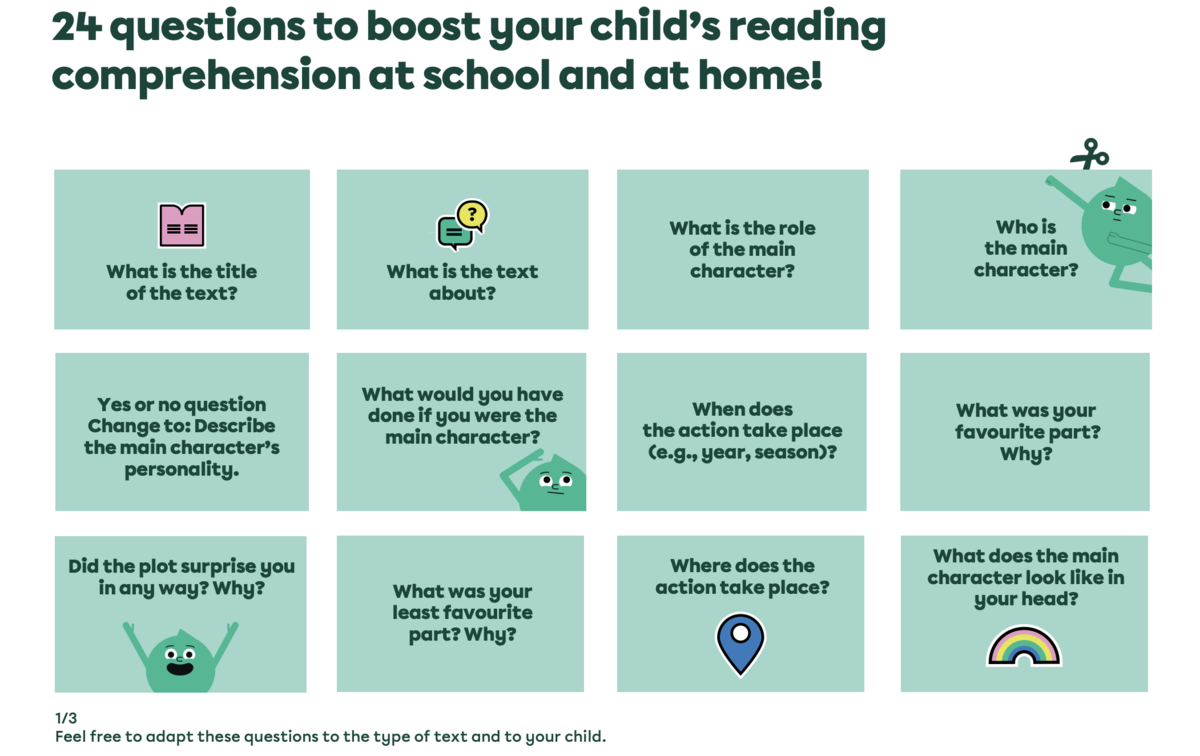
Have a blast while boosting your child’s reading comprehension with this card game.
Get everything you need to help your child year-round!