Subjects
Grades
 100%
100%
 100%
100% 100%
100% 100%
100%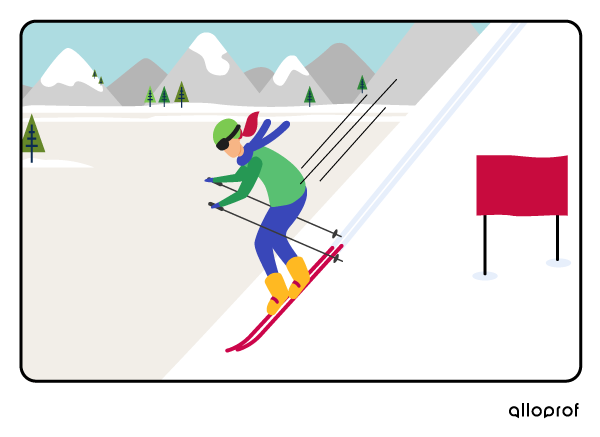 100%
100%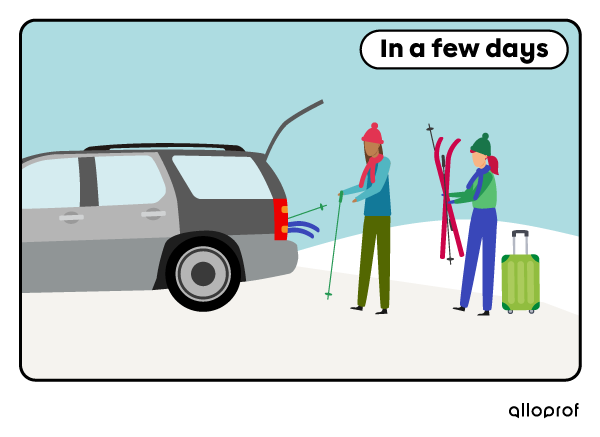
The simple future verb tense is used to express actions or states that begin and end in the future.
It is formed with will or going to.
The simple future is used for:
Promises → using will
Spontaneous actions or decisions → using will
Future facts → using will
Predictions → using will or going to
Plans → using going to
For more information on using will and going to, visit Verb Tense vs. Verb Tense.
Promises

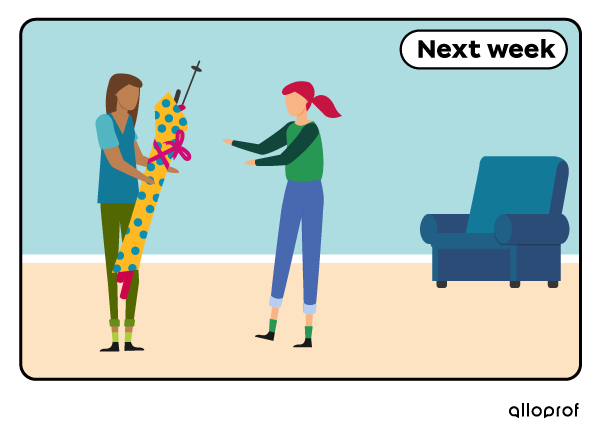
Benita will give a present to her best friend Sarah next week.
Spontaneous actions or decisions
As soon as Sarah sees it, she will jump with joy.
Future facts
Italy will host the 2026 Winter Olympic Games.
Predictions
They think Sarah will become a ski champion!
Plans
Benita and Sarah are going to try their new equipment in a few days.
Many keywords can help you recognize the future.
|
A word |
A word combination |
|||
|
next... |
in... |
this... |
within... |
|
|
|
|
|
|
|
Affirmative form with will |
|||
|---|---|---|---|
|
subject |
will |
+ |
verb |
|
Negative forms with will |
|||
|---|---|---|---|
|
subject |
will not won't |
+ |
verb |
|
Question Form with Will |
|||
|---|---|---|---|
|
will |
subject |
+ |
verb |
|
Affirmative forms with going to |
|||
|---|---|---|---|
|
I |
am going to 'm going to |
+ |
verb |
|
he |
is going to 's going to |
||
|
we |
are going to 're going to |
||
|
Negative forms with going to |
|||
|---|---|---|---|
|
I |
am not going to 'm not going to |
+ |
verb |
|
he |
is not going to 's not going to isn't going to |
||
|
we |
are not going to 're not going to aren't going to |
||
|
Question forms with going to |
||||
|---|---|---|---|---|
|
am |
I |
going to |
+ |
verb |
|
is |
he |
going to |
||
|
are |
we |
going to |
||