Strategies While Reading (2nd cycle primary)
Article
Update : August 27, 2025
Learning Together : An Initiative of the Institut des troubles d’apprentissage
Learning Together : An Initiative of the Institut des troubles d’apprentissage
Reading is a multidimensional skill (in French) and a key building block for academic success. It requires the use of multiple strategies to be done effectively. This sequence contains 18 activities designed to help your child develop these strategies. Throughout the sequence, we have provided either an informative text or a story to facilitate understanding (in French) of the strategy to be modelled. You will find them in the appendix. You can also use your child’s school texts for these activities, or when applying the related strategies to your reading routine.
This sequence contains the following activities:
Learn more on the Institut des troubles d'apprentissage
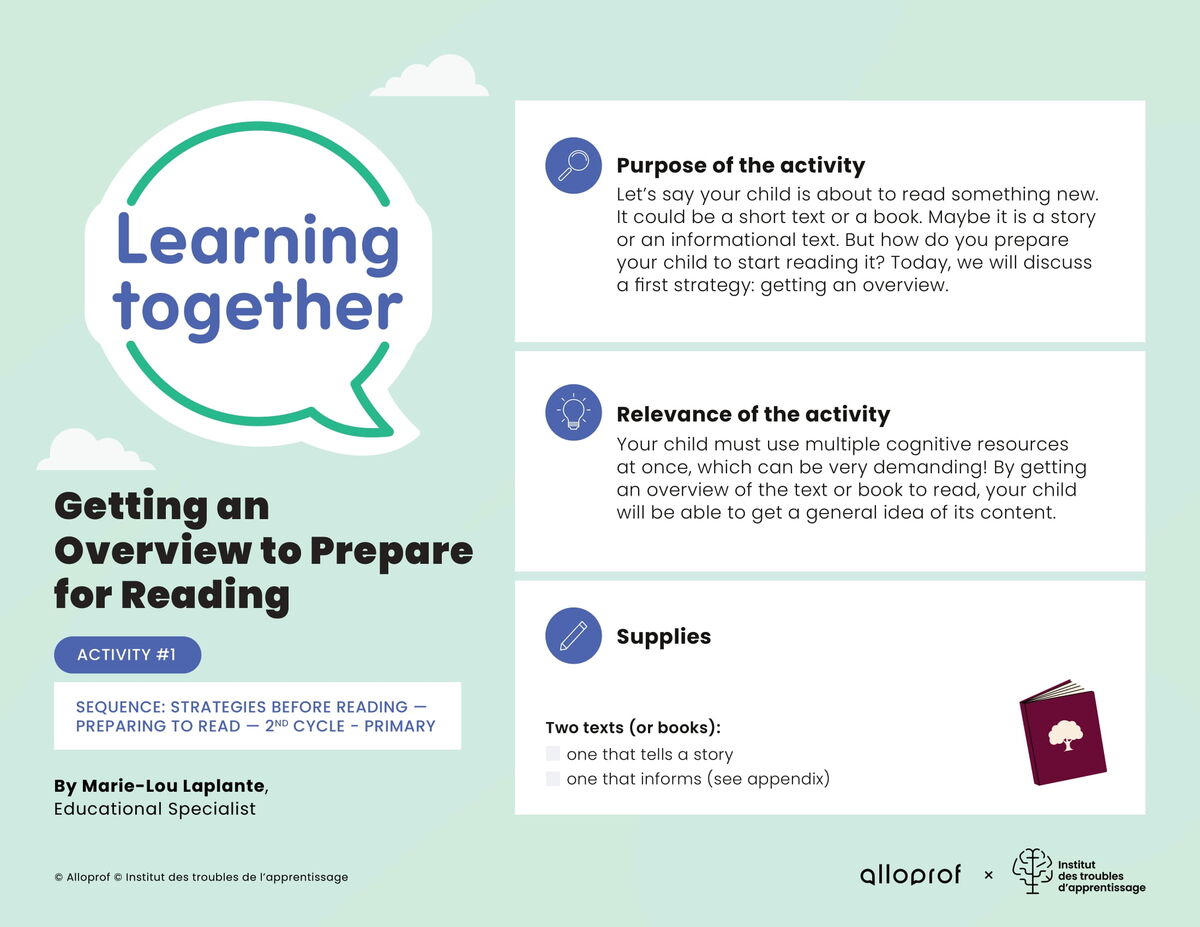
The purpose of this first activity is to teach your child to skim a text before reading it, whether it’s a story or an informative document. This fundamental strategy eases them into the reading process by helping them get a general idea of the text before diving in.
Supplies:
Rédaction : Marie-Lou Laplante, Educational Specialist
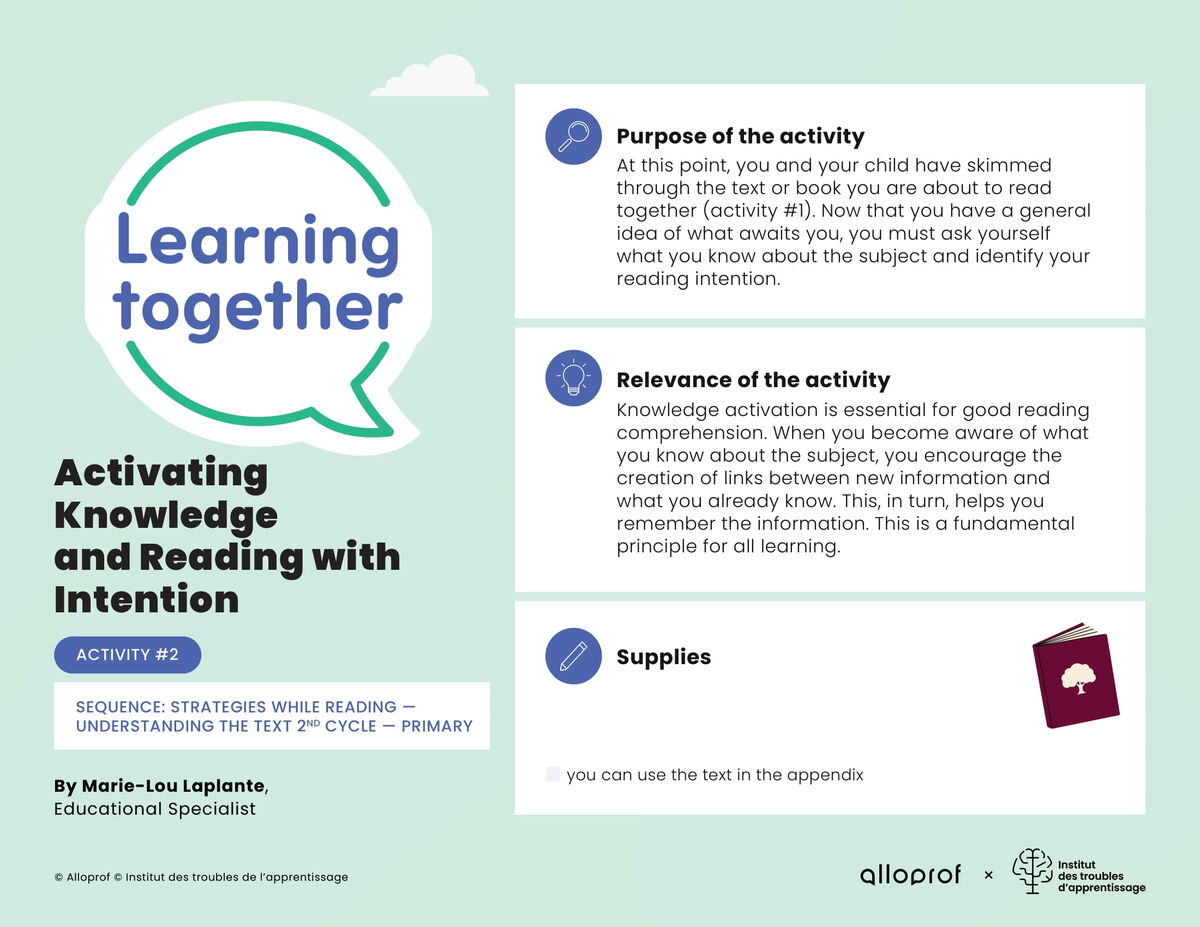
This is another preliminary step that should be done after your child has skimmed the text. The goal is for your child to think about what they already know and what they want to learn. By identifying what they already know about the subject, they can make connections between their existing knowledge and the new information, which will improve their reading comprehension.
Rédaction : Marie-Lou Laplante, Educational Specialist
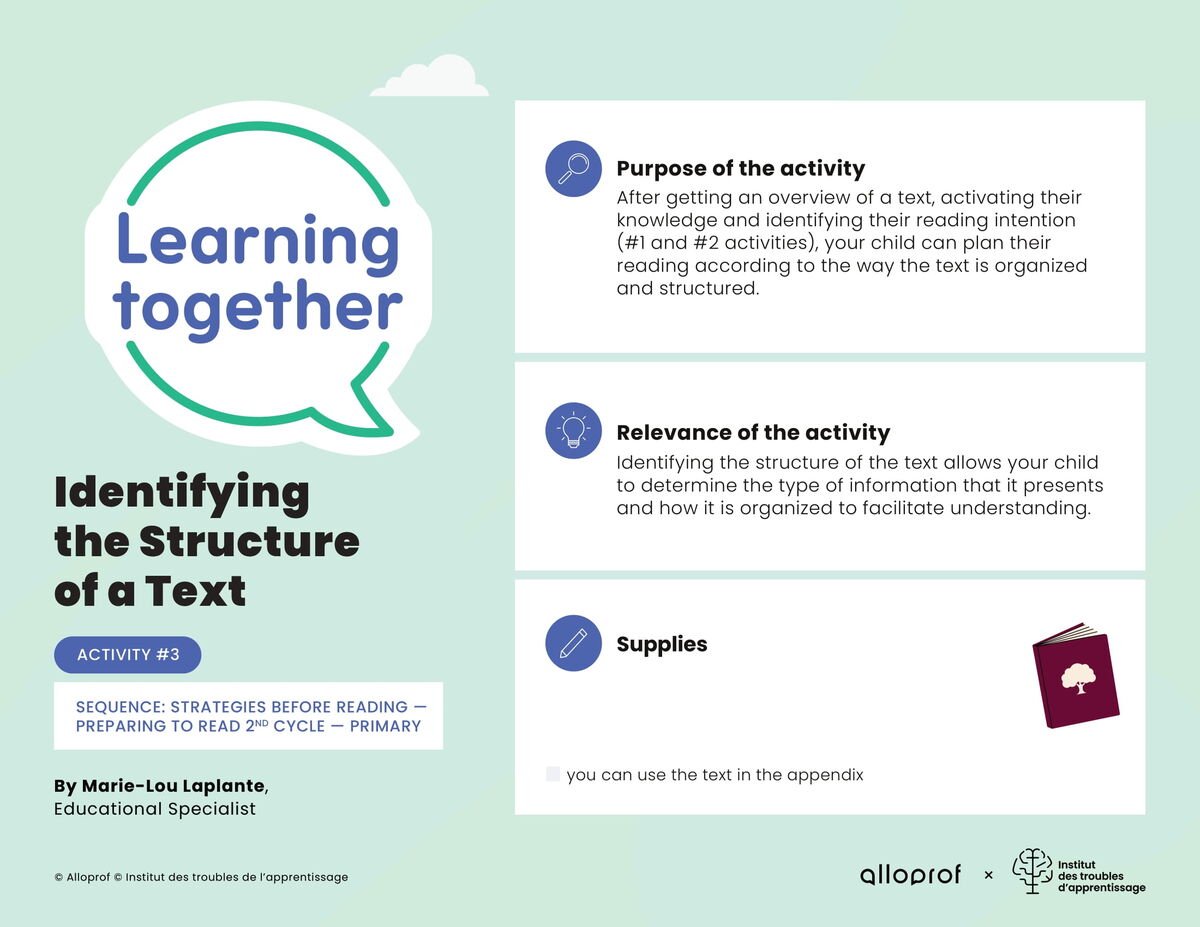
In this activity, your child plans their reading based on the organization and structure of the text. After skimming the text, activating their knowledge, and defining their reading intention, they can benefit from identifying the structure of the text to better understand how the new information is organized. This strategy can also be applied during and after reading to help your child find and remember information.
Rédaction : Marie-Lou Laplante, Educational Specialist
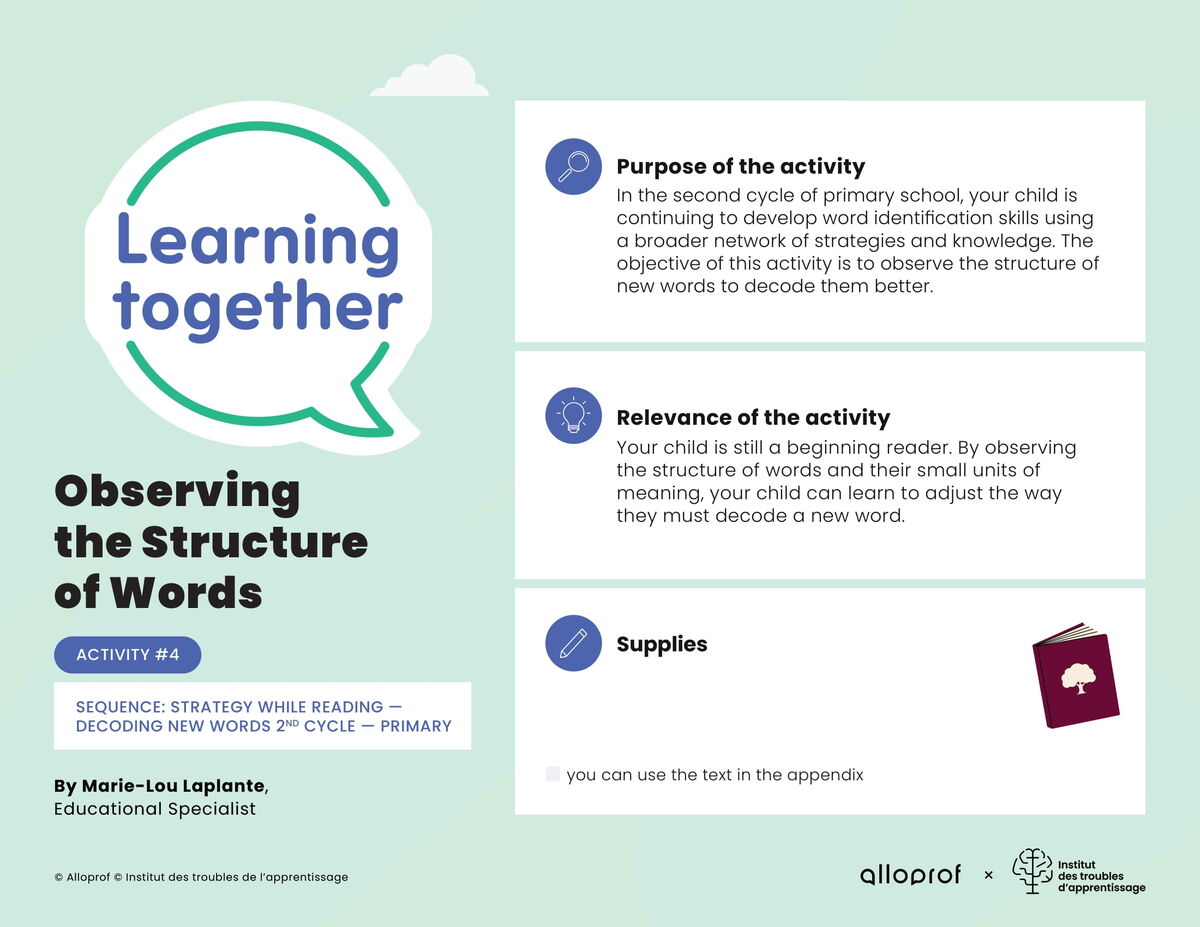
This activity teaches your child to decode words by focusing on their shape. This simple trick helps them recognize and understand words by examining their structure.
Rédaction : Marie-Lou Laplante, Educational Specialist
The purpose of this activity is to help your child to use the clues in a sentence to identify words and check their understanding. This allows them to draw connections between words they understand orally and how they are written.
Supplies:
You can complete this activity using either of the following:
Rédaction : Marie-Lou Laplante, Educational Specialist
When your child uses context to anticipate the meaning of unfamiliar words, it enhances their reading comprehension. This often intuitive skill plays an important role in reading fluency. In this activity, your child learns how anticipating the meaning of new words can help them get a general idea of a text.
Supplies:
You can complete this activity using either of the following:
Rédaction : Marie-Lou Laplante, Educational Specialist
Following activities 4 to 6, which explore how to recognize words and anticipate their meaning, this worksheet focuses on interpreting punctuation. Paying attention to punctuation can help your child understand individual sentences, which is essential for understanding a paragraph or text as a whole.
Supplies:
You can complete this activity using either of the following:
Rédaction : Marie-Lou Laplante, Educational Specialist
This activity is designed to show your child how graphic elements such as headings, subheadings, bold or italicized words, and tables and graphs can help them identify the main ideas in a text. These visual cues draw attention to key concepts and make it easier to understand more complex sections of the text.
Supplies:
You can complete this activity using either of the following:
Rédaction : Marie-Lou Laplante, orthopédagogue, pour l’Institut TA
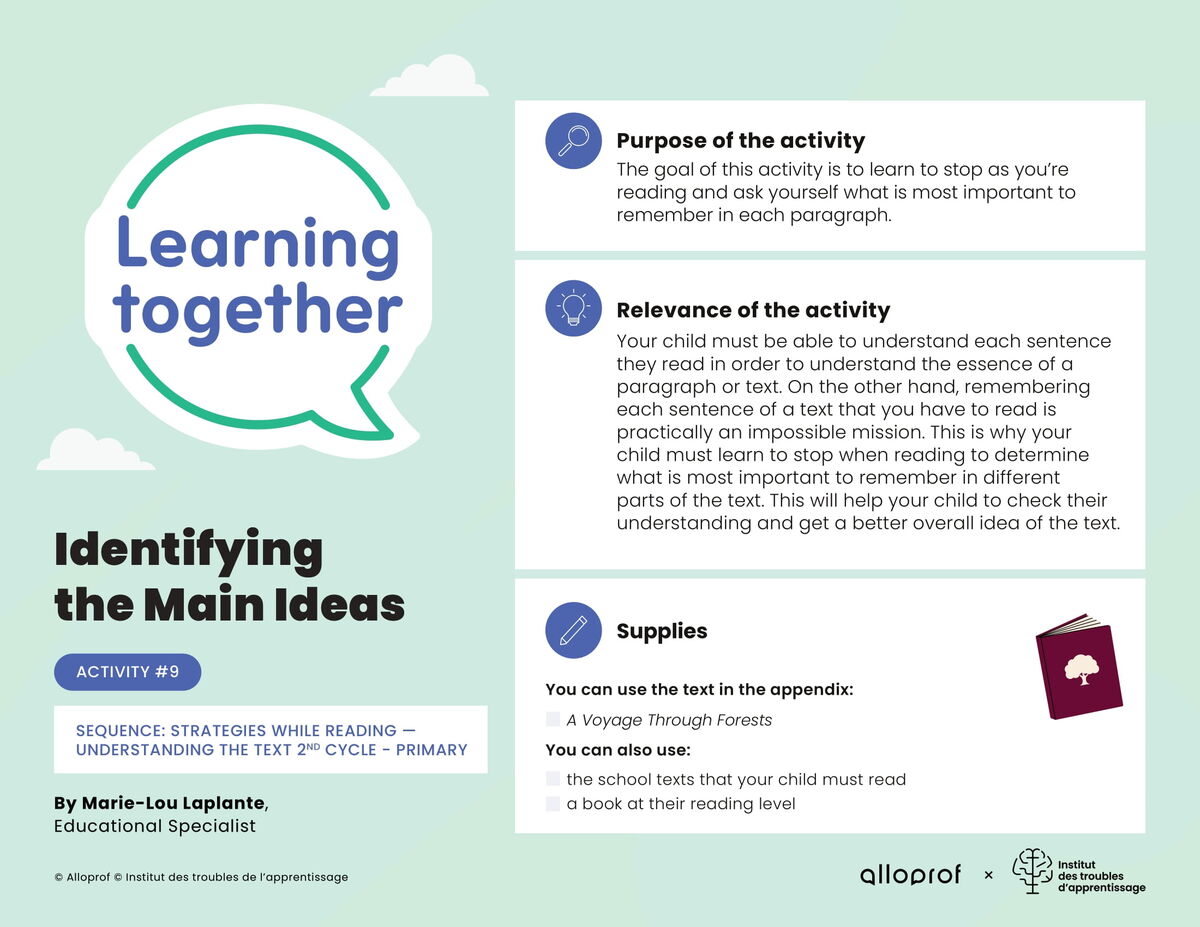
This activity is designed to encourage your child to stop and think while reading to determine the most important information in each paragraph. To understand a text, it’s more useful to identify the main ideas than to try to remember every sentence. This strategy improves not only reading comprehension (link in French) but also the ability to synthesize and develop a mental picture of the material.
Supplies:
You can complete this activity using either of the following:
Rédaction :Marie-Lou Laplante, Educational Specialist
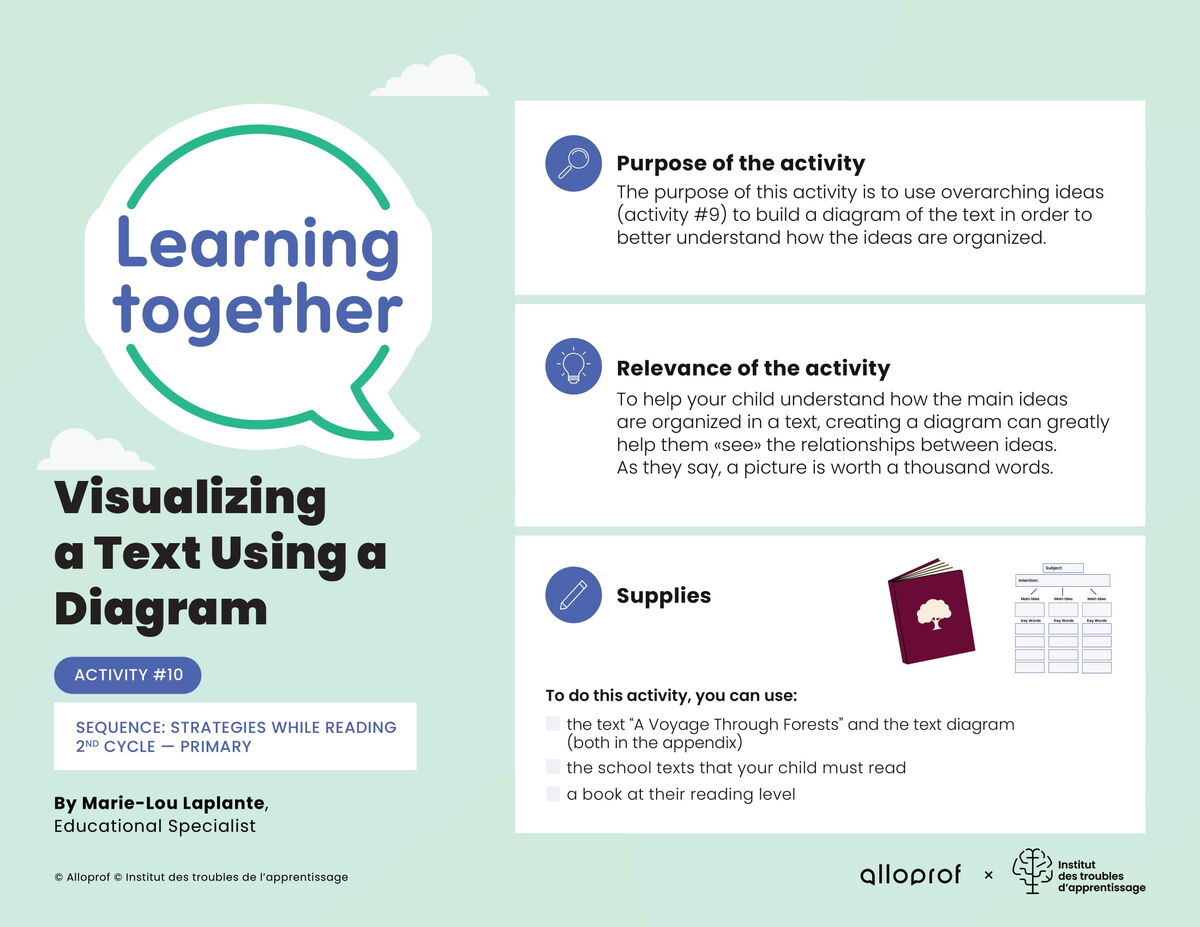
In this activity, your child draws a diagram using the main ideas they’ve identified to deepen their understanding of the text. Drawing a diagram improves their understanding by helping them visualize the relationships between ideas—an illustration of the adage that a picture is worth a thousand words.
Supplies:
You can complete this activity using either of the following:
Rédaction : Marie-Lou Laplante, Educational Specialist
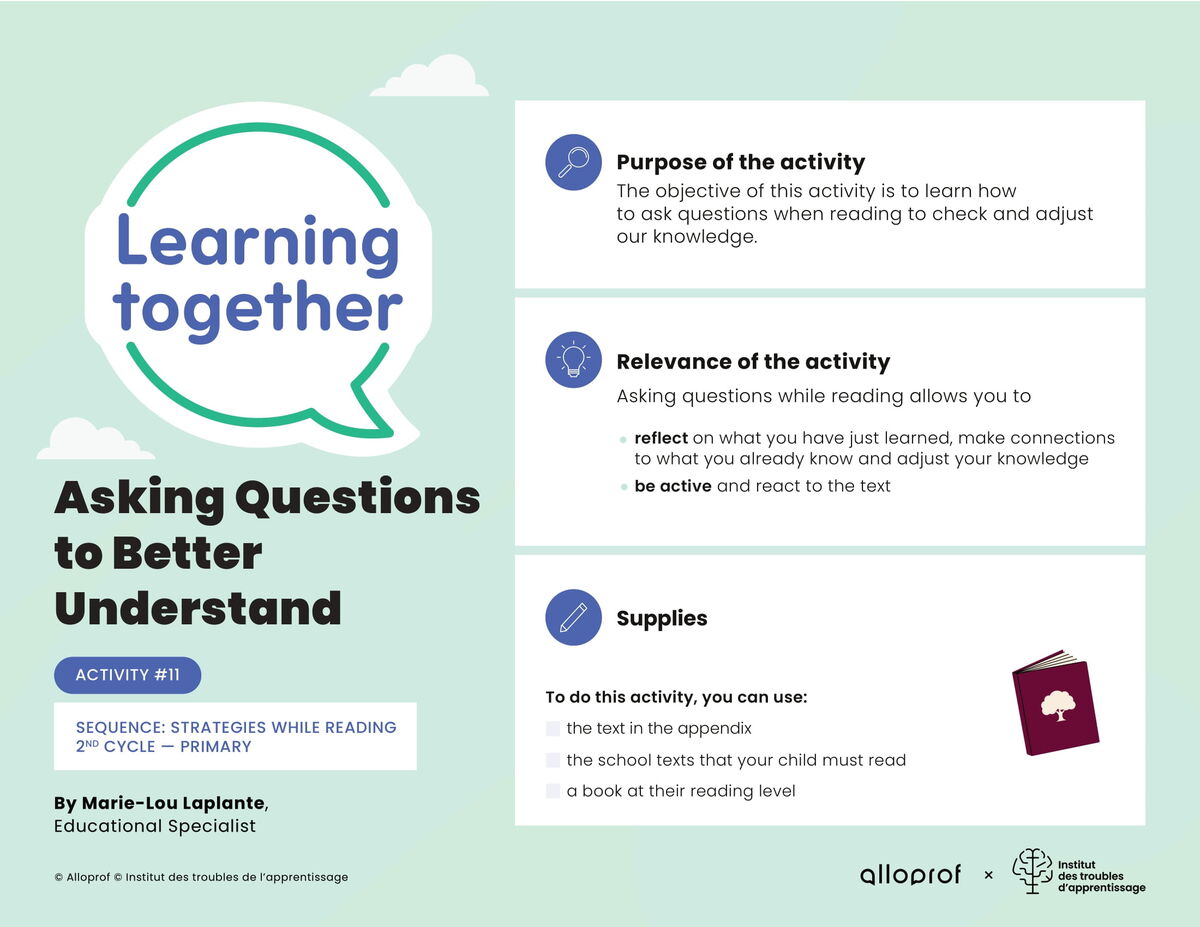
Getting into the habit of asking questions when they read allows your child to make connections with what they already know and to adjust their understanding accordingly. This reflex also turns them into a more active reader, which will help them foster a love of reading.
Supplies:
You can complete this activity using either of the following:
Rédaction : Marie-Lou Laplante, Educational Specialist
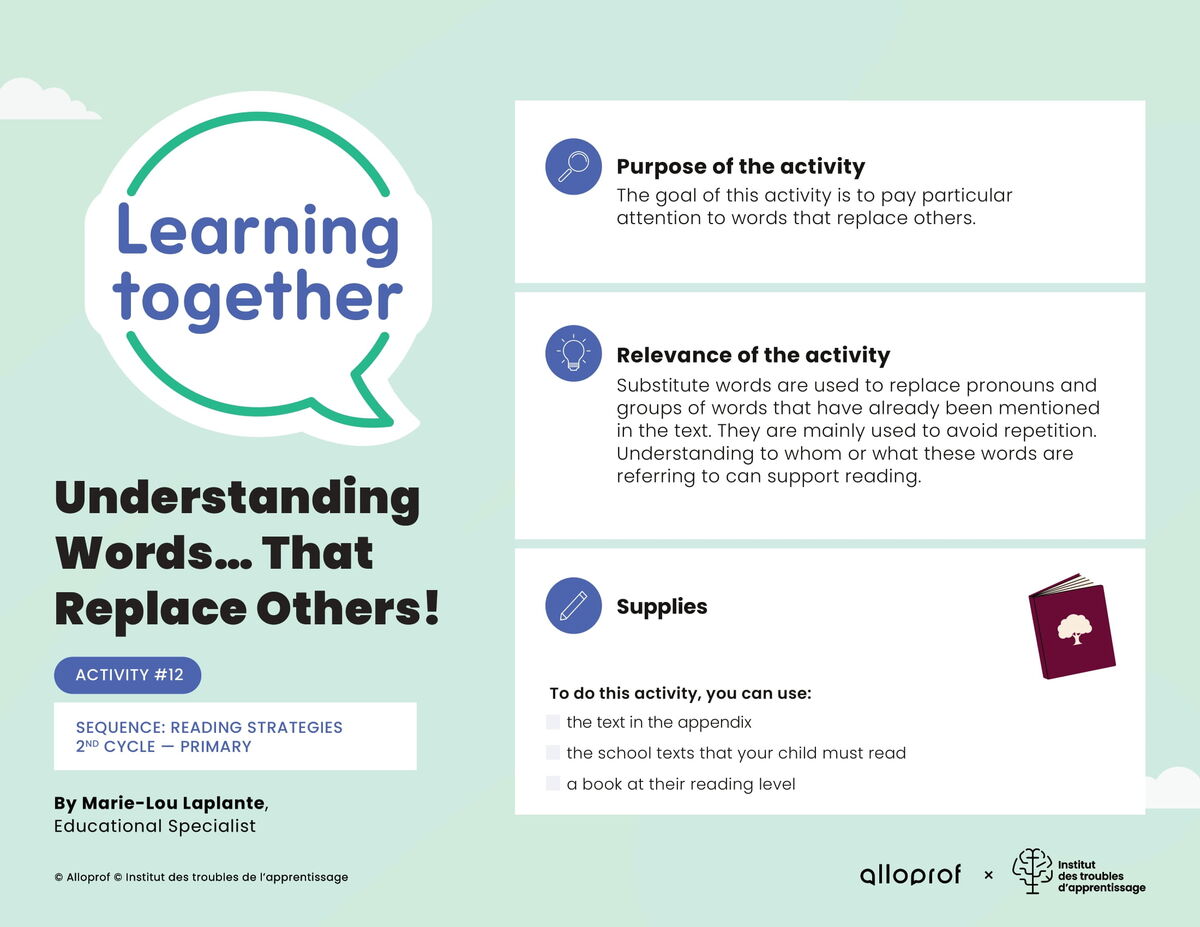
Learning to spot and understand words that replace others helps your child follow the flow of ideas in a text. Often used to avoid repetition, these substitution words refer to pronouns or groups of words previously mentioned in the text. Knowing what or whom these words refer to helps your child clarify and reinforce their overall understanding of the text.
Supplies:
You can complete this activity using either of the following:
Rédaction : Marie-Lou Laplante, Educational Specialist
Learning to identify transition words in a text helps your child understand how elements and ideas are connected. Although these words are often taught in later grades, getting the hang of them now will make it easier for your child to see how ideas are put together, which will improve their reading comprehension.
Supplies :
You can complete this activity using either of the following:
Rédaction : Marie-Lou Laplante, Educational Specialist
Being able to deduce the meaning of new words from similar words in the same family is essential to understanding a text. Encountering and deciphering the meaning of unfamiliar words not only enriches your child’s vocabulary, but also improves their ability to understand the texts they read.
Supplies :
You can complete this activity using either of the following:
Rédaction : Marie-Lou Laplante, Educational Specialist
The aim of this exercise is to teach your child to understand and use inferences when reading. Learning to make inferences will help them read between the lines and deduce information that isn’t explicitly mentioned, based on prior knowledge and clues within the text.
Supplies :
You can complete this activity using either of the following:
Rédaction :Marie-Lou Laplante, Educational Specialist
While there are many strategies for improving comprehension during reading, recall helps assess what information has been retained after reading. Recall is a key indicator for checking your child’s comprehension after they read a text.
Supplies:
You can complete this activity using either of the following:
Rédaction : Marie-Lou Laplante, Educational Specialist
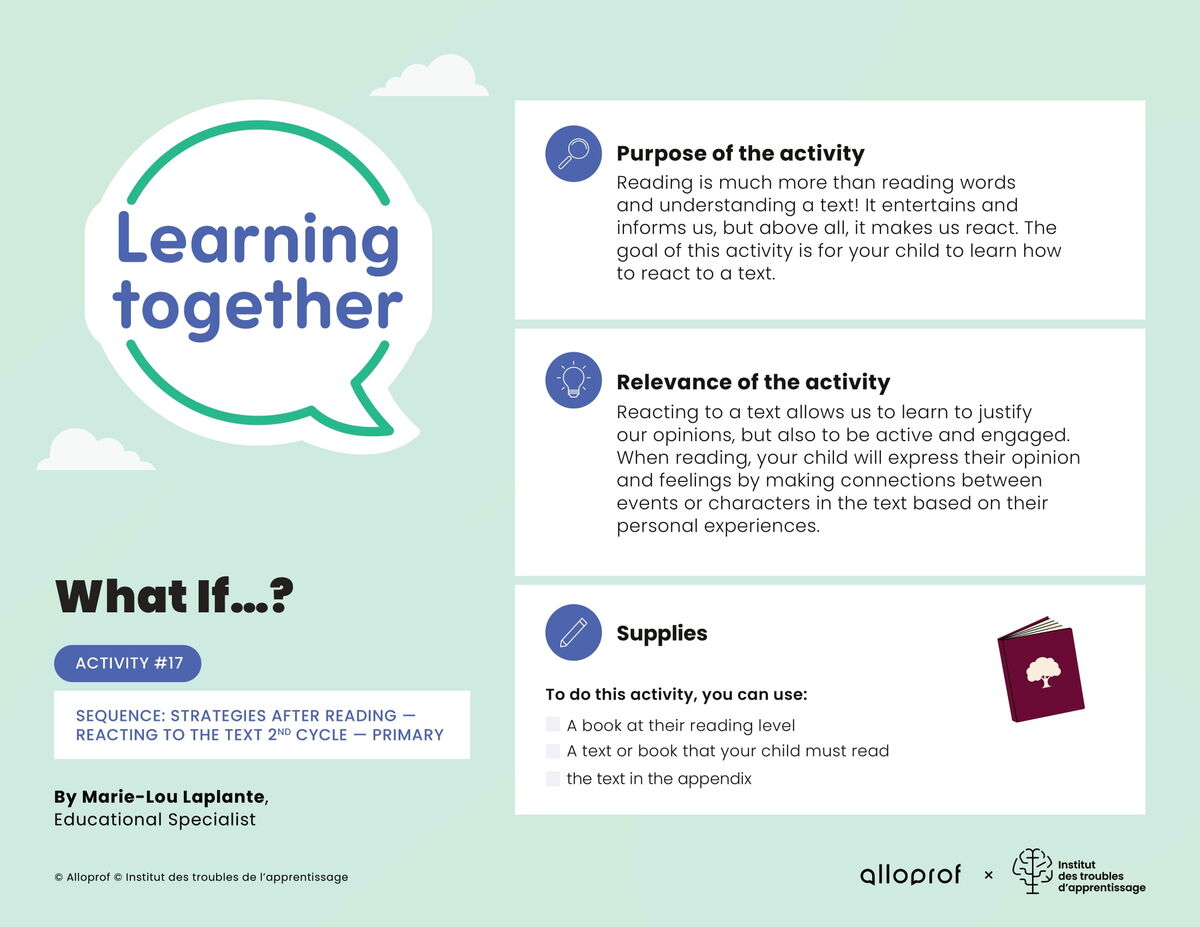
Active reading involves engaging with a text at the emotional and intellectual level, not simply understanding what the words mean. The aim of this activity is to help your child express their opinions and emotions in response to what they read by connecting their own experiences with events or characters in the text.
Supplies:
You can complete this activity using either of the following:
Rédaction : Marie-Lou Laplante, Educational Specialist
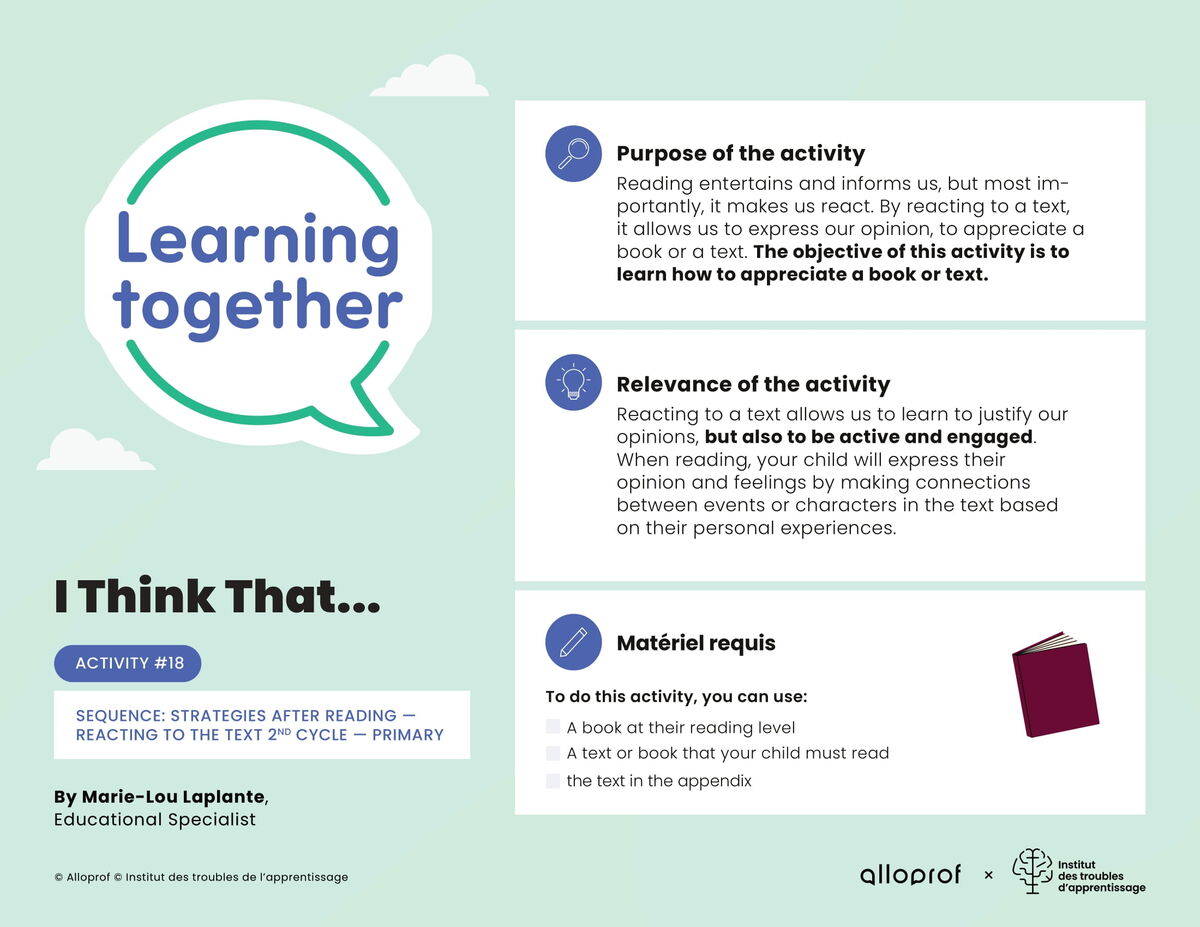
Reading is more than a source of entertainment and knowledge; it’s an interactive experience where you can express your thoughts and feelings. This activity encourages your child to share their opinion and evaluate their reading experience by making connections between the text and their own experiences. Actively reflecting on their opinion of a text keeps them more engaged and contributes to a more thoughtful and personal reading experience.
Supplies:
You can complete this activity using either of the following:
Rédaction : Marie-Lou Laplante, Educational Specialist