Questioning – Reading Strategies

Concept sheet | English Language Arts

What Is the Questioning Strategy?

The questioning strategy is asking yourself questions about the text to better understand it.
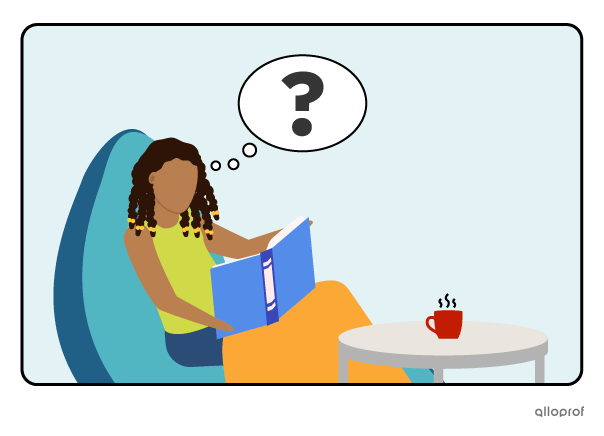
A person reading a book asking questions.

Questioning Process: Why Do We Ask Questions?

Ask questions about the text

Before reading

• To get ready to read

• To evaluate interest

• To evaluate reading difficulty

• To evaluate the relevance of reading a text

During reading

• To check comprehension

• To understand better

• To stay engaged

After reading

• To analyze the text

• To evaluate the text

• To evaluate the information gained 

• To draw conclusions

Questioning at a Glance

Summary of the questioning reading strategy.

Examples of Questions to Ask

Before Reading

  • What will the text be about?
  • What do the title, headings and visuals tell me about the text?
  • What do I already know about this topic?
  • What type of text is this?
  • What literary genre is this story?
  • What can I expect from this genre or text type?

During Reading

  • How well do I understand the information?
  • Why did the character act this way?
  • Why is this happening?
  • What will happen next?
  • What does this word/expression mean?
  • What are the themes in this story?
  • Where/when does the story take place?
  • What connections can I make between the text and myself?
  • What connections can I make between the text and other texts?
  • What connections can I make between the text and the world around me?

After Reading

  • What did I learn from the text?
  • How well were my expectations met?
  • How can I summarize the text?
  • What questions do I still have?
  • How right were my predictions?
  • What is the message of the story?
  • What was the author’s intention?
  • How does it connect to the world around me?
  • How do I feel about this text?

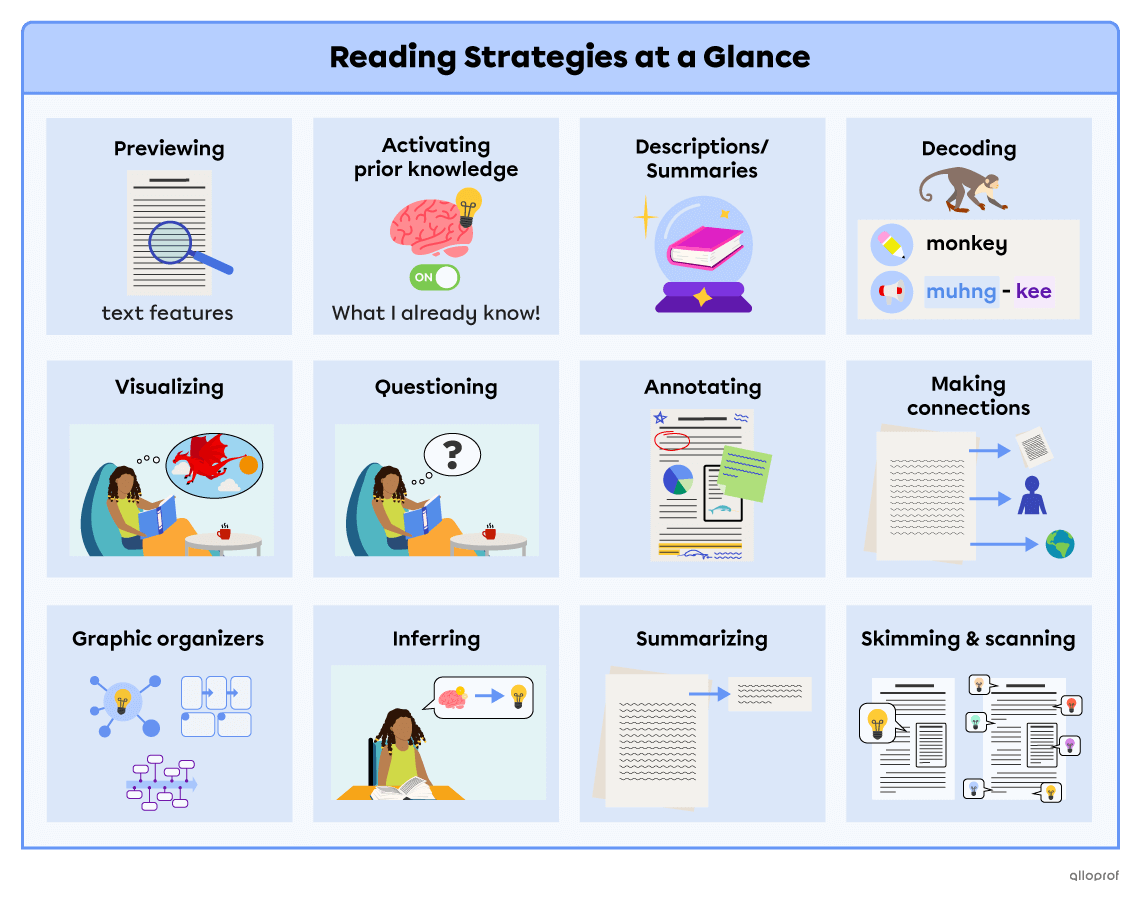
Reading Strategies at a Glance

Summary table of the 12 reading strategies: previewing, activating prior knowledge, making predictions, decoding, visualizing, questioning, annotating, making connections, graphic organizers, inferring, summarizing and skimming & scanning.