Inferring – Reading Strategies

Concept sheet | English Language Arts

What Is Inferring?

Inferring refers to drawing conclusions by combining clues from the text and your own knowledge. It means figuring out what the text is implying or “reading between the lines.”

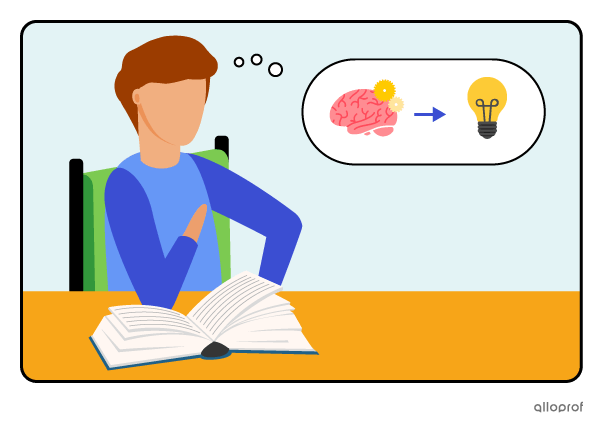
A speech bubble above a reader showing a brain with a gear and a lightbulb.

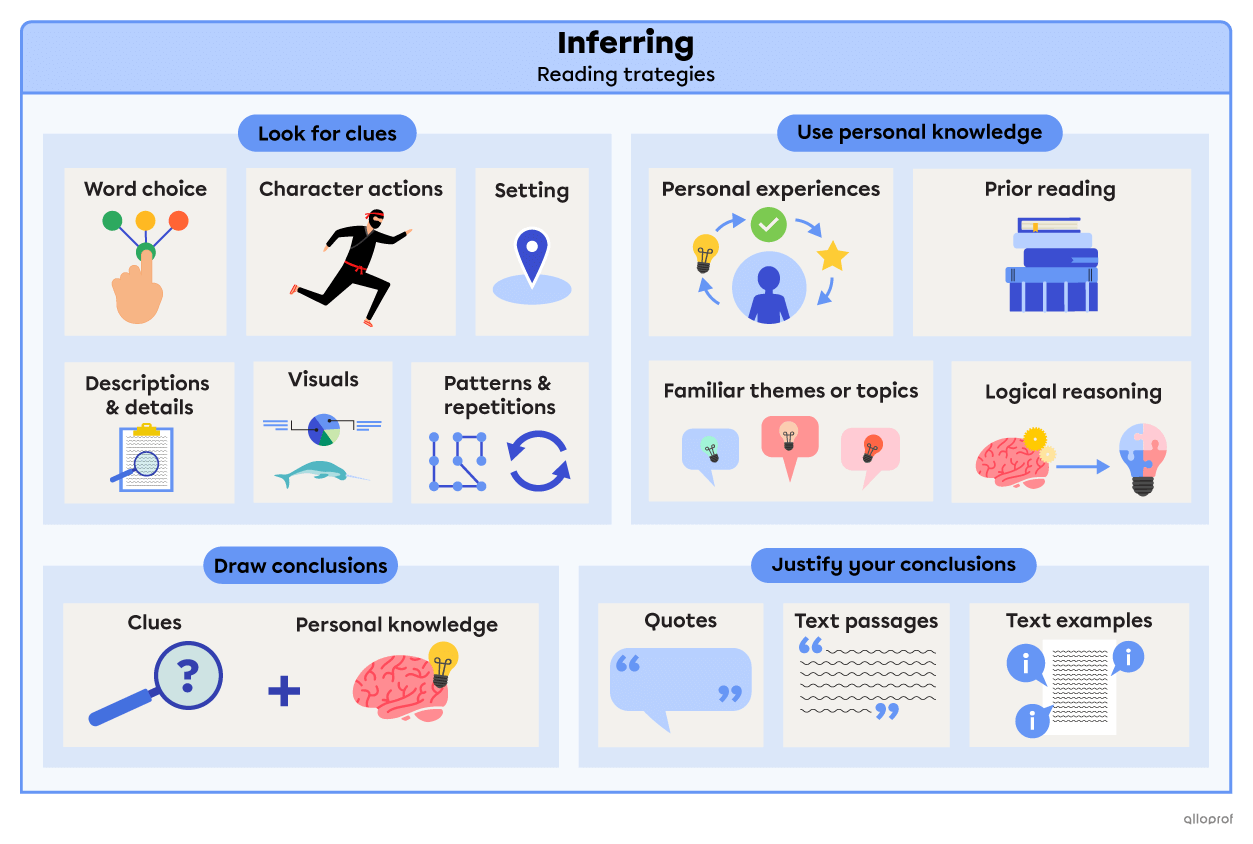
How to Make Inferences

What to do

What to look for

Look for clues

• Word choice
• Character actions
• Story setting
• Descriptions & details
• Visuals
• Patterns & repetitions

Use personal knowledge

• Personal experiences
• Previous readings
• Familiar themes or topics
• Logical reasoning

Draw conclusions 

• Clues + personal knowledge

Justify your conclusions

• Quotes
• Text passages
• Text examples

Inferring at a Glance

Summary of the inferring and scanning reading strategies. Inferring is looking for clues in the word choice, character actions, story setting, details, descriptions, visuals, patterns and repetitions of a text. You must use your personal knowledge like personal experiences, previous readings, familiar topics, themes and logical reasoning. Then, draw conclusions by combining the clues and your personal knowledge. Make sure to justify your conclusions with text elements like quotes, passages and examples.
Example

Take a look at the following sentence.

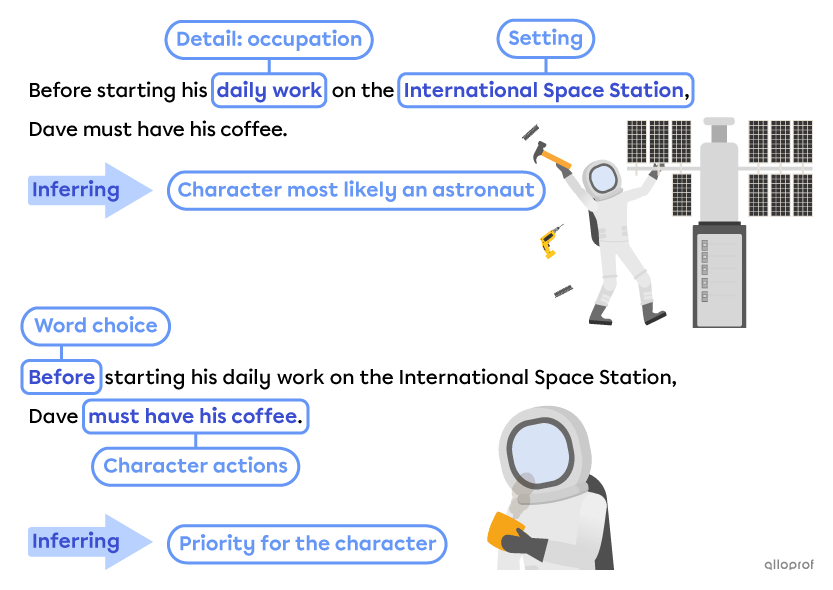
Before starting his daily work on the International Space Station, Bob must have his coffee.

What can we infer from it?
 

The sentence “Before starting his daily work on the International Space Station, Dave must have his coffee.”

From the sentence, we can infer that Dave is most likely an astronaut and that getting his coffee in the morning is a top priority for him.

Reading Strategies At a Glance

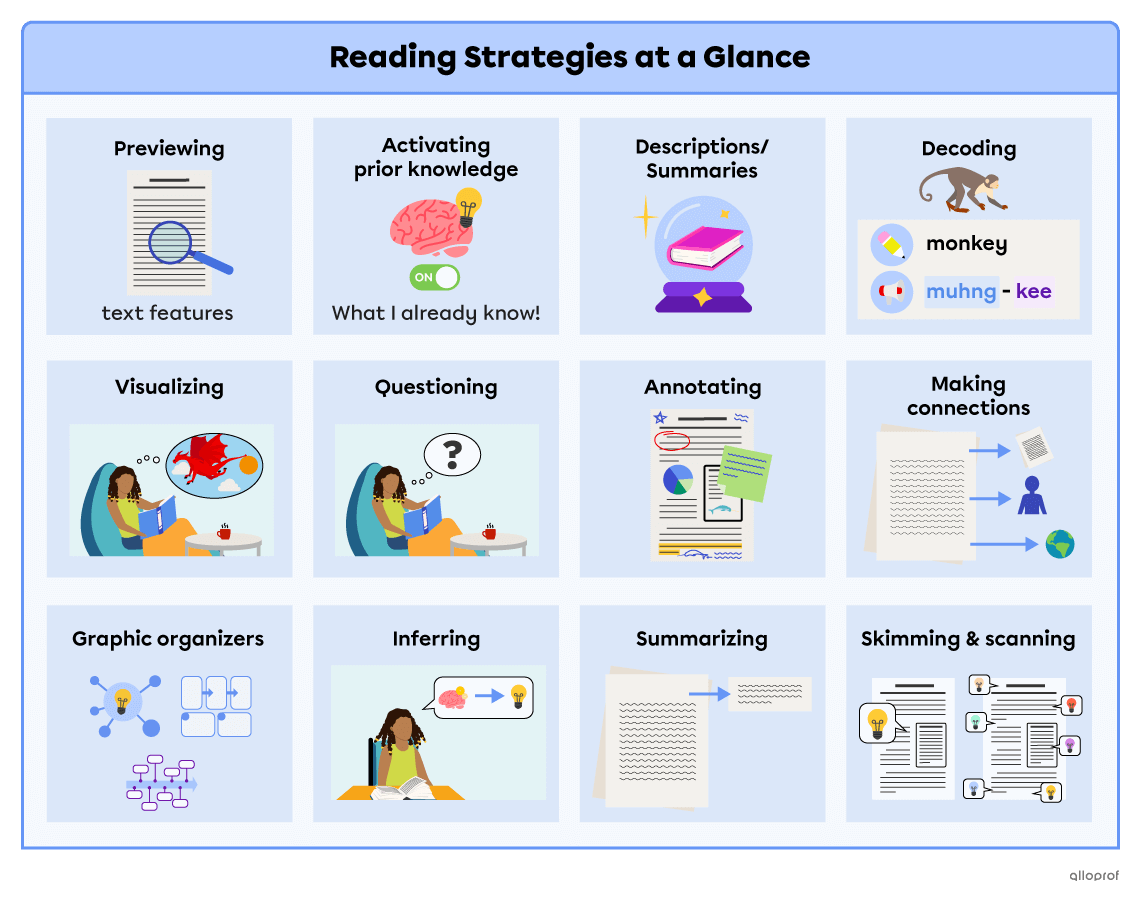
Summary table of the 12 reading strategies: previewing, activating prior knowledge, making predictions, decoding, visualizing, questioning, annotating, making connections, graphic organizers, inferring, summarizing and skimming & scanning. Description :