Subjects
Grades
 100%
100%
 100%
100%
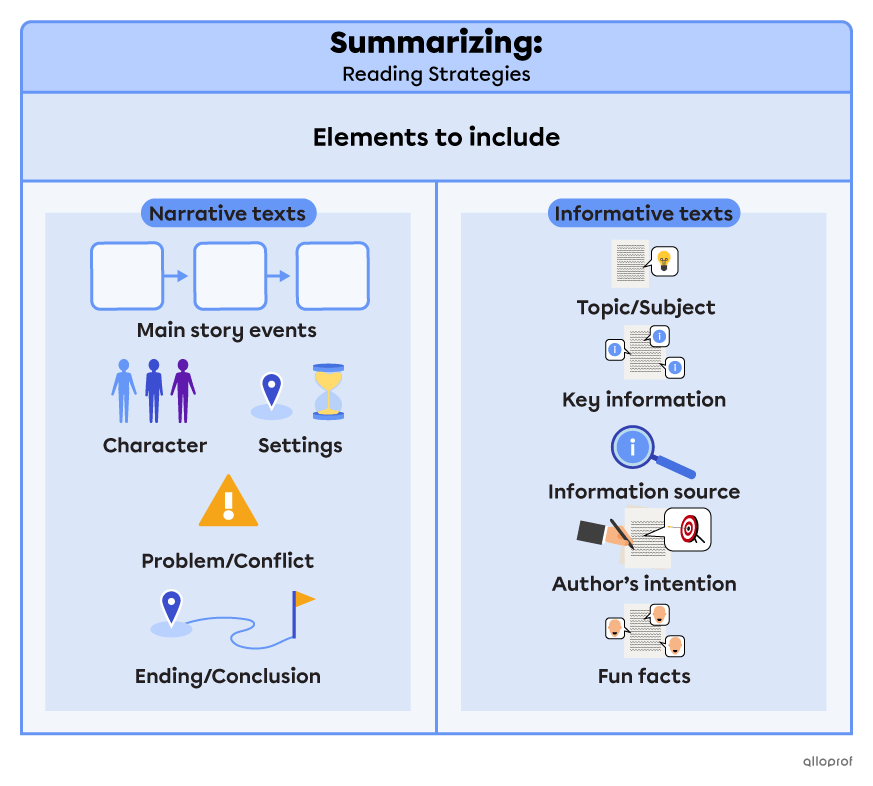
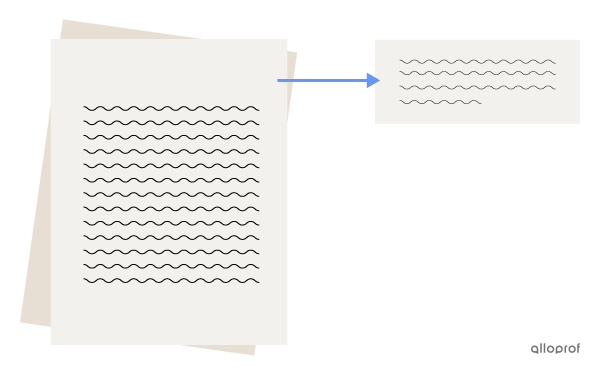
Summarizing is reformulating the main idea of a text in a short form, in your own words.
Example of elements to include in a summary
|
Narrative text elements |
|
|
Main story events |
Main ideas and actions in the story |
|
Characters |
Who is involved in the story and makes it move along |
|
Setting |
Where and when the story is taking place |
|
Problem/Conflict |
What set the story in motion, what made it start moving |
|
Ending/Conclusion |
How the story ends, how the problem/conflict is resolved |
|
Informative text elements |
|
|
Topic/subject |
What the text is about |
|
Key information |
Main points the text is presenting |
|
Information sources |
Where the information is from |
|
Author’s intention |
Why the author wrote the text: to inform, to persuade, to entertain… |
|
Fun facts |
Text elements that make it an interesting read |
