Subjects
Grades
 100%
100%
 100%
100%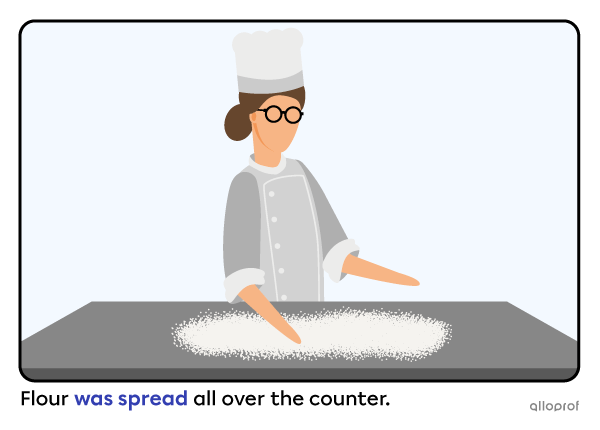 100%
100%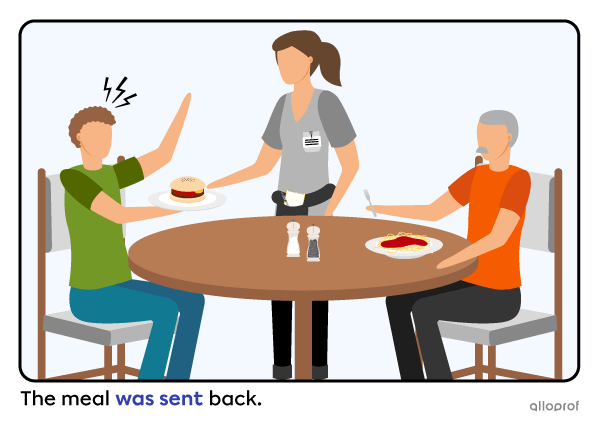 100%
100%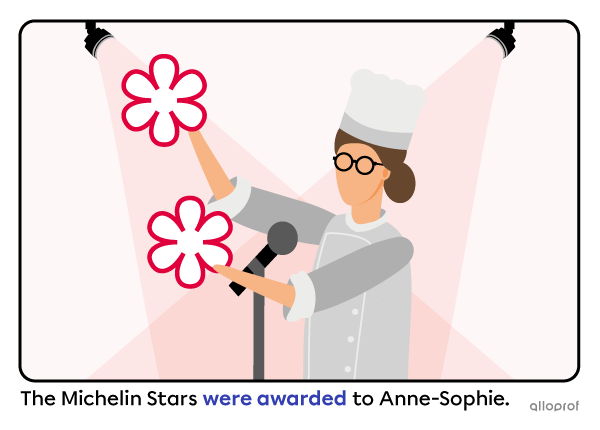 100%
100%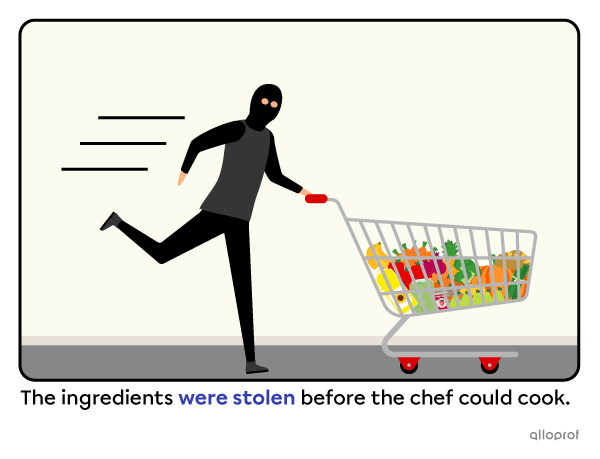 100%
100%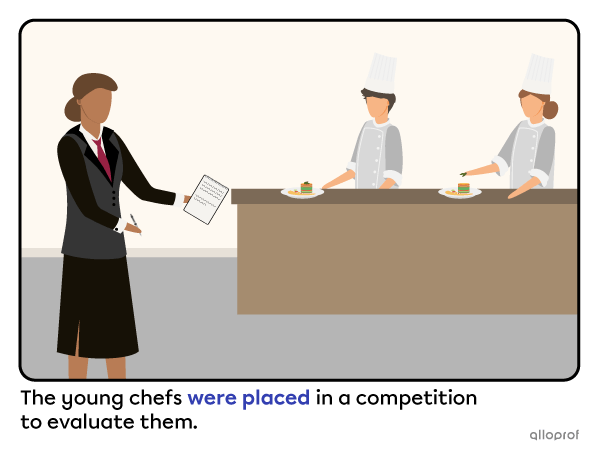 100%
100%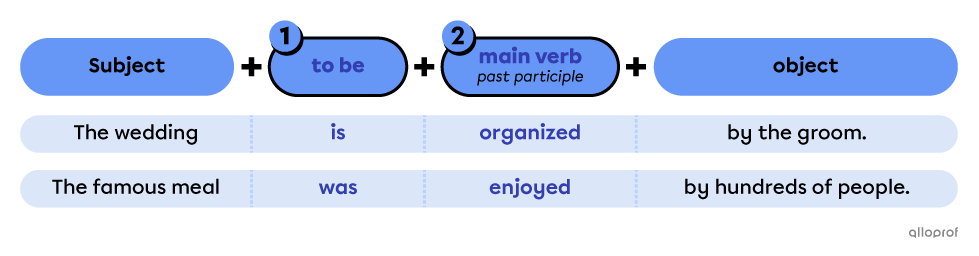 100%
100%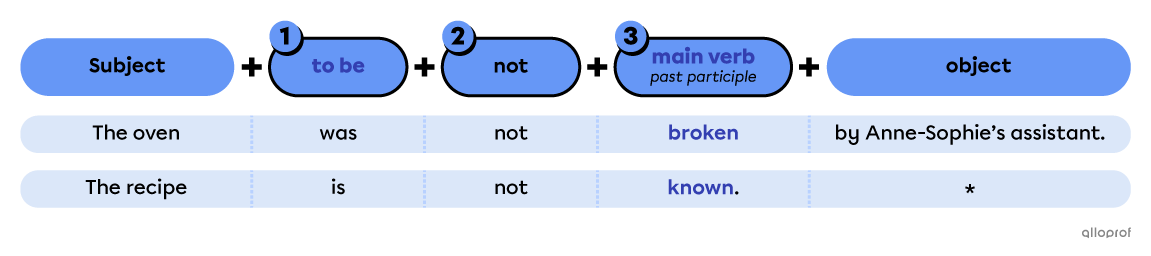 100%
100%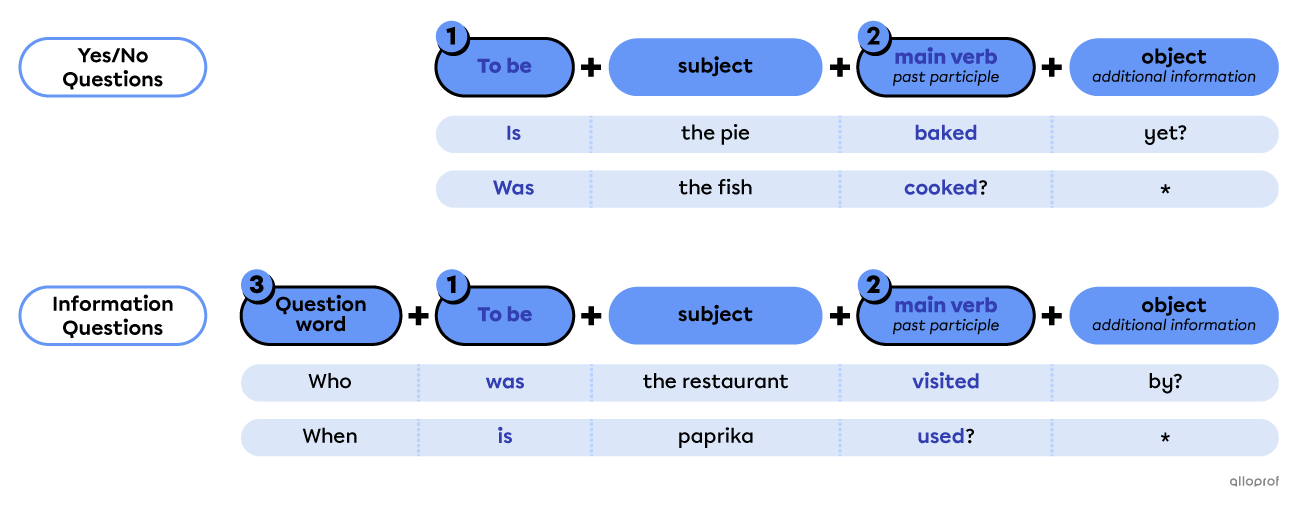
Here are some examples of sentences written in their active and passive form:
|
Active |
Passive |
|
This weird restaurant serves questionable meals. |
Questionable meals are served at this weird restaurant. |
|
Grandmothers cook marvelous pancakes. |
Marvelous pancakes are cooked by grandmothers. |
Using active sentences usually makes your writing more straightforward.
However, using passive sentences can be useful in specific situations.
There are many reasons to use passive voice sentences.
To emphasize the action or the object rather than the person doing it
To lessen the importance of the role of the person doing it
To avoid directly blaming a person
To sound more formal
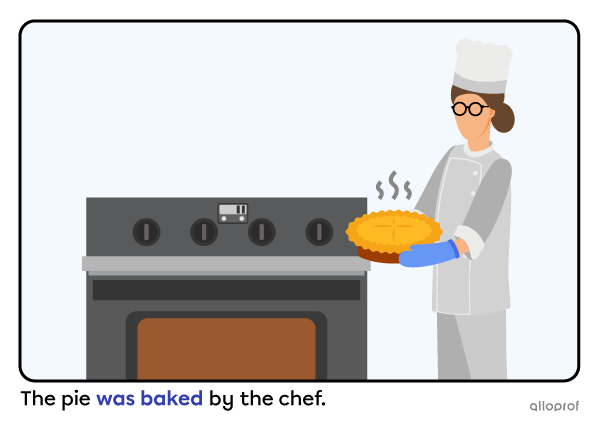
To emphasize the action or the object rather than the person doing it

We focus on the action the pie was baked rather than on the chef who baked it.
To lessen the importance of the role of the person doing it
We focus on the fact that flour was spread on the counter rather than on who spread the flour.
To avoid directly blaming a person
We focus on the action the meal was sent back rather than blaming who cooked the meal.
To sound more formal
The passive voice makes things sound more official. At the same time, it also focuses on the award more than on the person receiving it.
There are other situations where using passive voice sentences is useful.
To report crimes or incidents with an unknown perpetrator
In science reports
To report crimes or incidents with an unknown perpetrator
The identity of the thief in this situation is unknown. The focus is on the ingredients that were stolen.
In science reports
Knowing who placed the young chef in the competition isn’t important. The focus is on the experiment of being placed in the competition.
*Object is not always necessary.
*Object is not always necessary.
The passive voice can be used in continuous tenses (also called progressive tenses).
|
Continuous Tenses |
Affirmative Form |
Negative Form |
Question Form |
|
The pie was being cooked yesterday at 9 p.m. |
The pie was not being cooked yesterday at |
What was being cooked yesterday at 9 p.m.? |
|
|
The chef is being evaluated by a critic today. |
The chef is not being evaluated by a critic today. |
Who is the chef being evaluated by? |
|
|
The students will be being tested on their knowledge tomorrow. |
The students will not be being tested on their knowledge tomorrow. |
When will the students be being tested on their knowledge? |
The passive voice can be used in perfect tenses.
|
Perfect Tenses |
Affirmative Form |
Negative Form |
Question Form |
|
The kitchen had been cleaned before the next team arrived. |
The kitchen had not been cleaned before the next team arrived. |
Had the kitchen been cleaned before the next team arrived? |
|
|
A new recipe has been tried with excellent results! |
A new recipe has not been tried with excellent results! |
What has been tried with excellent results? |
|
|
The fridge will have been filled for the next cooking session. |
The fridge will not have been filled for the next cooking session. |
Why will the fridge have been filled? |
The passive voice can be used with conditionals.
|
Conditionals |
Affirmative Form |
Negative Form |
Question Form |
|
The table would be set if they had guests. |
The table would not be set if they had guests. |
What would be set if they had guests? |
|
|
The cake would have been baked if the children had arrived. |
The cake would not have been baked if the children had arrived. |
Would the cake have been baked if the children had arrived? |
|
|
The fridge will have been emptied by the time the adults get home. |
The fridge will not have been emptied by the time the adults get home. |
Will the fridge have been emptied by the time the adults get home? |
The passive voice can be used with modals.
|
Modals |
Affirmative Form |
Negative Form |
Question Form |
|
have to |
The reservation had to be booked on time. |
The reservation didn’t have to be booked on time. |
Did the reservation have to be booked on time? |
|
might |
The fish might have been stuck in the delivery van for too long. |
The fish might not have been stuck in the delivery van for too long. |
What might have been stuck in the delivery van for too long? |
|
may |
A meal may be planned in advance. |
A meal may not be planned in advance. |
What may be planned in advance? |
|
should |
The chef should be warned of any delays in the kitchen. |
The chef should not be warned of any delays in the kitchen. |
Should the chef be warned of any delays in the kitchen? |