Matières
Niveaux
 100%
100%
 100%
100%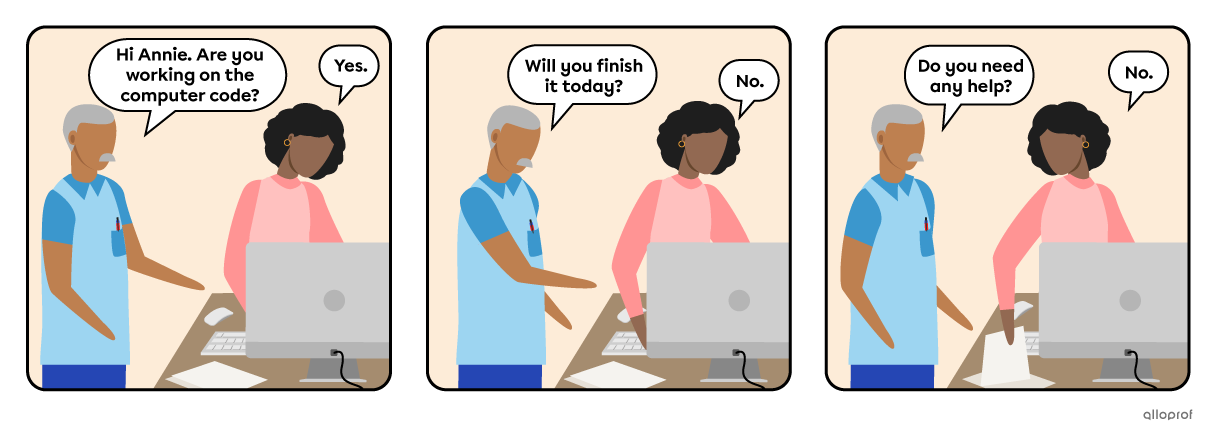 100%
100% 100%
100%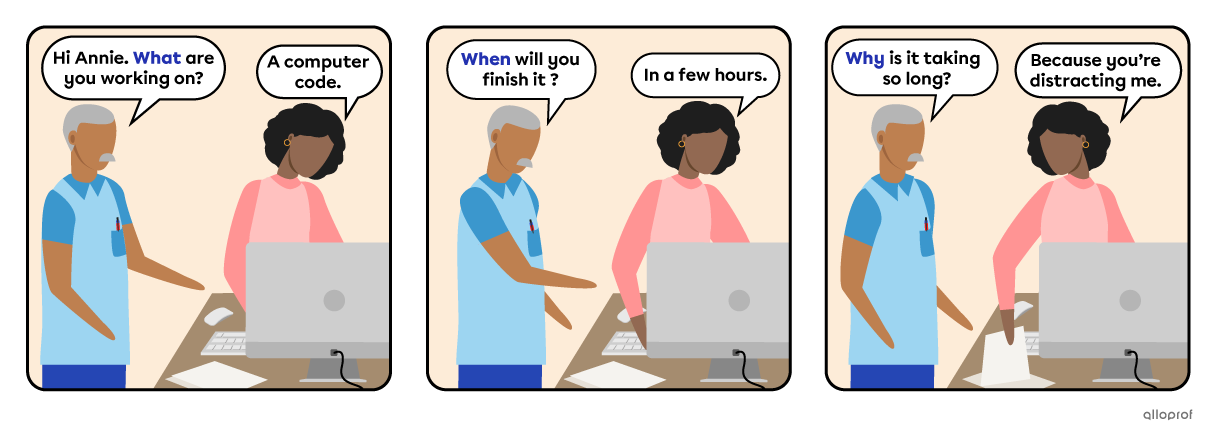 100%
100%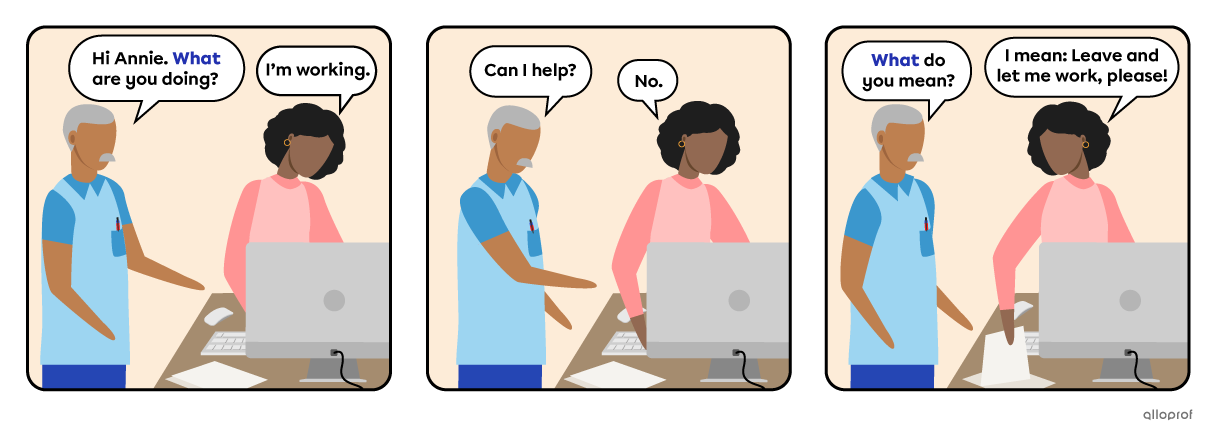 100%
100%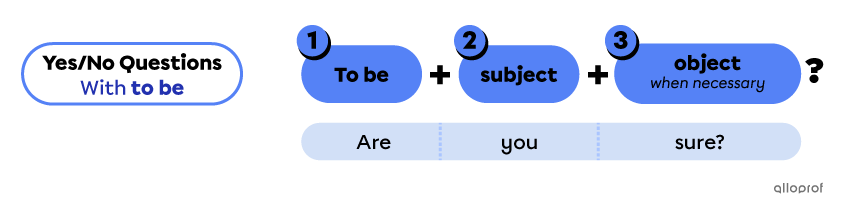 100%
100% 100%
100%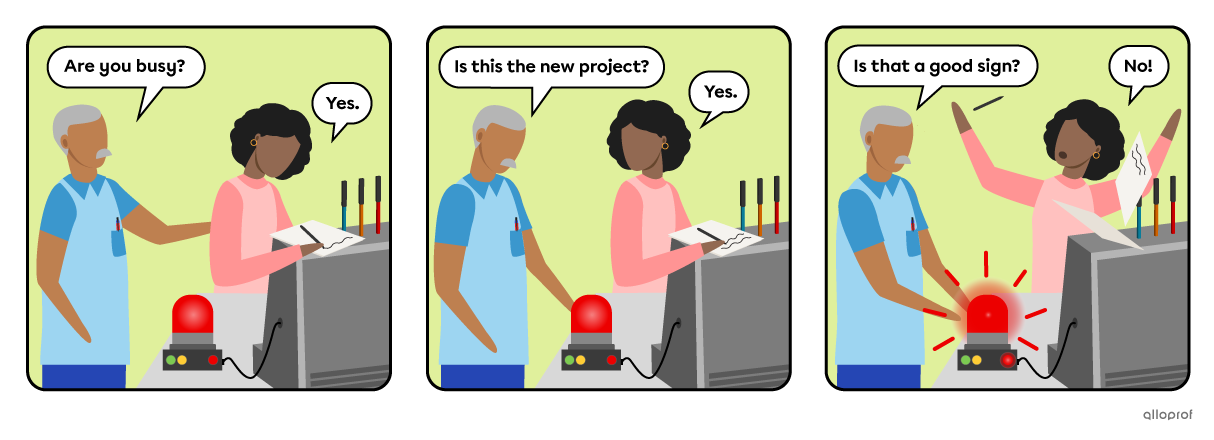 100%
100%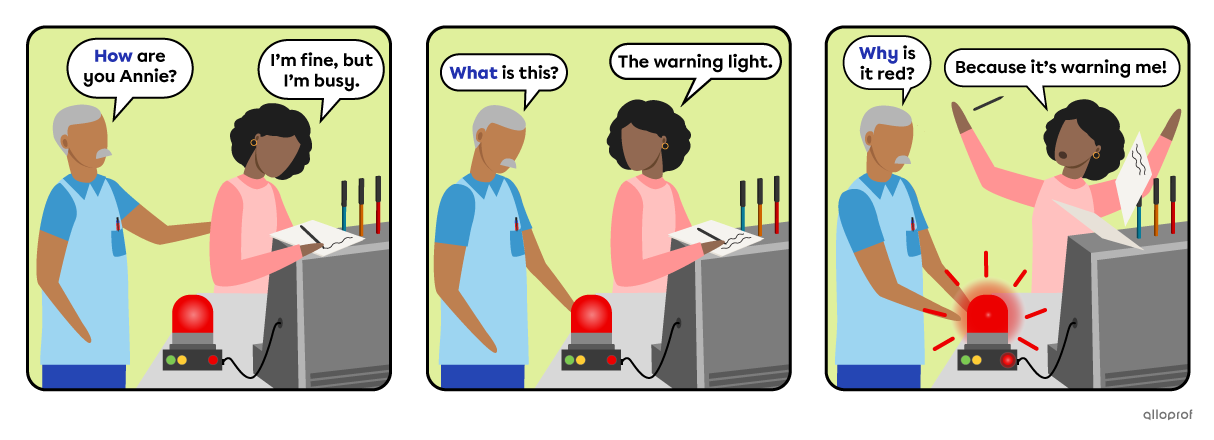 100%
100%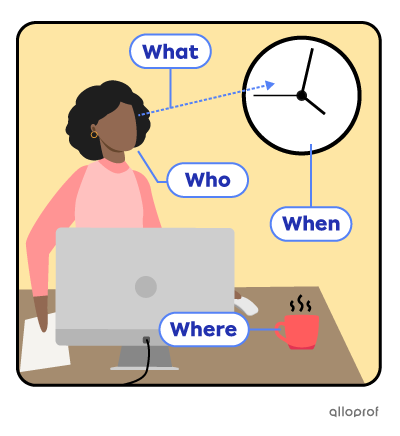 100%
100%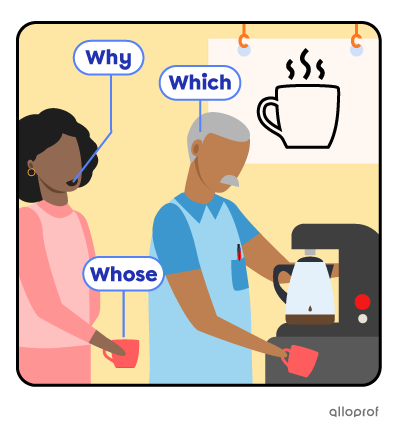 100%
100%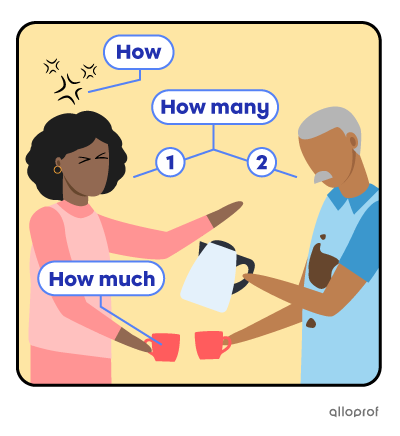
Questions are interrogative sentences. They are used to ask for information.
Most common question types:
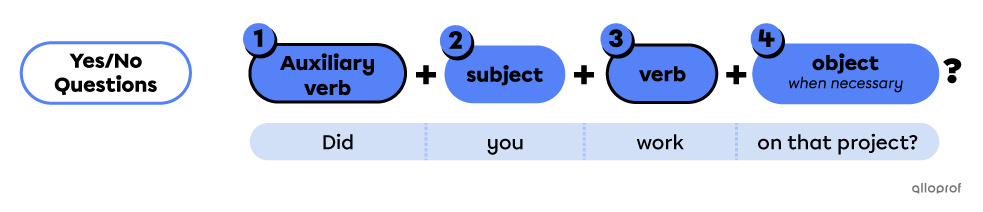
Yes/no questions
answered by yes or no
begin with an auxiliary verb or the verb to be
Information questions
cannot be answered by yes or no
ask for a more complete answer
begin with question words
The 4 elements of a yes/no question:
The auxiliary verb indicates the verb tense.
The subject is the person, people or thing(s) doing the action.
The verb is the action.
The object is additional information, added when necessary.

| Auxiliary verb |
Subject | Verb | Object |
| Are | you | working | on the computer code? |
| Will | you | finish | it today? |
| Do | you | need | any help? |
Information questions use almost the same structure as yes/no questions, but they start with:
Next, use the same yes/no questions form for the rest:
The auxiliary verb indicates the verb tense.
The subject is the person, people or thing(s) doing the action.
The verb is the action.
The object is additional information, added when necessary.
| Question word |
Auxiliary verb |
Subject | Verb | Object |
| What | are* | you | working | on? |
| When | will | you | finish | it? |
| Why | does | it | take | so long? |
*In this example, to be is an auxiliary verb, not the main verb. The verb in the example is to work, conjugated in the present continuous.
| Question word |
Auxiliary verb |
Subject | Verb | Object |
| What | are | you | doing? | No object necessary |
| Can | I | help? | ||
| What | do | you | mean? |
Questions with the verb to be do not use auxiliary verbs when they are in the simple present or simple past verb tenses.
The 3 elements of a yes/no question with to be are the following:
The verb to be is conjugated according to the subject and verb tense.
The subject is the person, people or thing(s) doing the action.
The object is additional information, added when necessary.
Start with:
A question word indicating what the question is about.
Next, use the same yes/no questions form for the rest:
The verb to be, conjugated according to the subject and verb tense.
The subject is the person, people or thing(s) doing the action.
The object is additional information, added when necessary.
| To be | Subject | Object |
| Are | you | busy? |
| Is | this | the new project? |
| Is | that | a good sign? |
| Question word |
To be | Subject | Object |
| How | are | you | Annie? |
| What | is | this? | * |
| Why | is | it | red? |
*object not necessary
Question words, also known as Wh- words, are used to ask information questions. They indicate what the question is about.
The most commonly used ones are:
| Question word | Asking information about |
| What | things & actions |
| Who | people |
| Where | places |
| When | time |
| Why | reasons & explanations |
| Which | choice |
| Whose | possession |
| How | in what way |
| How many | countable quantity |
| How much | uncountable quantity |
It is 4:00, time for Annie’s coffee break.
| What | things & actions | |
| What is Annie looking at? | She is looking at the clock. | |
| Who | people | |
| Who is looking at the clock? | Annie is looking at the clock. | |
| When | time | |
| When is the coffee break? | It is at 4 o’clock. | |
| Where | places | |
| Where is Annie’s coffee mug? | It is on her desk. | |
She walks to the coffee machine; Terry is already there.
| Why | reasons | |
| Why is Annie smiling? | Because she’s going to get the delicious coffee she loves so much! | |
| Which | choice | |
| Which one of you was there first? | Terry was there first. | |
| Whose | possession | |
| Whose mug is Annie holding? | It’s her own coffee mug (it’s Annie’s mug). | |
Annie is upset because Terry spilled all the coffee on his shirt, again.
| How | in what way | |
| How is Annie feeling at the moment? | She is upset. | |
| How many | countable quantity | |
| How many people are standing by the coffee machine? | There are two people. | |
| How much | uncountable quantity | |
| How much coffee is Annie going to drink? | None at all, because Terry spilled all of it. | |
Words can be added to question words for more precision.
Nouns can be added to what, which and whose.
| What |
+ |
noun |
| Which | ||
| Whose |
Adjectives or adverbs can be added to how.
| How |
+ |
adjective |
| adverb |
Adding a noun
| What | colour | is this? |
| What | difference | does it make? |
| Which | one | did you watch first? |
| Which | problem | are we fixing? |
| Whose | mug | did you break? |
| Whose | car | are you driving? |
Adding an adjective
| How | big | is the rocket’s fuel tank? |
| How | different | is the new computer system? |
| How | crazy | are you really? |
Adding an adverb
| How | often | do you spill coffee on yourself? |
| How | quickly | can you fix the problem? |
| How | soon | is the rocket launch? |