Syntax—Grammar

Fiche | Anglais
Definition

Syntax is the structure and organization of words into understandable sentences. 

Sentences

Sentences can take different forms like:

Affirmative Sentences

Positive statement

The sentence: “This is Bob,” with an astronaut getting out of bed.

Negative Sentences

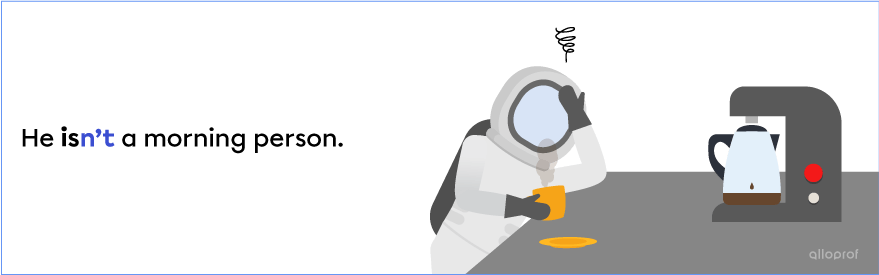
Negative statement

Sentence saying: “He isn’t a morning person,” with a barely awake astronaut holding a cup of coffee.

Questions

Interrogative sentences asking for information

Sentence saying:”Why does he get up so early?” with an astronaut walking by a clock showing 5 it’s 5 a.m.

Capitalization

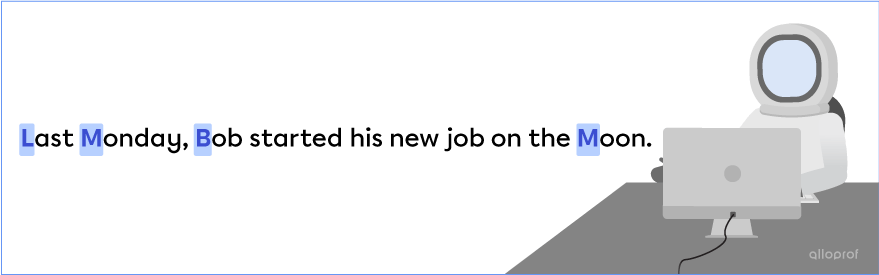
Using capital letters

Sentence saying: “Last Monday, Bob started his new job on the Moon,” with an astronaut working at a computer.

Compound & Complex Sentences
 

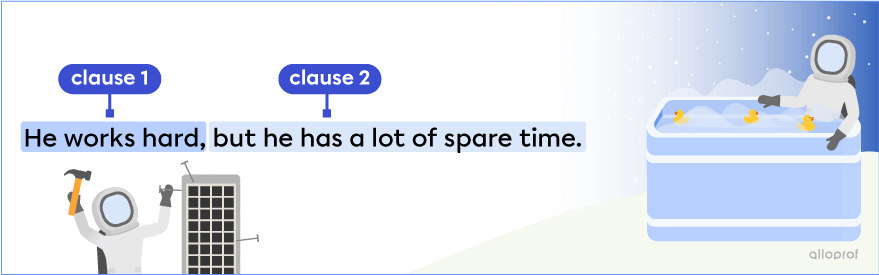
Sentences made of two, or more, simple sentences or clauses together.

Sentence saying: “He works hard, but he has a lot of spare time,” with an astronaut fixing equipment and later chilling in a hot tub.

Punctuation

Punctuation includes:

The period

Punctuation ending a sentence

Sentence saying: “Bob likes to learn new skills,” with an astronaut holding an open book.

The comma

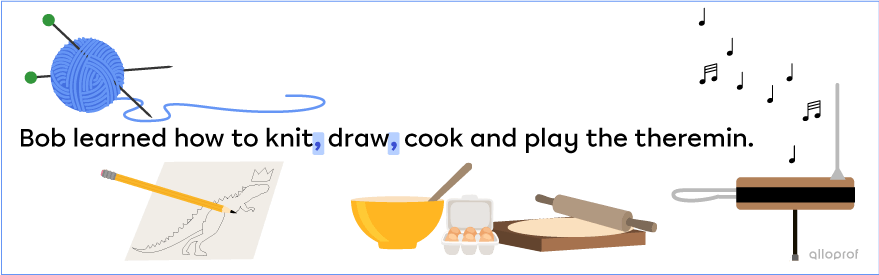
Punctuation separating elements in a sentence

Sentence saying: “Bob learned how to knit, draw, cook and play the theremin,” with knitting yarn, a pencil sketch, a cooking set up and a theremin.

The question mark

Punctuation ending a question

Sentence saying: “Do you know what a theremin is?” next a to a theremin.

Word Classes

Word Classes, also known as parts of speech, include:

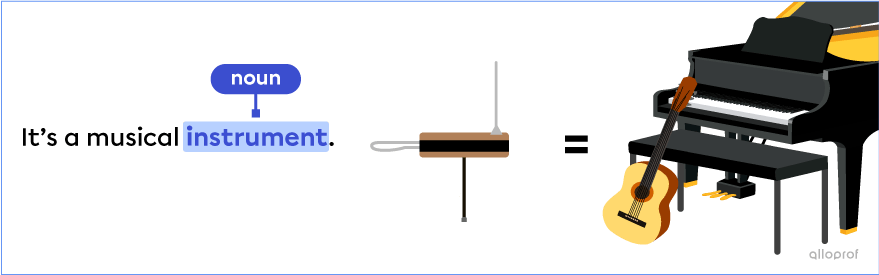
Nouns

Words representing people, places and things

Sentence saying: “It’s a musical instrument,” with a picture of a theremin, a guitar and a piano.

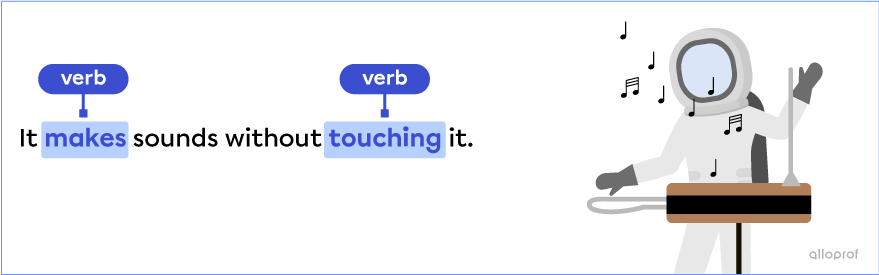
Verbs

Words representing actions and states of being

Sentence saying: “It makes sounds without touching it,” with an astronaut playing the theremin.

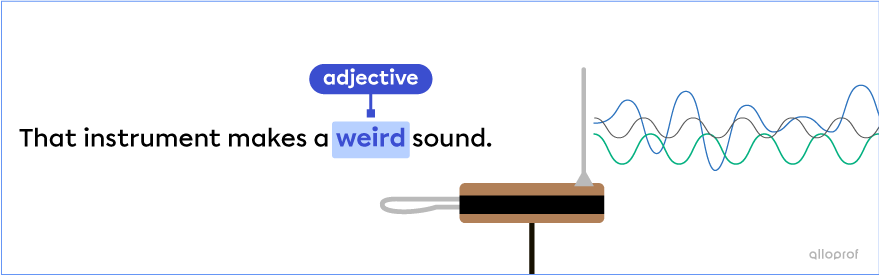
Adjectives

Words used to describe or modify nouns

Sentence saying: “That instrument makes a weird sound,” with an illustration of a theremin and a soundwave.